Episode 1 Overview
As the Social Lives of Shoes team prepares for its next interview series, this three-part miniseries shares updates from the Footwear Research Network’s This Is Not a Shoe project. In this first episode, they look back on a busy couple of months, from a fashion week workshop with Amnesty International’s ACRUX Collective in Melbourne to the Making Futures conference at Arts University Plymouth and a visit to Manchester Metropolitan University. They also introduce the ‘Shoecuterie’ accessory-making activity, preview a TINAS workshop at Sheffield Cathedral, and share news of their recent Signal Awards podcast win.
Also available on Spotify and Apple Podcasts
Credits
Presenters: Dr Alexandra Sherlock and Dr Emily Brayshaw
Production and editing: Dr Alexandra Sherlock
Links and Resources
The Footwear Research Network and This Is Not a Shoe
Footwear Research Network: https://footwearresearchnetwork.org
This Is Not a Shoe: https://www.thisisnotashoe.org
Support the FRN on GoFundMe: https://gofund.me/93cd1aebf
This Is Not a Shoe: What happened when we brought unwearable shoes to Melbourne Fashion Festival: https://footwearresearchnetwork.org/articles/this-is-not-a-shoe-what-happened-when-we-brought-unwearable-shoes-to-melbourne-fashion-festival
Previous episodes mentioned
Episode 8: Understanding Attachment and Divestment for a Circular Economy with Dr Ellen Sampson: https://footwearresearchnetwork.org/podcast/understanding-attachment-and-detachment-for-a-circular-economy-with-dr-ellen-sampson
Episode 10: More Stitches, Less Riches: Reconnecting with our shoes, each other and the planet with Wendy Ward https://footwearresearchnetwork.org/podcast/more-stitches-less-riches-reconnecting-with-our-shoes-each-other-and-the-planet-with-wendy-ward
People and organisations
Lynne O’Donnell Substack (also published in New World Magazine 11.11.2026) Why the world worships shoes (13 November 2026): https://lynneodonnell.substack.com/p/why-the-world-worships-shoes
ACRUX, Amnesty International Australia’s National Youth Collective: https://activism.amnesty.org.au/acrux-collective
Pennie Jagiello, https://www.penniejagiello.com/
Bianca Easton, Weaving Connections Naarm Instagram
Bianca Easton and Weaving Three Stories: https://star-semicircle-n7cf.squarespace.com/weaving-three-stories
Abbotsford Convent: https://abbotsfordconvent.com.au
Making Futures 2026, Arts University Plymouth: https://makingfutures.org.uk
Ellen Sampson website and publications: https://www.ellensampson.com/
F/fashion Narratives Research Group, Manchester Metropolitan University: https://fashionnarratives.mmu.ac.uk
Professor Kate Fletcher, Manchester Metropolitan University: https://www.art.mmu.ac.uk/profile/kfletcher
The Emotional Life of Clothes (ESRC-funded project): https://fashionnarratives.mmu.ac.uk/the-emotional-life-of-clothes-leveraging-the-connection-between-emotion-and-clothing-to-support-circular-fashion-through-sustainable-lifestyles/
Sheffield Cathedral: https://www.sheffieldcathedral.org/
The Signal Awards: https://www.signalaward.com/winners/details/footwear-research-network-the-social-lives-of-shoes-735107/
RMIT Sustainable Technologies and Systems Enabling Impact Platform: https://www.rmit.edu.au/research/our-research/enabling-impact-platforms/sustainable-technologies-systems
MFW Merchendise Acknowledgements
Ink & Spindle, Abbotsford Convent: https://abbotsfordconvent.com.au/whos-here/ink-spindle/
T-Shirt Oz: https://t-shirtoz.com/
Helping Hands Mission Op Shop, Airport West: https://www.helpinghandsmission.org.au/
Lilbeanzine - Instagram
References
Gibson, J. J. (2015). The ecological approach to visual perception (Classic ed.). Psychology Press. (Original work published 1979) https://www.routledge.com/The-Ecological-Approach-to-Visual-Perception-Classic-Edition/Gibson/p/book/9781848725782
O’Donnell, L. (2026, November 13). Why the world worships shoes. Substack. https://lynneodonnell.substack.com/p/why-the-world-worships-shoes
Sampson, E. (2020). Worn: Footwear, attachment and the affects of wear. Bloomsbury Visual Arts. https://www.bloomsbury.com/uk/worn-9781350294547/
Chapters
[00:00] Show Intro
[00:58] Welcome to the Miniseries
[04:53] Melbourne Fashion Week 2026: TINAS x ACRUX Collective for Amnesty International
[08:57] Making, talking and footwear futures, from algae fibres to kombucha leather
[12:17] Deconstruction working bees and the ‘Shoecuterie’ activity
[15:41] TINAS goes on the road
[18:25] Making Futures at the Arts University Plymouth
[22:00] Decolonising Docs: Bianca Easton's boots and shoes as a medium for connection and knowledge exchange
[25:04] From Plymouth to Sheffield: Developing a collaborative participatory research project
[27.47] Deconstruction as Managed Divestment: Cleaving together and cleaving apart
[29:19] Footwear Rubbings and This is Not a Shoe at Sheffield Cathedral
[32:23] F/fashion Narratives at Manchester Met
[35:40] Unlearning convention and returning to material play
[38:44] Extended producer responsibility as keeping while giving
[42:00] Developing effective engagement strategies
[45:00] Next of the TINAS tour: Reflections from Sheffield
[46:02] Award News: Bronze for Thought Leadership at the Signal Awards
[47:32] Further Acknowledgements: RMIT, Abbotsford Convent, Ink and Spindle, T-Shirt Oz and Lil Bean Zine
Transcript with Images
1. Show Intro [00:00]
Emily [00:10]
What if shoes could speak? What might their stories, and the stories of those who make and wear them, tell us about the ways we live, our values and our impact on the world?
Alex [00:22]
Welcome to the Social Lives of Shoes, a podcast brought to you by the Footwear Research Network that brings to life one of the most underestimated and humble aspects of consumer culture.
Emily [00:32]
Whether you design, produce, make, market, sell, or just wear shoes. These conversations will transform how you think about them and reveal new possibilities for a more sustainable future.
Alex [00:46]
This episode was recorded on the unceded lands of the Wongal people of the Eora nation. We pay our respects to their ancestors, elders and custodians.
2. Welcome to the Miniseries [00:58]
Emily [00:58]
Hello to our listeners, and welcome to a series of special mini-podcasts from your This Is Not a Shoe Team, which is an offshoot of the Social Lives of Shoes. We haven't got any episodes scheduled for a while, but we've been super busy. So we thought we would let you know how we've been getting on, which is really exciting. So this is me, Dr. Emily Brayshaw. I am joined by co-presenter, Dr. Alex Sherlock, who is in L-England at the moment. Not London, England. I need a slap. And there has been so much going on. We're so excited. So tell us, Alex, what have you been doing? What are you up to? What are you doing in England?
Alex [01:39]
Yeah, England is London, didn't you know that?
Emily [01:42]
Of course it is. I mean, you know, yeah.
Alex [01:46]
I'm actually in Sheffield currently, but I will tell you more about why I'm in Sheffield in a minute, which is in the north of England. So, we decided to do, I think it's gonna be three episodes, just tracing the development of This is Not a Shoe, which regular listeners will recall, we reflected a little bit on with Professor Ellen Sampson, University of West of England, and also postgraduate researcher Wendy Ward, in those two episodes in the last series. Now those conversations have developed, and we are now collaborating with Ellen Sampson and Wendy Ward. So yeah, I just wanted to talk a little bit about that.
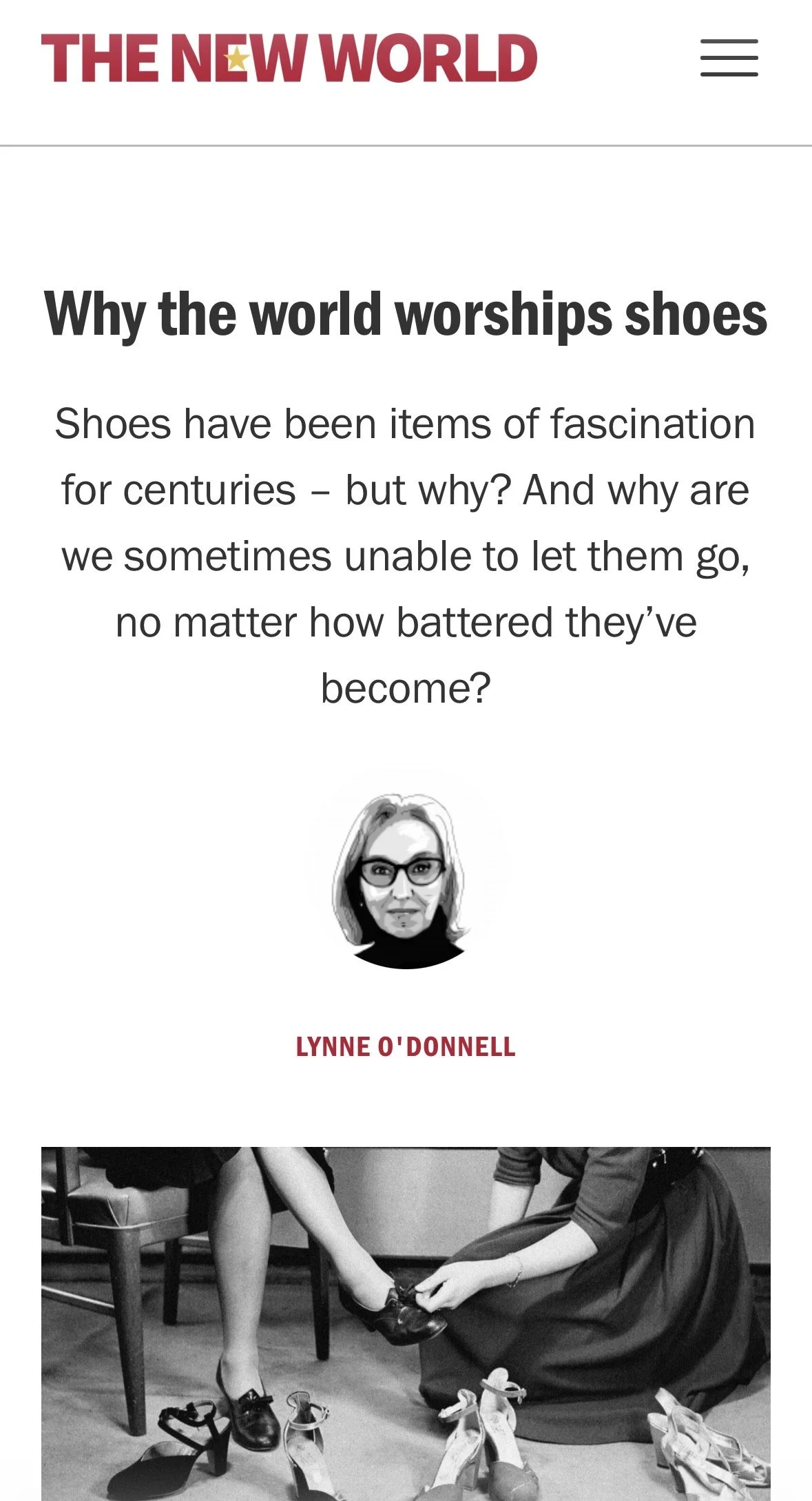
Also, we have had some exciting news that yesterday an article was published in New World Magazine about the project by a journalist, Lynne O'Donnell, who some people might know as the journalist who was captured by the Taliban in Afghanistan and forced to recant all of her articles on Twitter before being released, and that was a few years ago.
She's an absolutely extraordinary woman who has returned to Melbourne, moved back to Melbourne, and in unpacking all of her shoes, was encouraged to reflect on her relationship with her shoes. And then coincidentally stumbled across the This Is Not a Shoe Studio at Abbotsford Convent, which inspired this article for New World Magazine.
And it's just been really lovely, actually, to see her reflect on our relationship with shoes and what we're trying to do by encouraging people to dismantle and deconstruct their shoes and everything that those shoes represent.
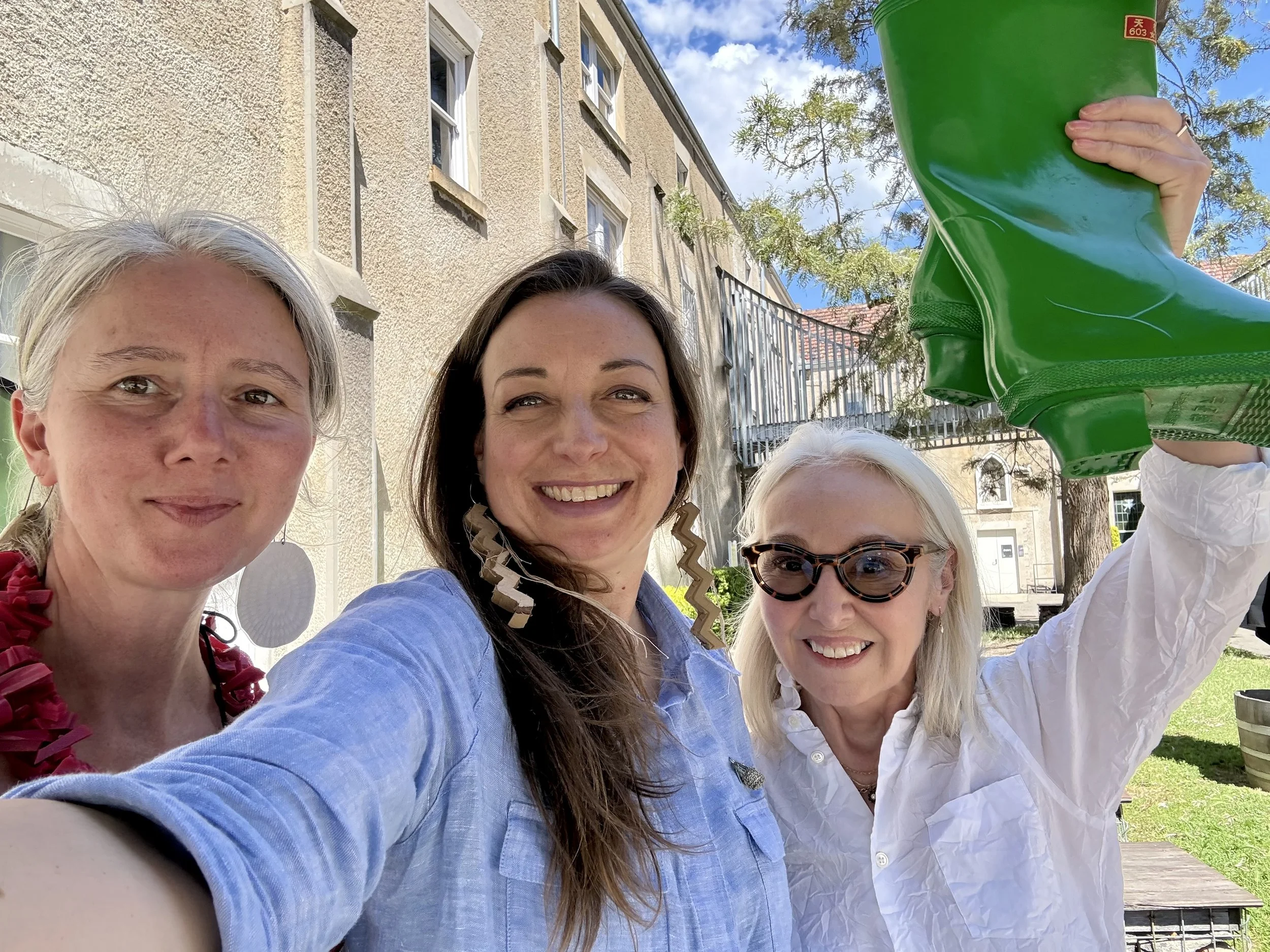
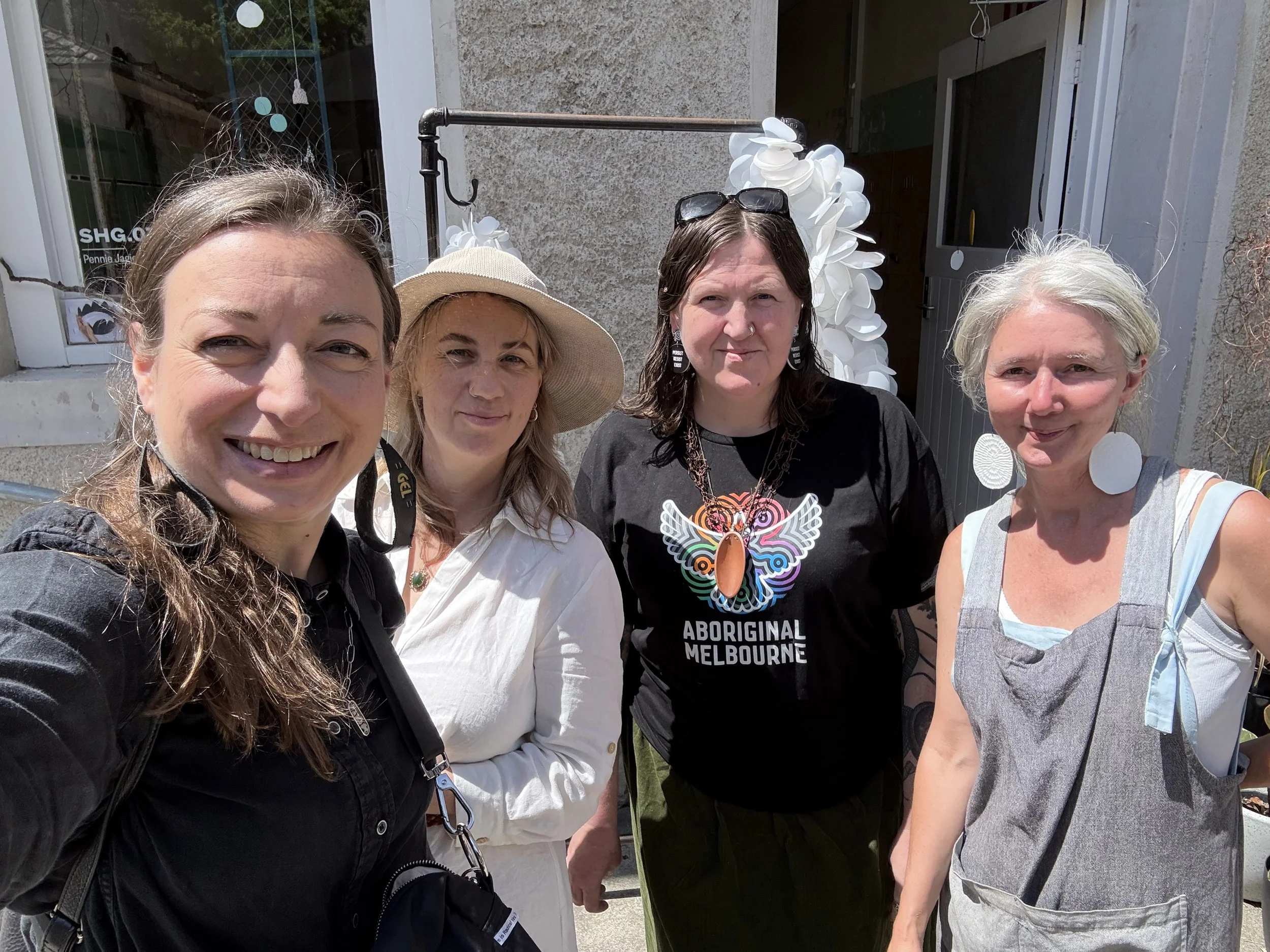
Lynne O’Donnell with Pennie and Alex at their Abbotsford Convent Studio donating a pair of green boots collected on assignment in rural China. Photograph Alexandra Sherlock, 2026.
So, this is not a shoe, is very much about physically and metaphorically deconstructing our shoes, unmaking what we think we know about them, to think about how we might n make and know them better. So the intention there is to think about how we might actually work towards a more sustainable and circular footwear industry and wearing practices. So yeah, so that's kind of the overview of what the project is and where we're at. And Lynne O'Donnell did say that she thinks that we're at the pointy end of a movement. Which was very exciting to hear. I don't know if that's true or not, but we thought we should probably actually start documenting and reflecting on what's happened just in case that's true.
Emily [04:06]
Yeah, wow, and what kind of popped into my head as well, is that these workshops really do, as well as getting us to think about sustainability, ethics, all around our footwear, it encourages us to think us to think about the social lives of our own shoes, why we're holding on to things, the stories that our shoes tell about us, and That's such an important part. And that's why it ties in with ideas of archives. You know, what are the shoes that we have in our personal collections? What are our personal shoe archives, if you will? How do we get rid of them? How do we divest them? What do we turn them into? What do they mean? Rather than just sort of mindlessly, I'm just going to keep buying a new pair of shoes because those are cool. You know, so I really love that.
3. Melbourne Fashion Week 2026: TINAS x ACRUX Collective for Amnesty International [04:53]
Emily [04:53]
And because I'm Sydney-based, I actually went down to Melbourne in late October, as you well know, because there was an event that This Is Not A Shoe was holding with ACRUX, who are the youth collective of Amnesty International. And it was a fashion week disruptor aimed at getting people to think about how their clothes are actually made, the ethics of fast fashion and the waste involved, as well. And so part of that we held one of those workshops there, which you were very helpful in getting it all set up, even though you were rushing off to England and trying to pack your bag and the whole thing. And you know, but
Alex [05:34]
I know. Well, I mean, I think for listeners I might just explain quickly how that came about because you absolutely got me out of a bit of a sticky situation there, Emily. Thank you so much. Because I mean, first of all what you were saying there, being located in Sydney, I think what we're understanding is that this is not a shoe activity is really fascinating because wherever you run it in the world and now I'm in the UK, it looks different. And that's because actually, wherever you are in the world, people wear different kinds of shoes, different climates, different kind of ecologies, different cultures, different identities. So it is really fascinating actually to run it in different places. But the ACRUX Collective, which is a really extraordinary organisation, which I wasn't previously aware of, as you say, is this group of truly inspirational young people based in Australia who are led by the elected youth representative for Amnesty International. Dookes, her name is, who we've got to know very well, who's just a really inspiring person in terms of everything that she's doing to raise awareness of worker exploitation.
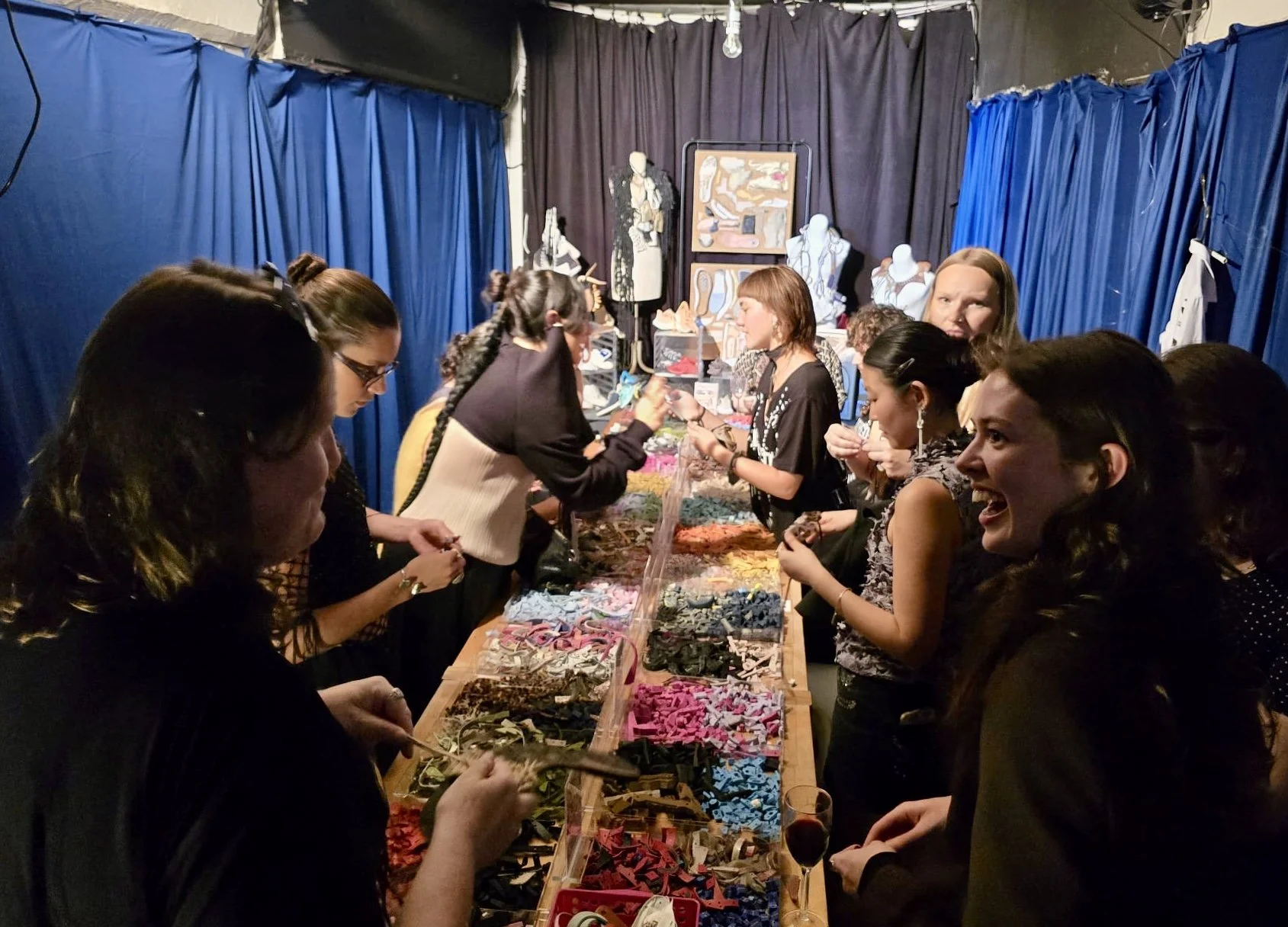
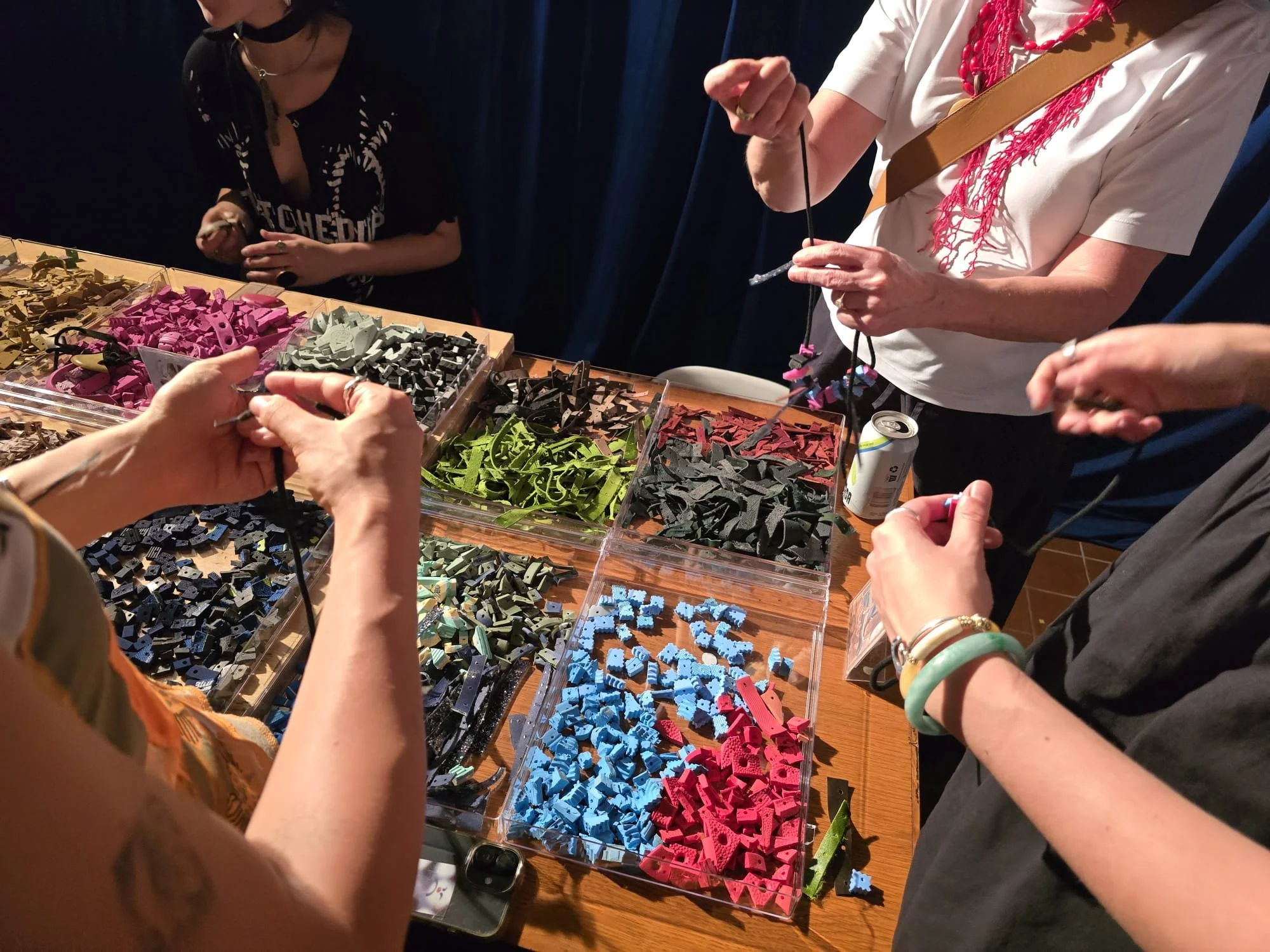
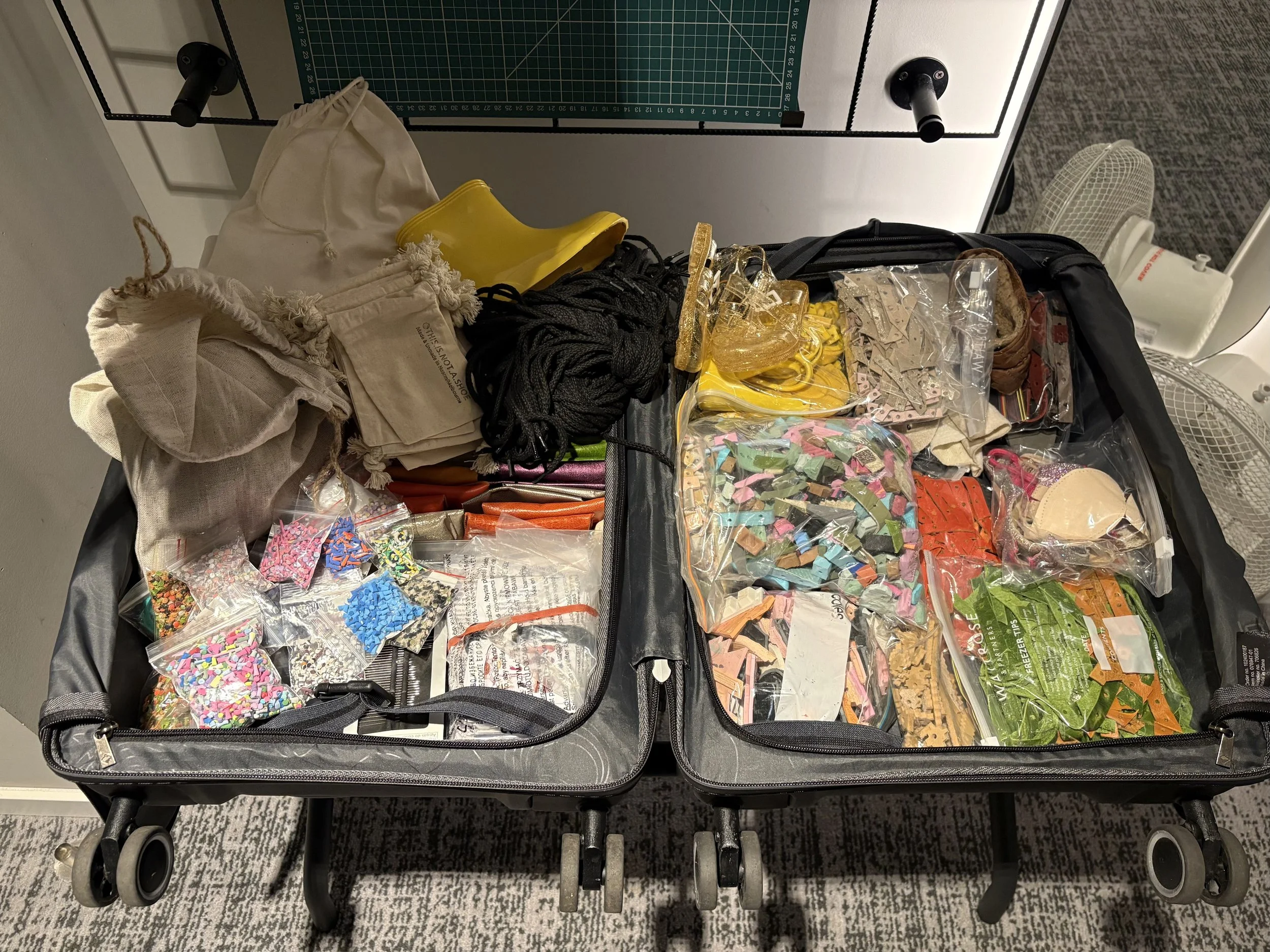
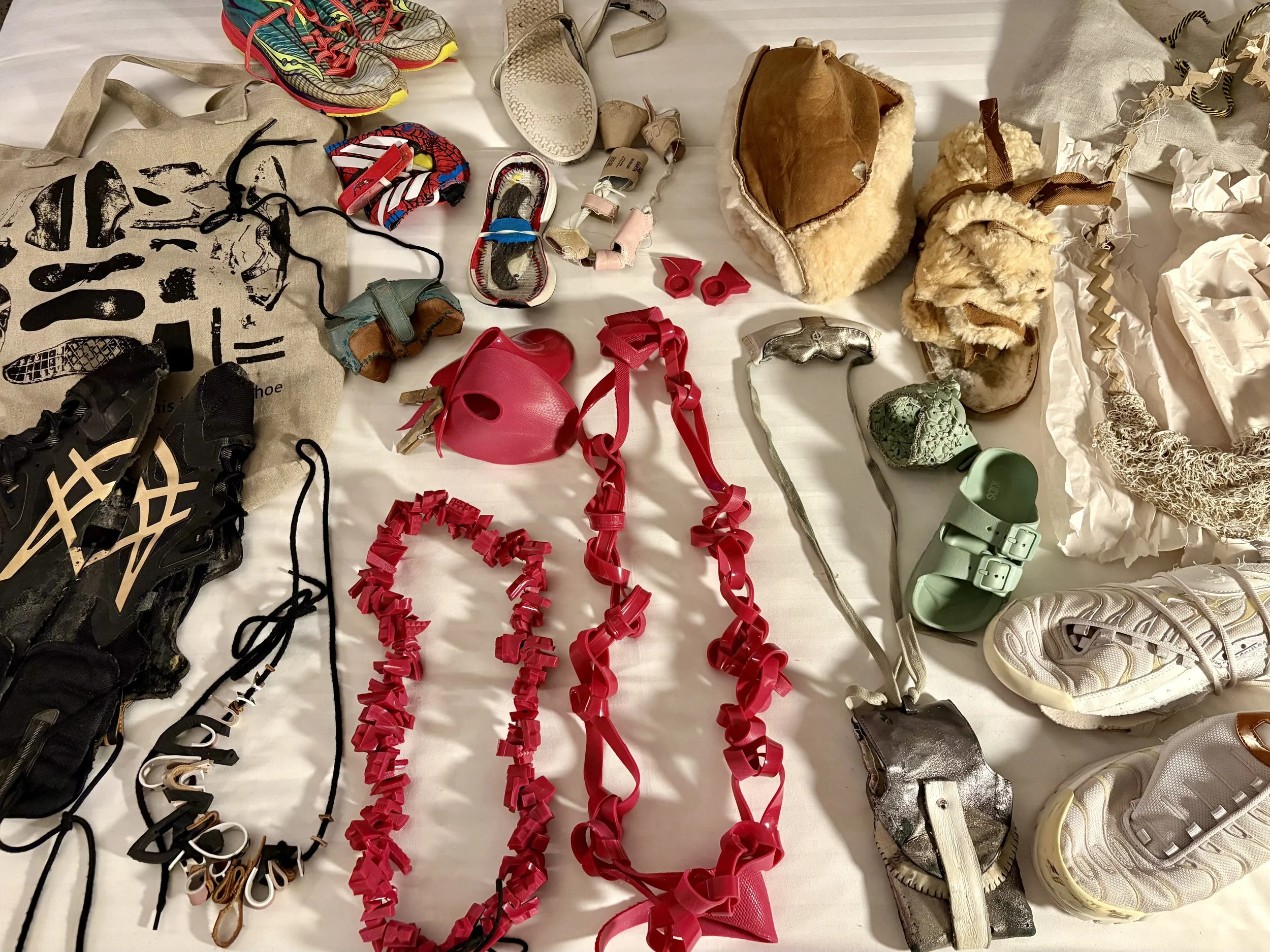
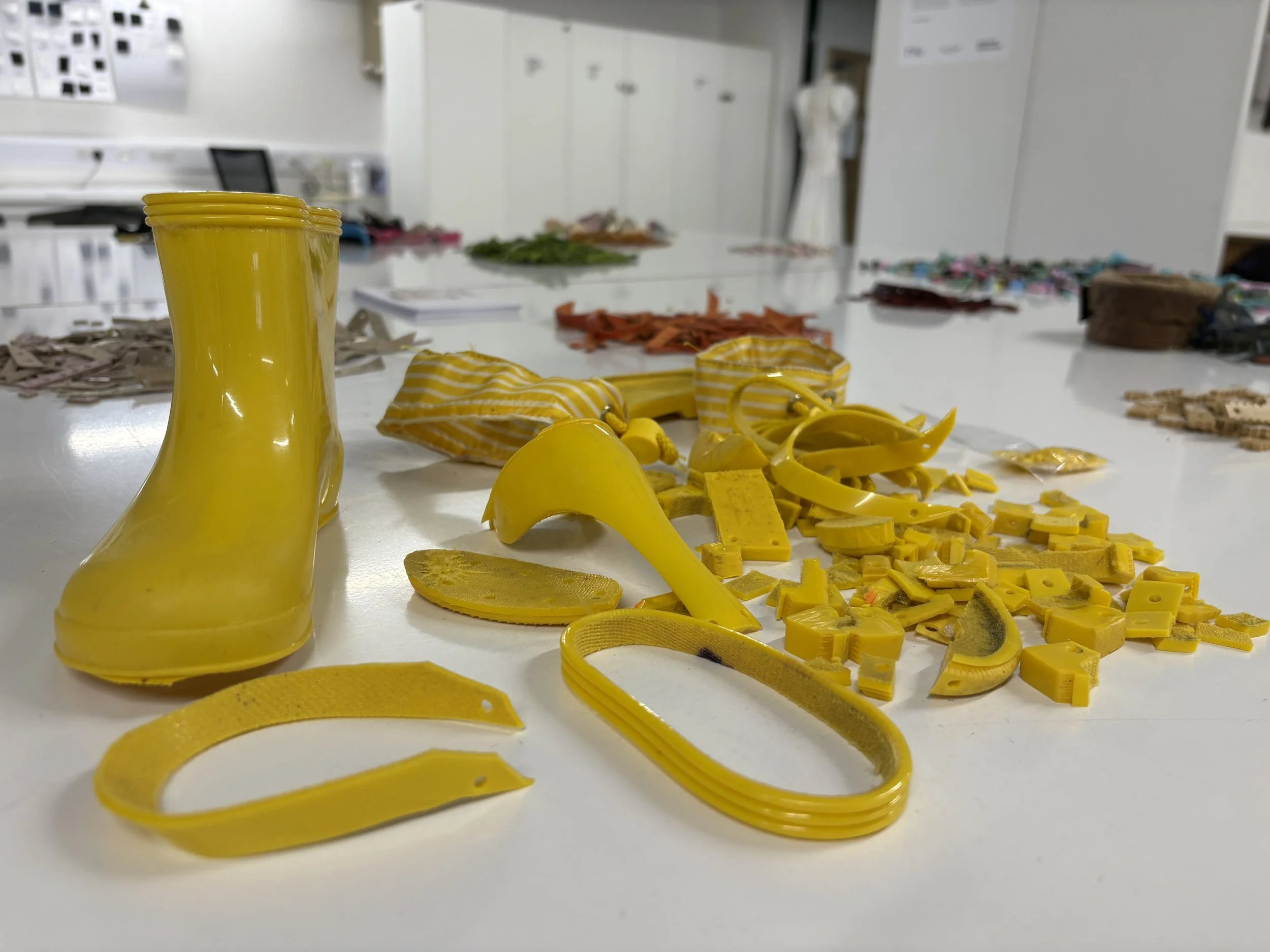
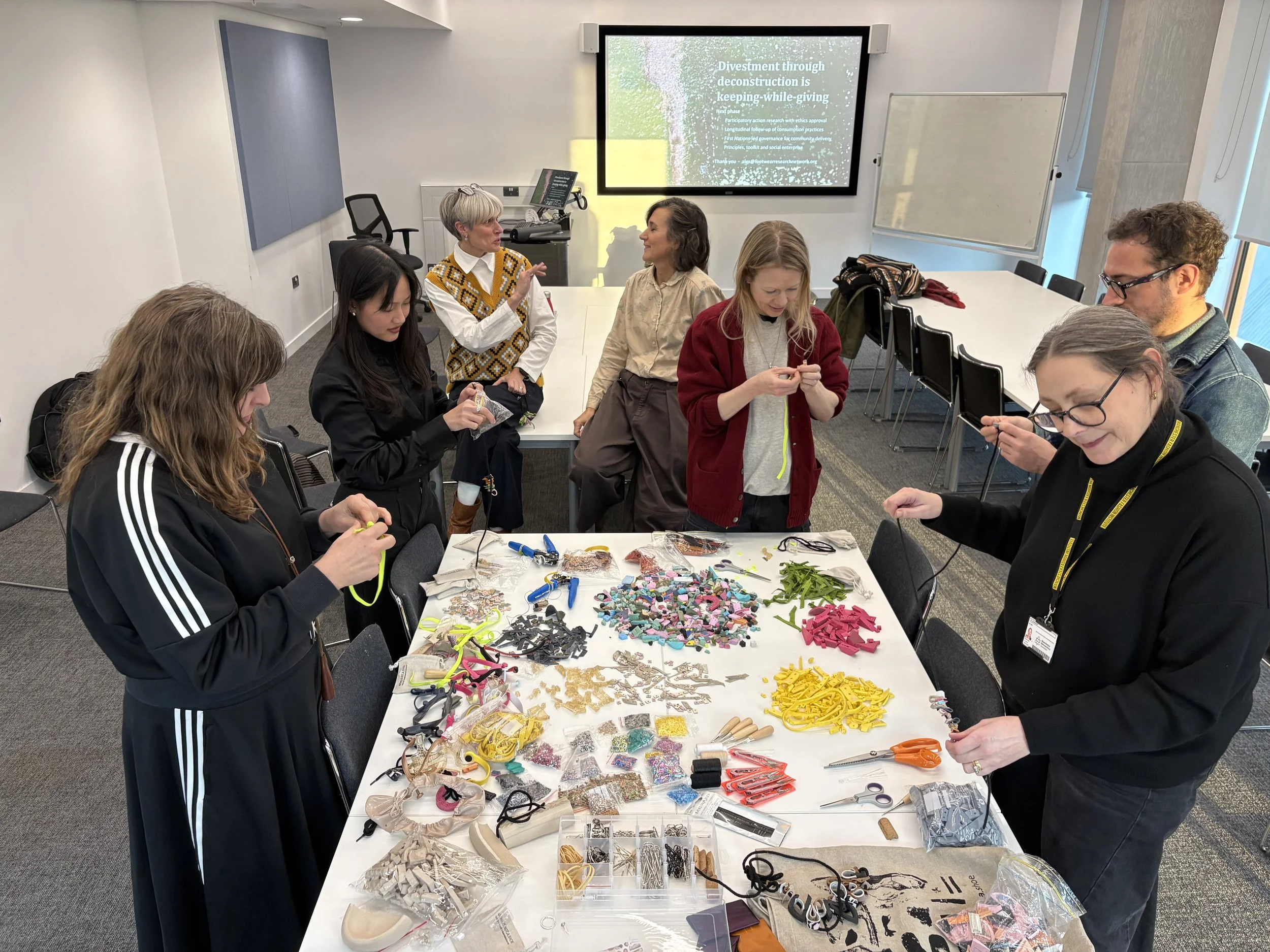
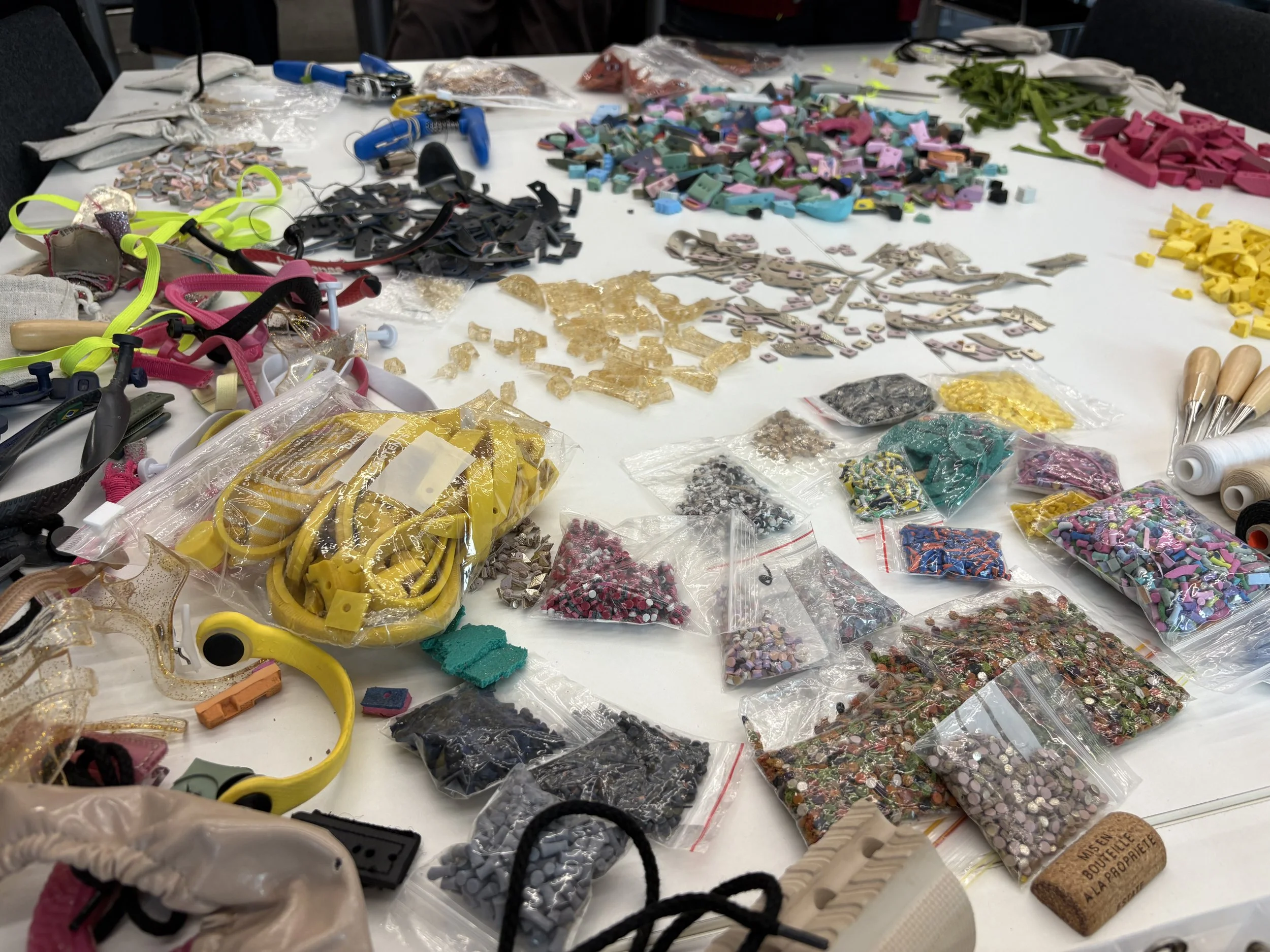
So they actually approached us because they'd seen some of the activities that we were doing to do this little activation in the basement of a three-story decommissioned warehouse in Melbourne near Victoria Market. It brought an entirely new audience to it. So it was super cool Gen Z kind of fashionistas that just really loved, I think, the weirdness of turning weird little shoe parts. So for this activity, what we do for any listeners that aren't aware is we get sort of plastic shoes, so EVA shoes like crocs, um, gum boots or Wellington boots, whatever you call them, depending on where you are in the world, things that we can properly clean and sterilise. And we work with volunteers to chop them up into tiny pieces, punch holes into them. And then we take laces, so sort of pre-consumer waste shoelaces that have aglets on the end, which sort of almost serve as needles in a sense. It's a very safe activity, really good for children for fine motor skills, um, to thread the pieces onto, and they can make necklaces, key rings, jewellery. I mean, gosh, we've had all sorts of weird and wonderful things made with just one lace and these amazing trays of different colours, and textures and materials that were once shoes, and often these shoes come from charity shops, and they're the shoes that can't be sold. And maybe they're sort of faulty or dysfunctional in some way, they're a bit broken, maybe they're too dirty to sell. We solve that problem for them, we chop them up and make this problem into a creative opportunity. And we've done it with children, and now we did it with ACRUX. So Emily, I wasn't able to be there because I was actually flying to the UK, which I'll explain a little bit more about in a minute. But you then saved the day by coming in and helping Pennie, who's our TINAS co-founder, and also Bianca Easton, who is our also co-collaborator now, who's joined the This Is Not a Shoe team at the Abbotsford Convent, and other volunteers to deliver this. So tell us about what it was actually like on the day. How how did it go?
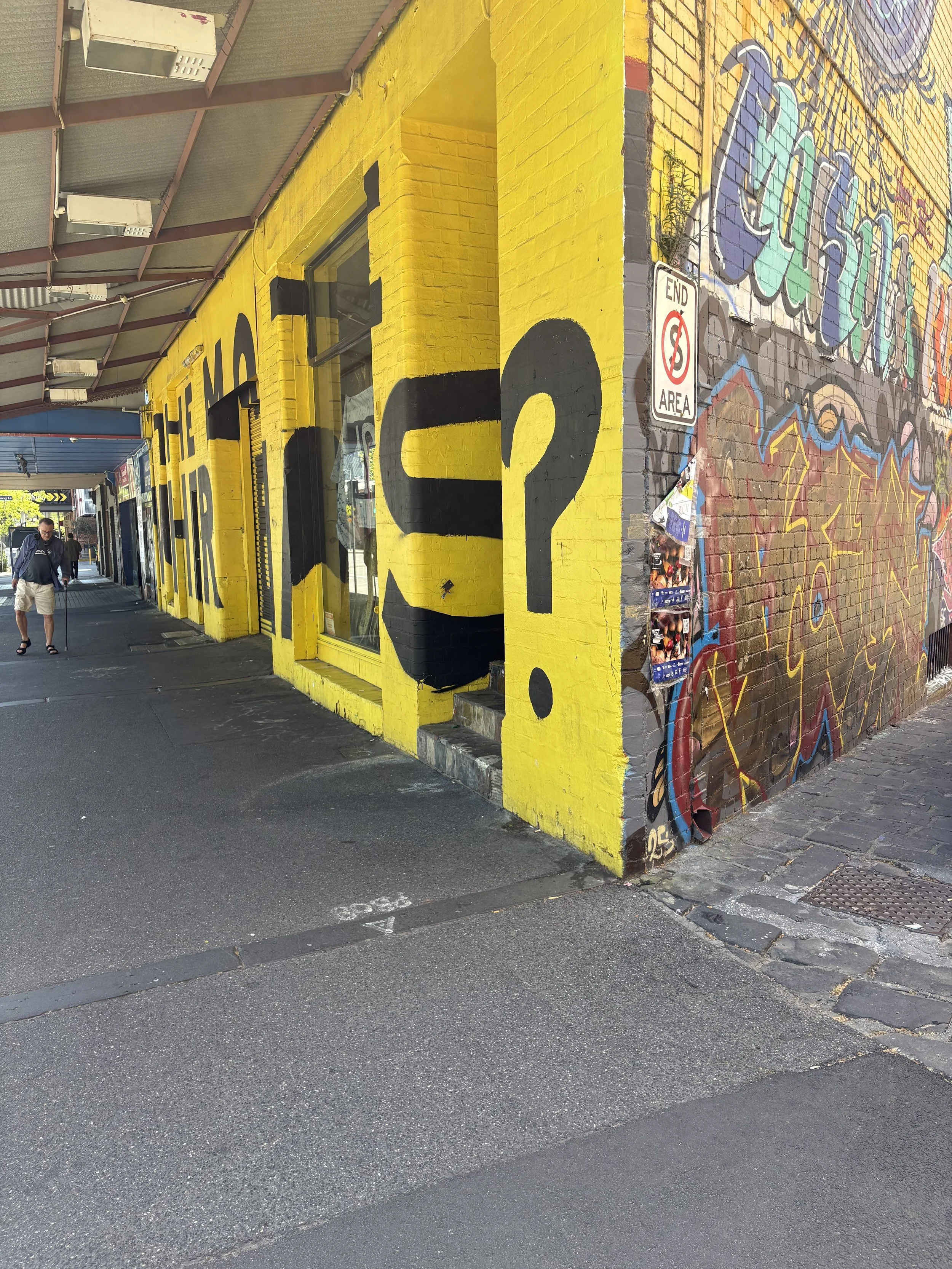
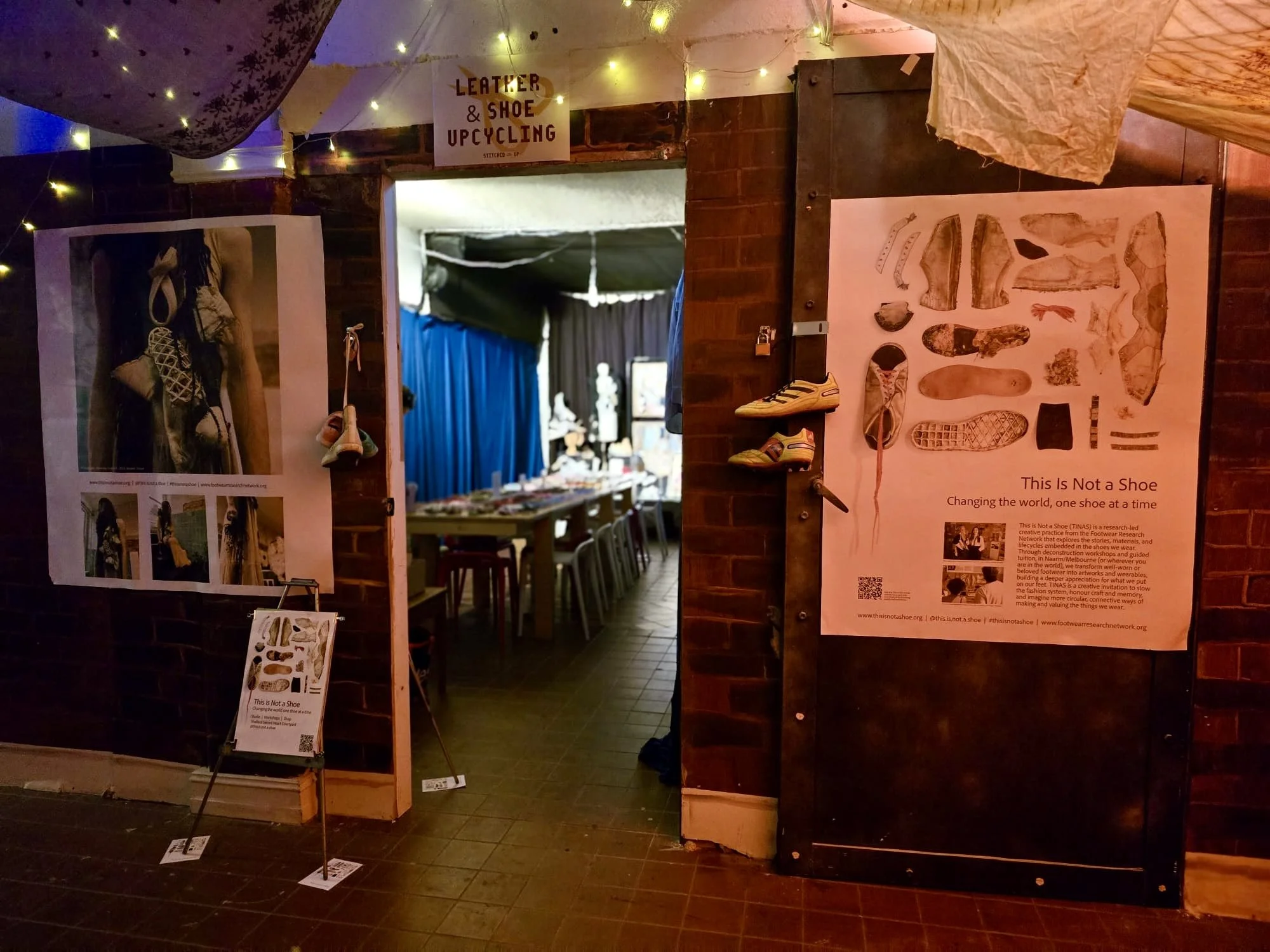
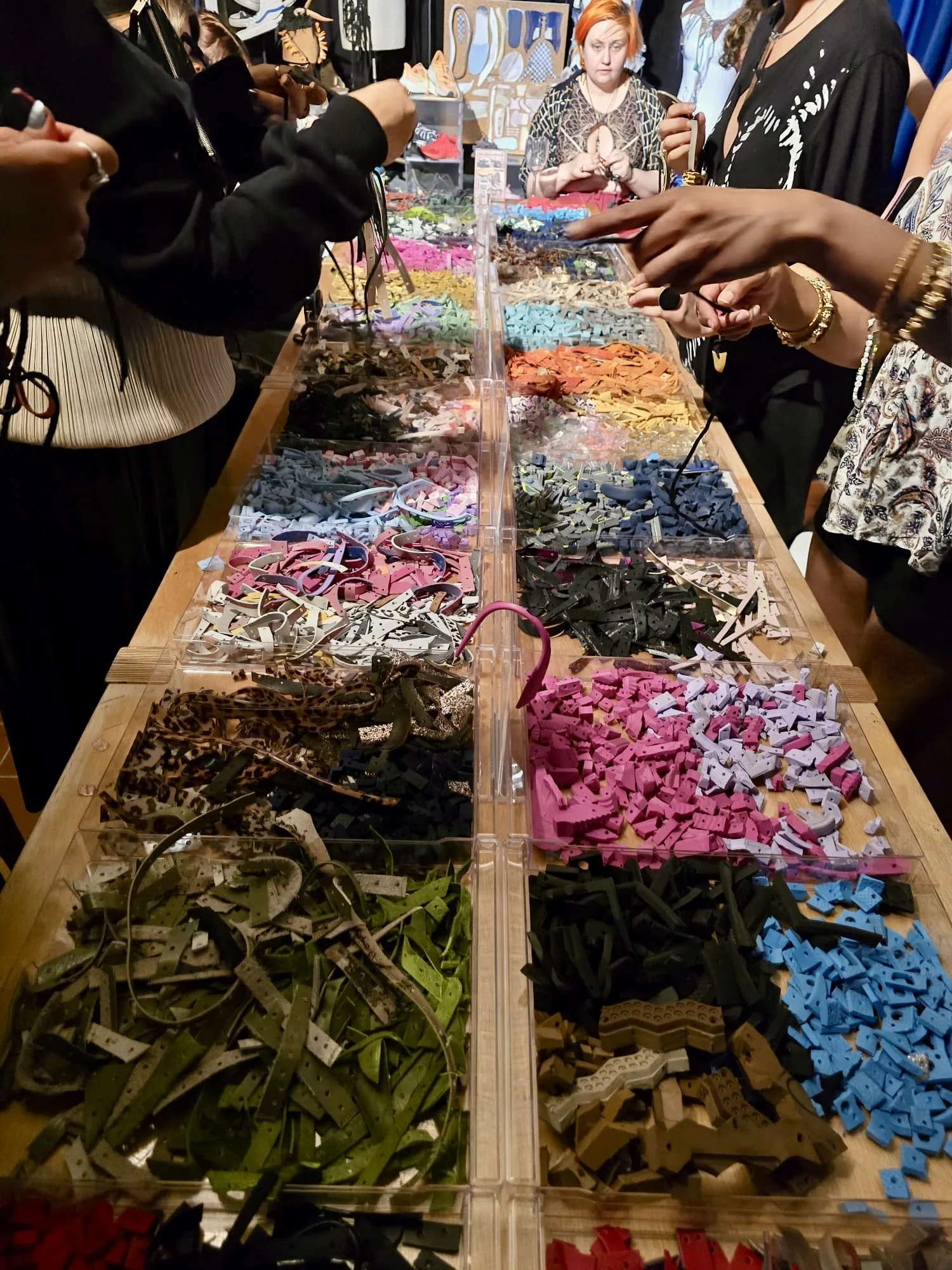
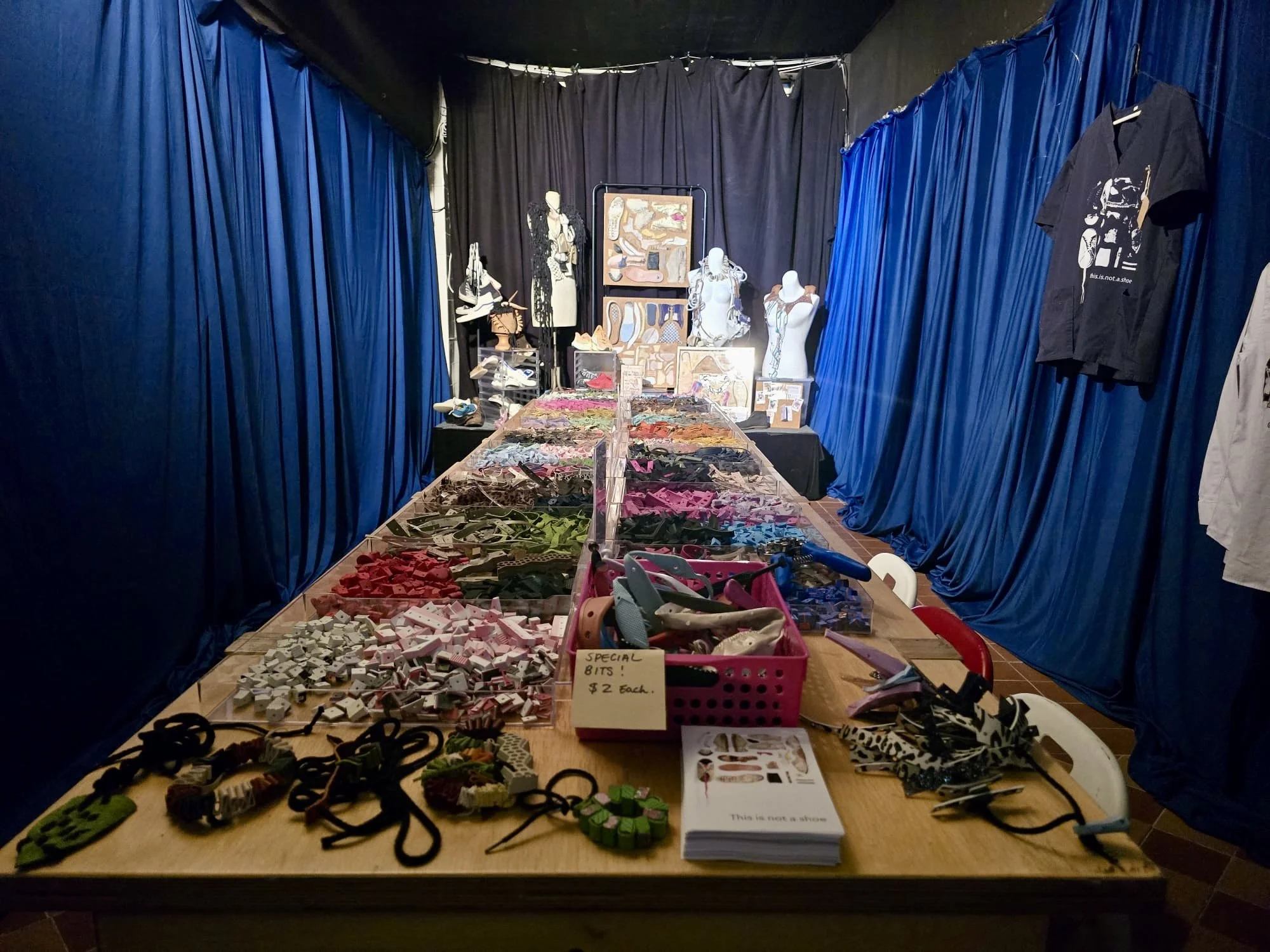
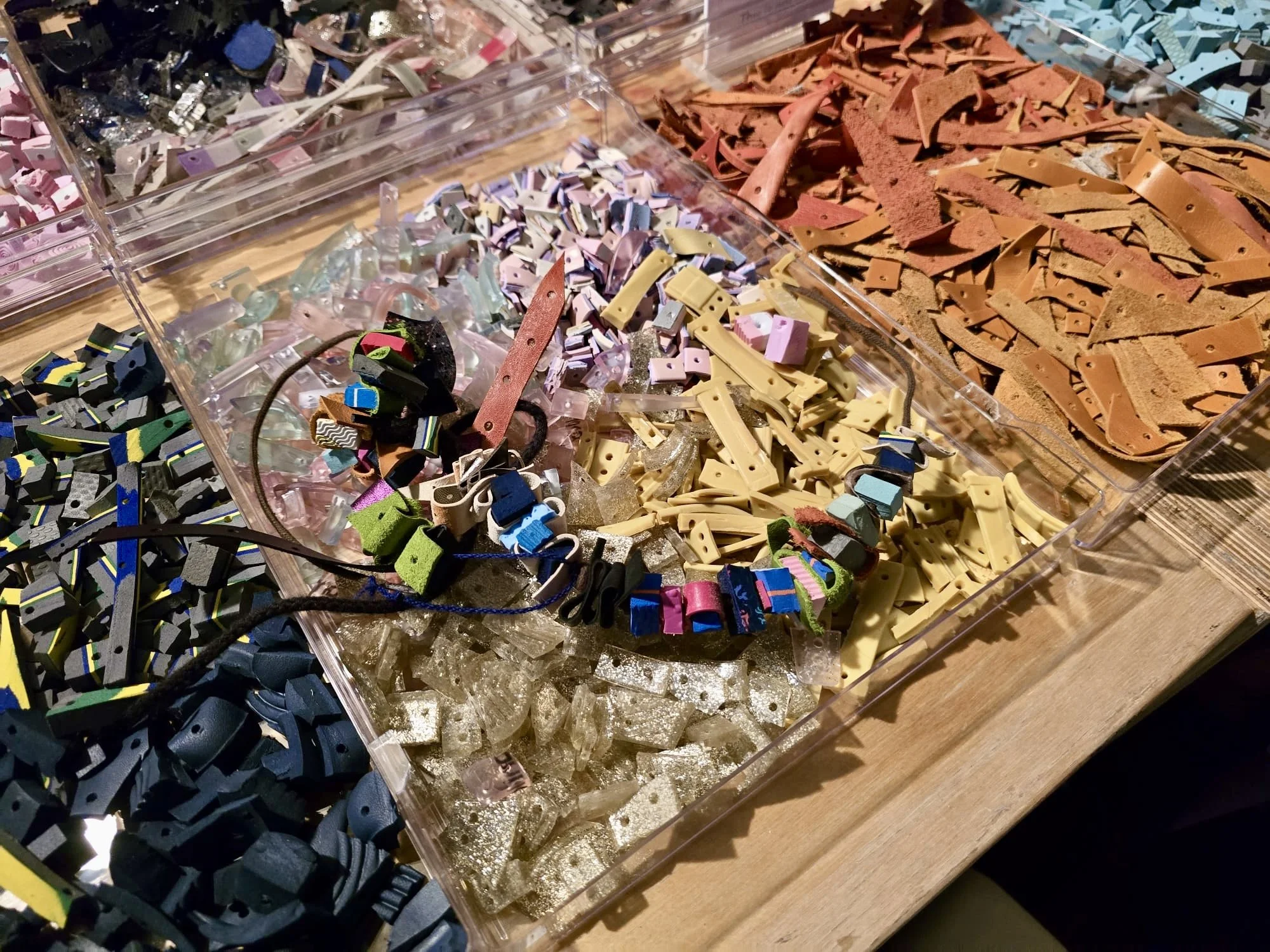
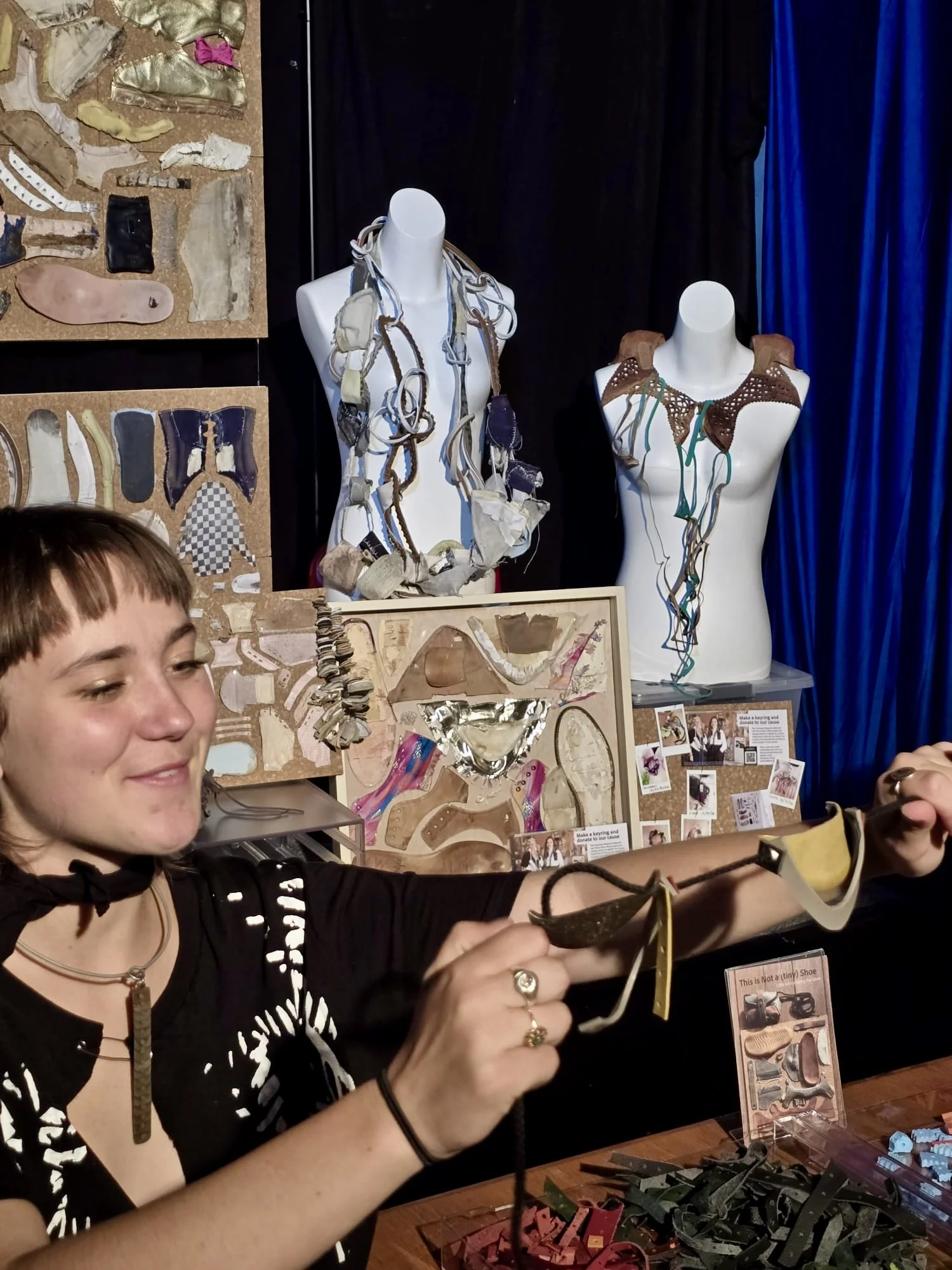
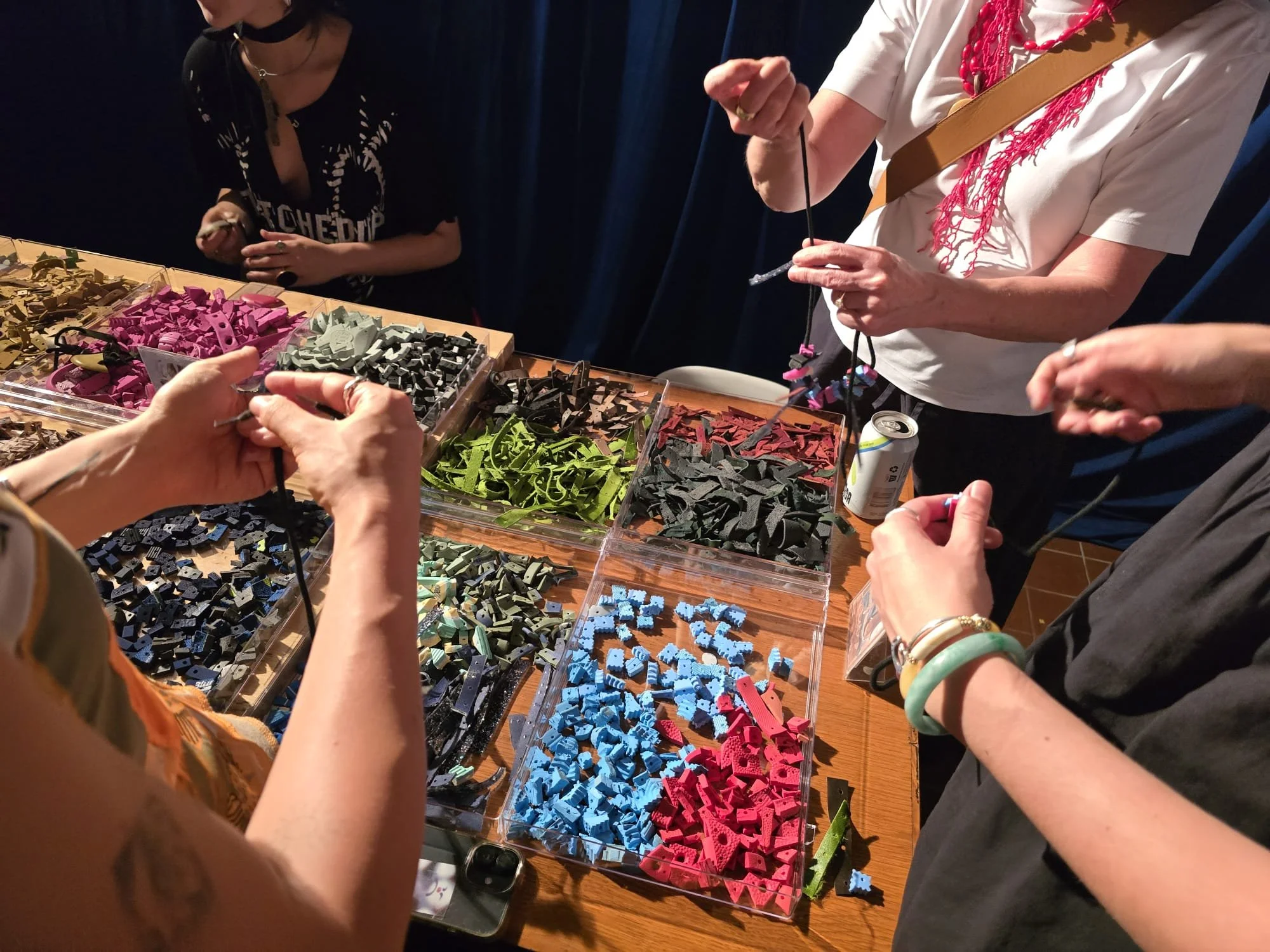
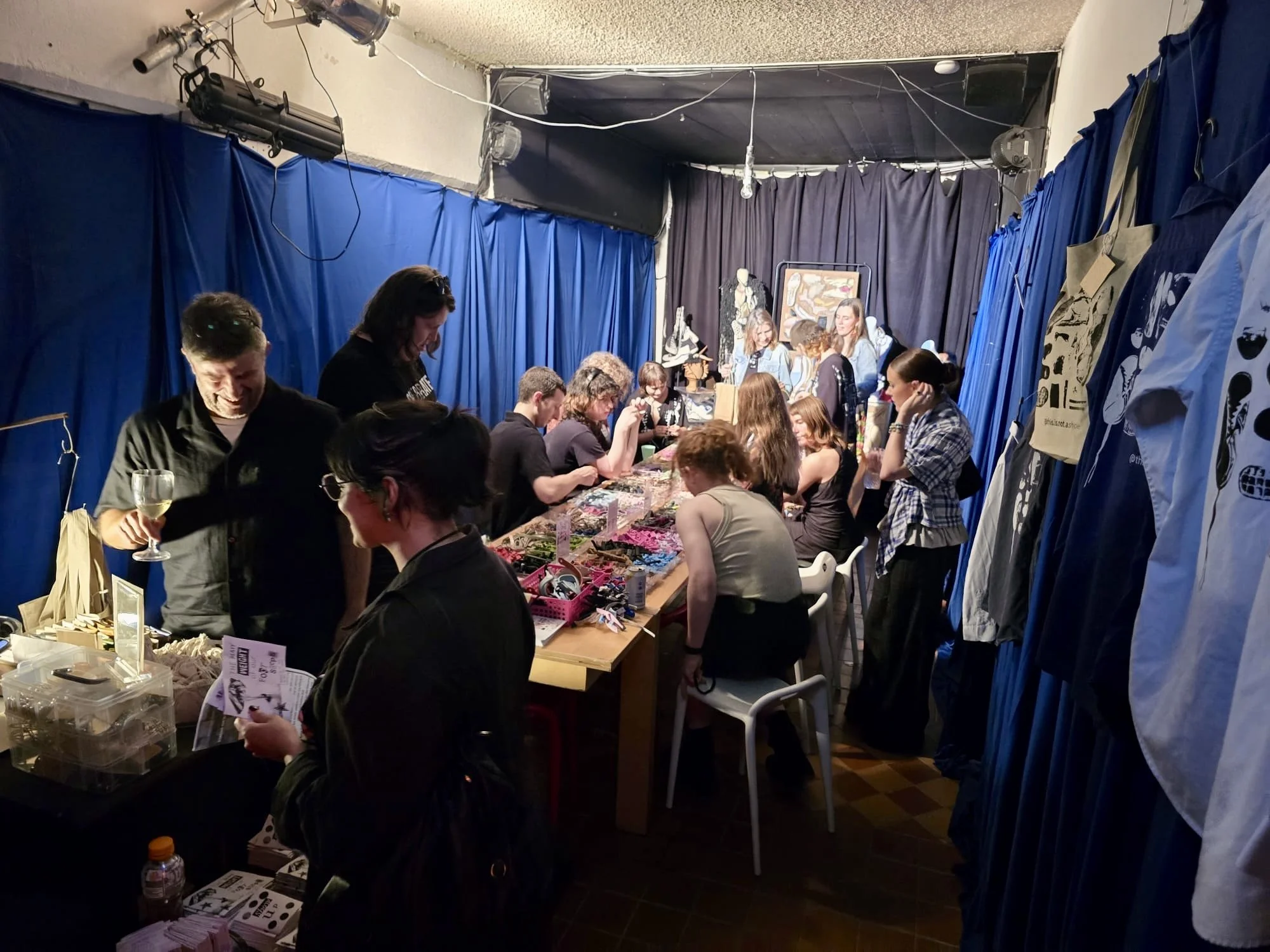
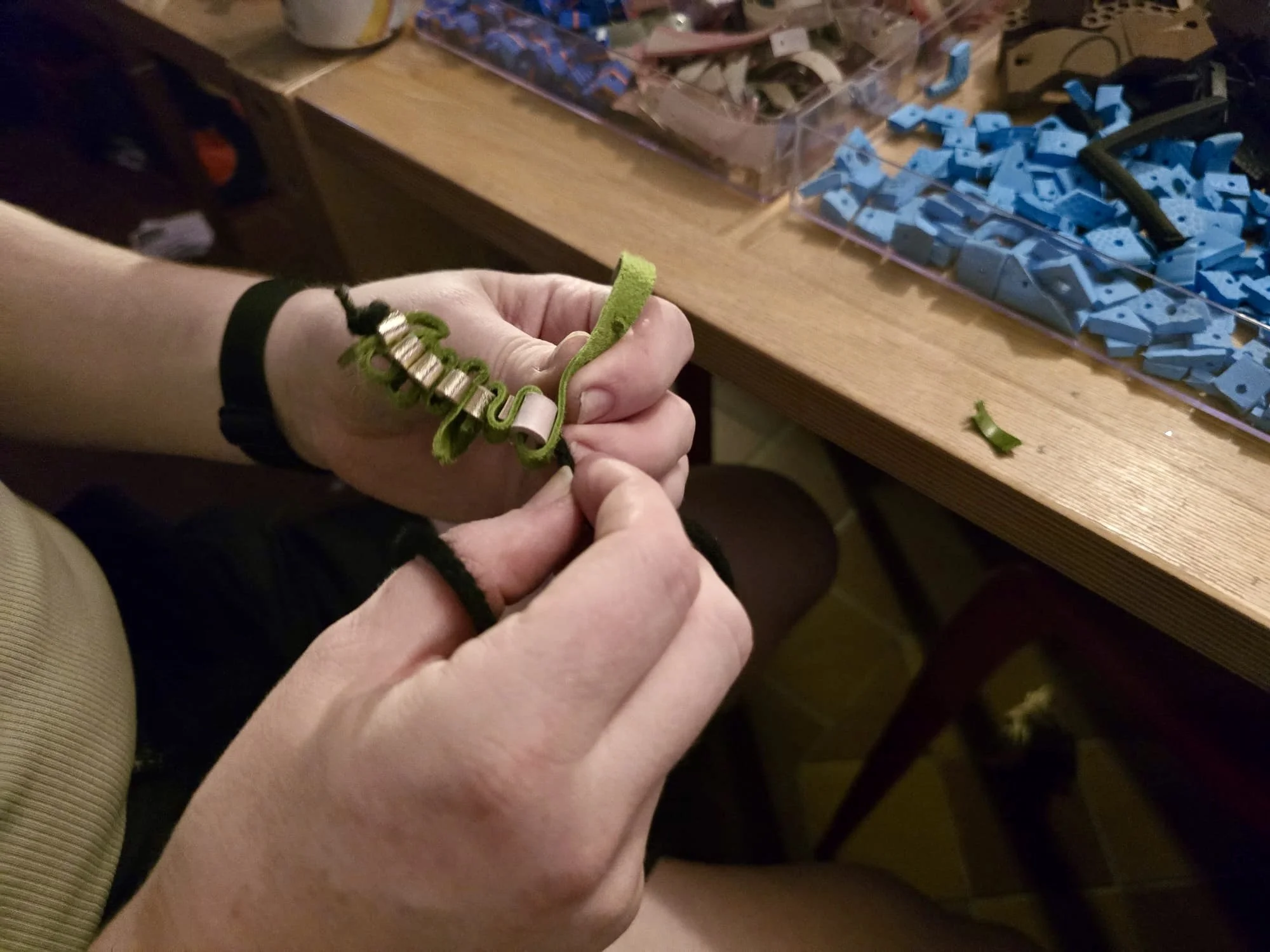
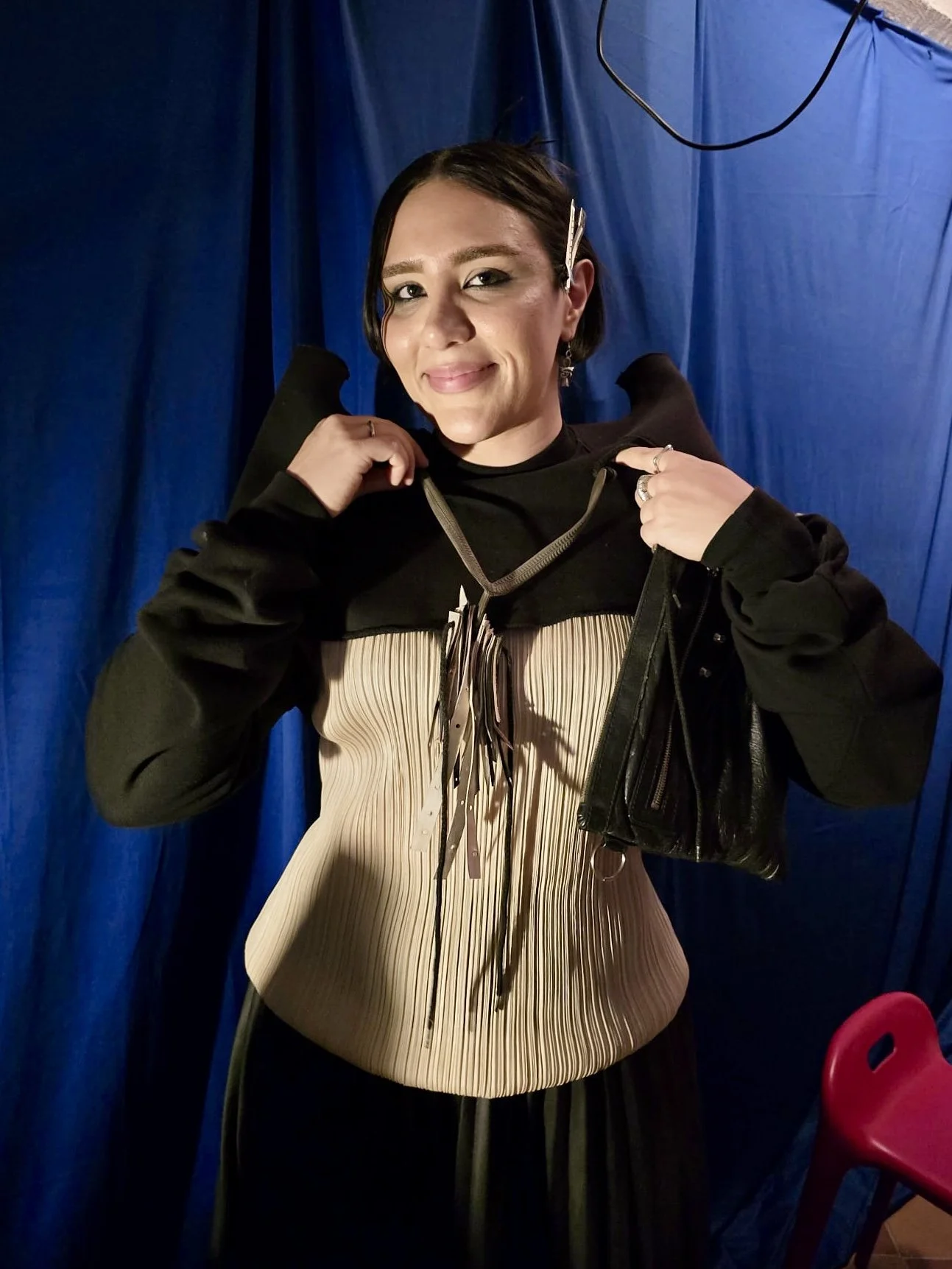
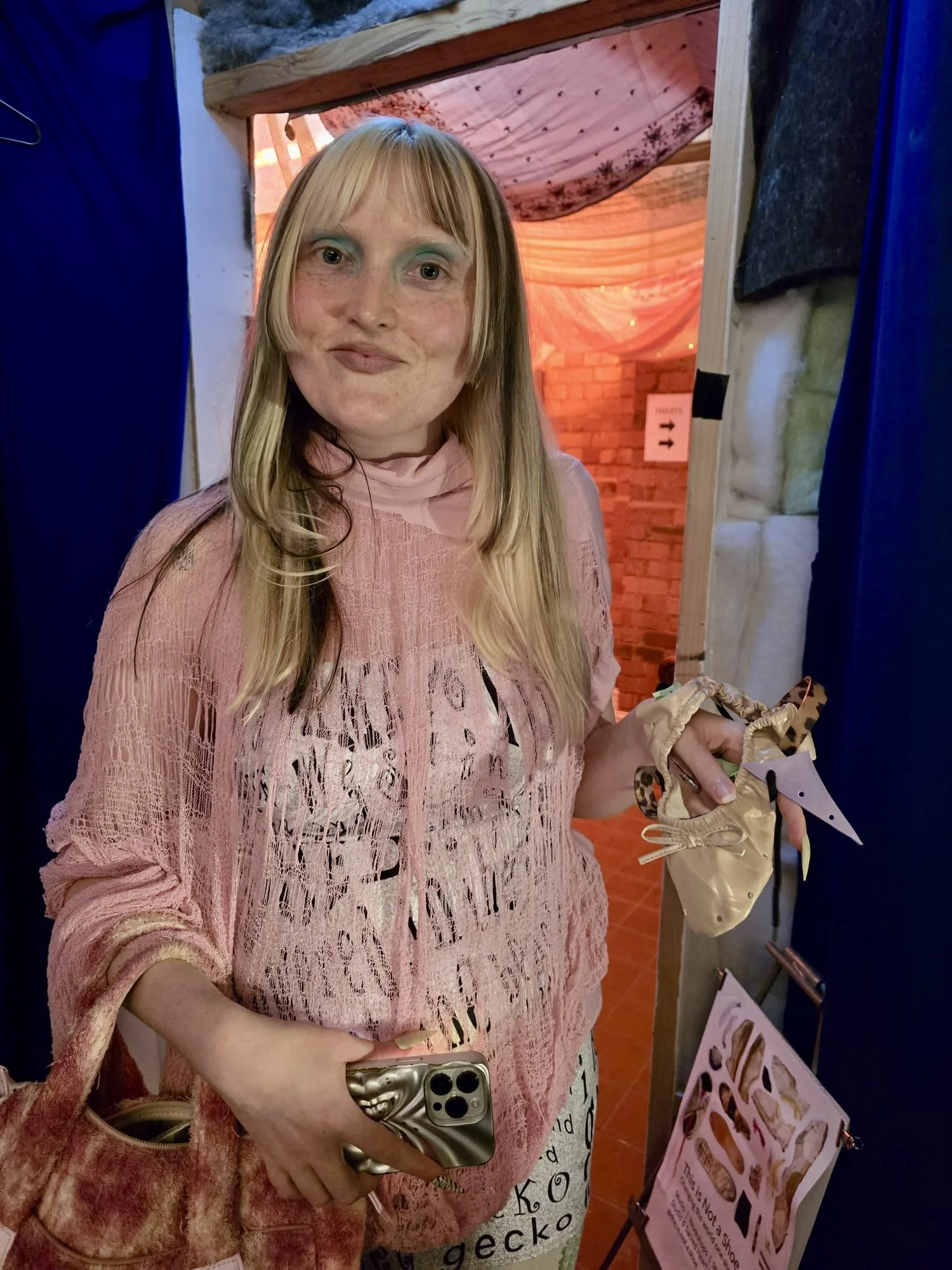
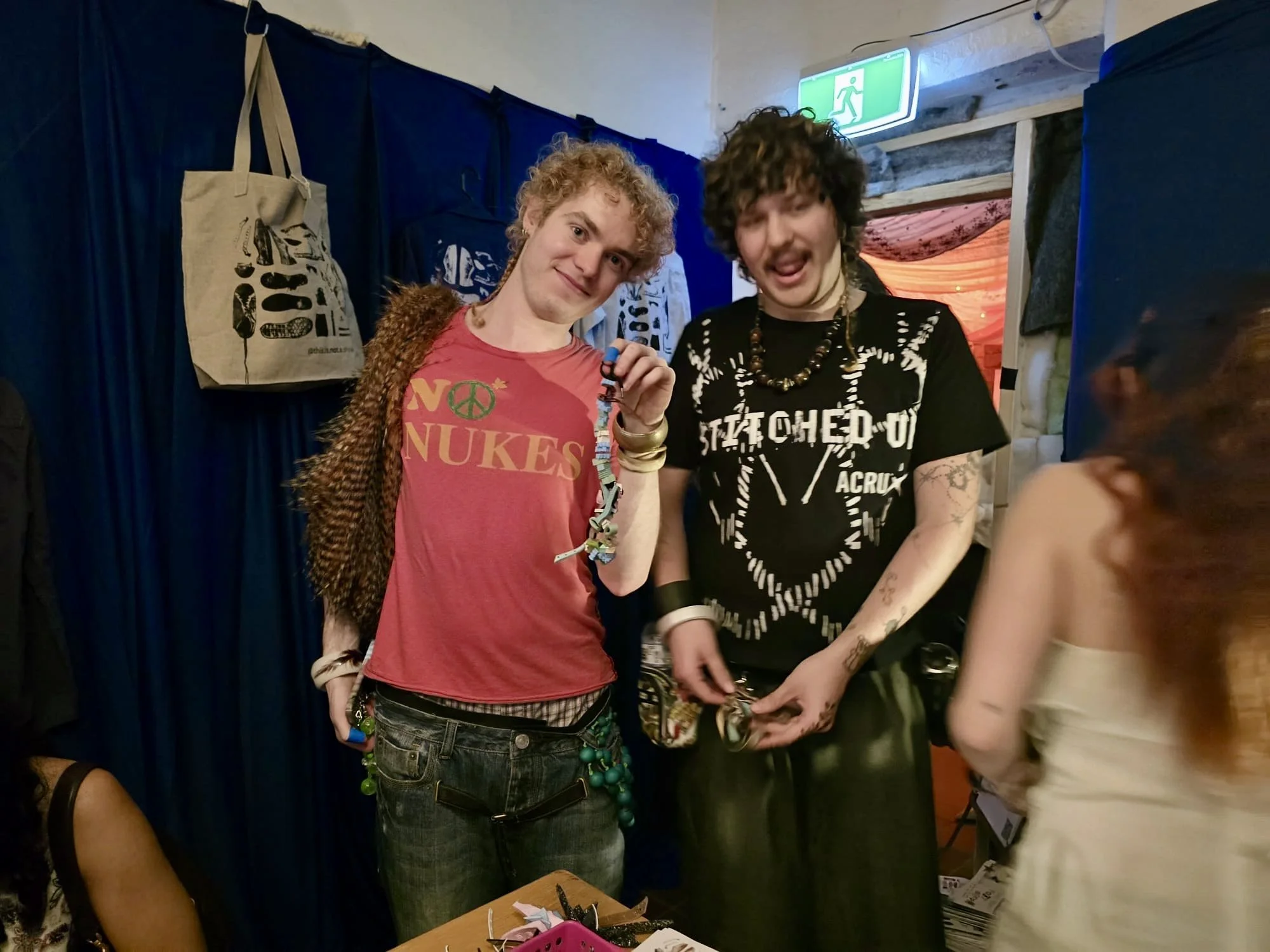
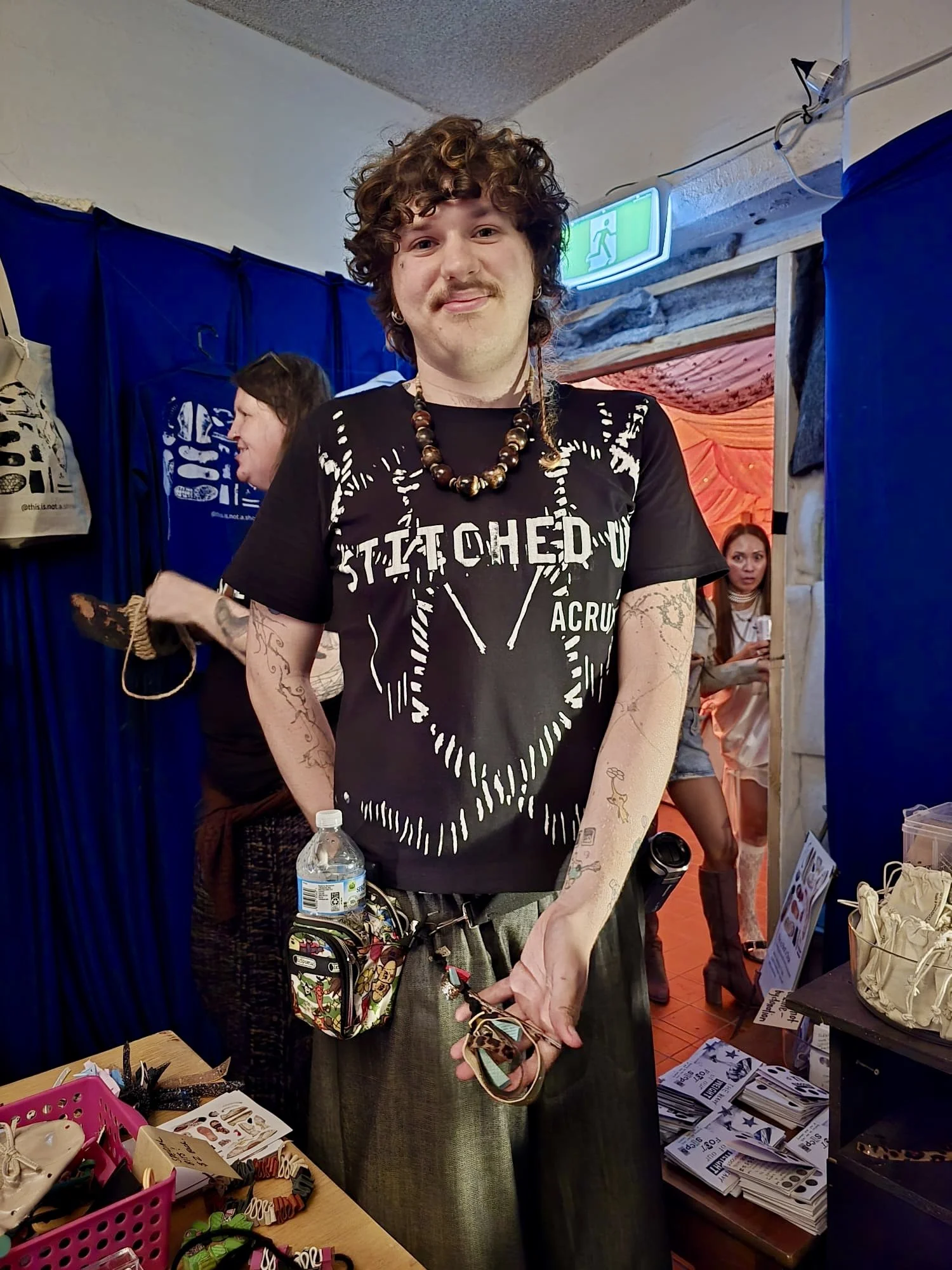
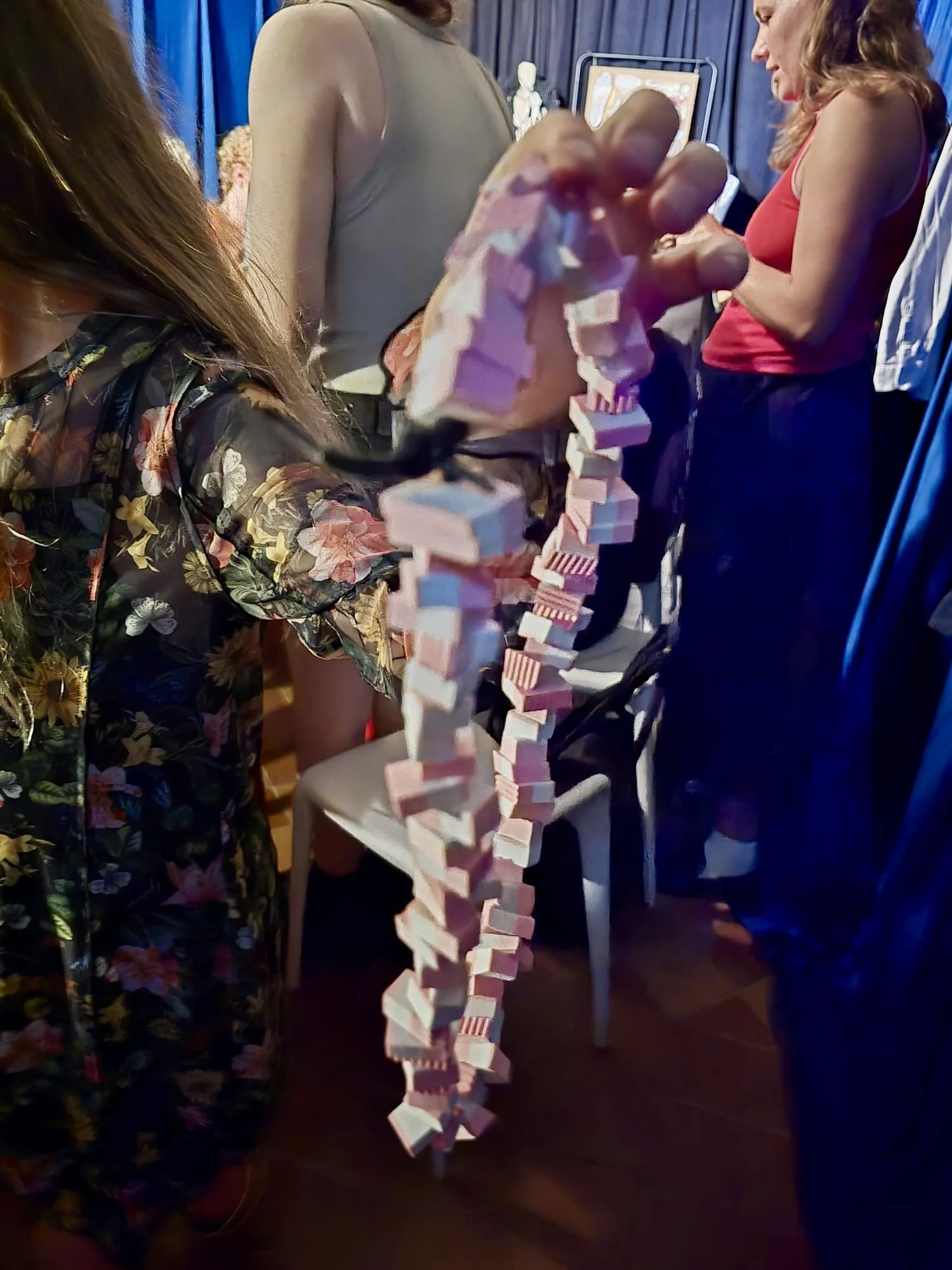
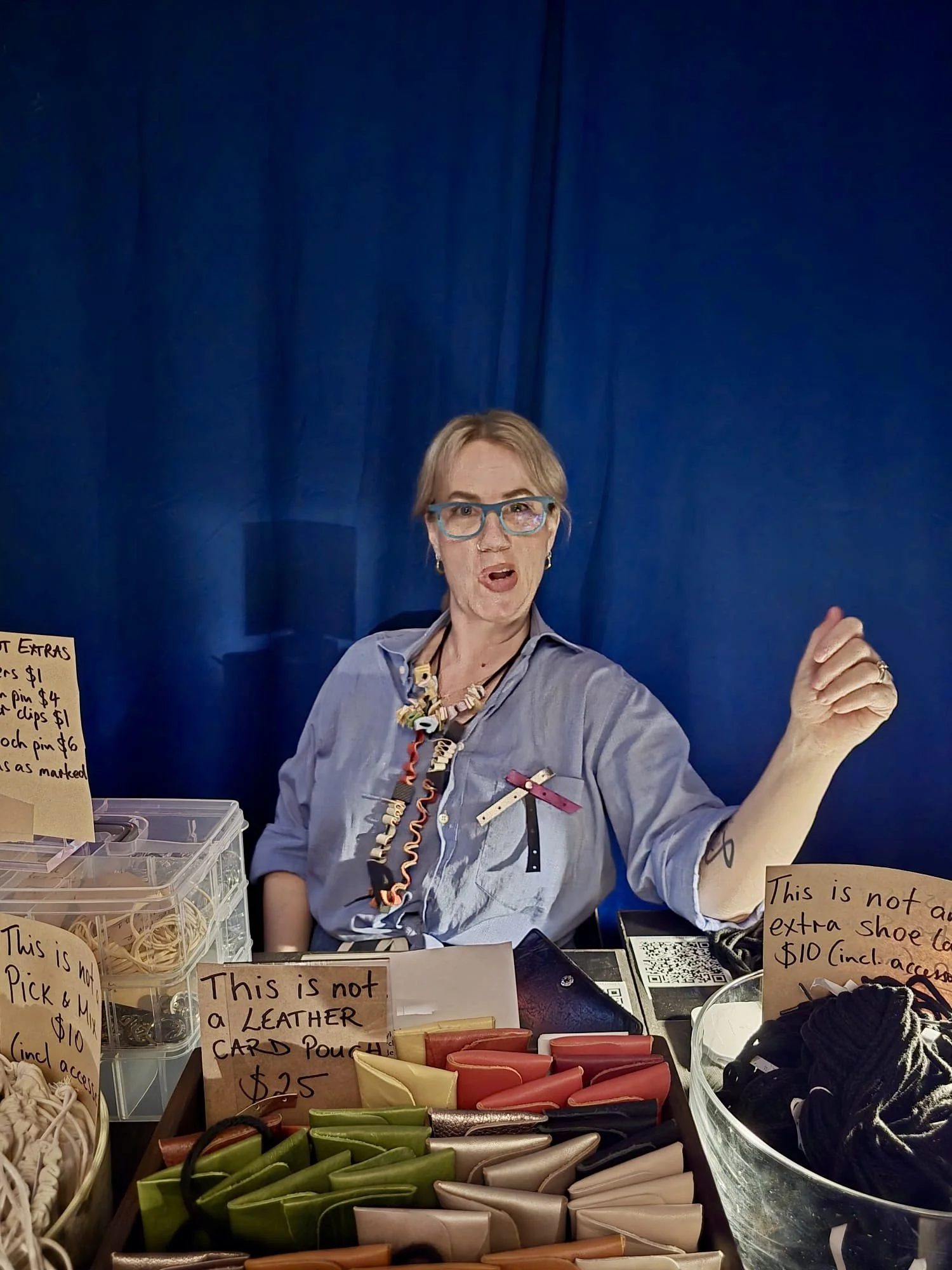
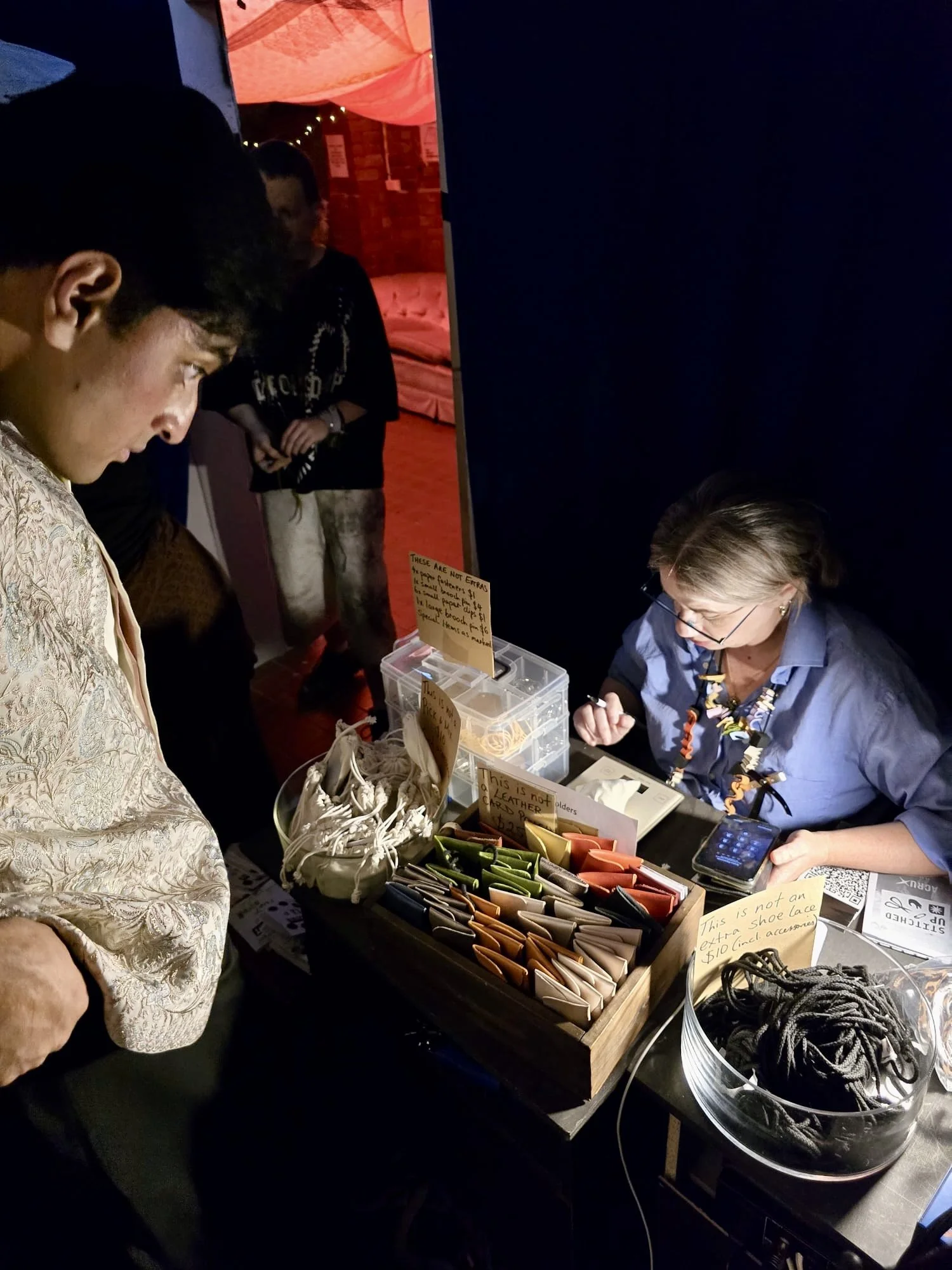
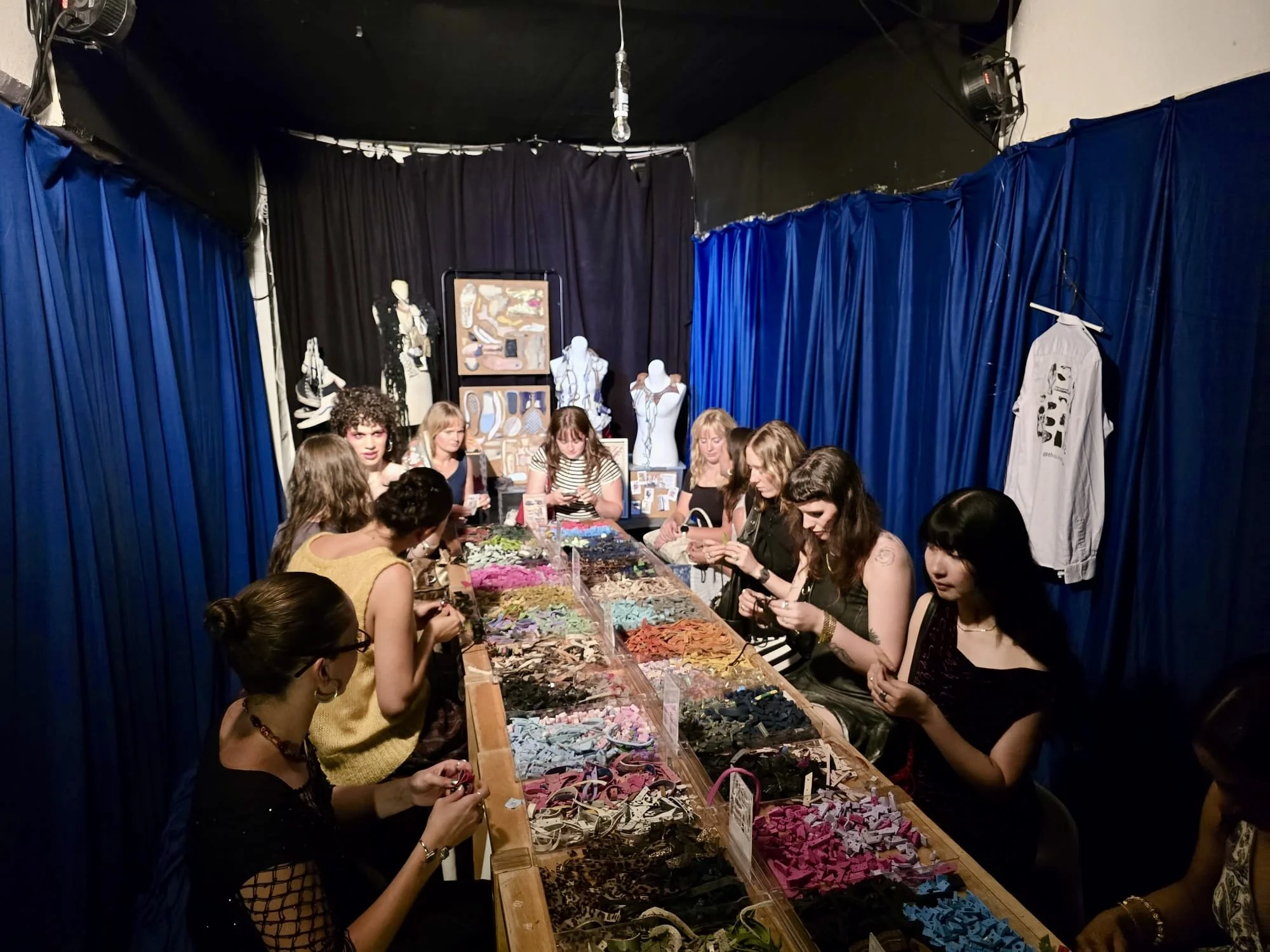
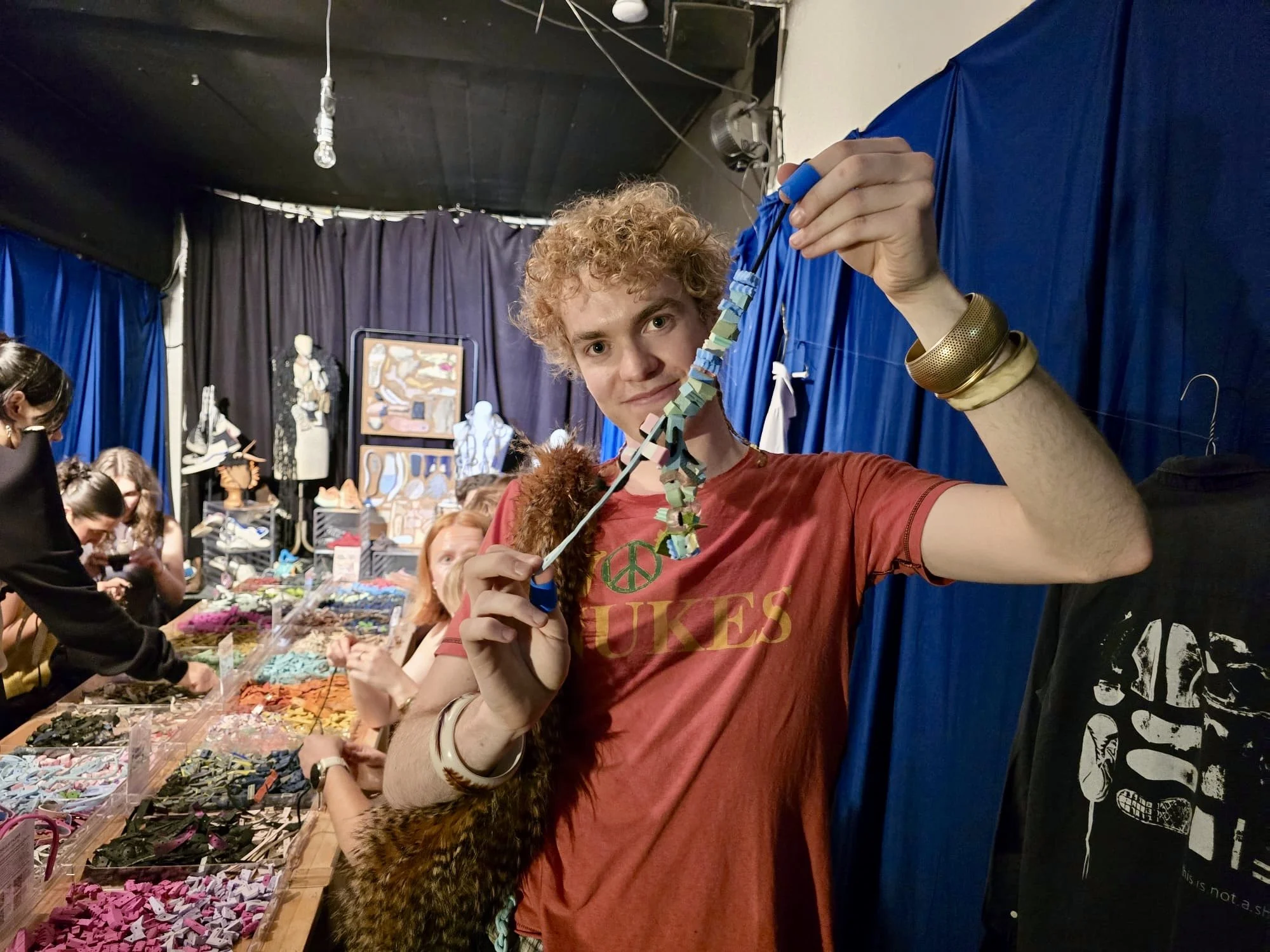
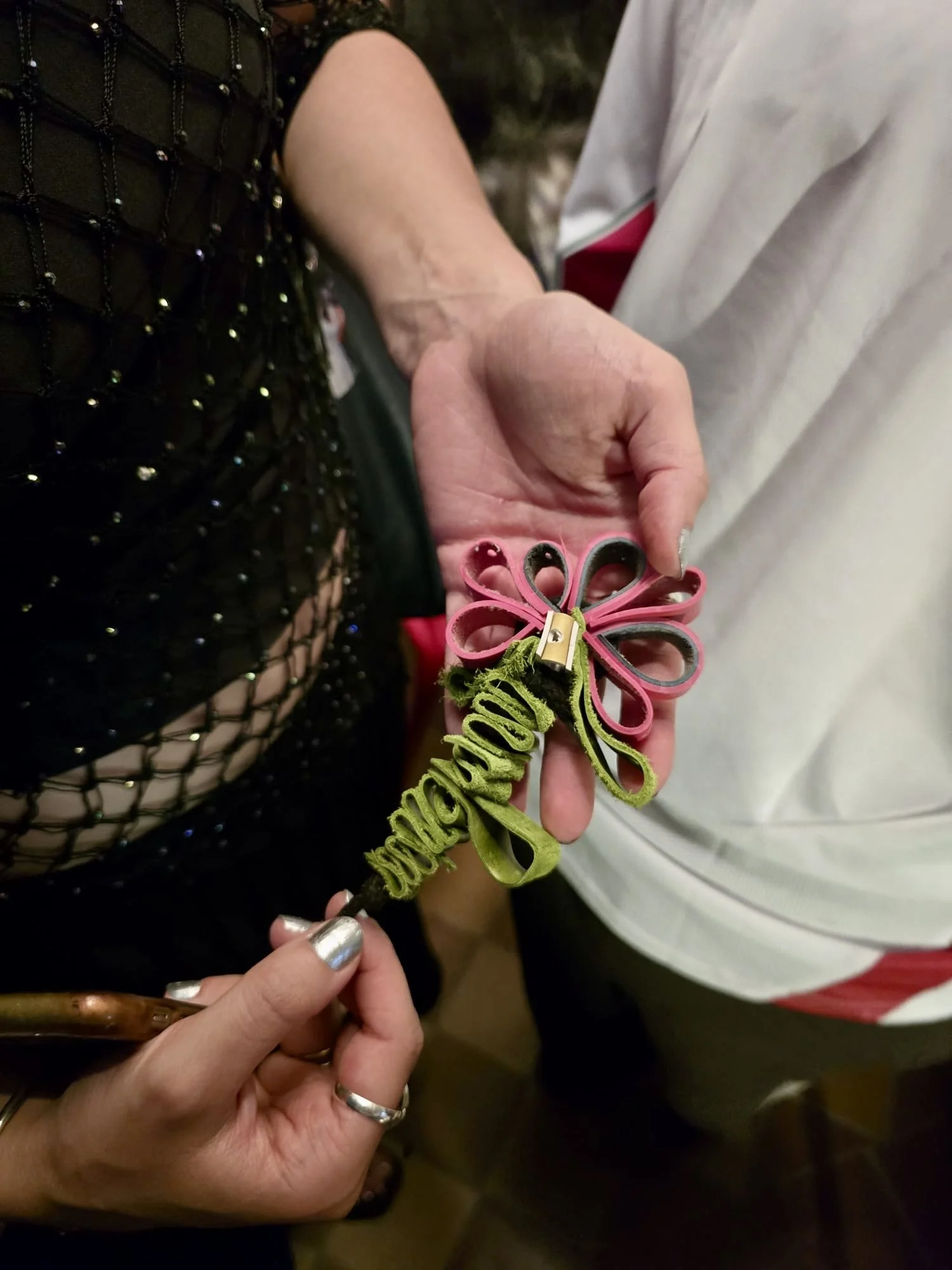
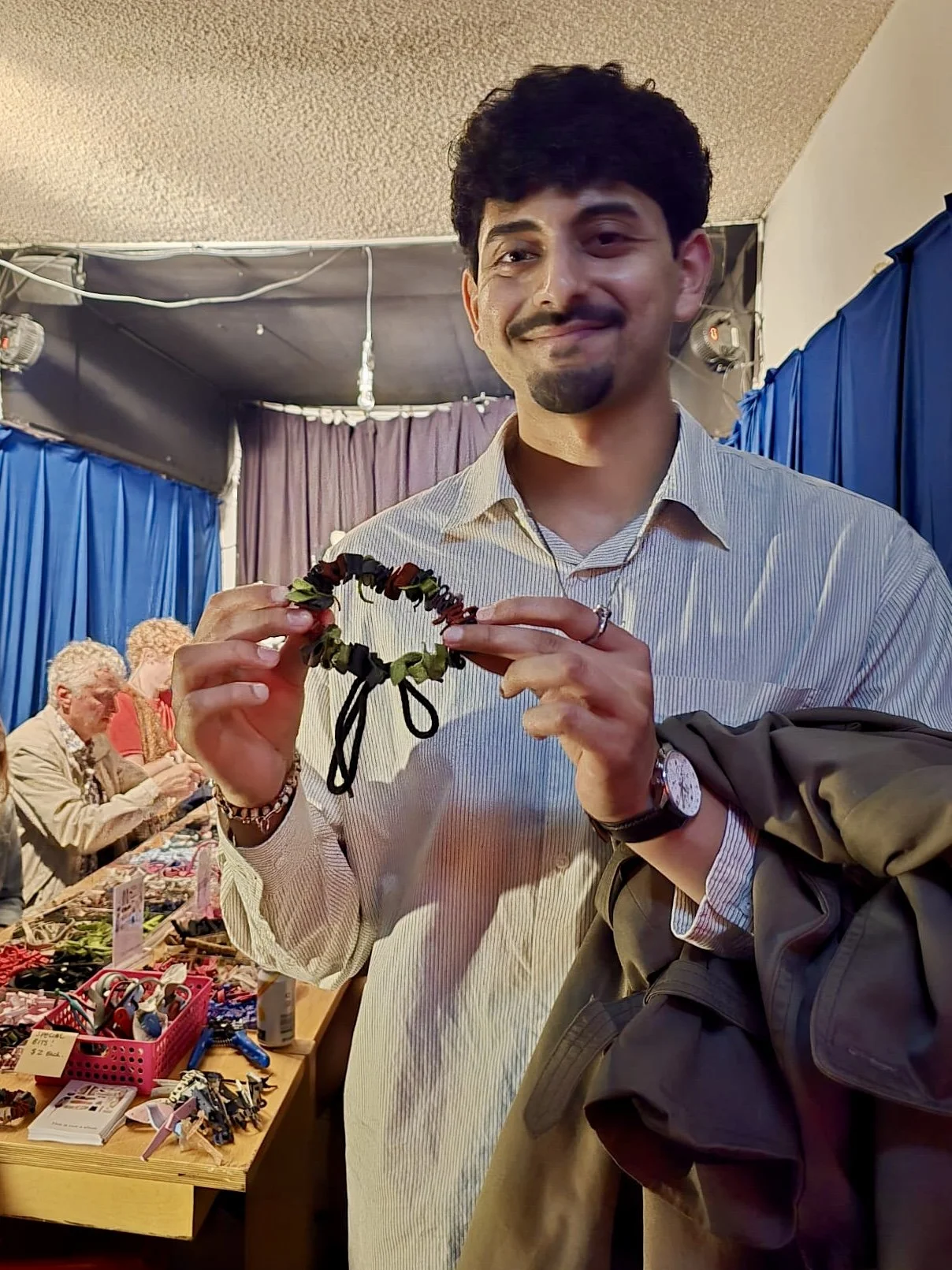
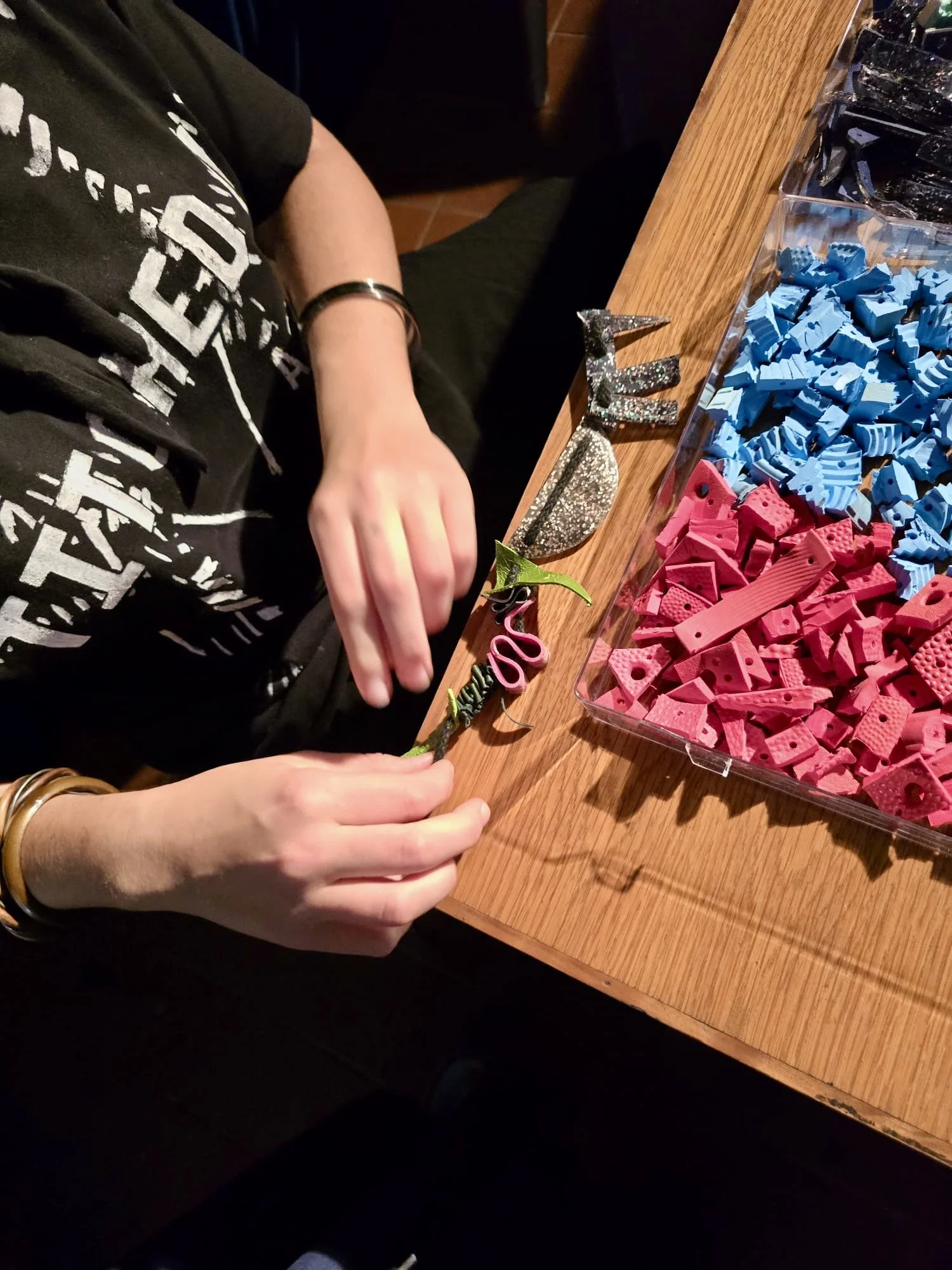
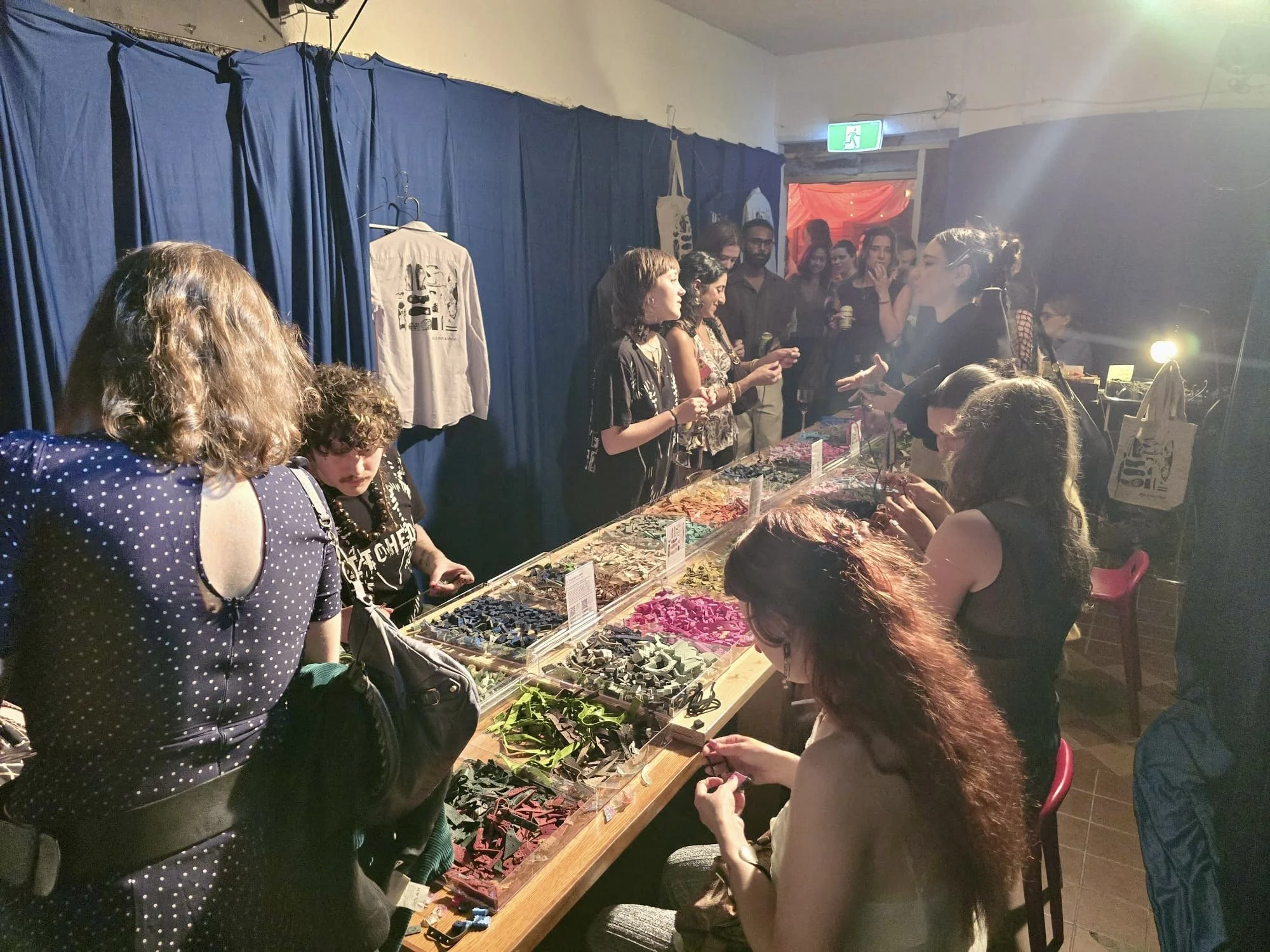
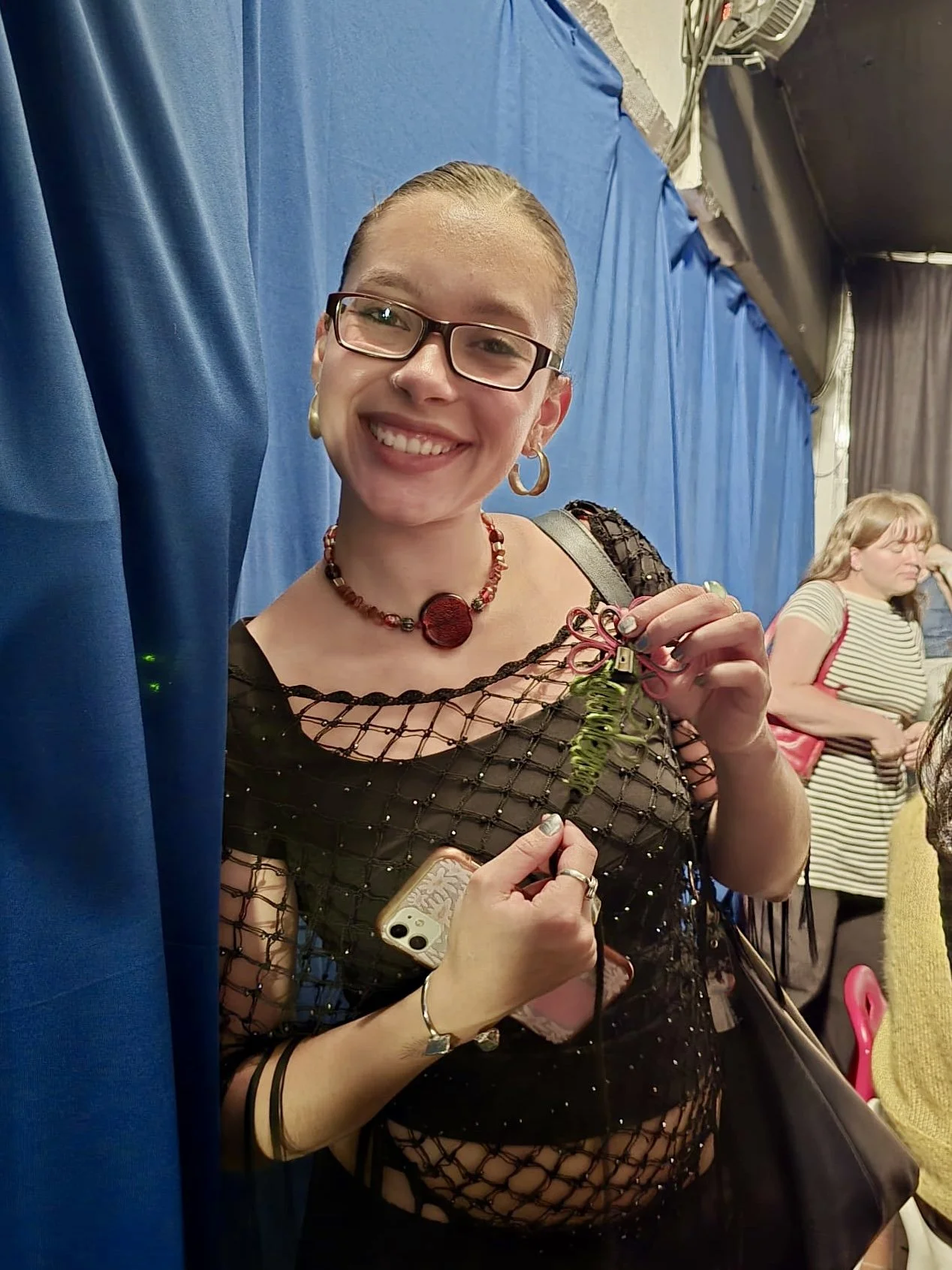
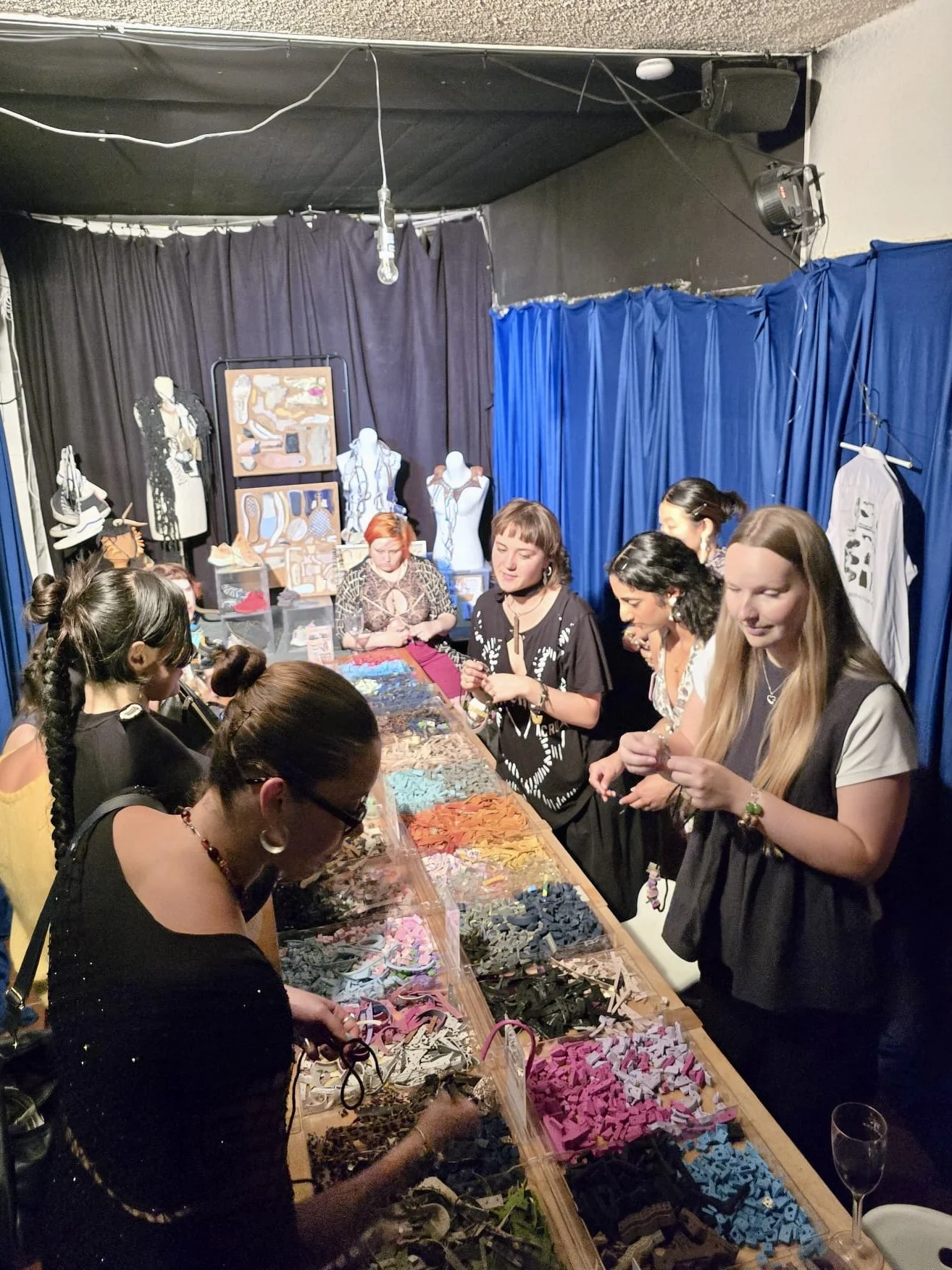
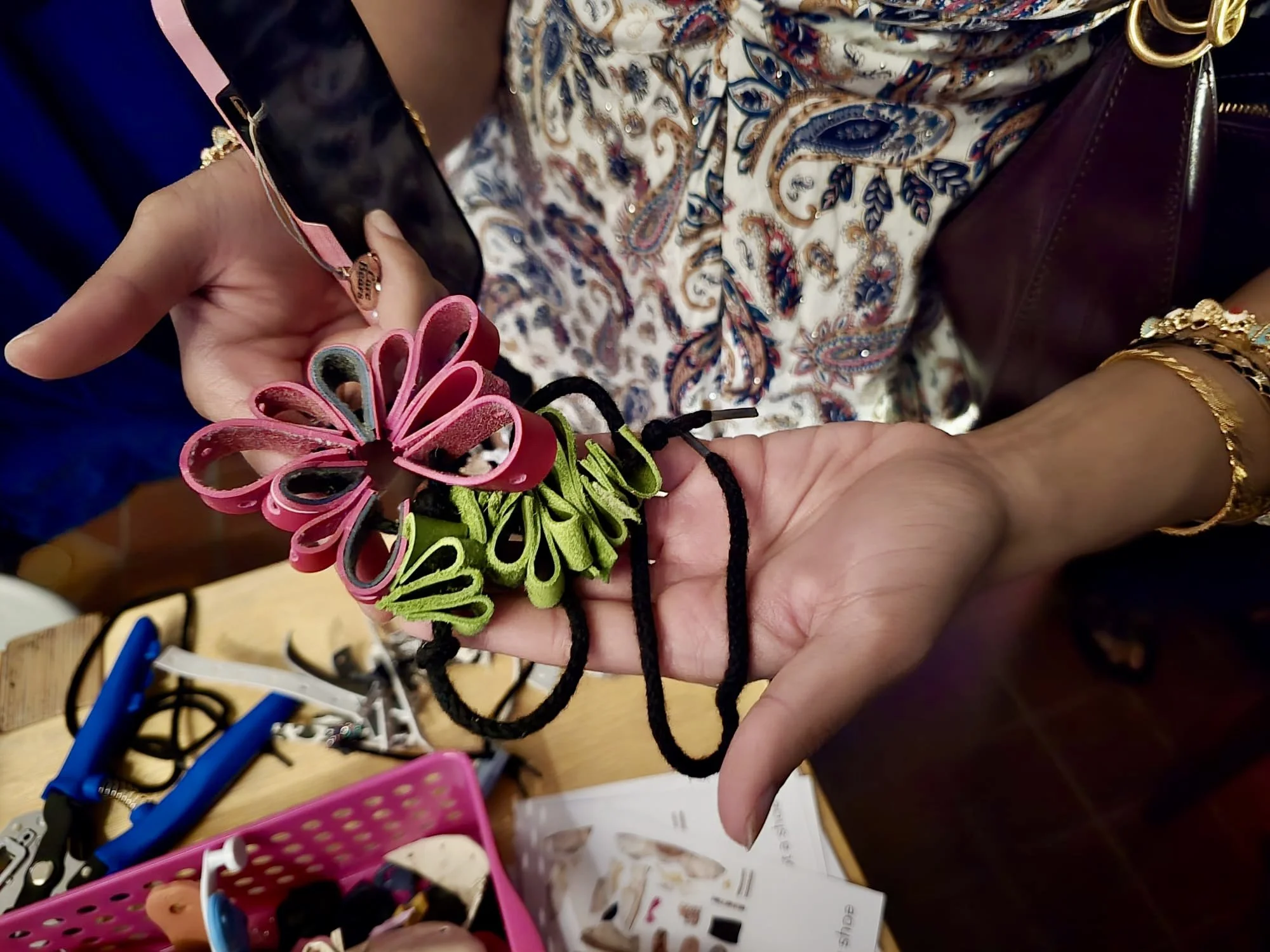
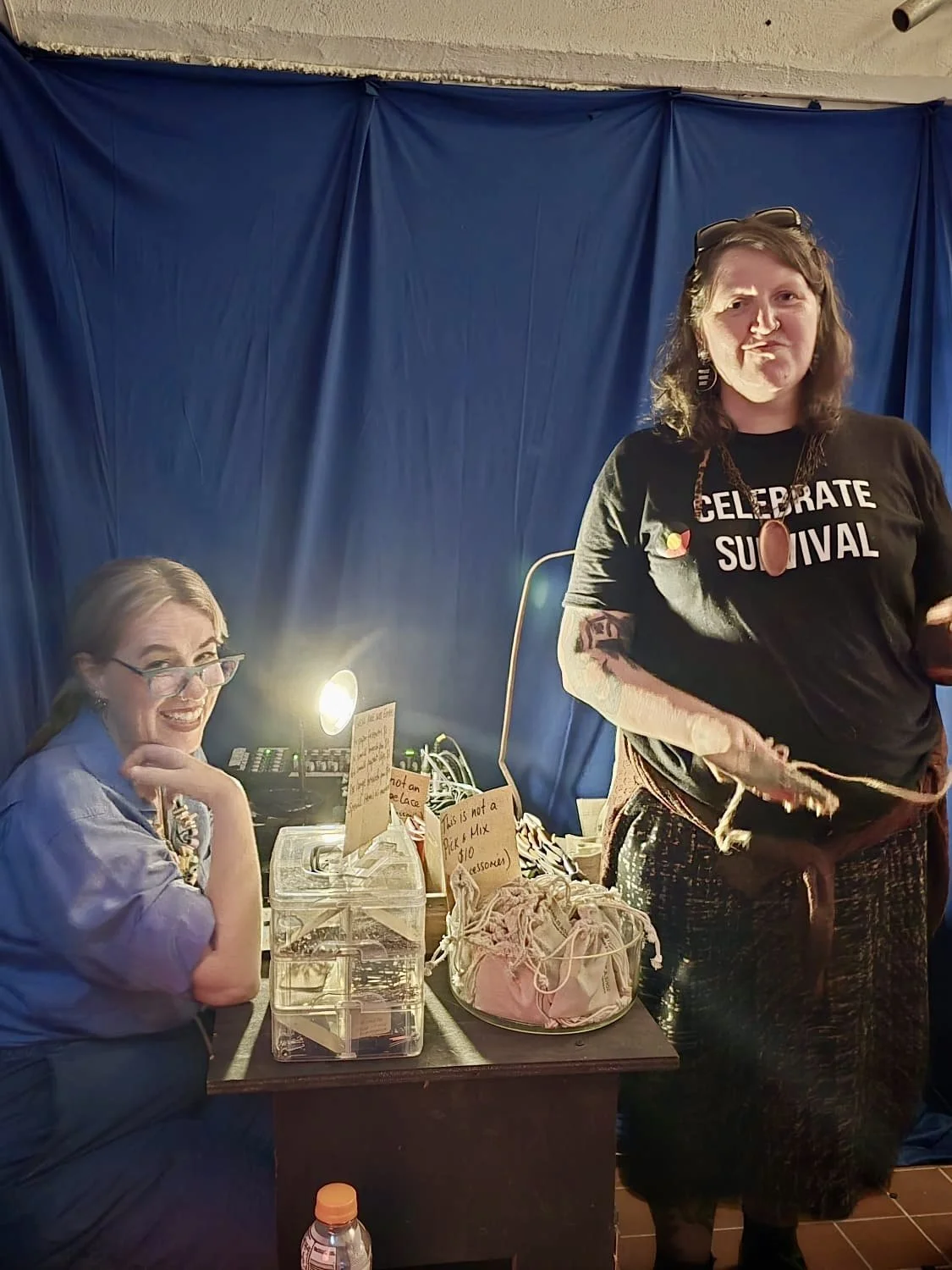
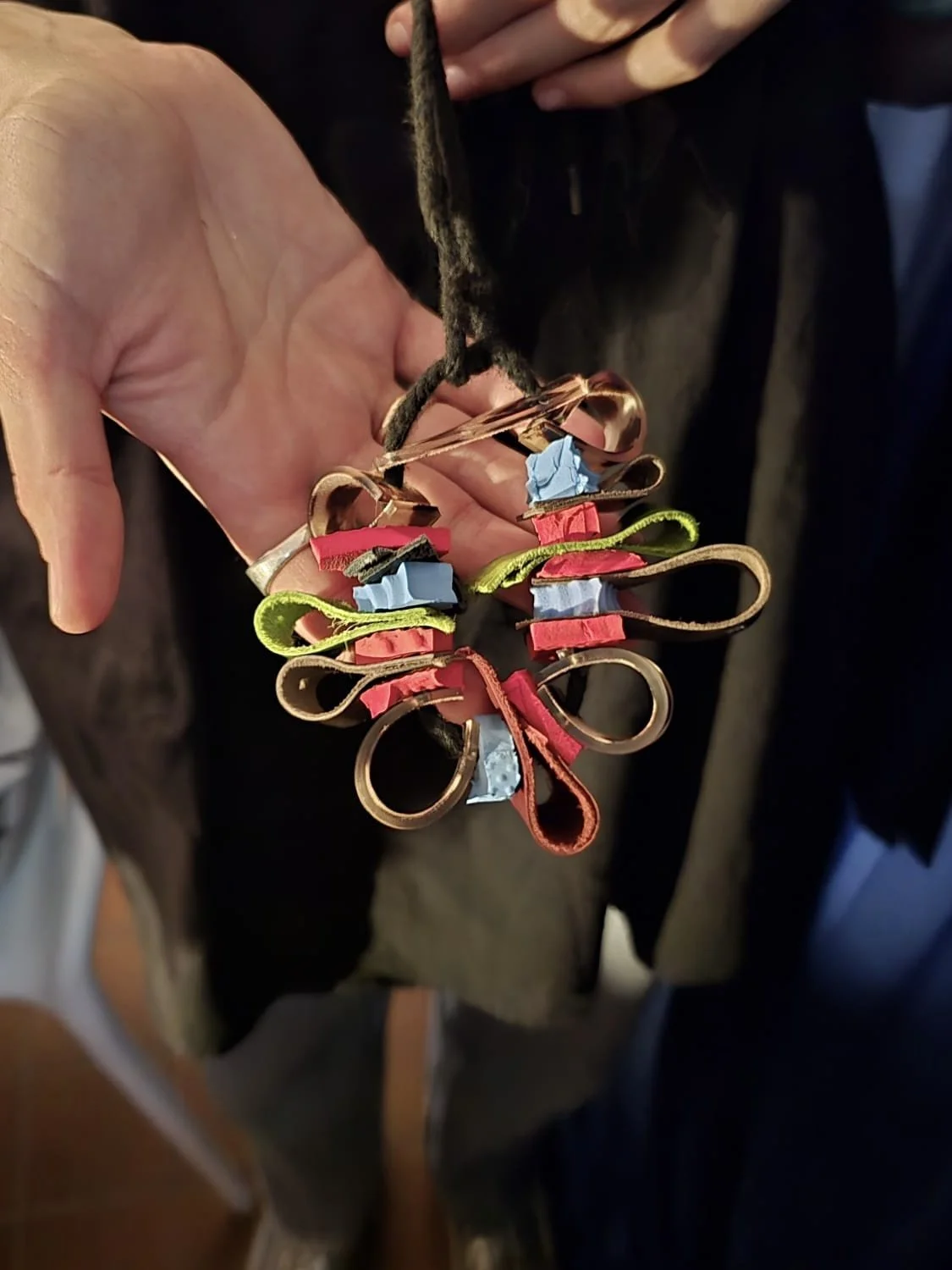
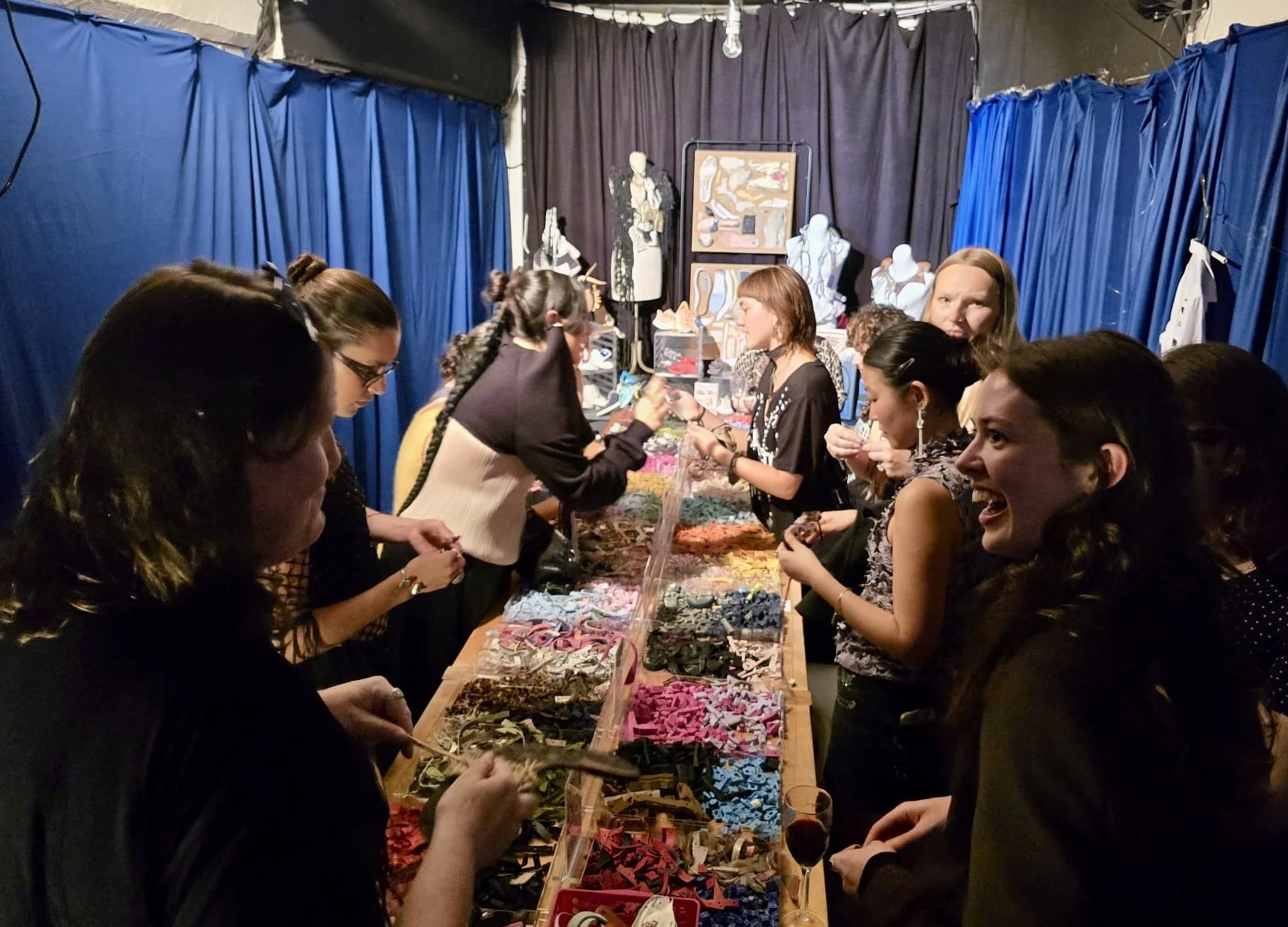
All photographs: TINAS 2026
4. Making, talking and footwear futures, from algae fibres to kombucha leather [08:57]
Emily [08:57]
Yeah, look, it was a roaring success. What I loved about it it's a real icebreaker for one thing, you know, and and there's a lot of First Nations knowledge about sitting around and making and talking, right? Because people are relaxed, it's quite meditative. So it really turned into a space where people kind of came in quite amped up and excited because they'd just seen the fashion show. And then they all just really calmed down, and it gave them an opportunity to create for themselves, but it also gave them an opportunity, I would argue, to let the back of their minds really think about what they'd actually seen, what they'd witnessed, and kind of process some of these really key takeaways that the ACRUX Collective and our Tina's workshop was trying to do. So that was one thing that I found really fascinating.
You mentioned children, and there were a couple of younger kids at the fashion show at the workshops and they really loved it. And I mean, we all know that kids can be a little bit shy, um, you know, maybe a bit too cool for school. But you know, one young girl really got into it after a while, and by the end of it, she owned that activity. That was hers. She'd done the most amazing stuff, and it's like, yes, you have. and it was just such a warm environment from her.
Emily [10:22]
But then another thing also, um, running and facilitating the workshops and have well co-running it, obviously Pennie and Bianca were there as well. Um, but I got the chance to see some of the other collective members of ACRUX and the other workshops that they were doing. And it was actually a great opportunity to talk to them about how, for example, some of their innovations could be used not just in fashion but in the footwear industry as well. So for example, there was a couple of young researchers, they'd just finished uni, in the workshop next door and they were doing one on creating fibers out of algae and then doing like knitting and textile. And her colleague was there, and she'd been making sort of leather out of kombucha and these kinds of materials, and it hadn't occurred to them until I said, well, this also has implications for footwear; you could use those to make soles, you could knit the uppers from these algae fibres.
And so even though these were very much in the nascent stages of development and they were just showcasing their thinking and what's possible, it also got them thinking about additional ways that they might like to make an impact on sustainable fashion, sustainable footwear. Again, into the future, right? Footwear futures is one of the key things that we're also promoting and getting people to think about. So that was really exciting too.
Alex [11:53]
Yeah, and I think one thing that's come out of some of the conversations I've been having here is footwear is such a neglected, overlooked topic, whether it's because shoes are out sort of eyesight often, they're on the ground, we don't think about them so much. Just in research and generally, I think it's really great to be able to make these connections and show people that actually footwear is a really interesting application for a lot of these innovations and developments, which is really exciting.
5. Deconstruction working bees and the ‘Shoecuterie’ activity [12:17]
Alex [12:17]
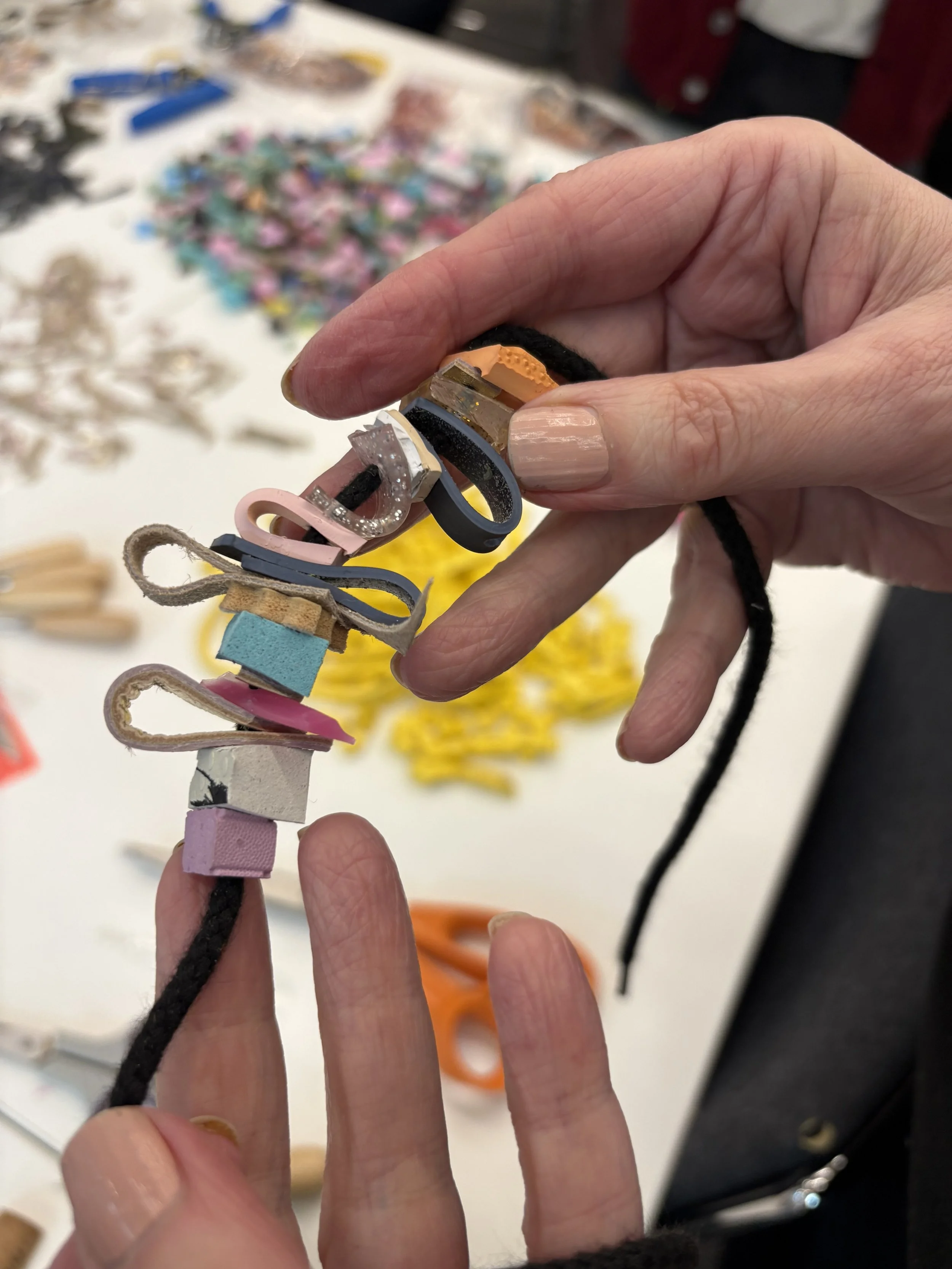
It's wonderful. I was so sad to miss out on that. I was absolutely gutted. I really enjoyed helping to prepare for it and we had some lovely Working Bees where we found actually that people were as excited about cutting up the shoes together as they were about actually making things from them because there's something really meditative about cutting things up and really interrogating materials and learning from them. We had one person during the Working Bees who spent about uh, an hour on one kid's sort of Wellington boot because it had glitter in it and every different way that they cut this this boot, the the pieces, the beads that were made from it, looked entirely different because of the sort of the grain of the way that the glitter had, and I just sort of remarked that nobody had ever paid this material, this boot, as much attention as as they had, and there was something really beautiful about the the the interrogation, and the attention that that material was getting. And I think by the end of it they had quite a lot respect for that one boot.
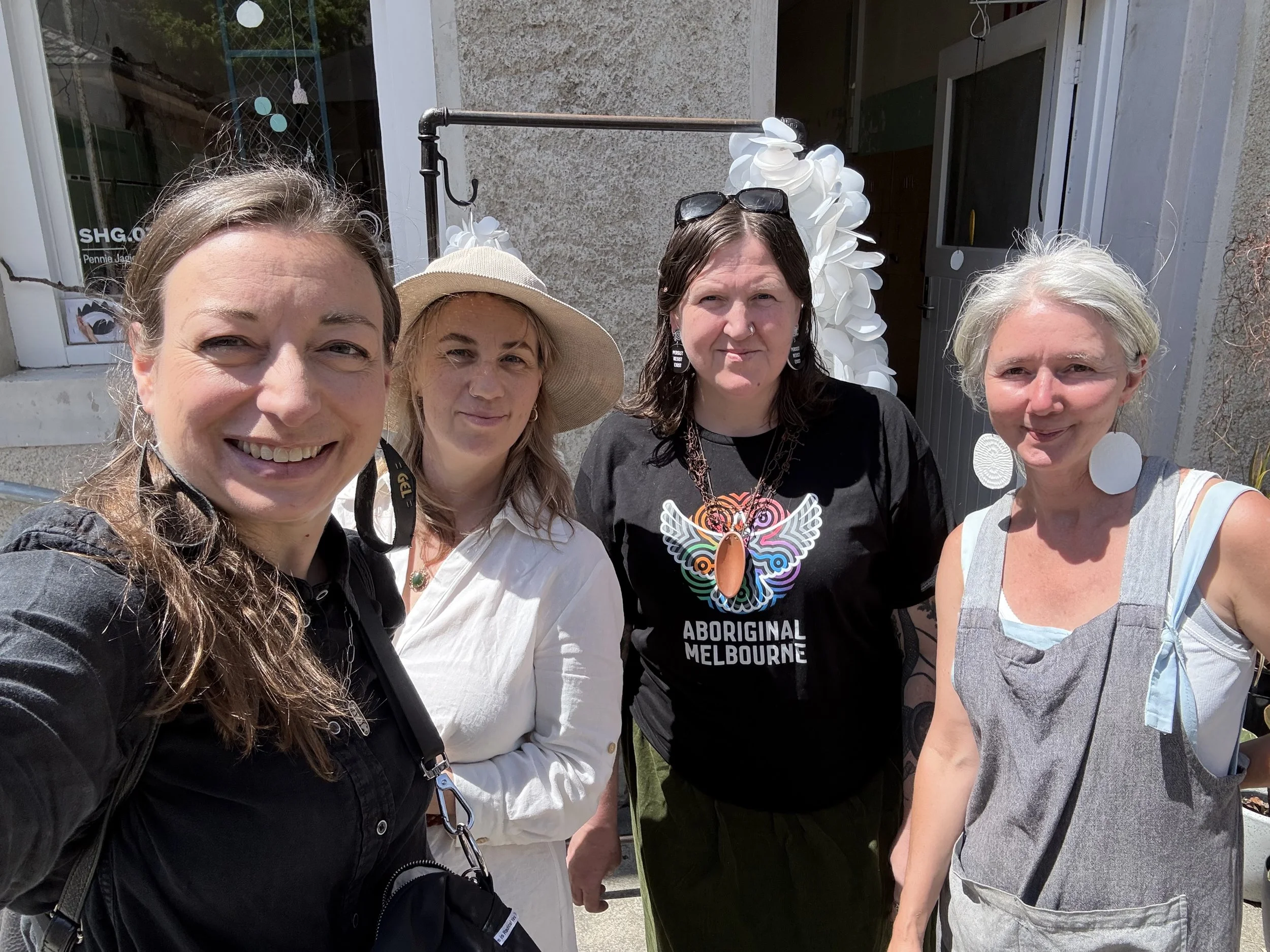
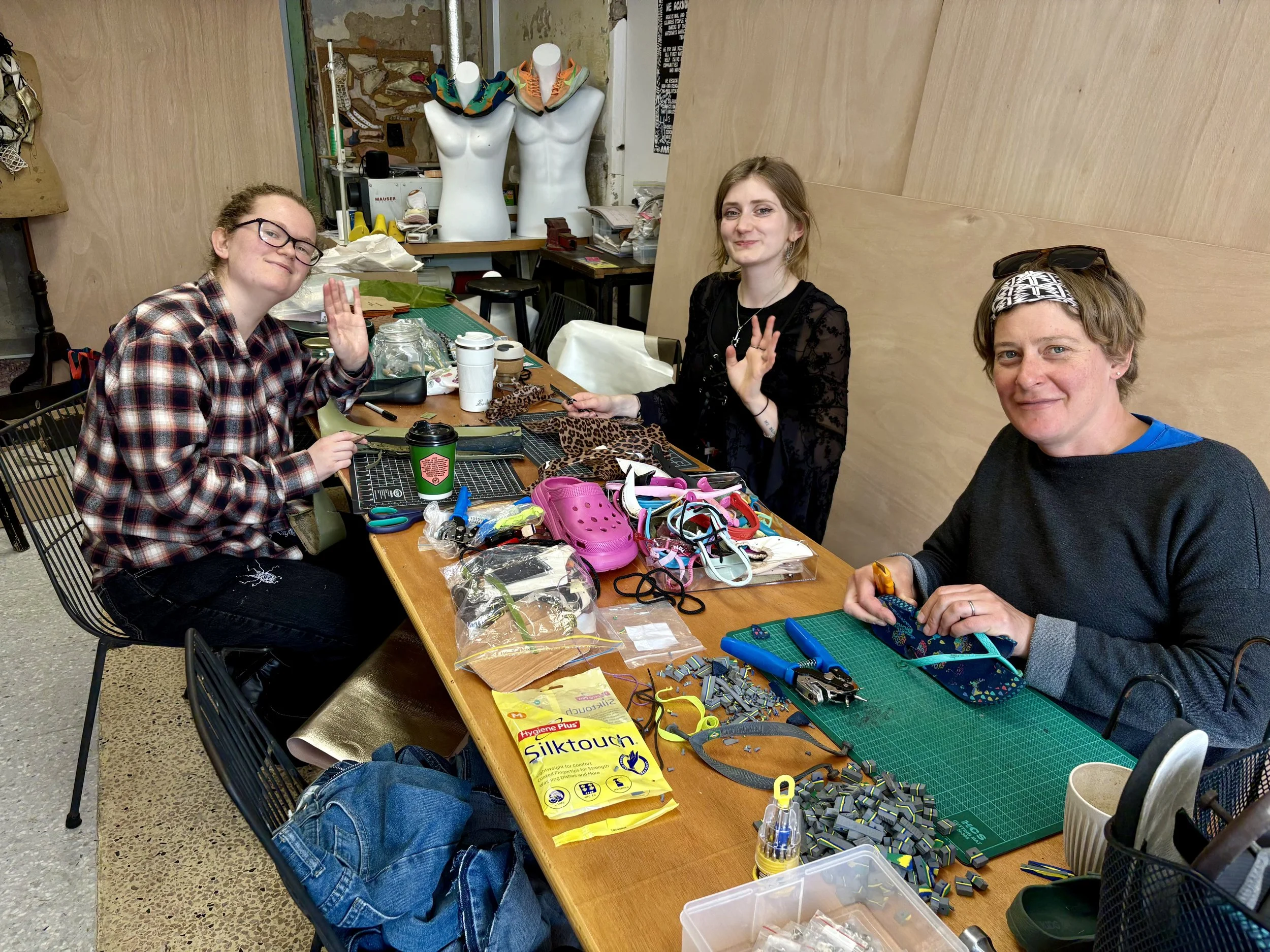
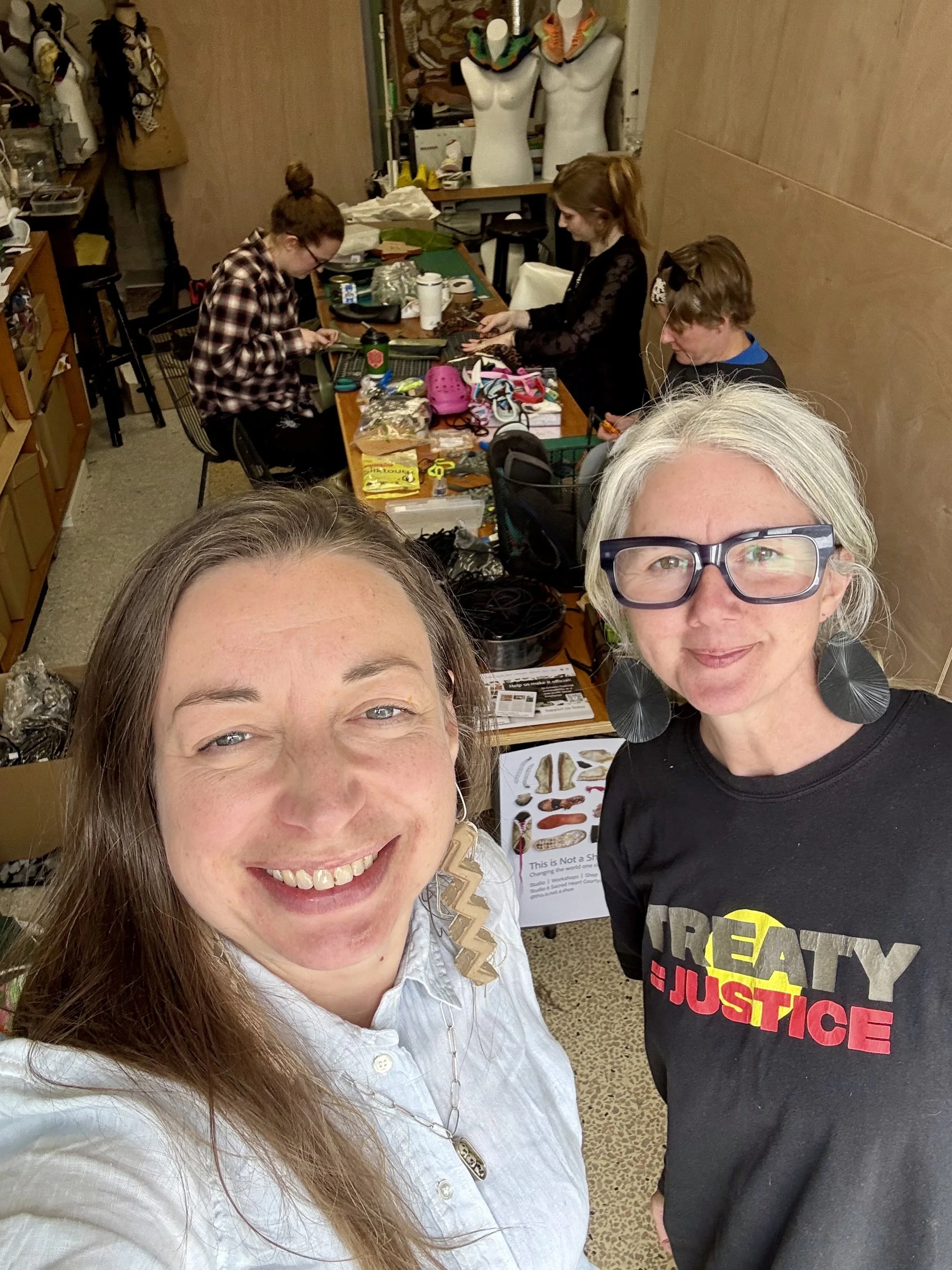
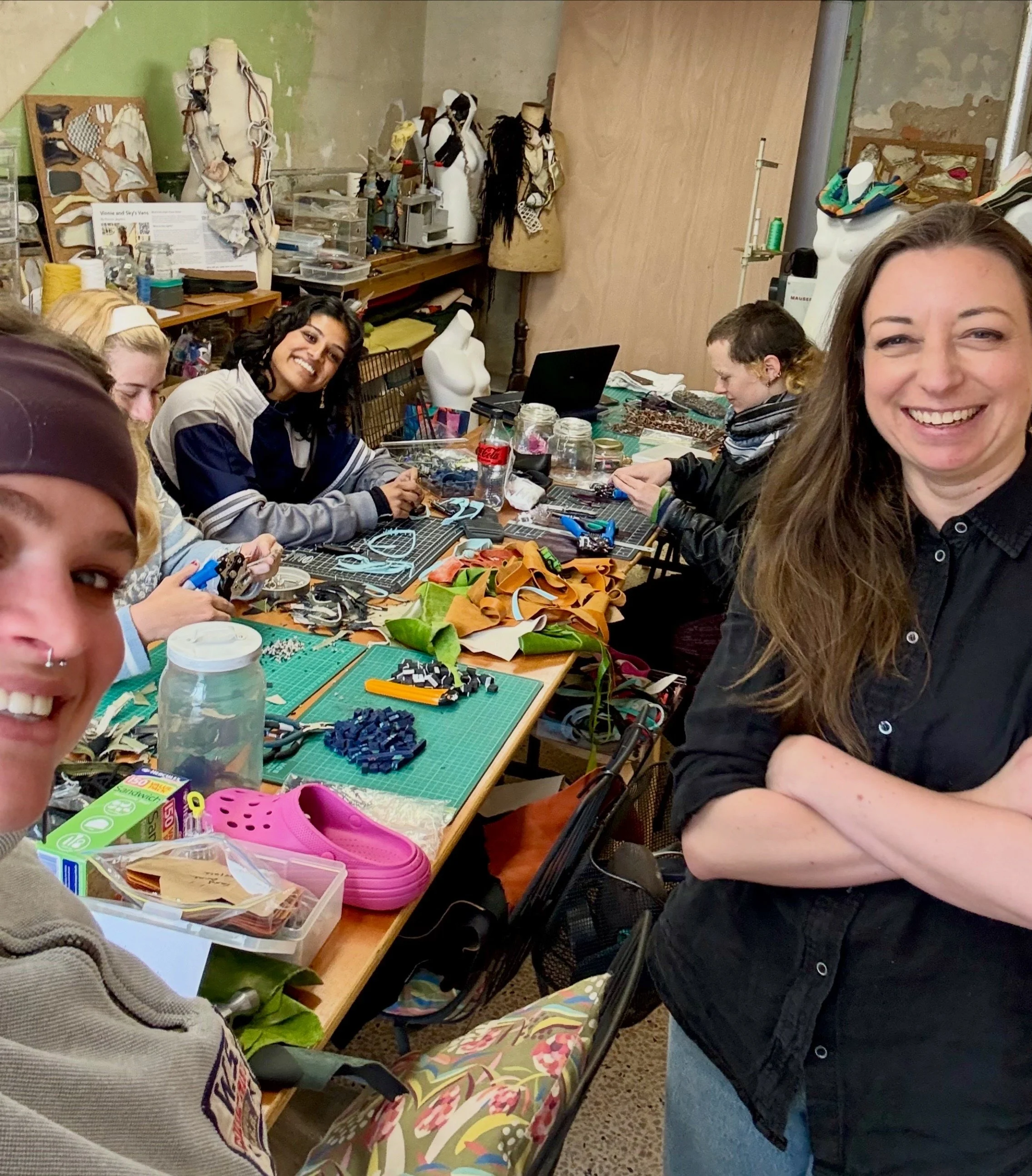
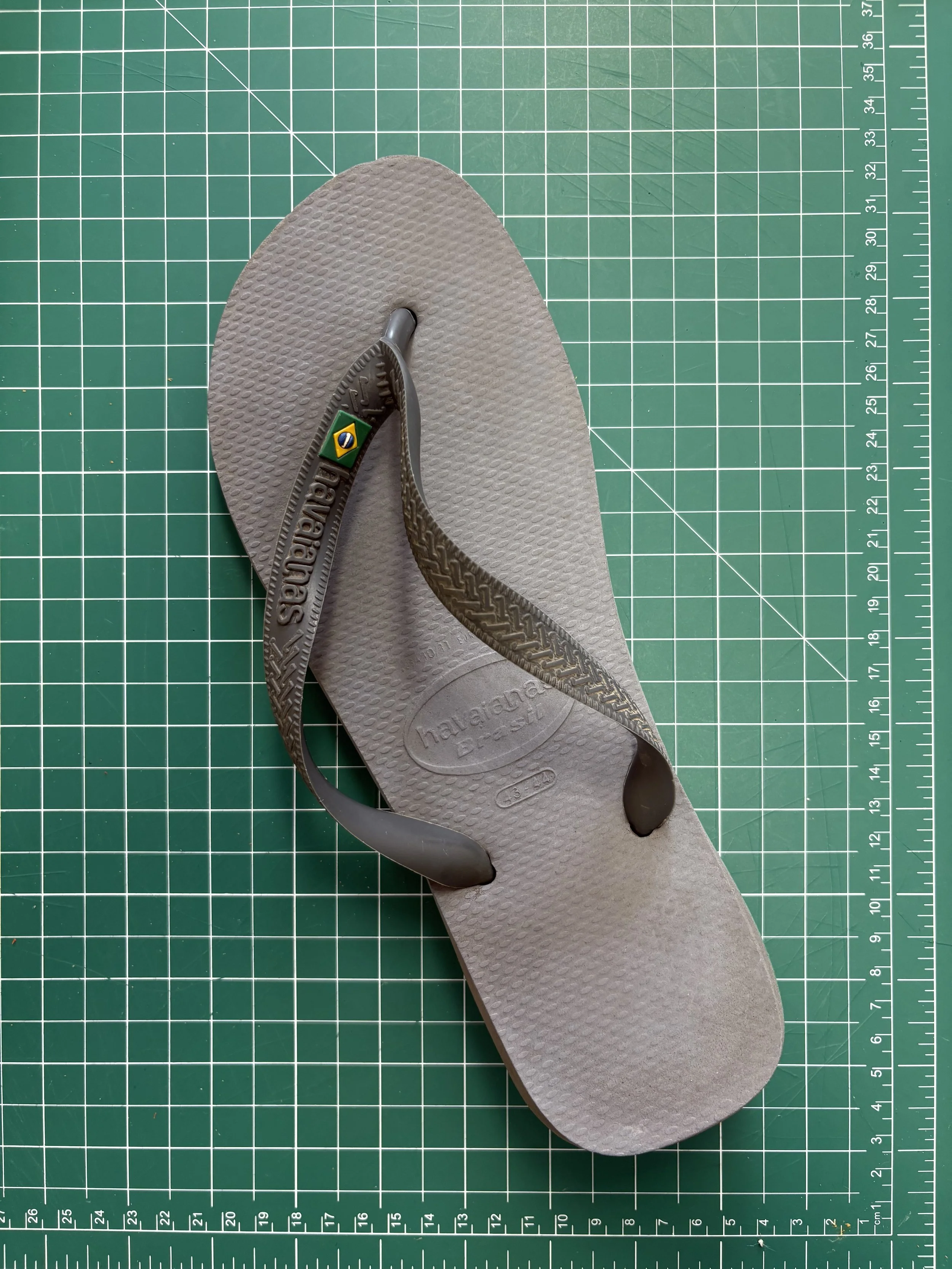
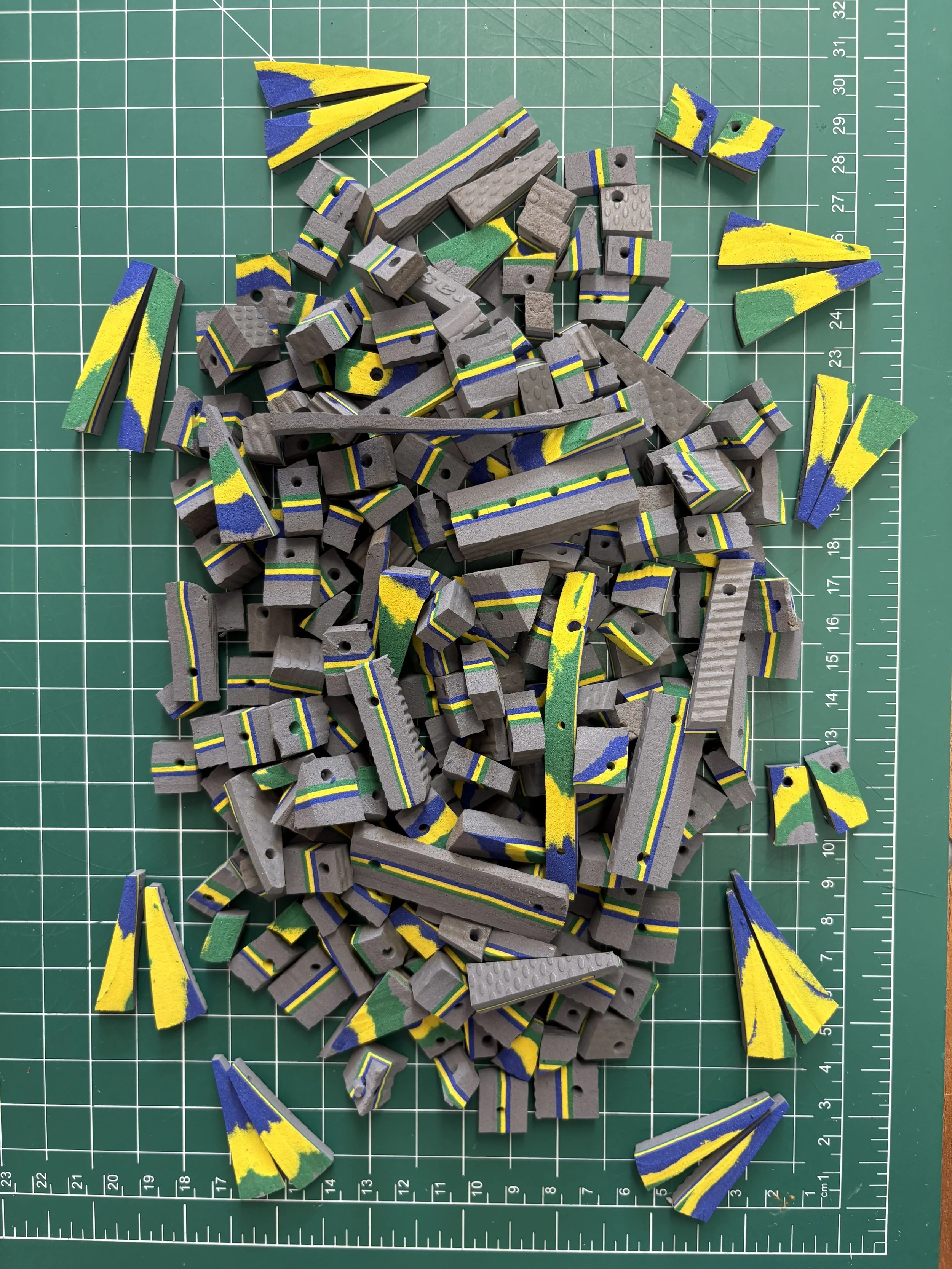
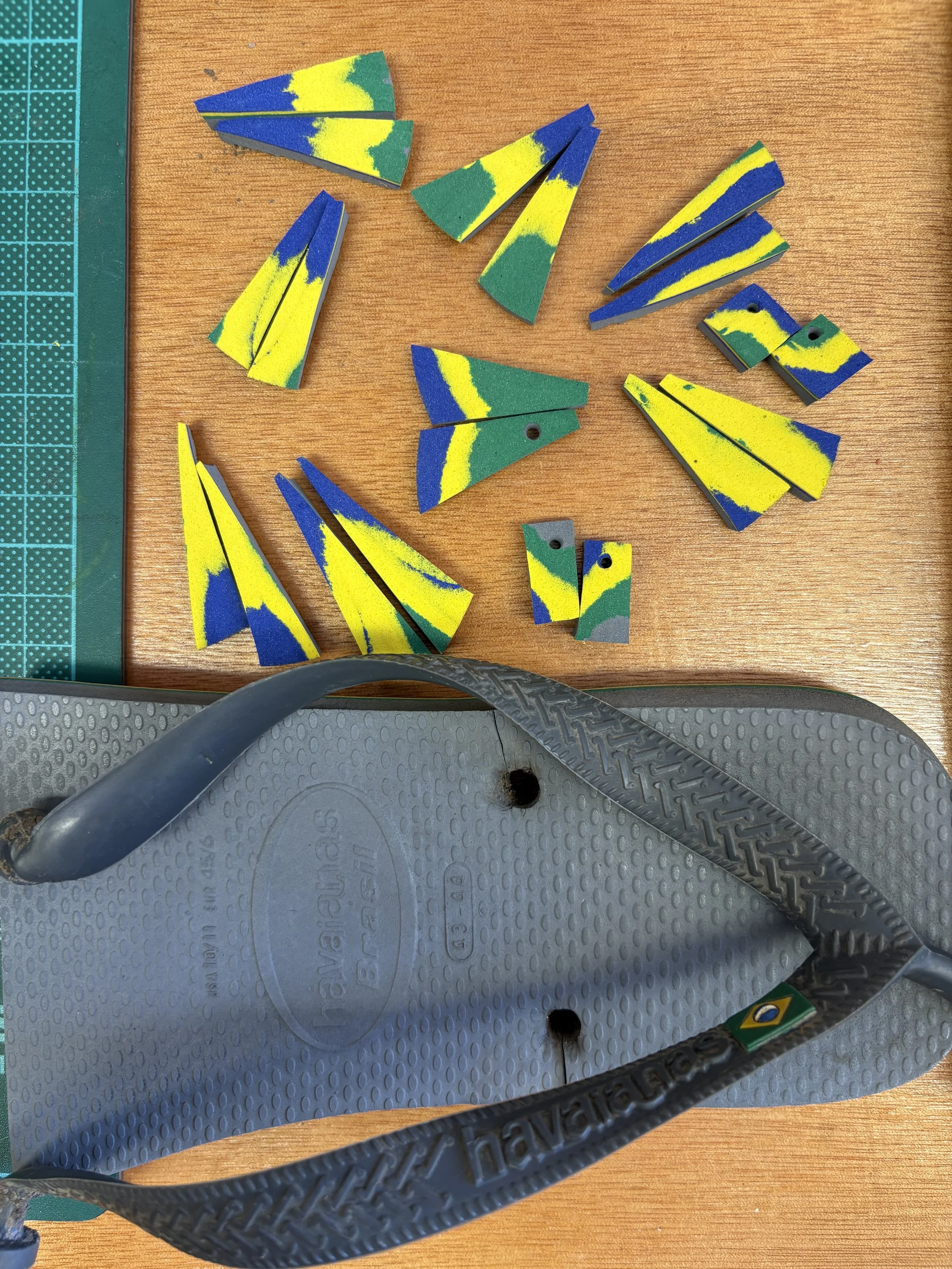
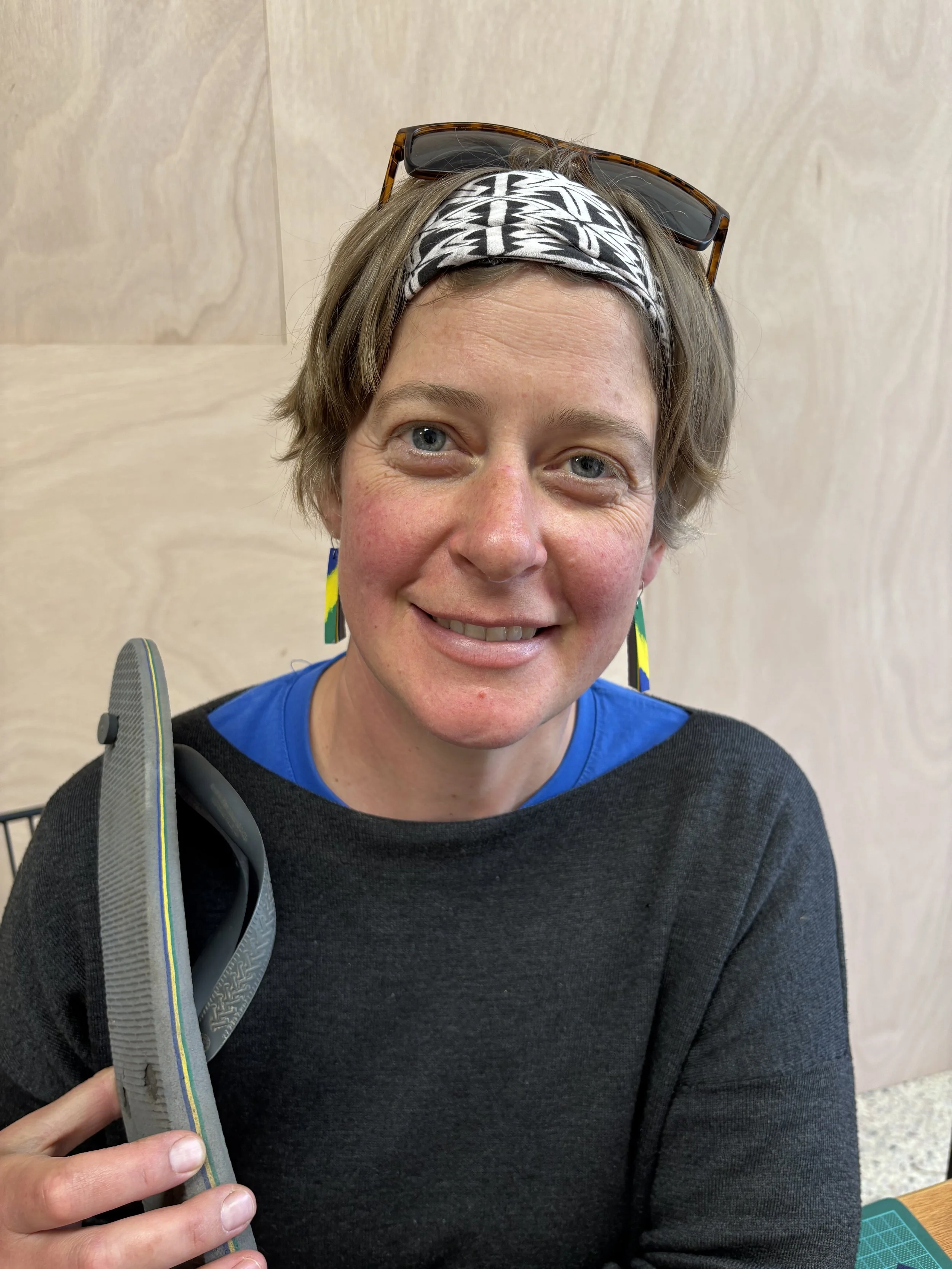
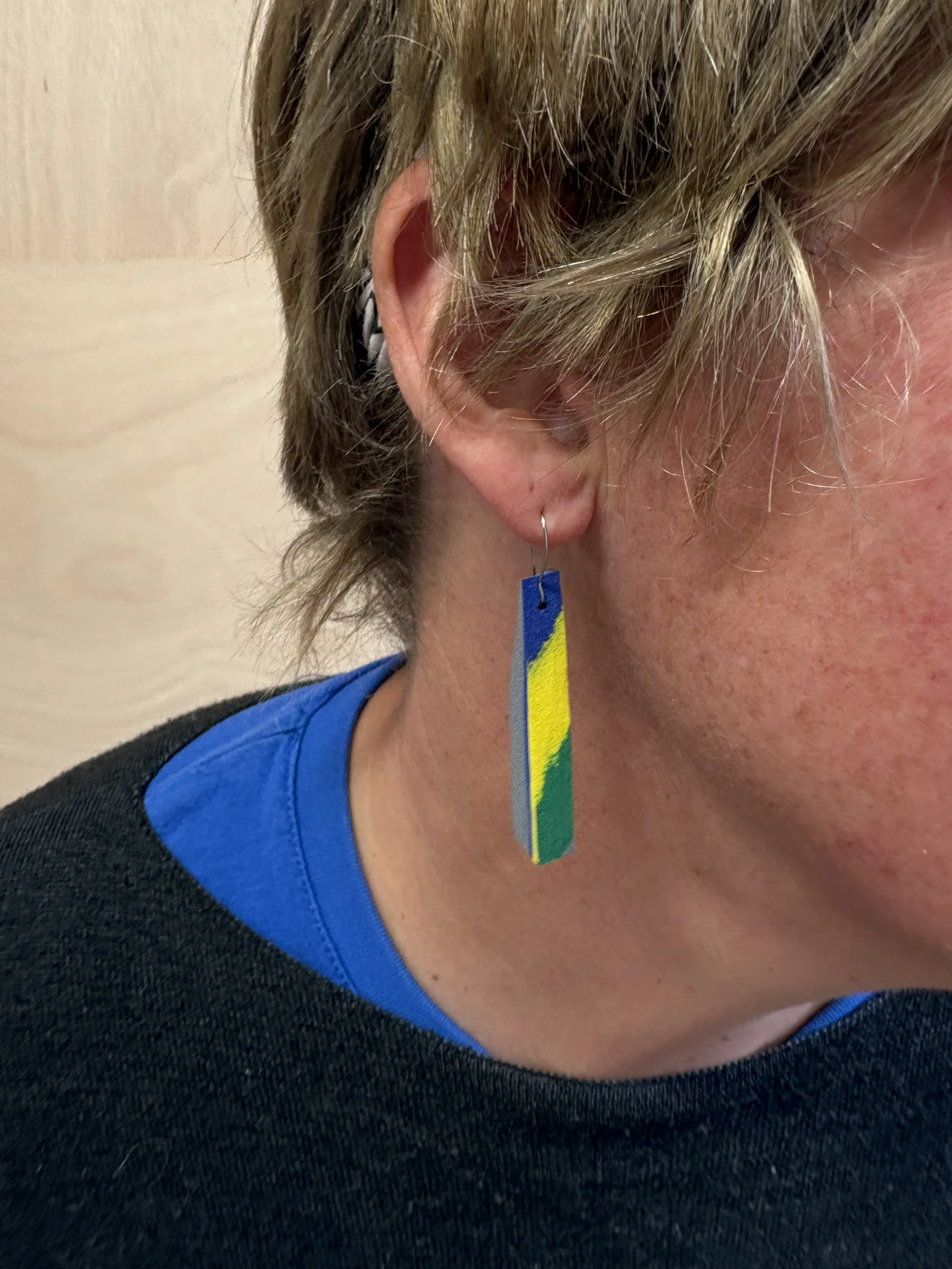
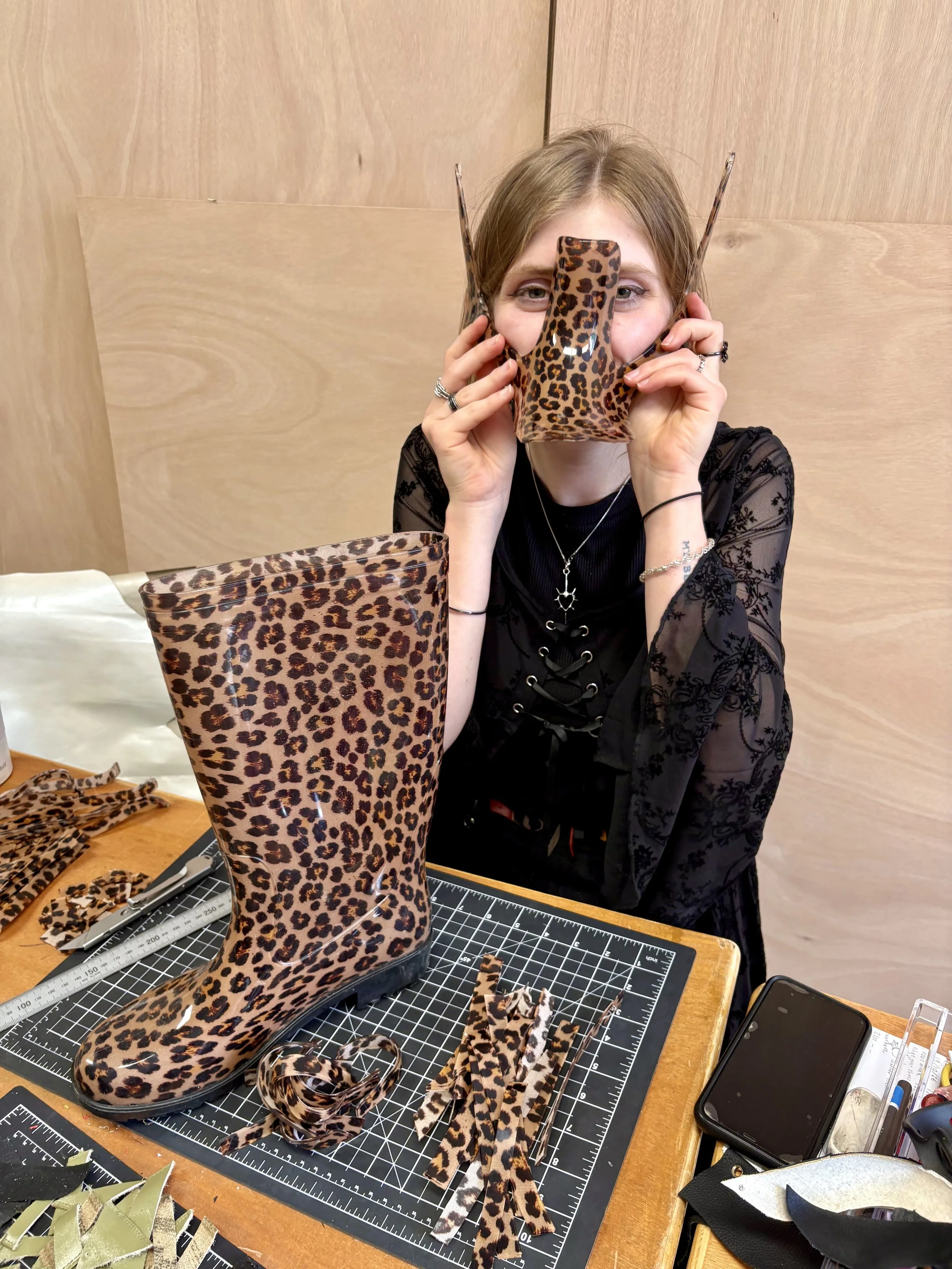
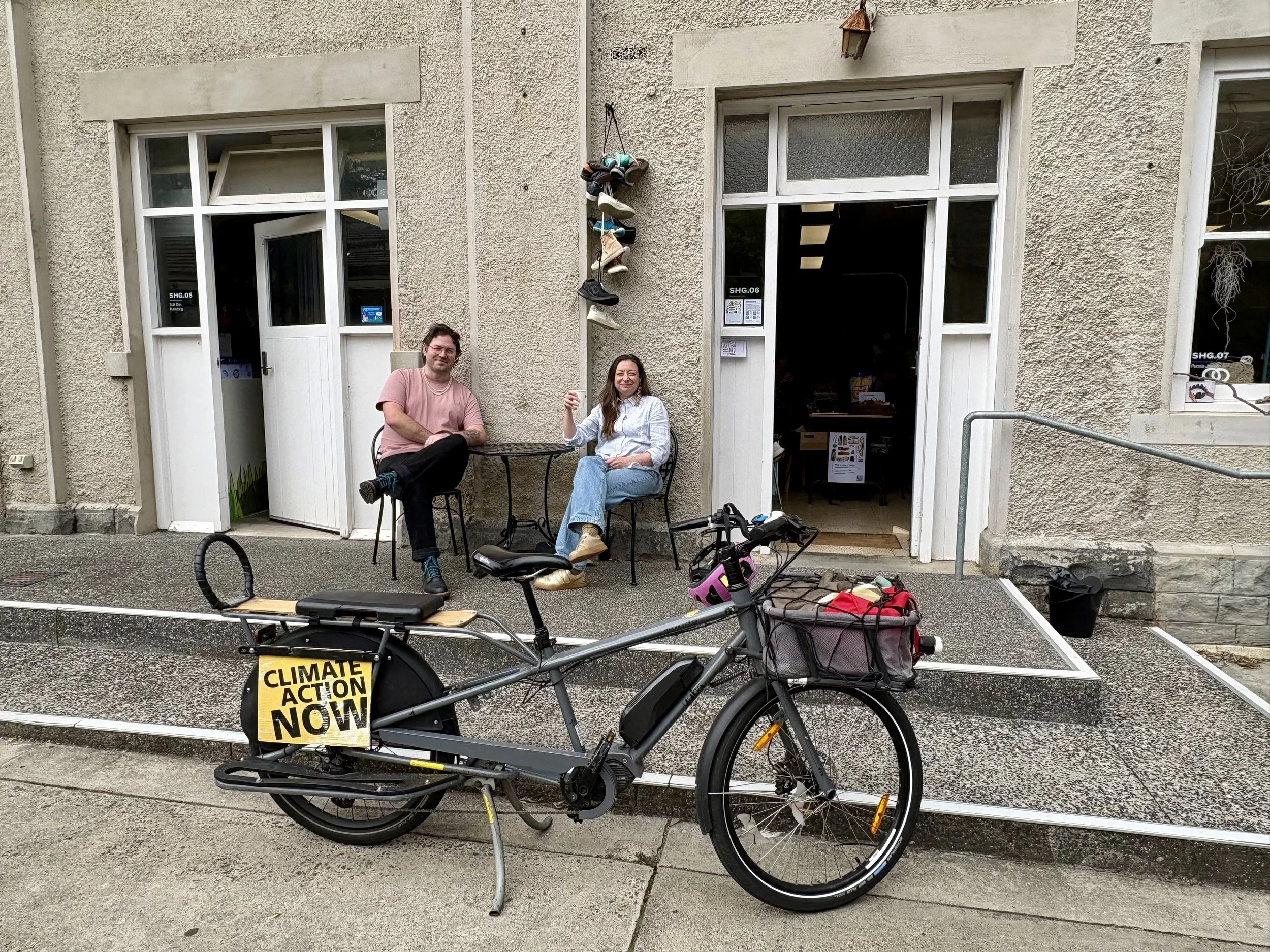
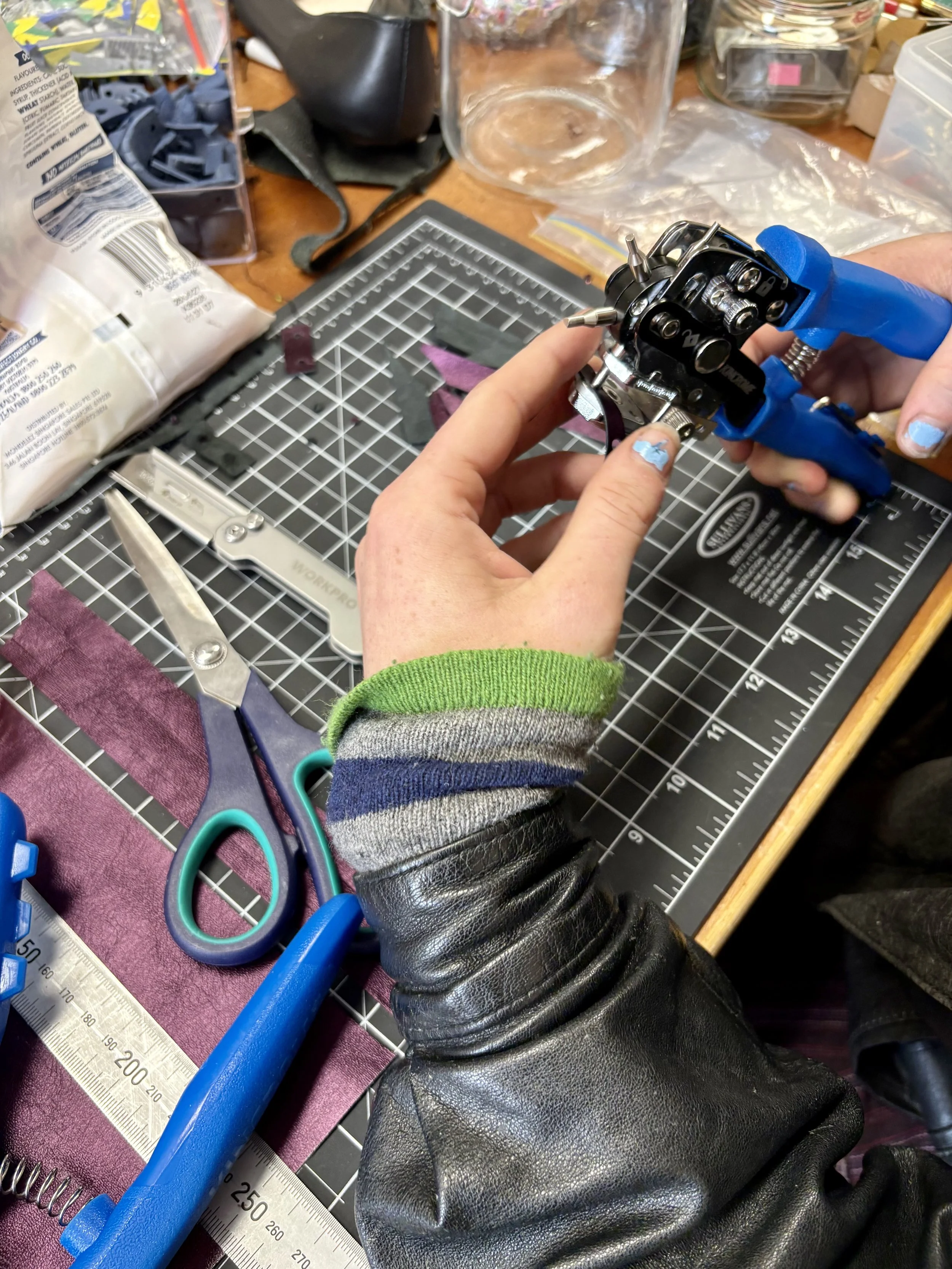
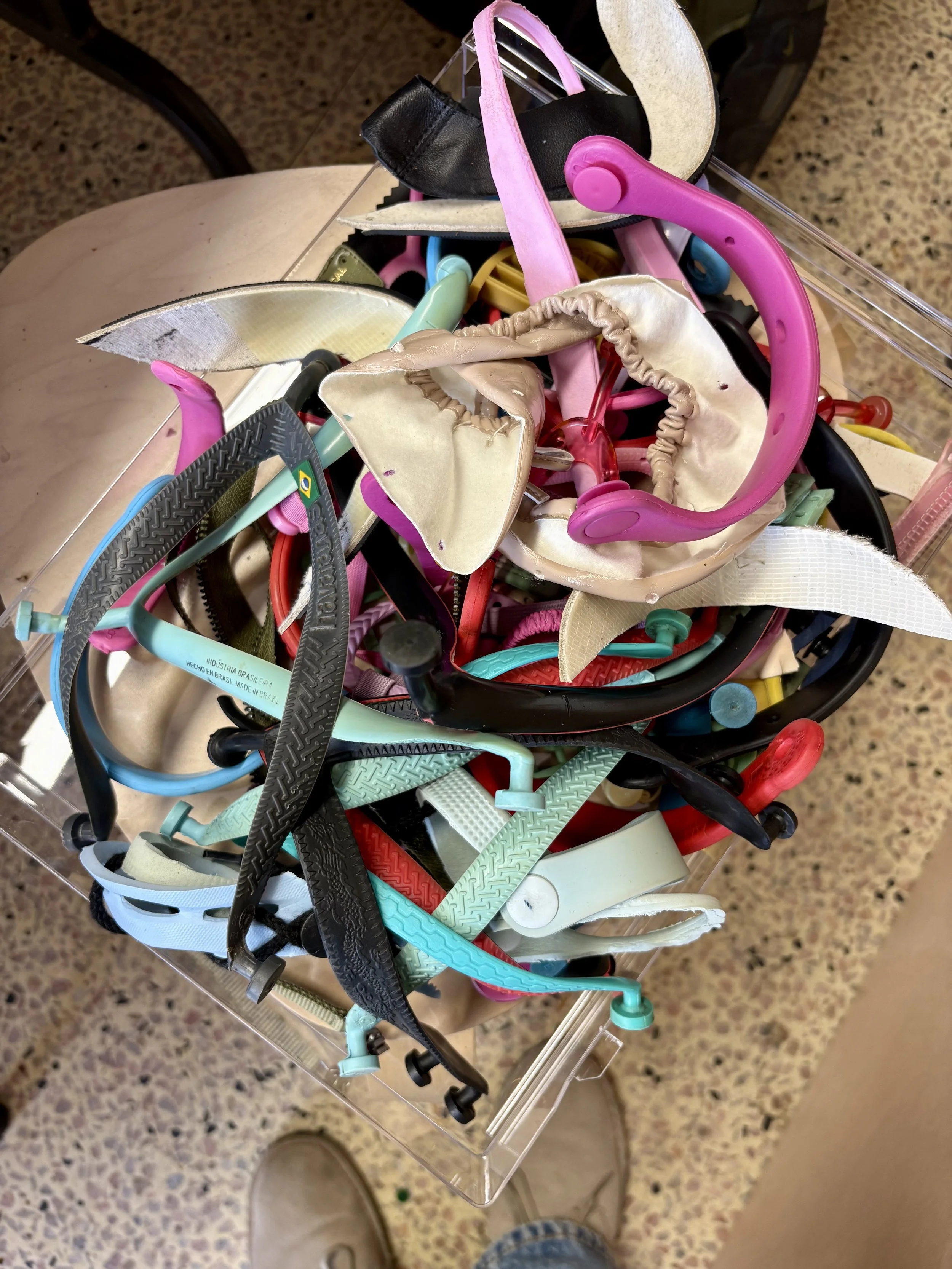
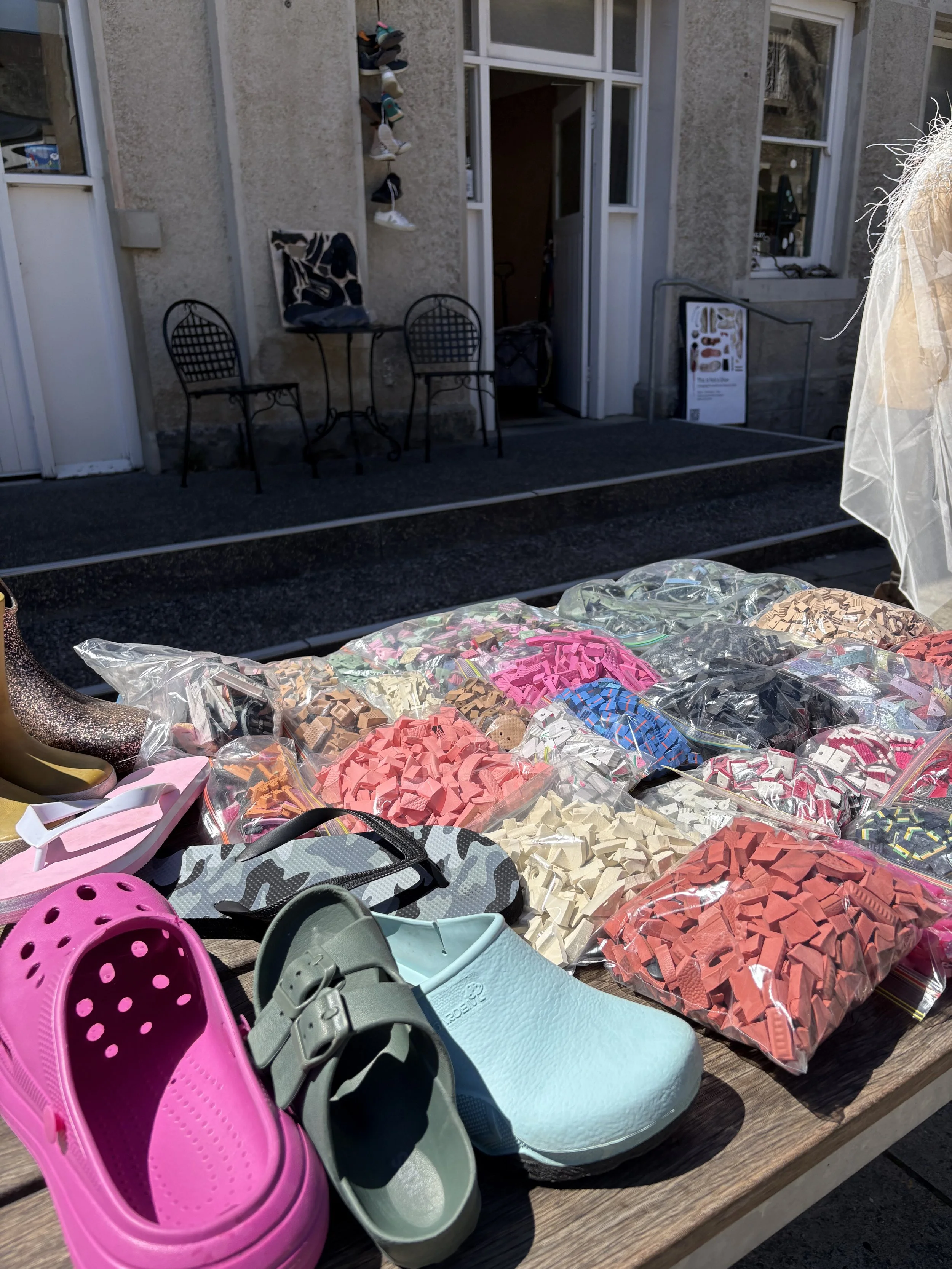
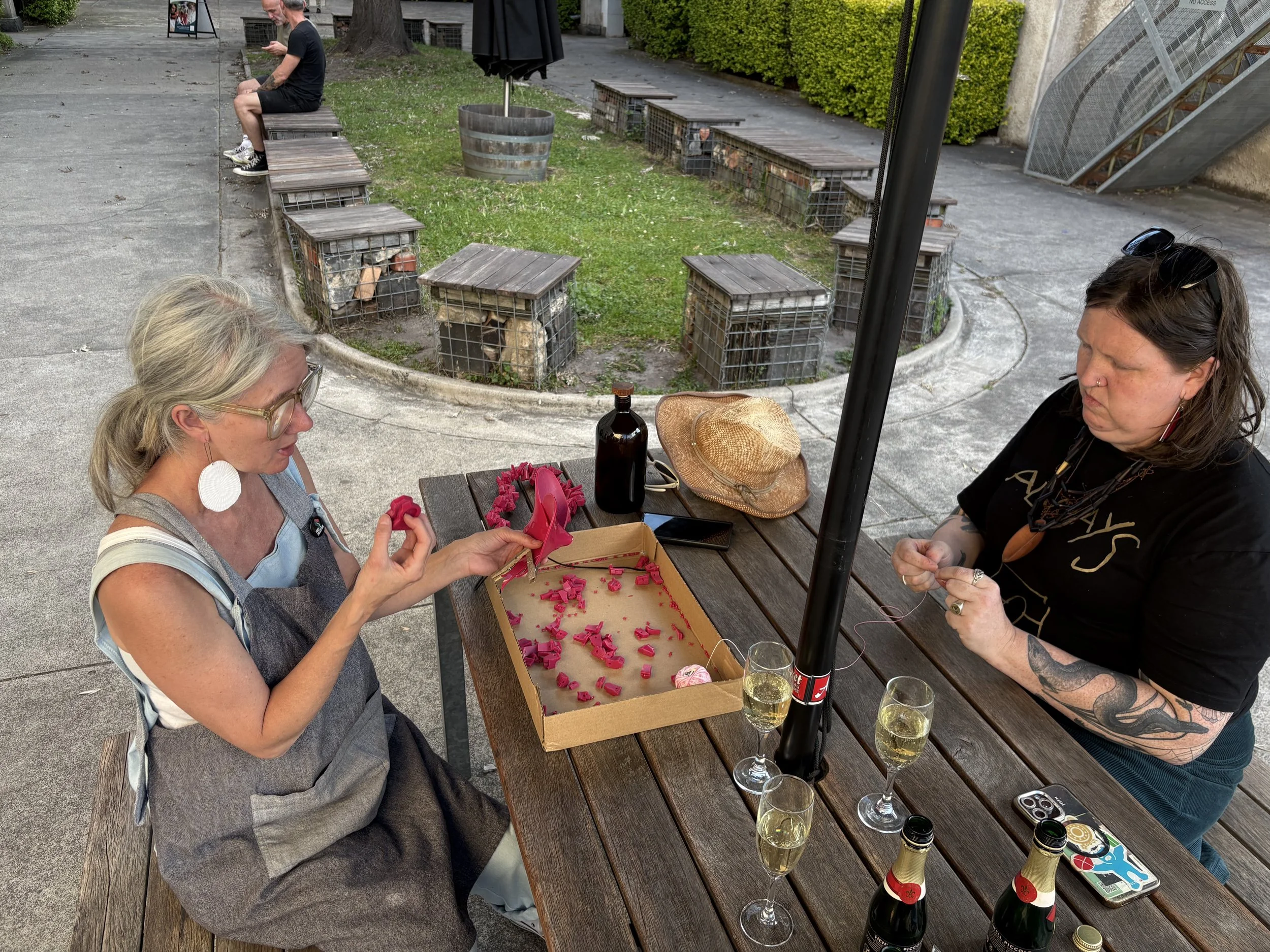
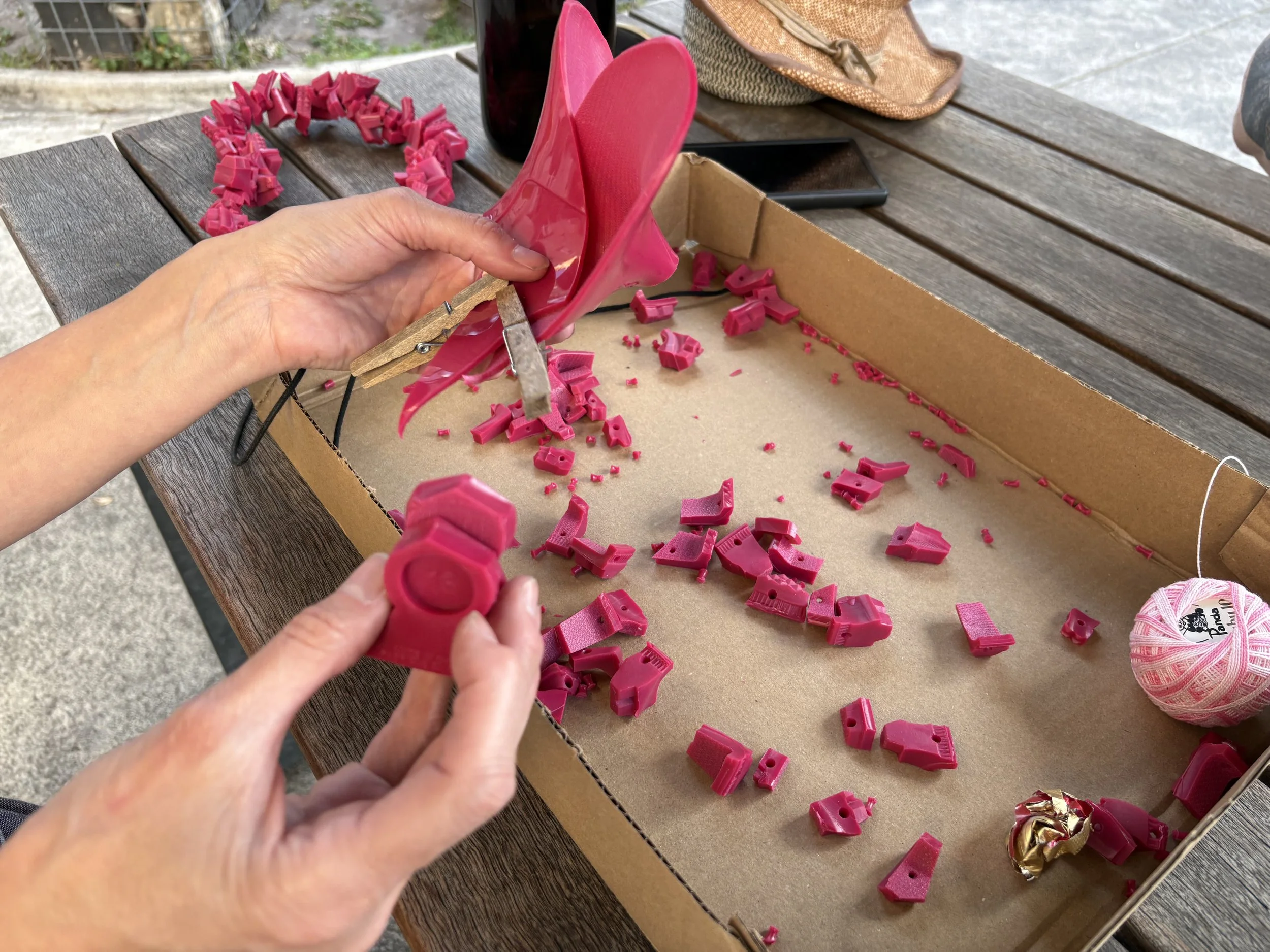
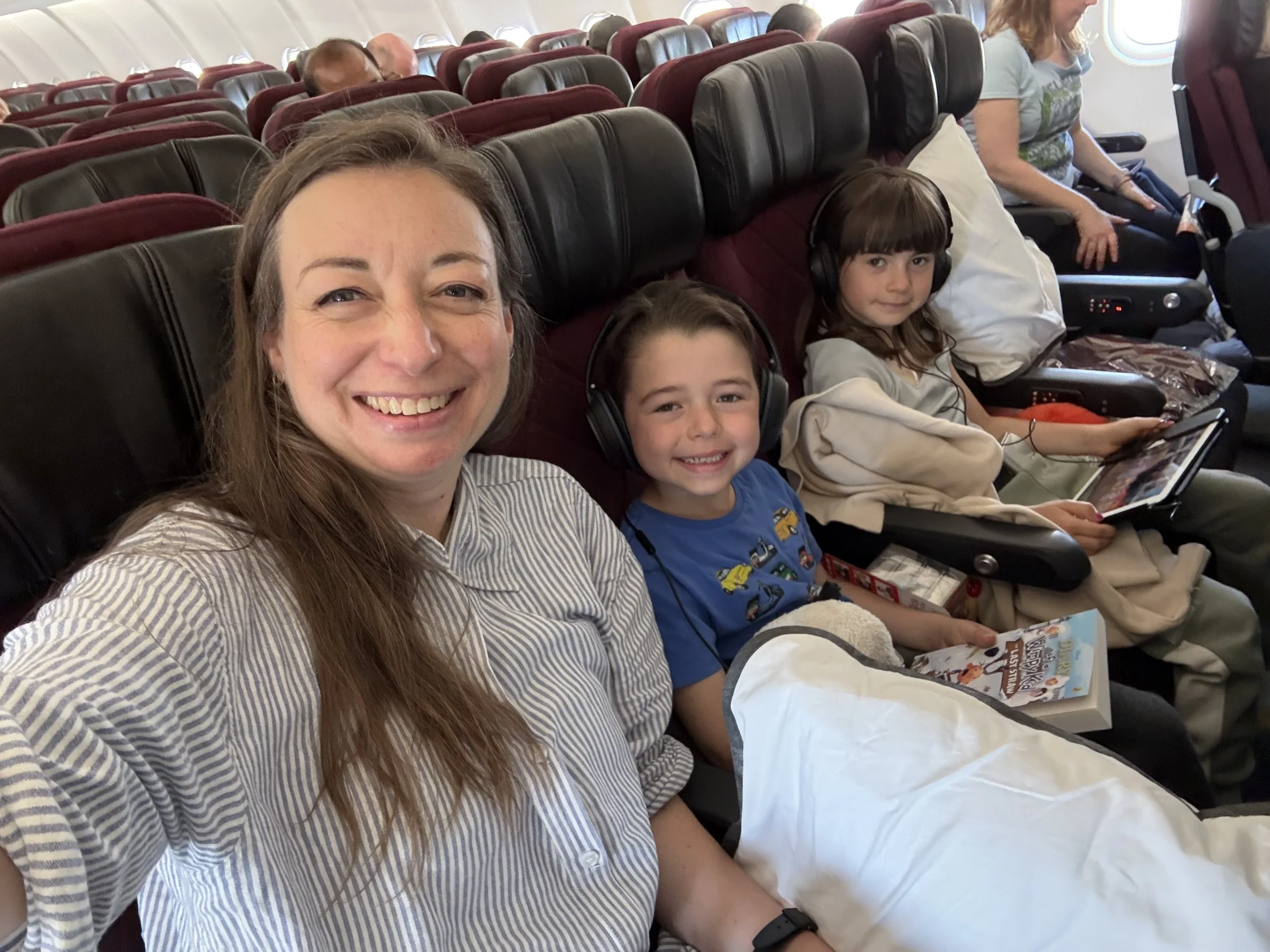
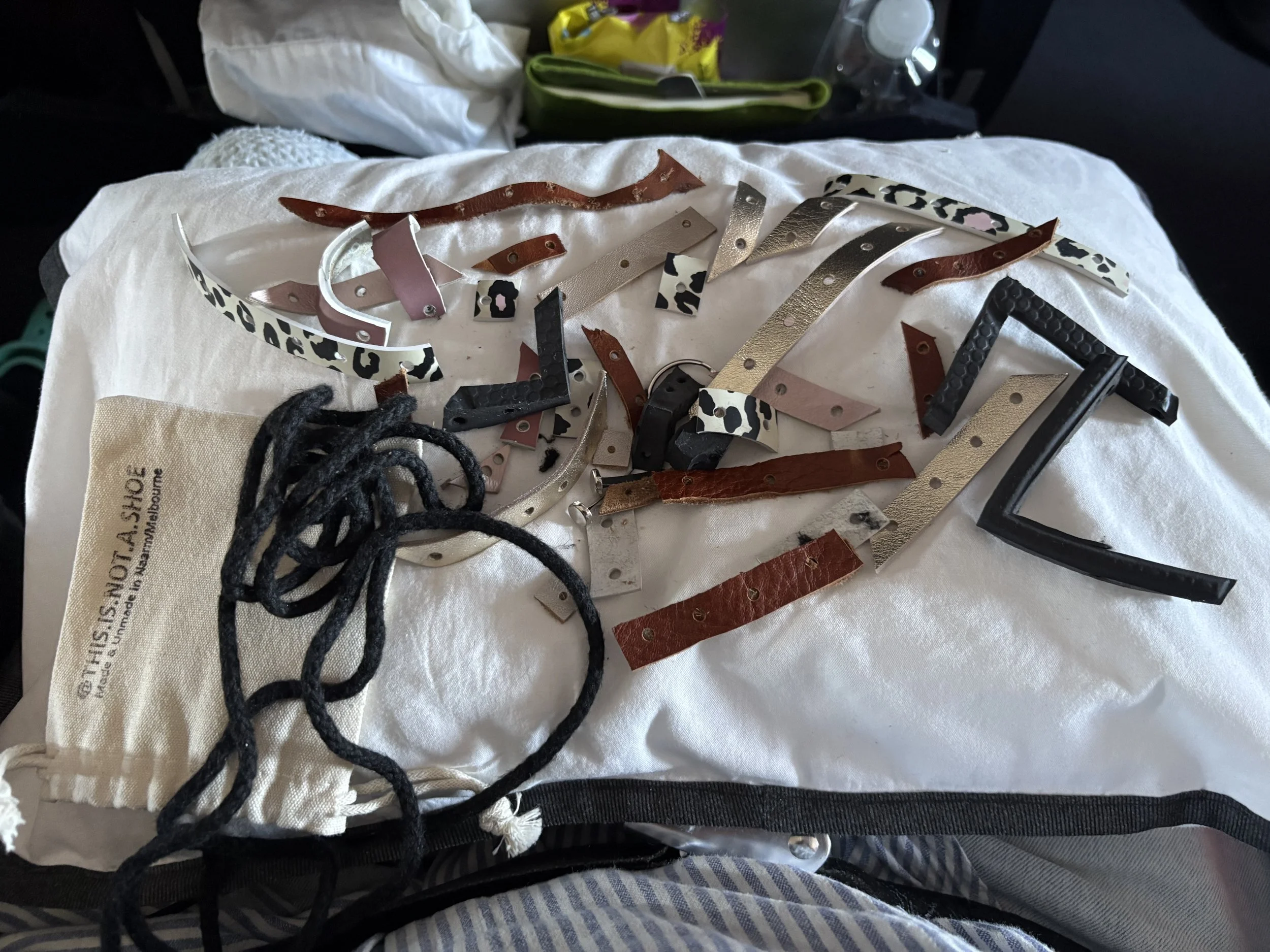
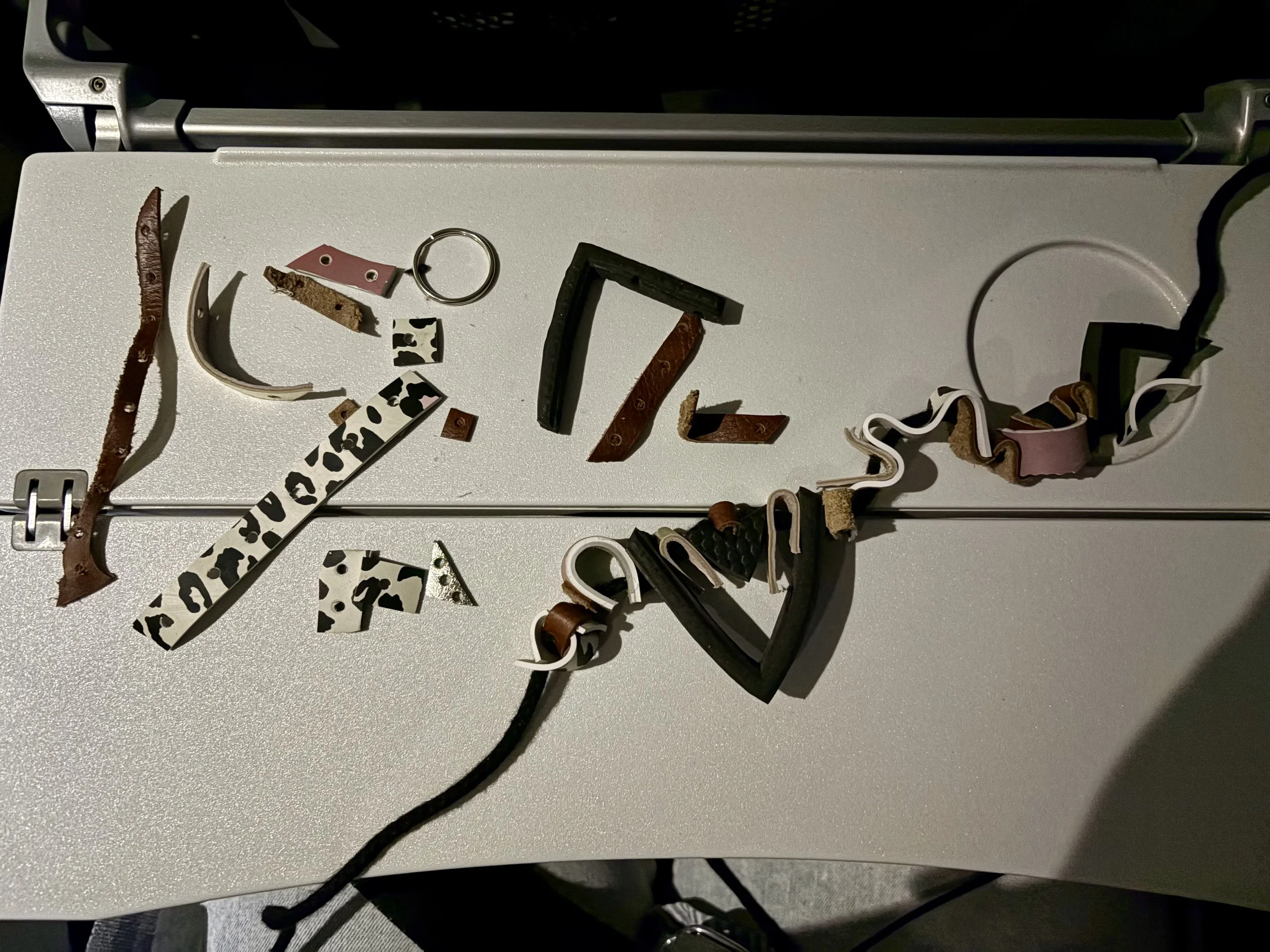
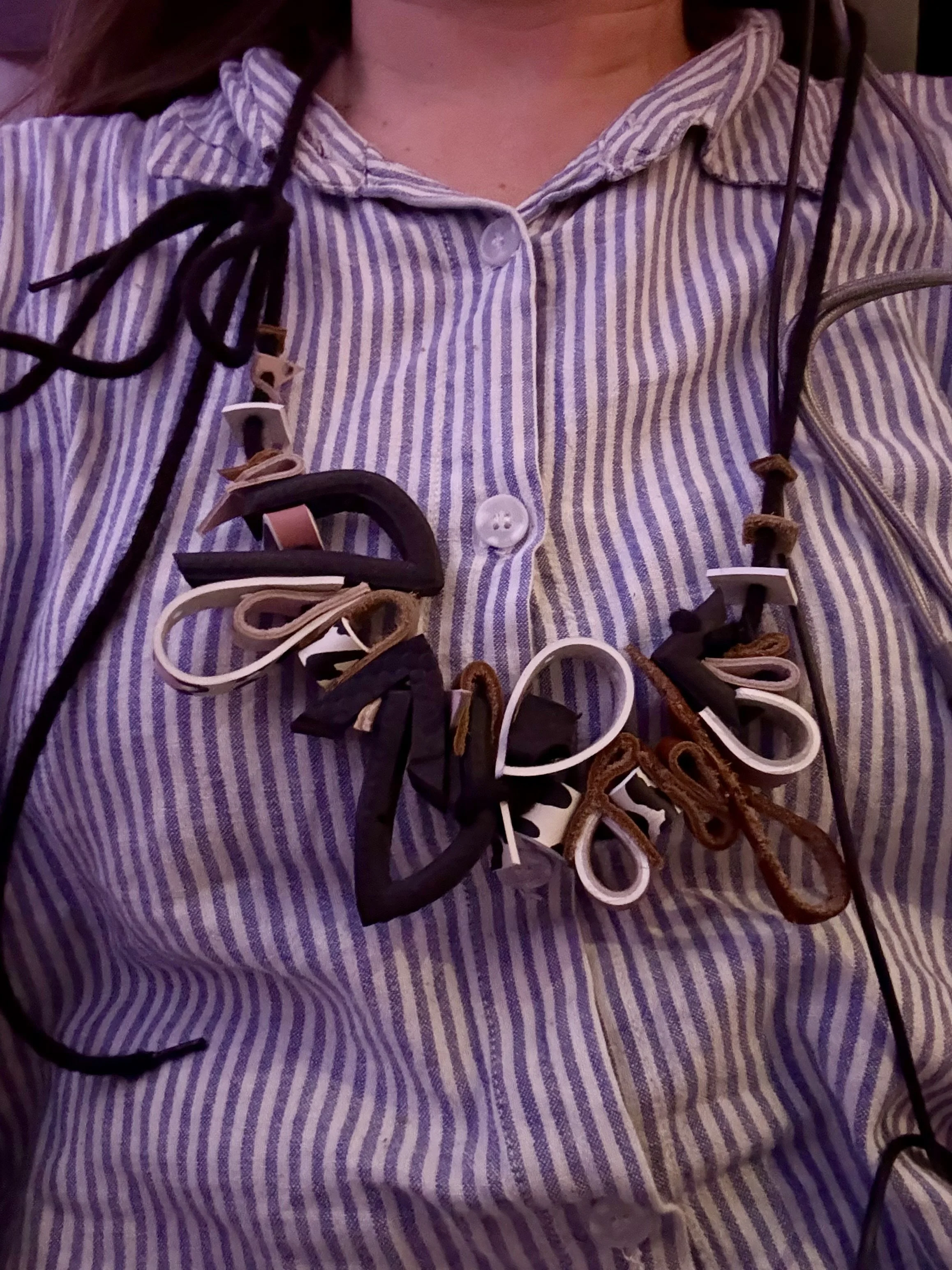
All images: Alexandra Sherlock, 2026
So I think just what you mentioned about the yarning circle there and it being informed by First Nations perspectives, that for me is why it's been so wonderful to include Bianca Easton in the project who's a proud First Nations Boon Wurrung woman who also founded Weaving Connections Naarm, which is a Melbourne-based initiative where she will go around to lots of organisations and teach um traditional weaving techniques and and the knowledge that those techniques hold to raise awareness of the value of First Nations practices. And what she talks about is actually when you sit around in a circle and your hands are busy and you're crafting, it just actually diminishes any hierarchies, and it sort of keeps your hands occupied to the extent that you're able to like actually openly chat.
And I just found it really uh wonderful that you were talking that people using the activity at ACRUX to reflect on what they'd just seen with the fashion show because I think it's wonderful to see these things, but it's another thing then to talk with other people and really cement the learning through conversation. a knowledge exchange. Otherwise we just move on very quickly, don't we? And we don't think about these things.
So I did actually put a little bag of shoe parts together with a lace. And on the plane, I, instead of watching movies the whole time, I had great fun putting it all out on my fold-down table and making jewellry, and I could see all of these people out of my peripheral vision going, “what on earth is she doing?” So that was kind of good. I I wish I'd taken more materials and got everyone involved, it would have been great fun.
So now I should say as well that one of our amazing volunteers, we had a few volunteers, Eva, came up with a name for it. And so this activity, now, that involves all of these trays of different shoe parts on a table to make amazing things from, is called… would you like to do the honours, Emily?
Emily [15:05]
It is well we were playing with it because it looks like a smorgasboard. And Eva's just like, uh no, it's a shoecuterie board. And we're like, yes, it is. Brilliant. So that's what we've got now. We've got our shoecuterie.
Alex [15:20]
Absolutely amazing. Yeah, that we did joke that she that she needs a profit share, but since we're registering to be a nonprofit, that doesn't really work. But absolute, absolute credit and kudos to Eva for coming up with that genius idea because we have been trying to work out what to call it. And, you know, that was perfect.
6. TINAS goes on the road [15:41]
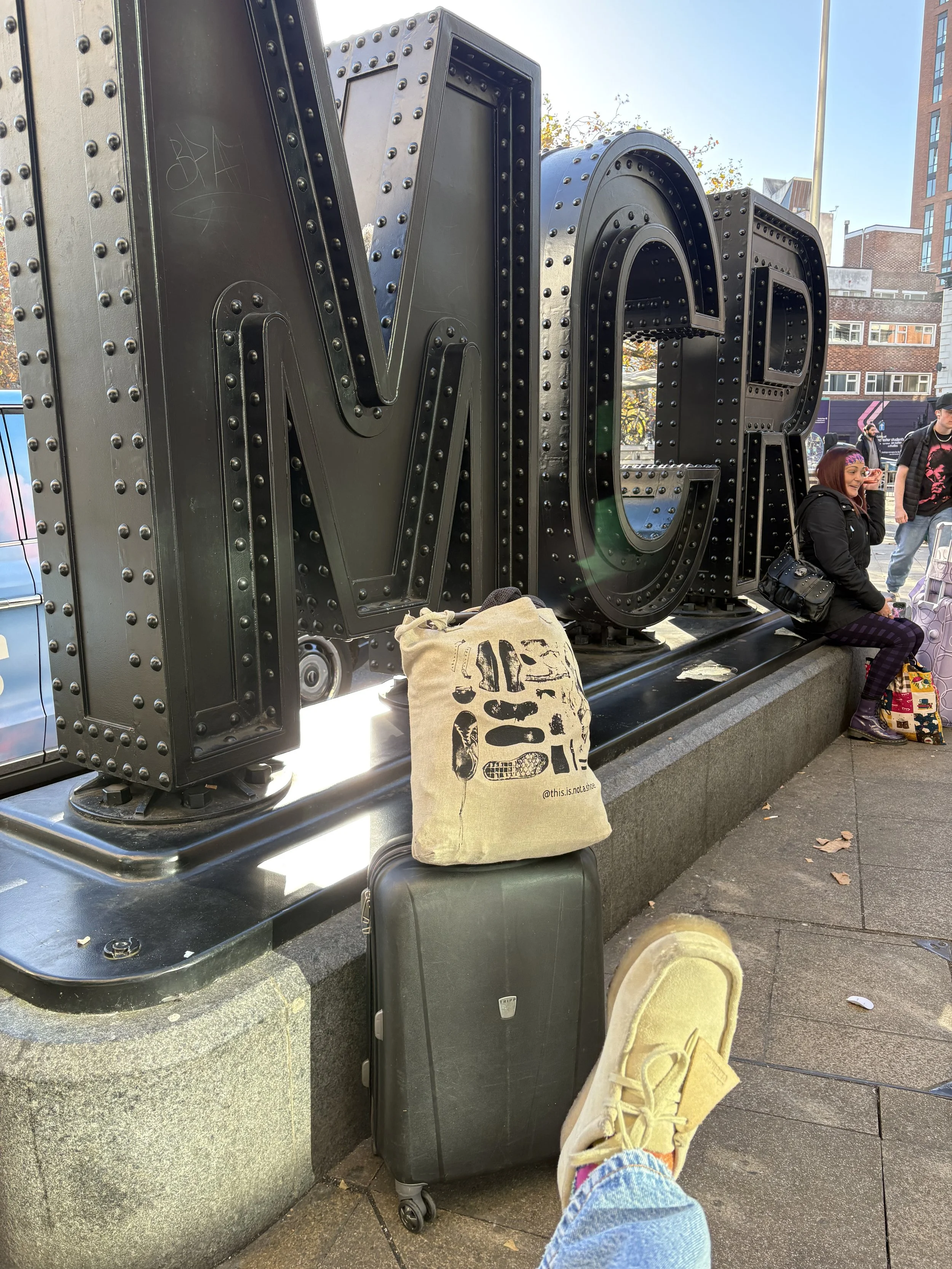
Alex [15:41] So, now, let me talk about what is happening at the moment. So we have continued our conversations with Ellen, and we've continued our conversations with Wendy, and I'm now in the UK. The reason I am in the UK is because I had planned my long service leave, which is something that we get in Australia, which is where you work for an organisation for a certain amount of time, you get a little bit of time off to go and, you know, spend time with family, essentially. It's a very strange legacy of the colonial era. Won't go into that too much, but I definitely did need some time with my family. My family live in the UK and they're getting older, and I proposed to my husband that it should be a good opportunity to catch up with our family while we still can, and the kids can spend time with their grandparents.
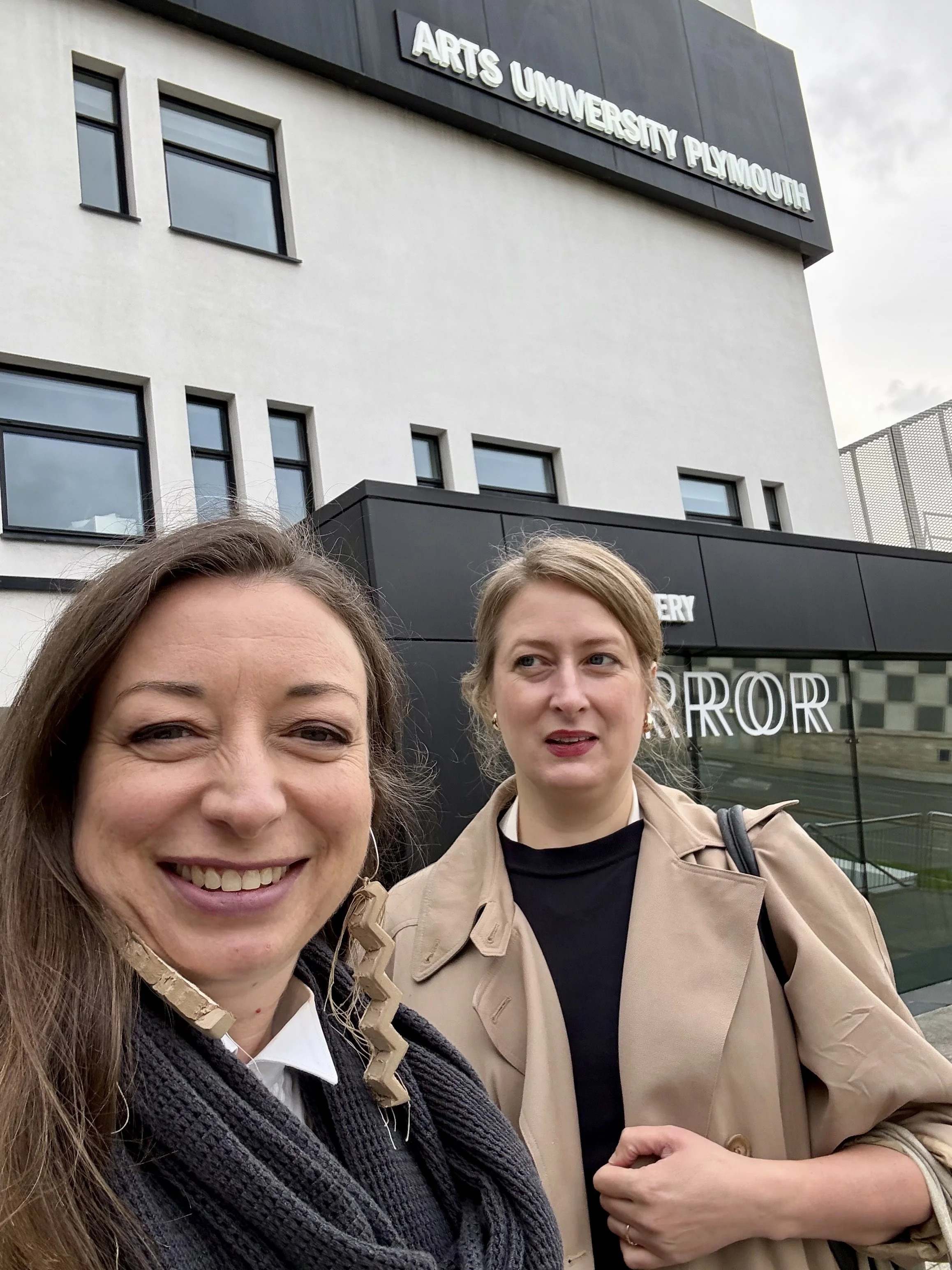
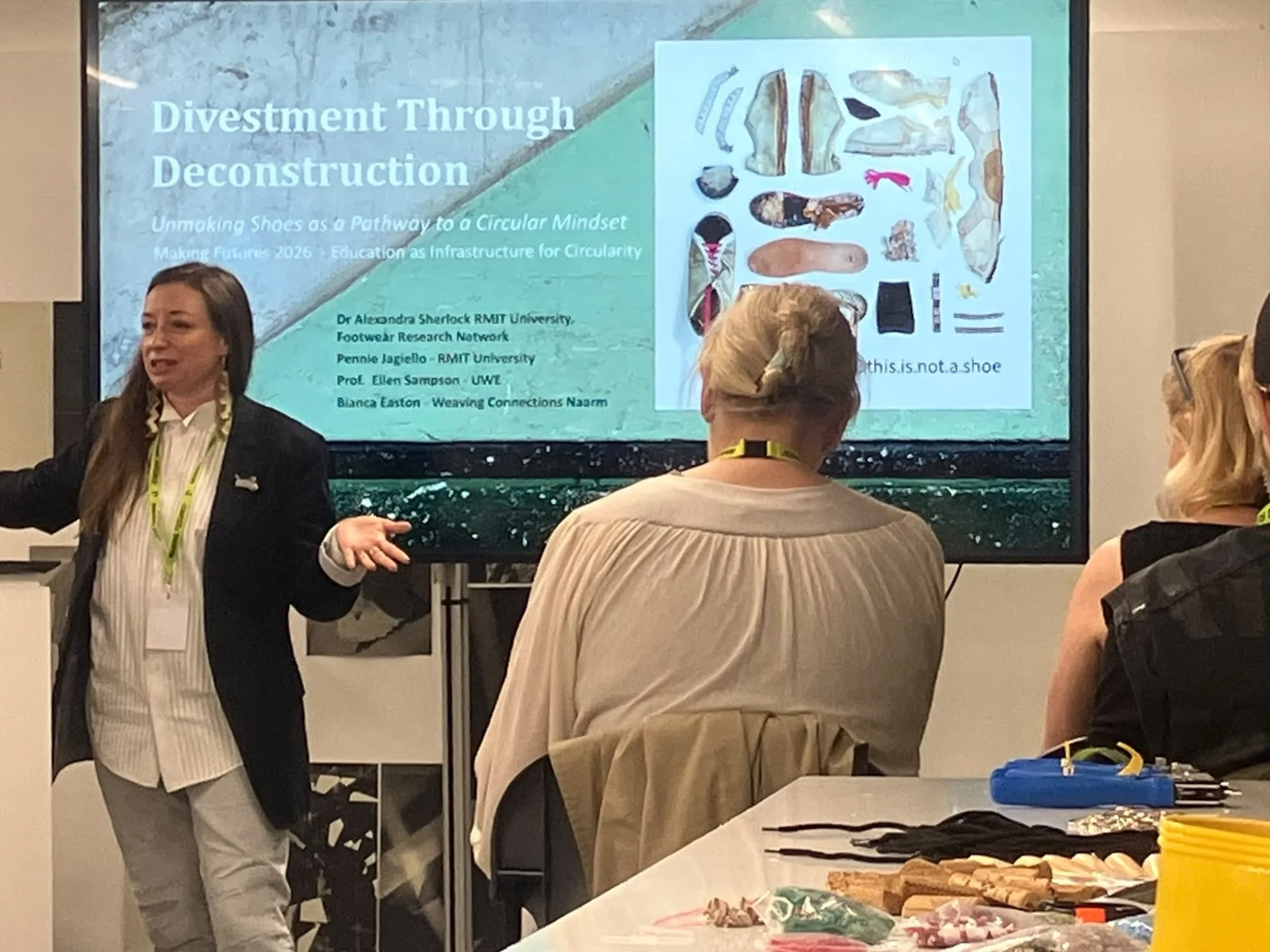
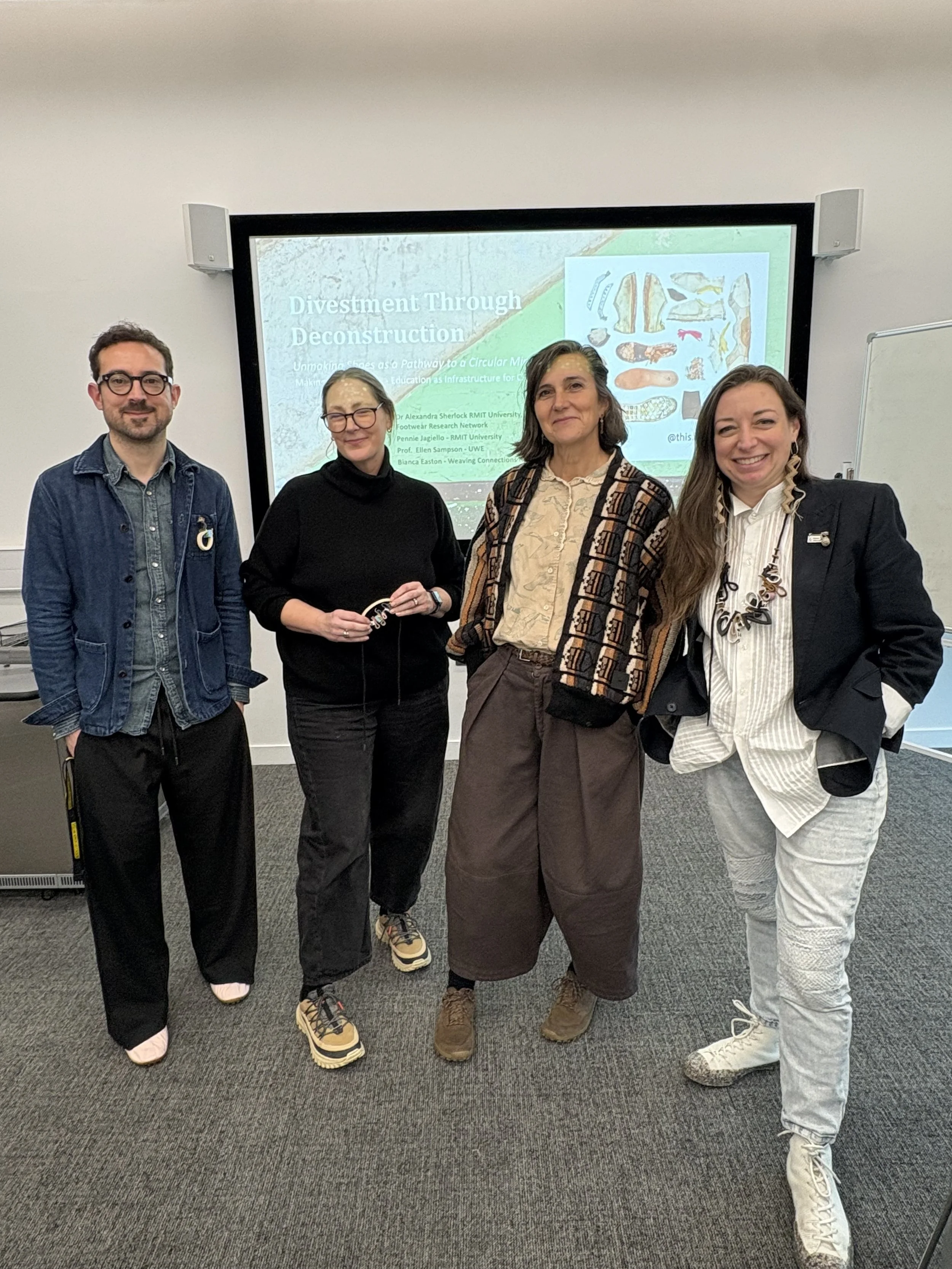
Now, as fate would have it, in a rather strange turn of events… I have two fathers, Emily. One of my fathers unfortunately passed away two weeks before we left, and the other father had a stroke three days before we left. So it's been a very, very strange time. I had planned lots of things to do whilst over here, obviously making the most efficient use of the long-haul flight and the carbon emissions that that entails. I thought, well, you know, let's do some other bits and pieces while we're over here. It's been quite a challenge. But actually, what I would say is the activities that I have done, including I did present at the Making Futures conference with Ellen down in Plymouth and also Manchester Metropolitan University yesterday and Sheffield today, has just been a wonderful respite.
I think probably what lot of other academics and people who are really passionate about their jobs will um identify with is that what we do is part of our identities. isn't it, Emily? And so, um, being able to have some snippets of time to be able to do that has actually been really good, whilst in between trips to solicitors and funerals and things like that. And thankfully actually my adopted father who had the stroke is actually doing incredibly well. So we are really happy to be over here, it's great timing to be able to help him with his recuperation. So I just need to thank all of my family for being really understanding about sort of allowing me to still do some of these bits and pieces at such a difficult time, and particularly for my husband, for stepping in and helping with the children while I sort of jet-setted off to different places.
Emily [18:19]
Steve is a legend, by the way. Steve is a legend. I'm just gonna put it out there.
7. Making Futures at the Arts University Plymouth [18:25]
Alex [18:25]
He's he is very, very good. Um so yes, the activities in the UK did start with a conference that we had been accepted into; only 50% of the applicants got accepted into this conference, so I was quite proud of that. And it was a paper written between the original This is Not a Shoe sort of collaborators, so it was me and Pennie, really taking a moment to pause and think about what are we actually observing with these workshops? What are we noticing? The workshops really sort of originated as a classroom activity, a studio activity at RMIT, which was developed from my PhD research of the same name, This is Not a Shoe. Pennie and I'd been delivering it in class, where we'd get our fashion students to deconstruct shoes and make things out of them. And we just noticed it going in all of these different directions, and the students really loved it.
So we took it out of the classroom and it's developed this of organic life of its own. And now we've got this studio at Abbotsford Convent. But we've noticed all of the different people that come to it now, beyond the fashion students, bring something completely new to it. And then Bianca, who joined us, who, as I mentioned, um is a First Nations practitioner, then started bringing her cultural knowledge and practices, and we realised that whilst in our research we talk about shoes as having an extraordinary number of affordances, so affordance theory is this idea from an ecological psychologist called James Jarome Gibson, who had this idea that the affordances of a material or an object are a combination of how we perceive it, what skills and perspectives and requirements we need a nd have at the time, and also the object's objective properties, so the properties of the materials. So when you chop up a shoe, the resulting materials actually have all of these different properties that one person will make one thing out of them and someone else will make something entirely different. So what's been wonderful about Bianca is seeing her bring that sort that First Nations perspective and practices. And she, as one of um, this is not a shoe participants, in an original workshop at the Abbotsford Convent had deconstructed her ten-up cherry red docs and is really excited to continue working with the pieces of leather of those Doc Martens that she'd worn for years and absolutely kind of wrecked, actually thinking about possibly doing possum skin cloak engraving, which is a practice that she is permitted to do by cultural elders, which is where you engrave with symbols and motifs your story and the story of Country, and you know, where you come from in Australia as an Aboriginal or Torres Strait Islander. And so it's so exciting to see her use a shoe that so many different people and cultures engage with, but bringing her own subjectivity and her own knowledge and using the shoe as a medium to be able to educate other people about her culture.
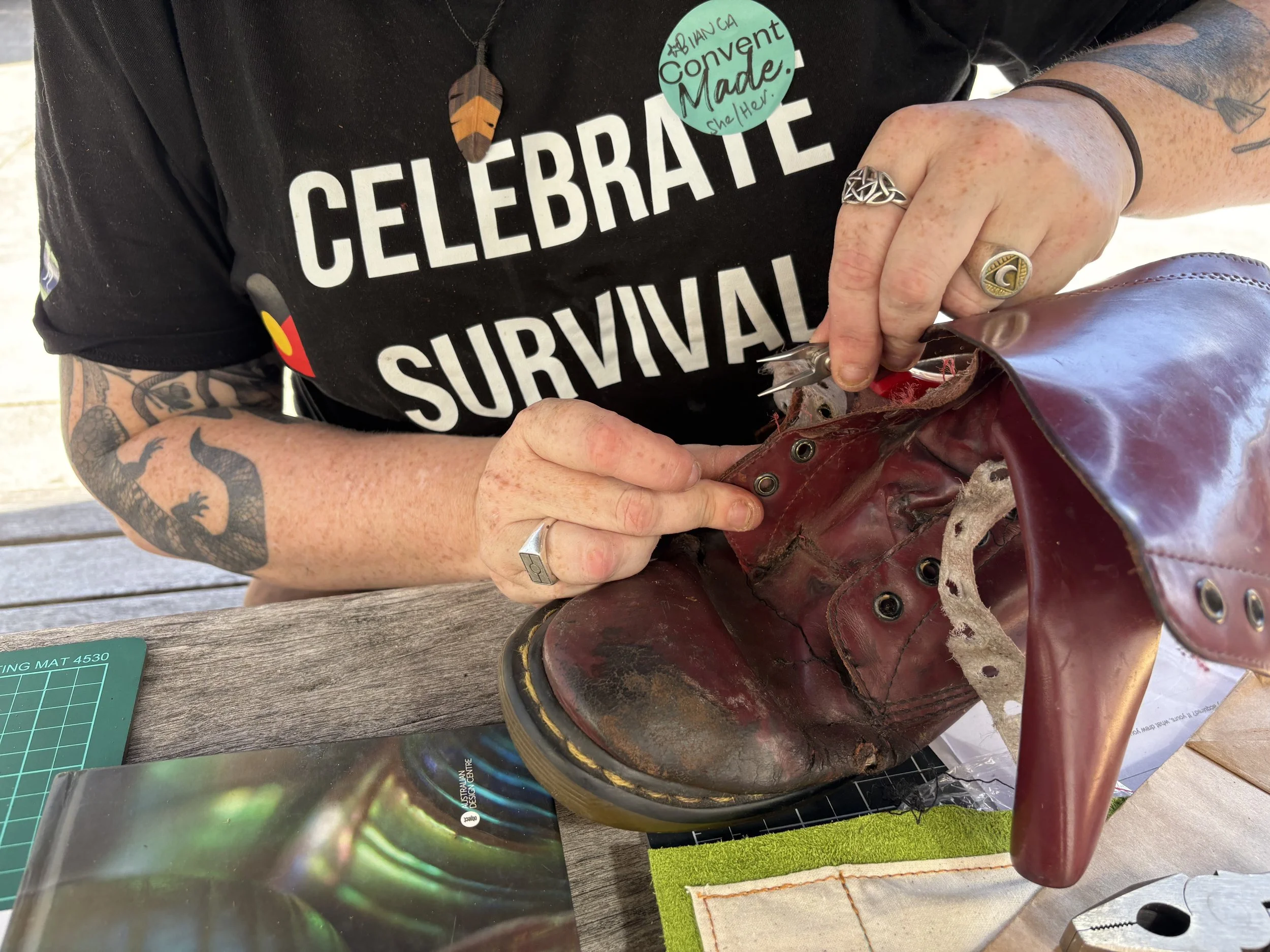
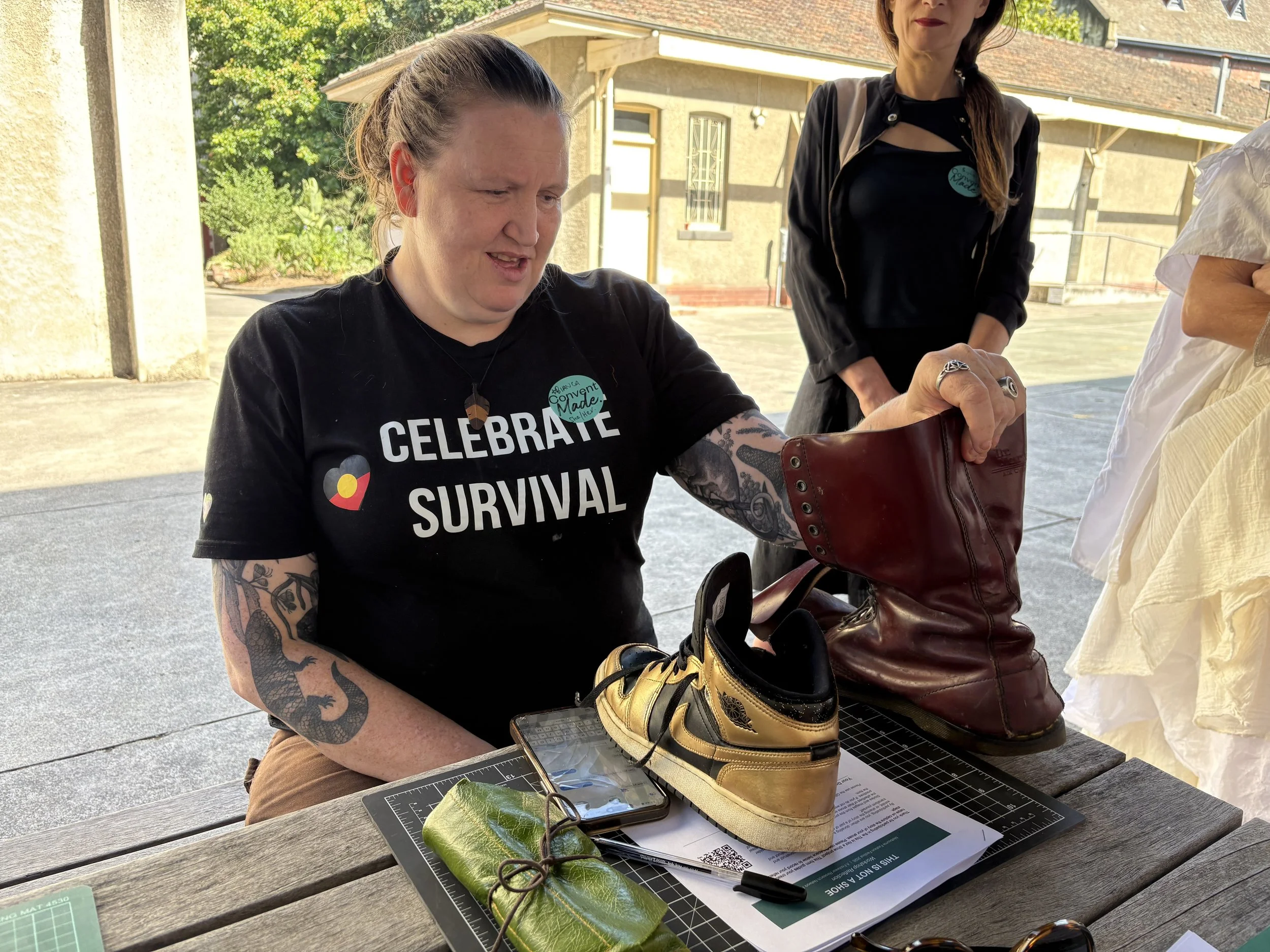
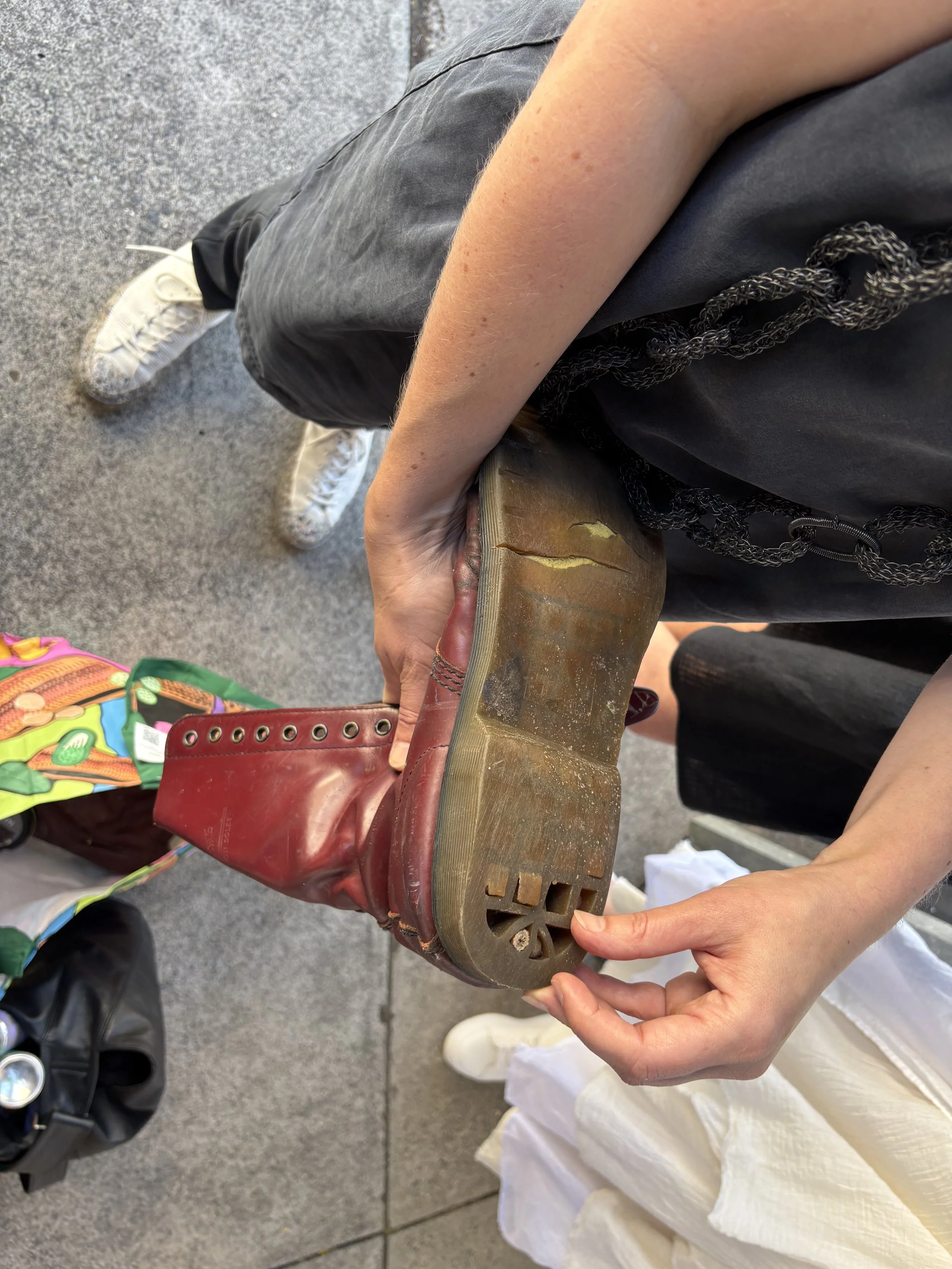
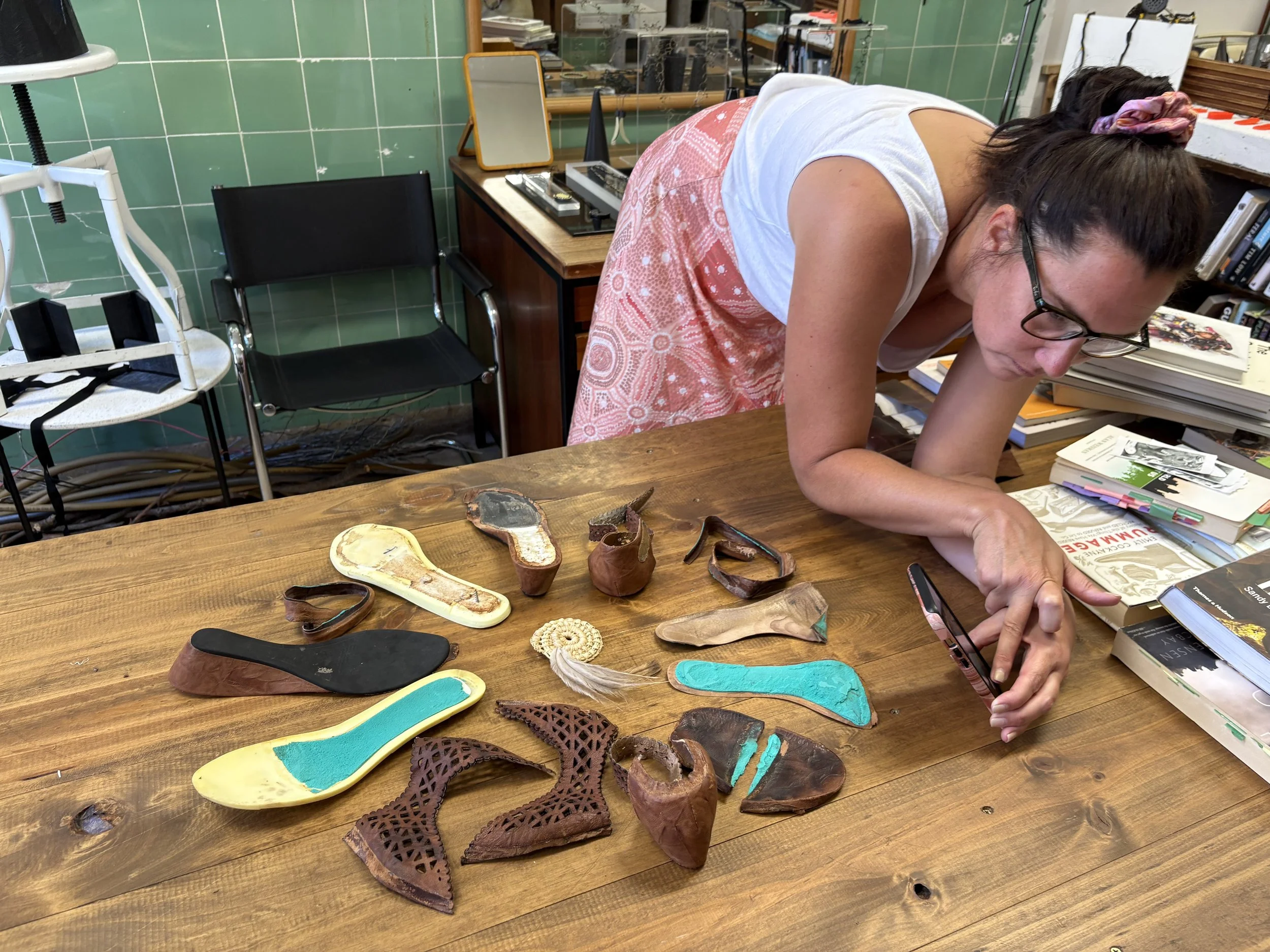
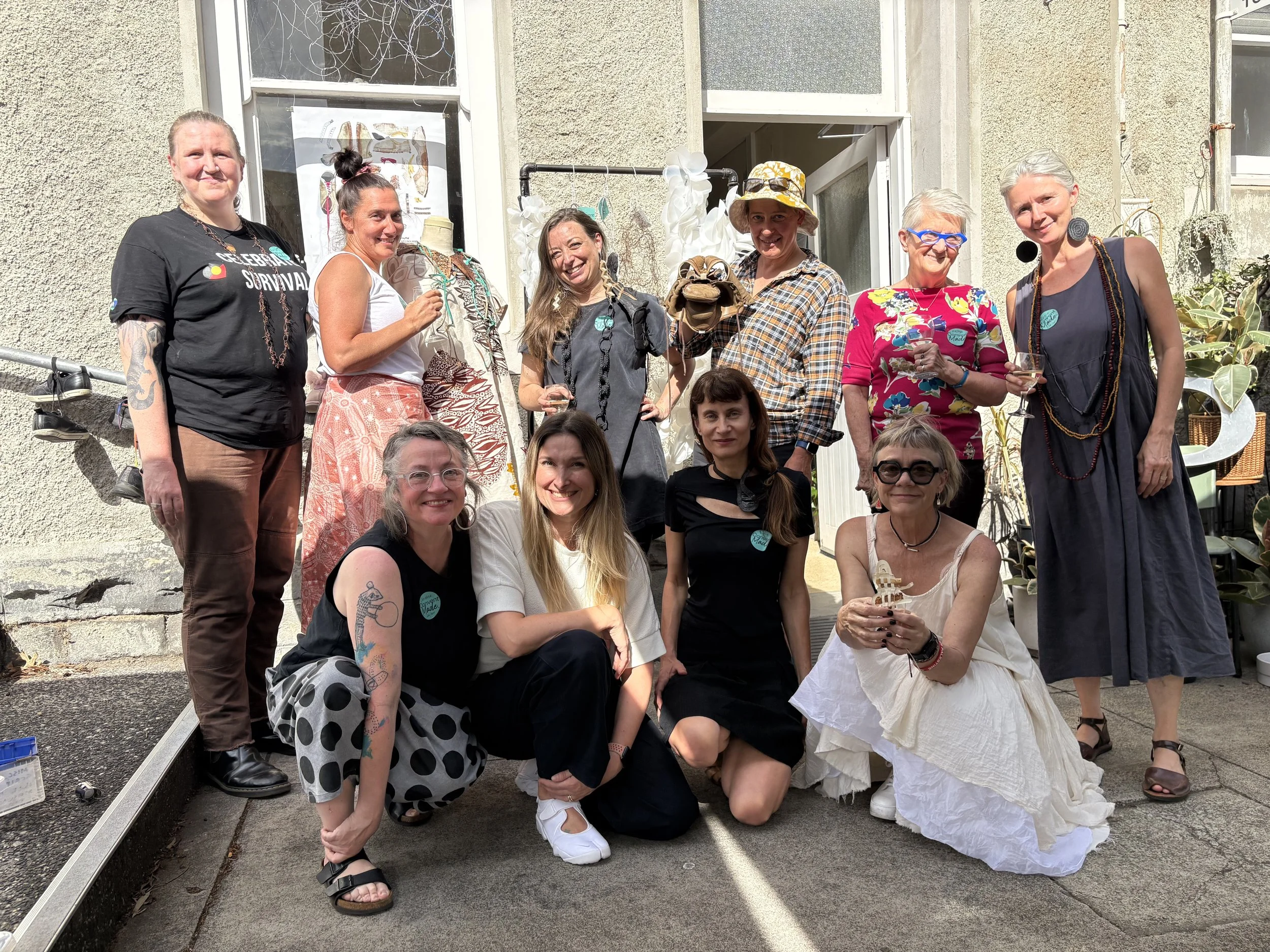
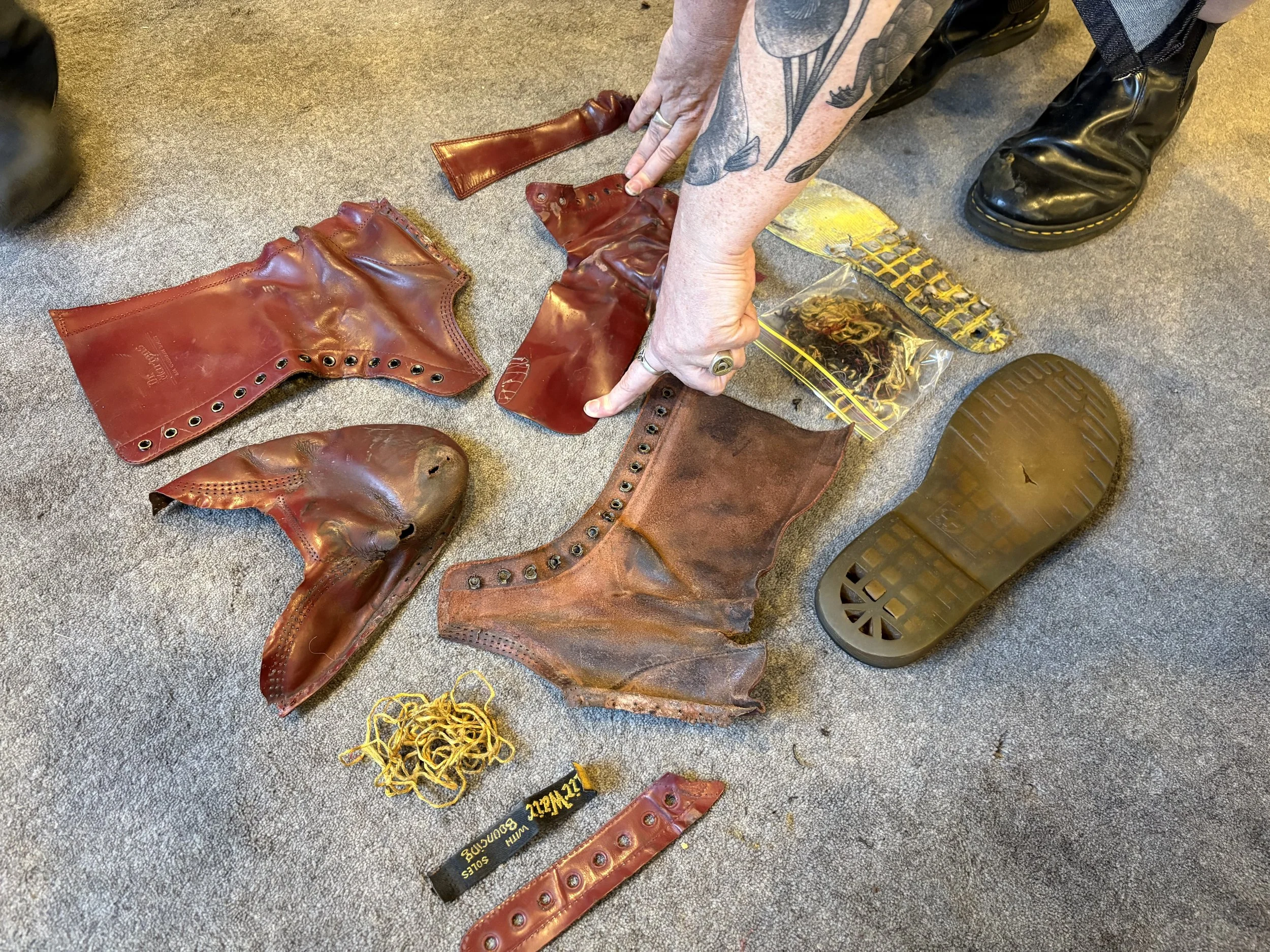
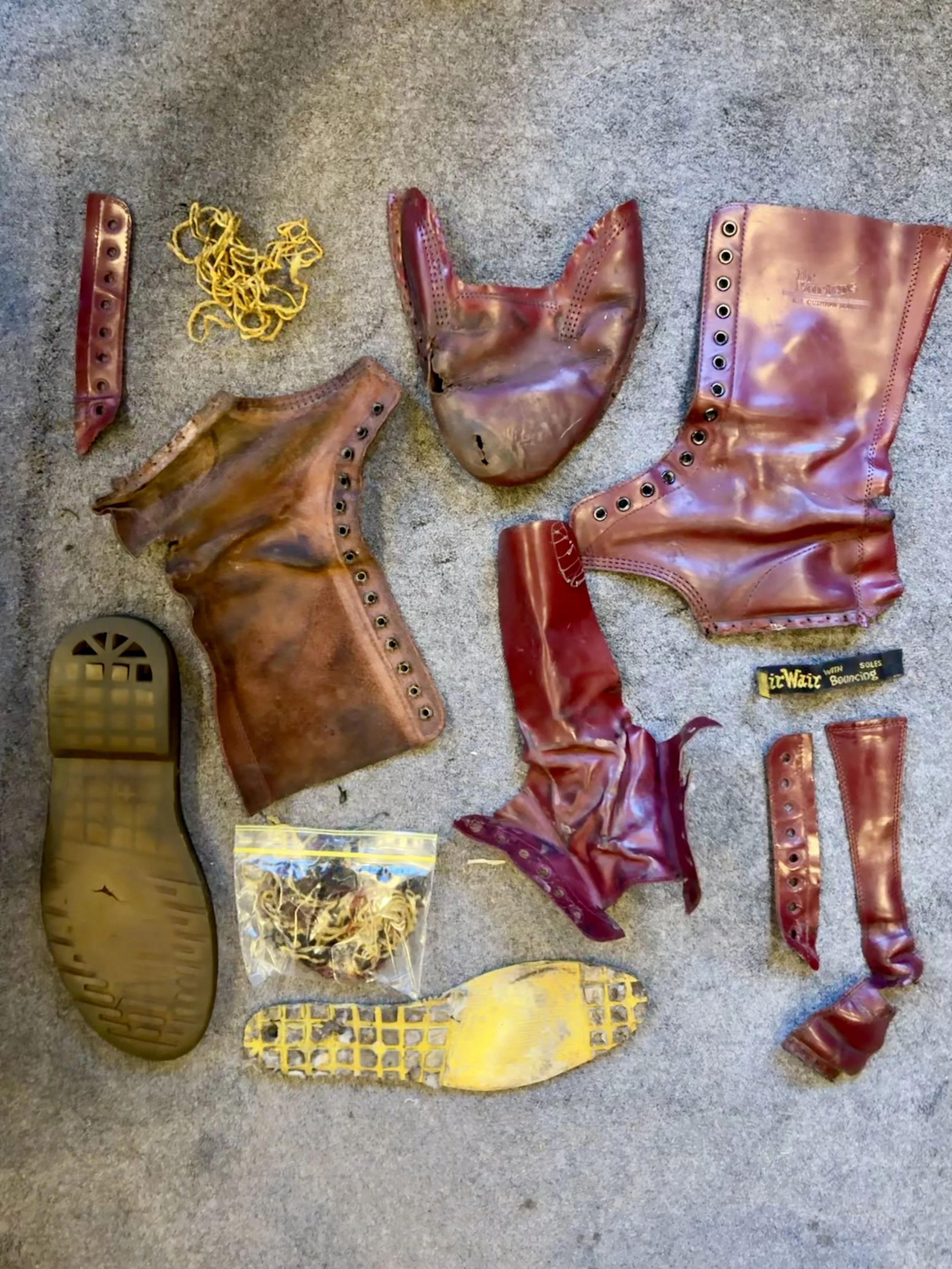
Photographs by Alexandra Sherlock 2026
So this started us thinking about the fact that even though the shoes themselves we hope to show people the affordances that the shoes have, the actual this is not a shoe activity has an extraordinary number of affordances for different people, different identities, in different places And this is what we're noticing.
8. Decolonising Docs: Bianca Easton's boots and shoes as a medium for connection and knowledge exchange [22:00]
Emily [22:00]
Yeah, I was teaching decolonisation in design actually this week. And when you were talking about Bianca's First Nations practices and her shoes that she deconstructed, of course, Dr. Martin boots are a very, very English shoe. Right? They're a super English shoe. They're an icon of sort of British identity for a long time. Embraced by British working class, British subcultures, but they've also got subcultural associations in Australia as well. But what I think is lovely, and Bianca's usage is that it really demonstrates that decolonisation and First Nations cultures, they're not stagnant practices, right? You can take these objects, you can reimagine, you can re-inscribe. You know, and and update them and make them wholly relevant, you know. And so it's it's in a way it's sort of is decolonising these Dr. Martin's boots, in a way. And I just love these ideas, you know, that that come through and punctuate, if you like, some of the more kind of frankly, racist discussions that are happening in Australia at the moment, particularly with politics shifting to the hard right. And, you know, and I think that's something that can come through footwear practices and individuality as well, thinking where our shoes come from, what they mean for us, but also, and I mean, I don't even know if Bianca was necessarily intending to disrupt or if that was the at the front of her mind, but it's one of those beautiful, I guess you would say, affordances. Right? for one person it's a symbol of identity. For another person, it can be incorporated into a symbol that involves reclaiming and practicing and keeping their culture strong, which is a really powerful thing.
Alex [24:00]
Yeah, and I think why it's a powerful thing for this idea of knowledge exchange is that with one brand, with one iconic shoe, so many people identify with it and therefore can identify with one another through that shoe. So the shoe becomes a medium for connection between different cultures.
And you say you're not sure whether Bianca intended to do it. I think that she didn't start or set out to do that, but as the process evolved and as we sat together and as we were talking, we were getting to know each other and actually we were having these really incredible conversations about colonisation and impacts and legacies um to First Nations people, bearing in mind that I'm very, conspicuously British and we'd not really met before. We really bonded over that activity and sharing those different perspectives. She really educated me about those things and, and also another participant, Emma Stenhouse, who is another First Nations artist who was involved in the same workshop.
So these workshops are an extraordinary way for people to be able to connect and identify with one another through dismantling these shoes and everything they represent.
9. From Plymouth to Sheffield: Developing a collaborative participatory research project [25:04]
Alex [25:04]
Now, what's wonderful about the Plymouth conference was certainly with First Nations knowledges, um and in terms of responsible practice, it's extremely important that um, there's this saying nothing about us without us. Um so it was wonderful to be able to bring Bianca in as a as another author on that paper to be able to write in her own words about her experience of that as well.
And just, you know, important to note that this really at this point is just a reflection on our own experiences as collaborators with this activity to think about where these ideas might go next. And this is with Professor Ellen Sampson's help in that podcast episode and then in writing the paper, is that actually we probably need to take this activity back into research, and apply for ethics to do actually participatory action research, which is very much about considering how knowledge is made and produced through these activities.
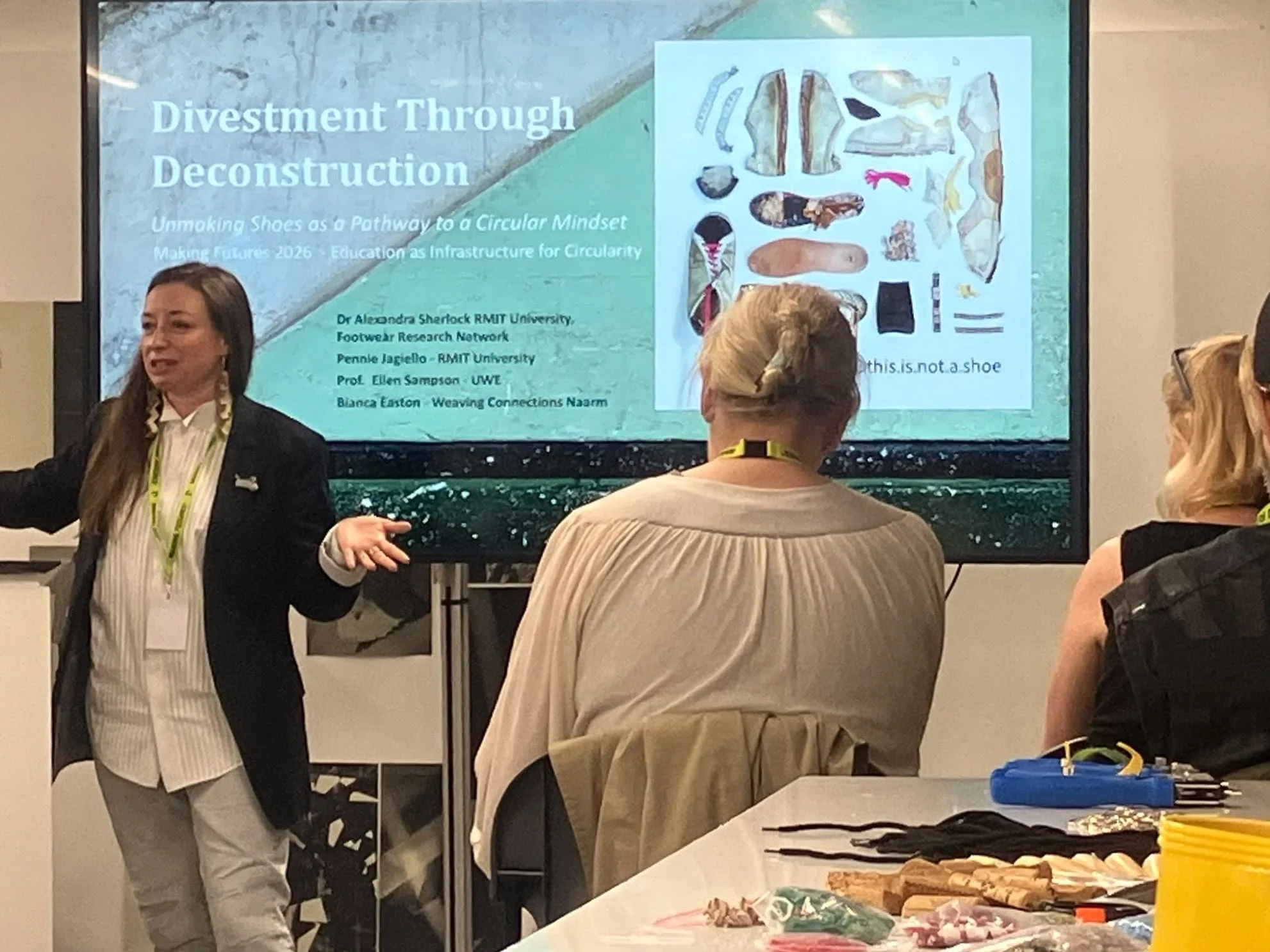
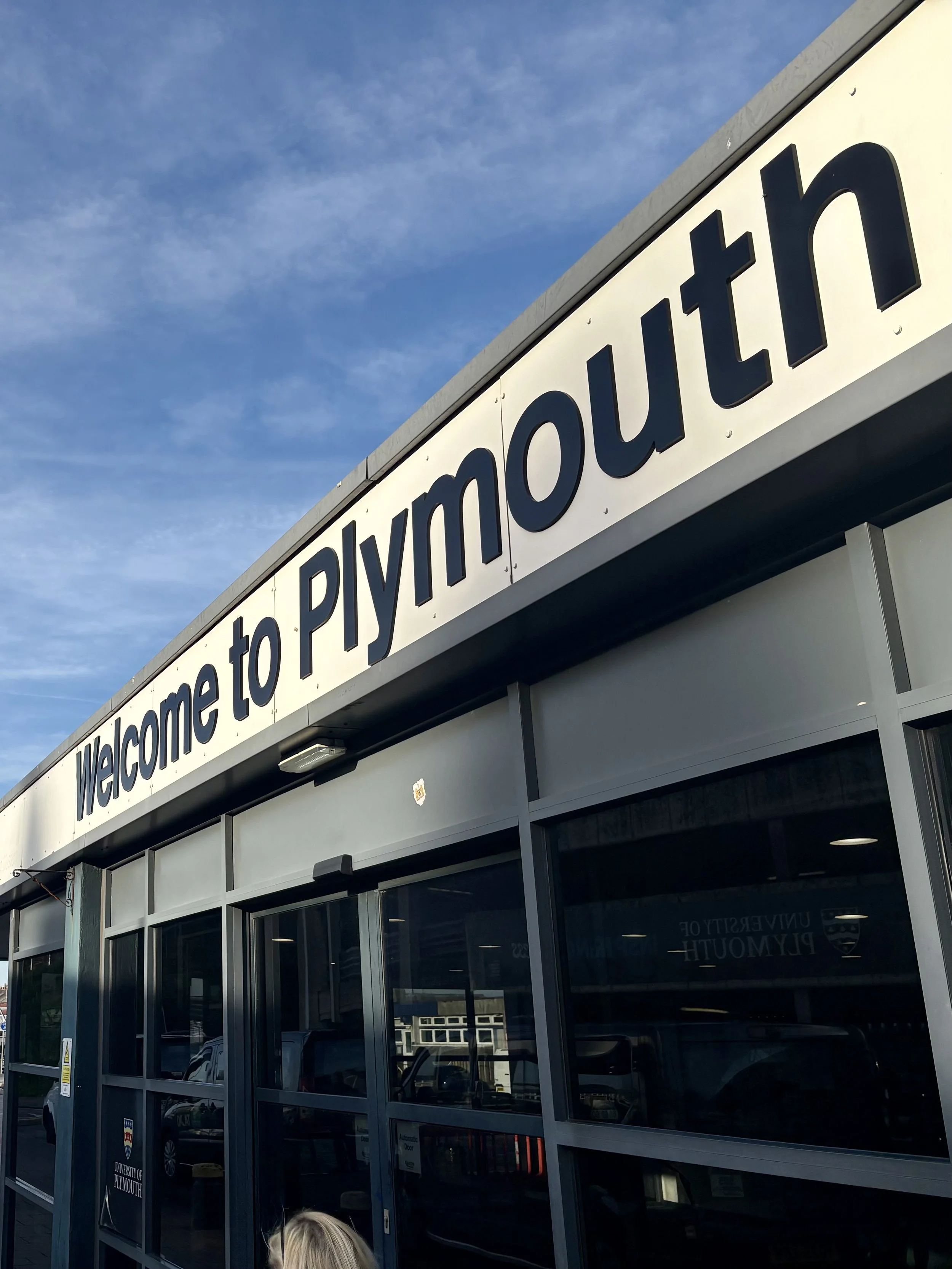
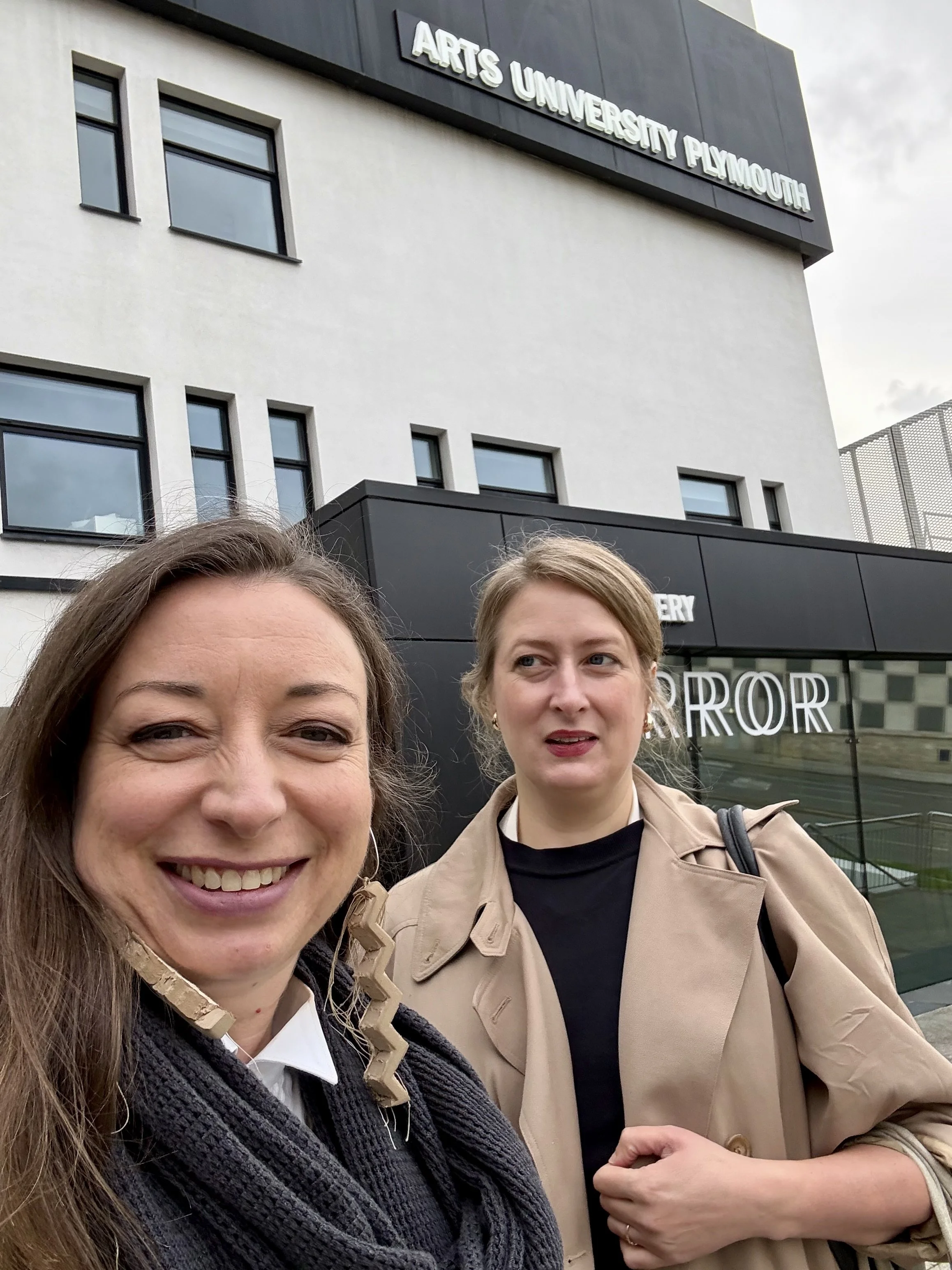
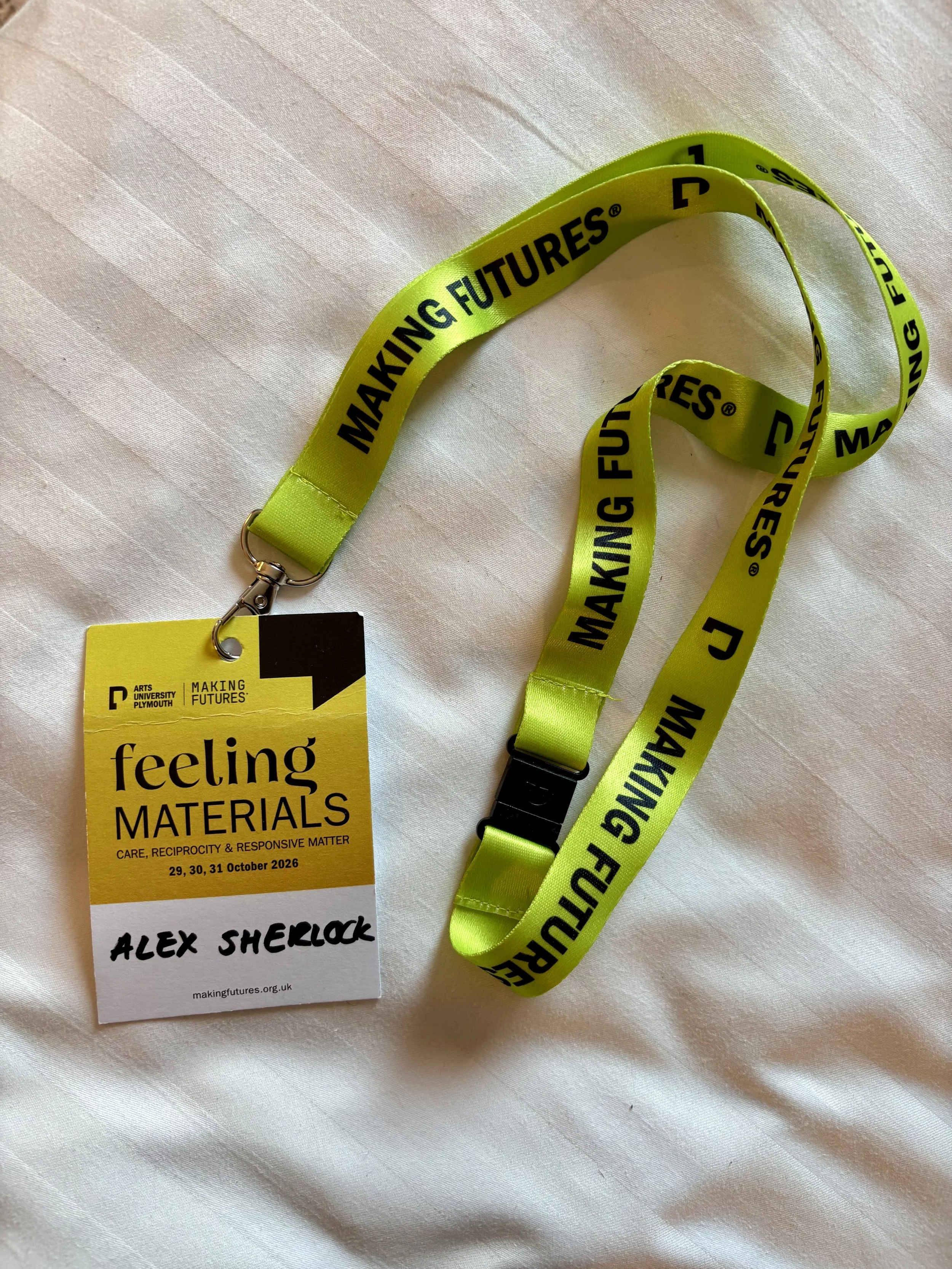
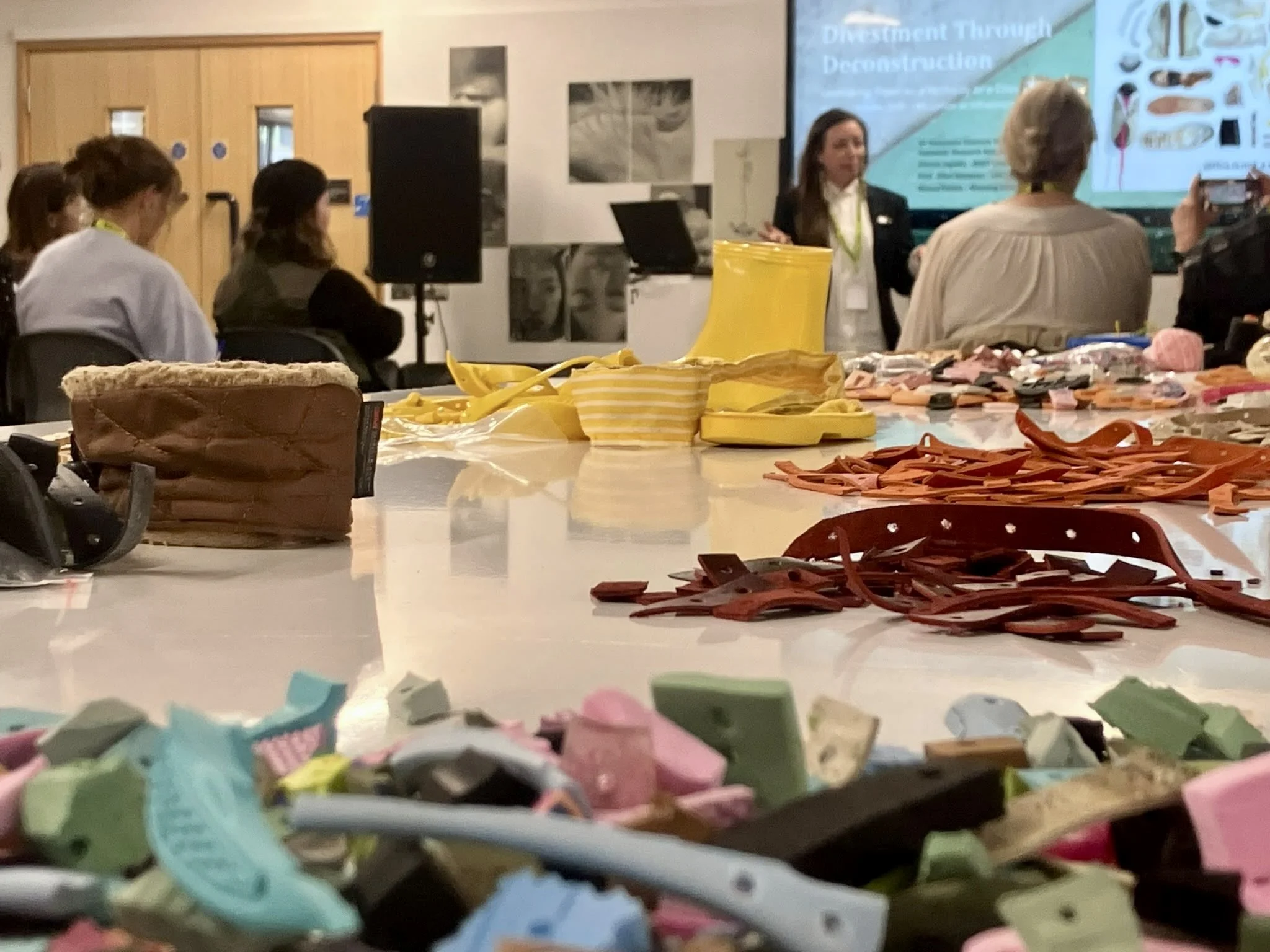
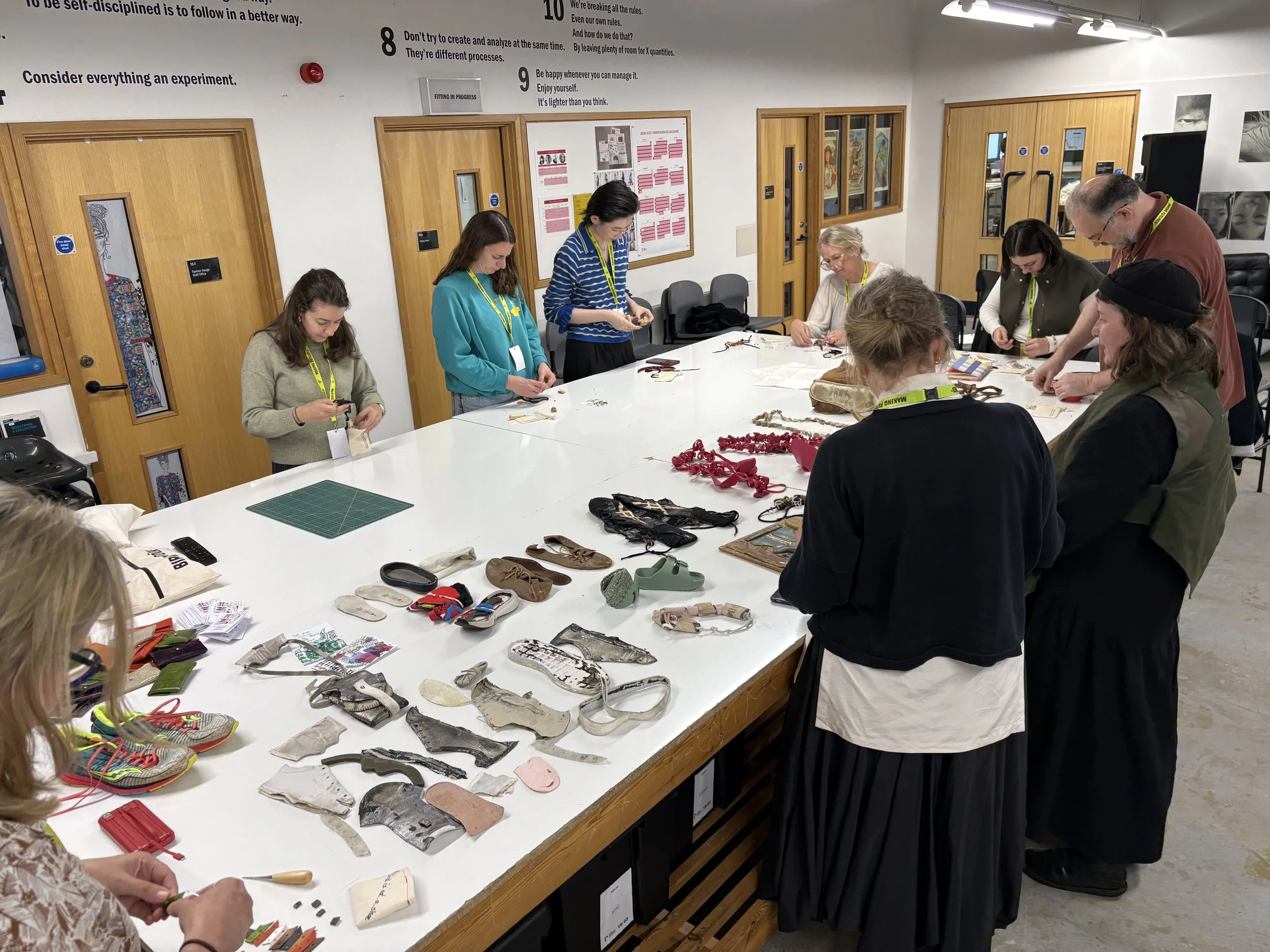
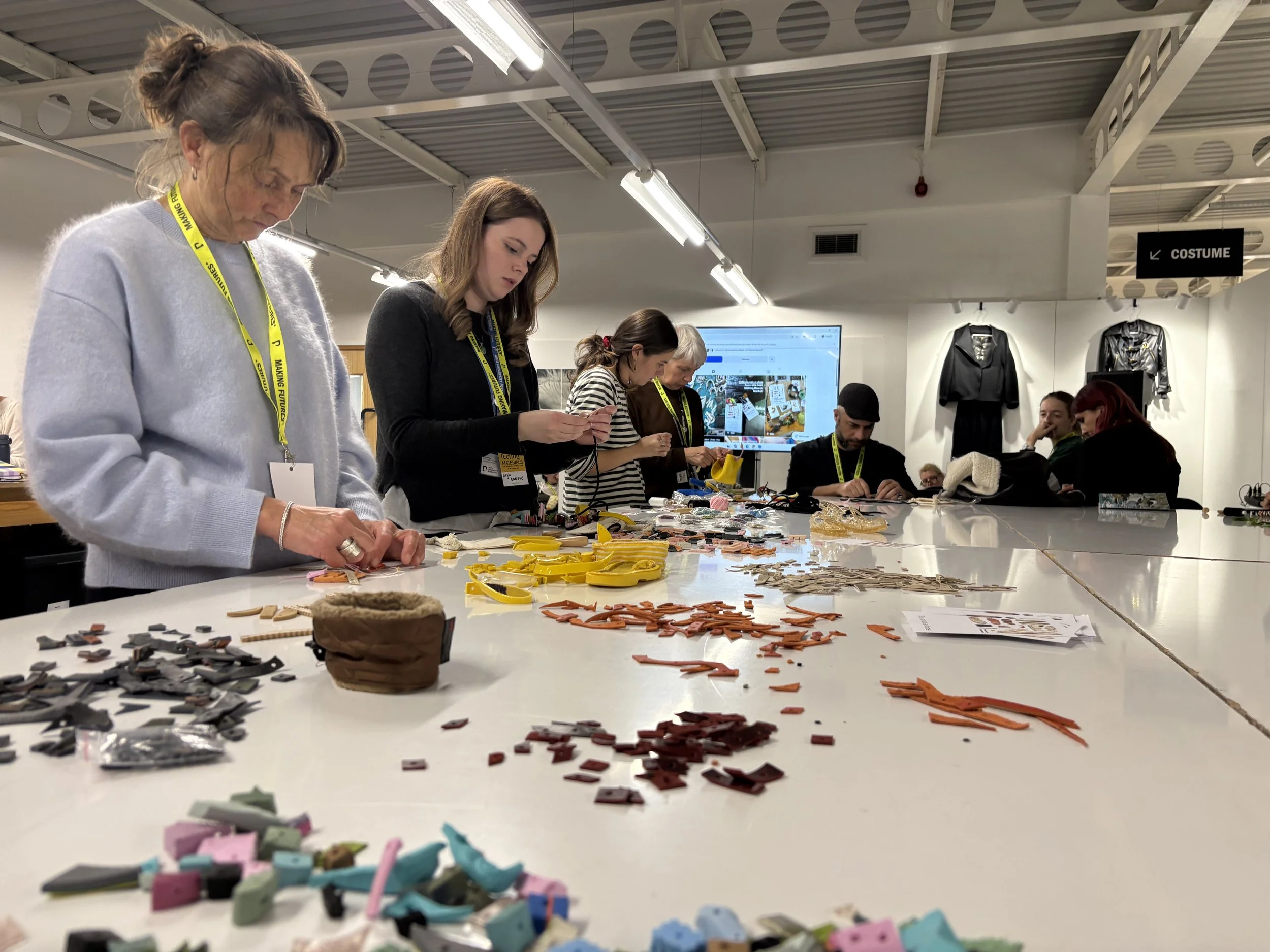
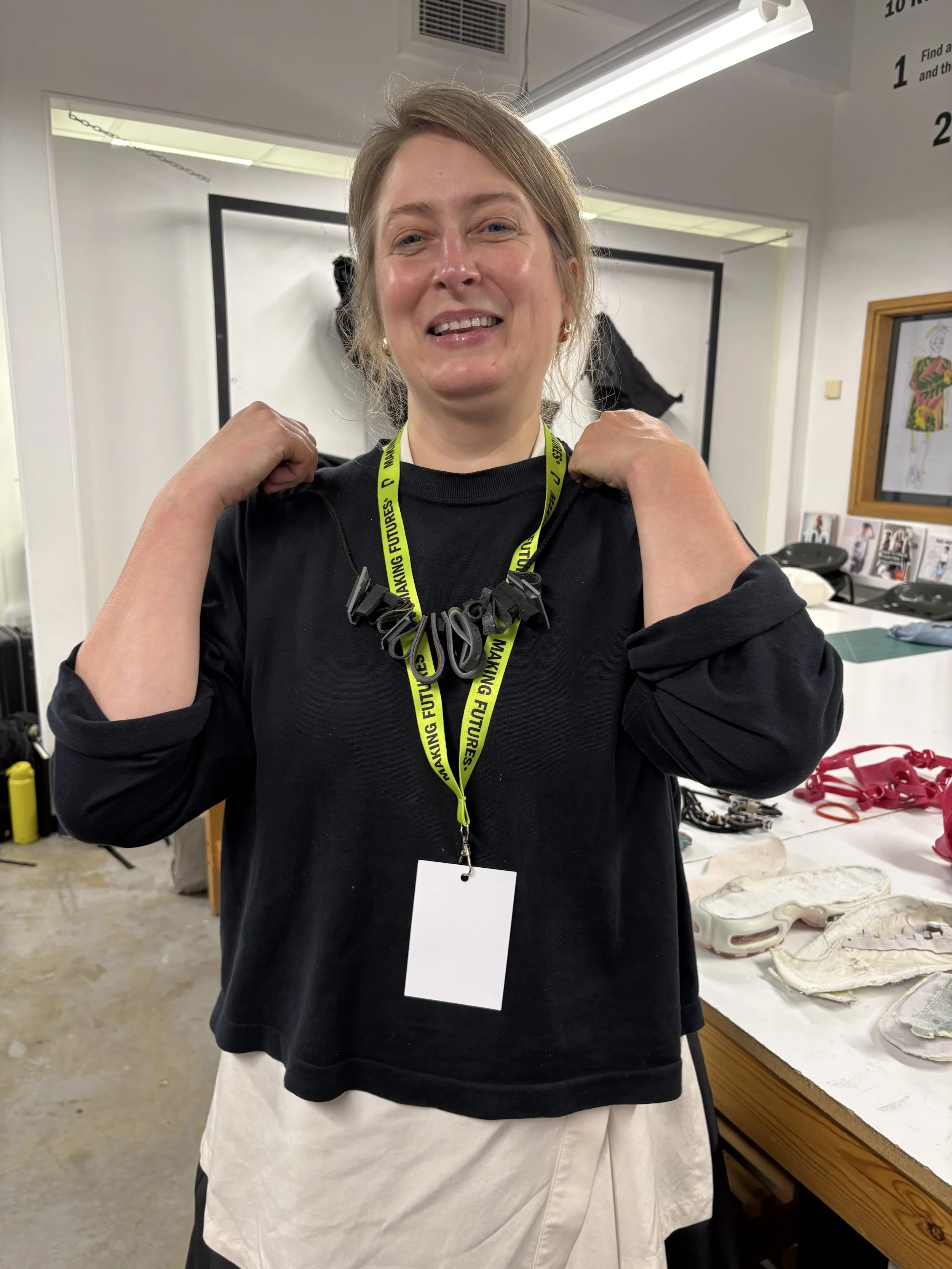
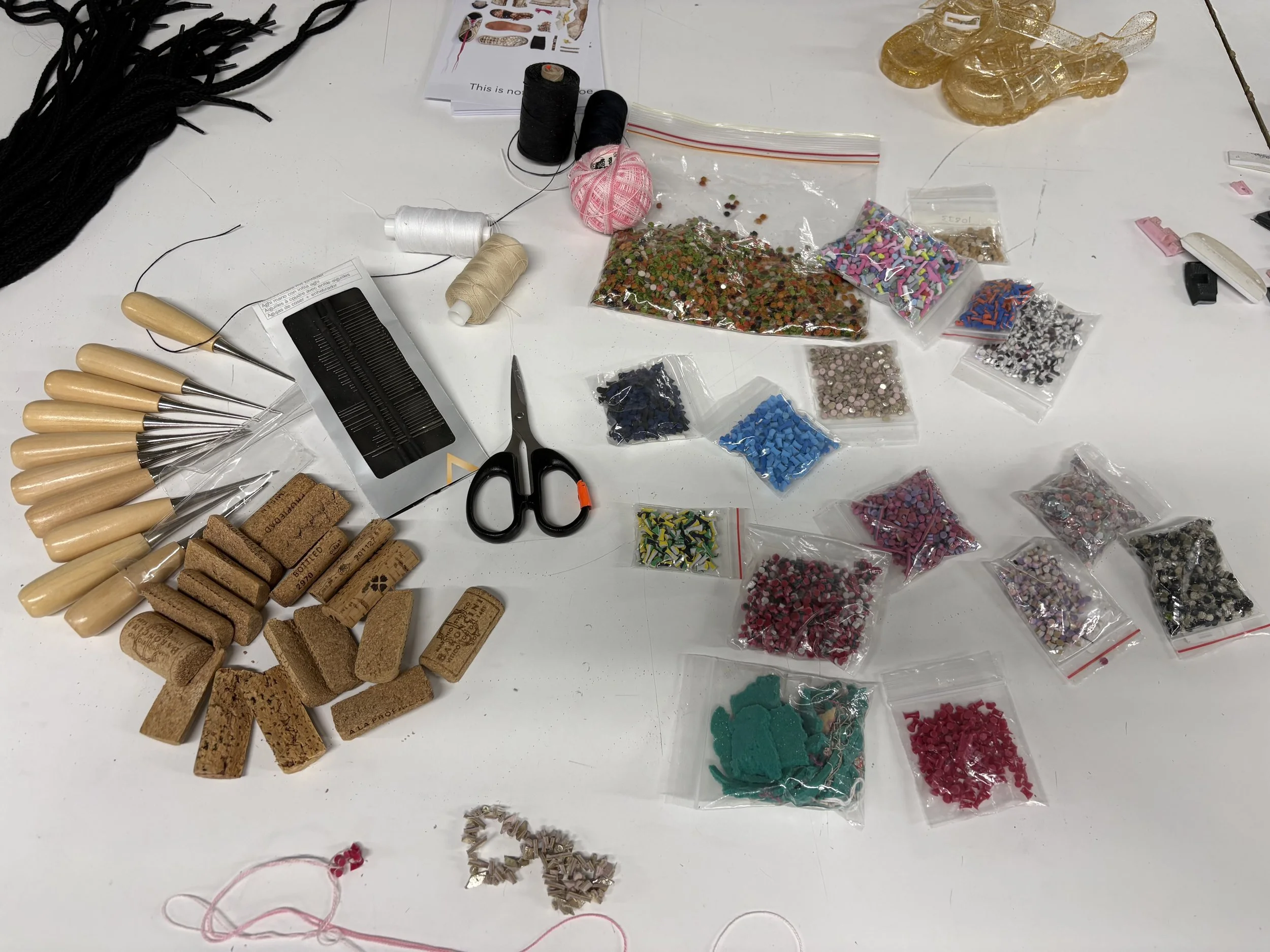
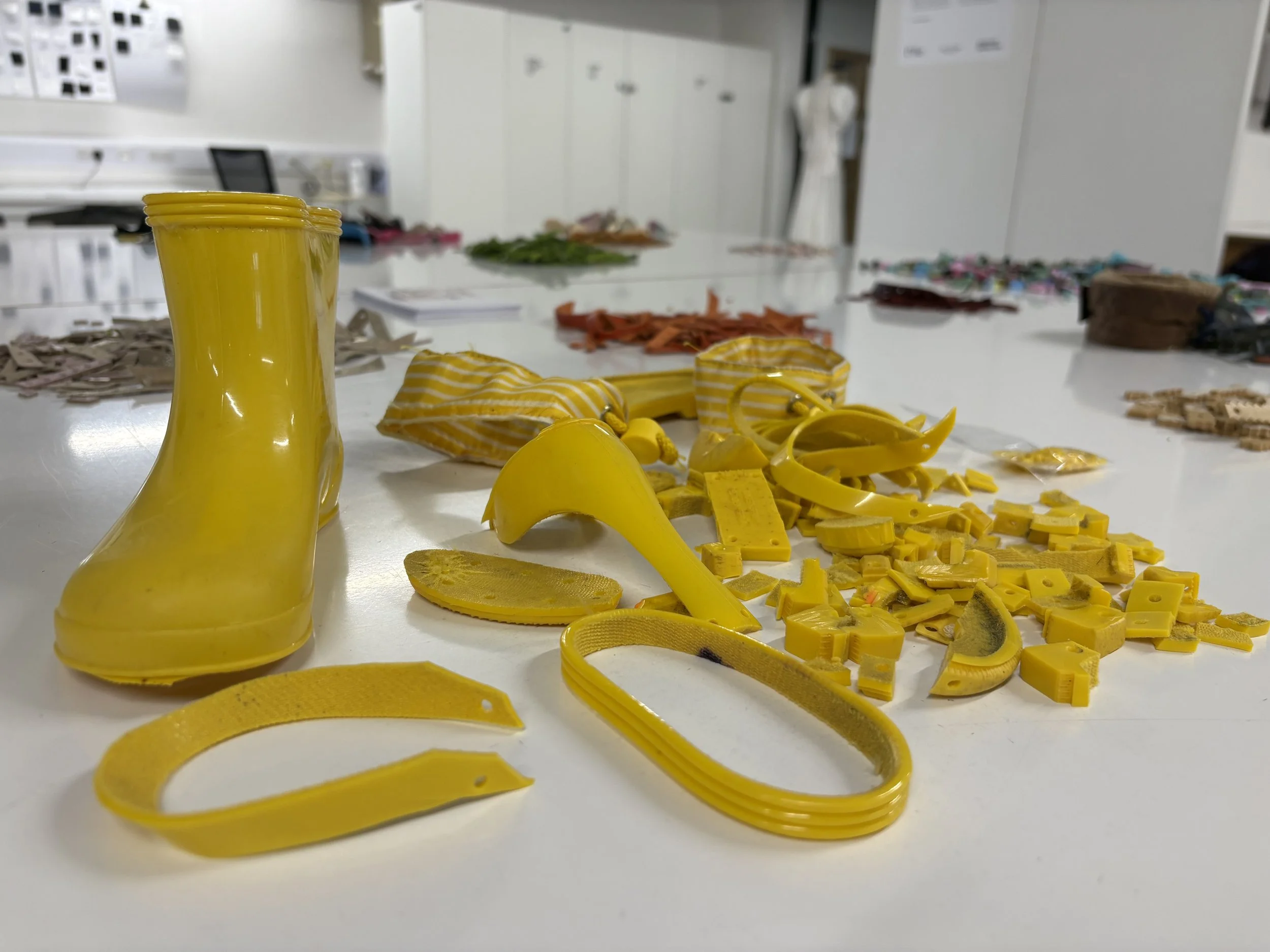
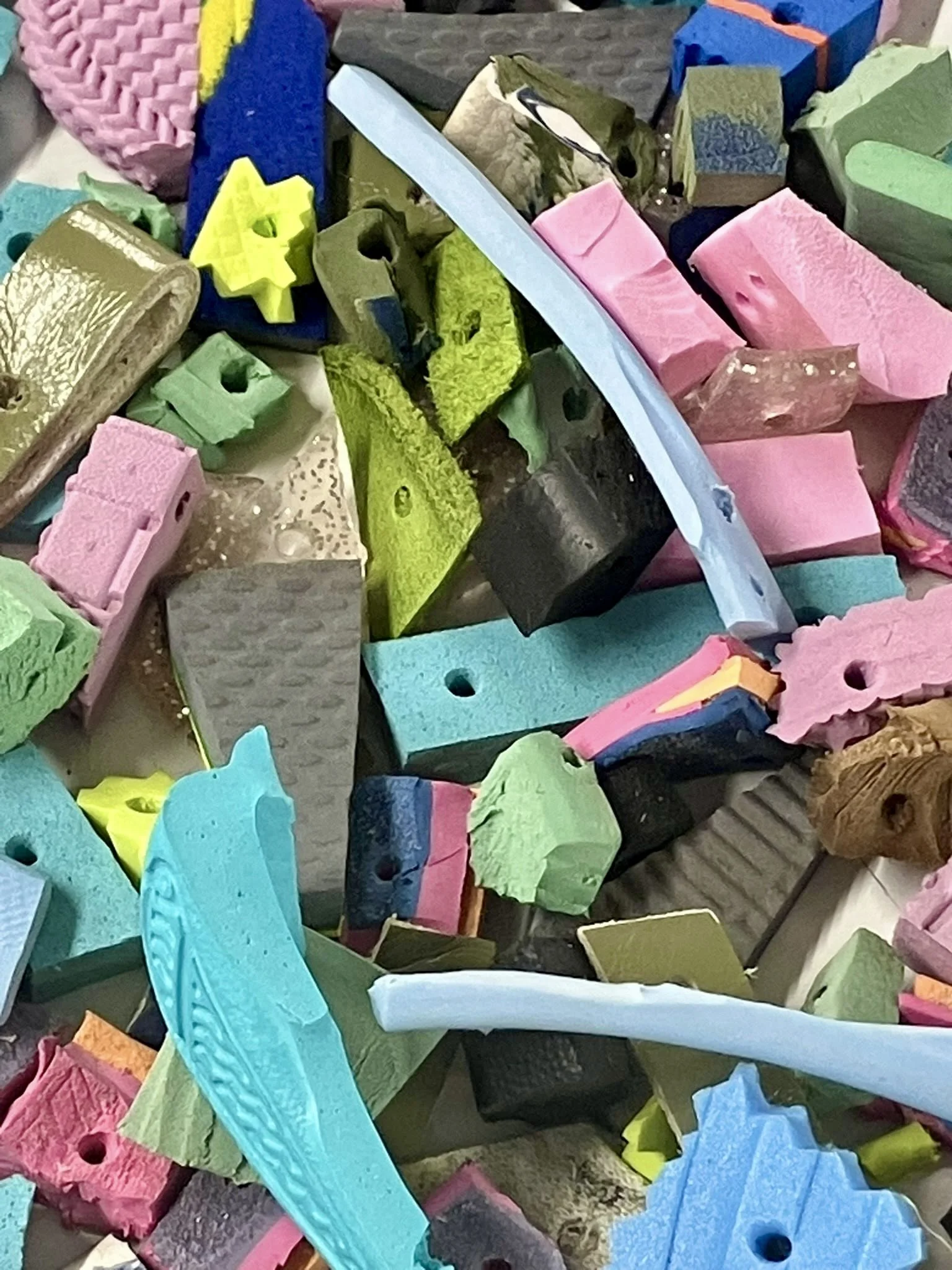
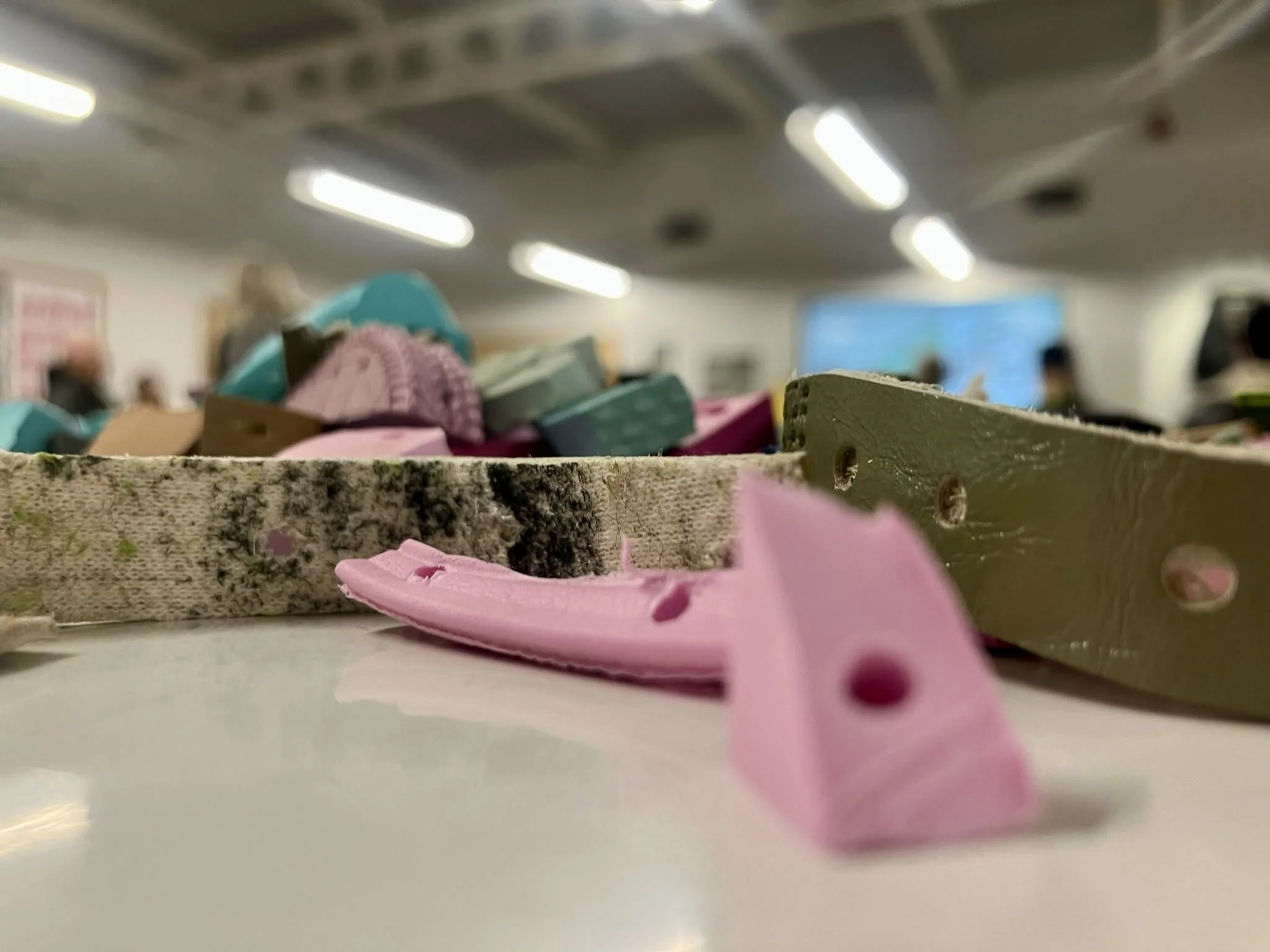
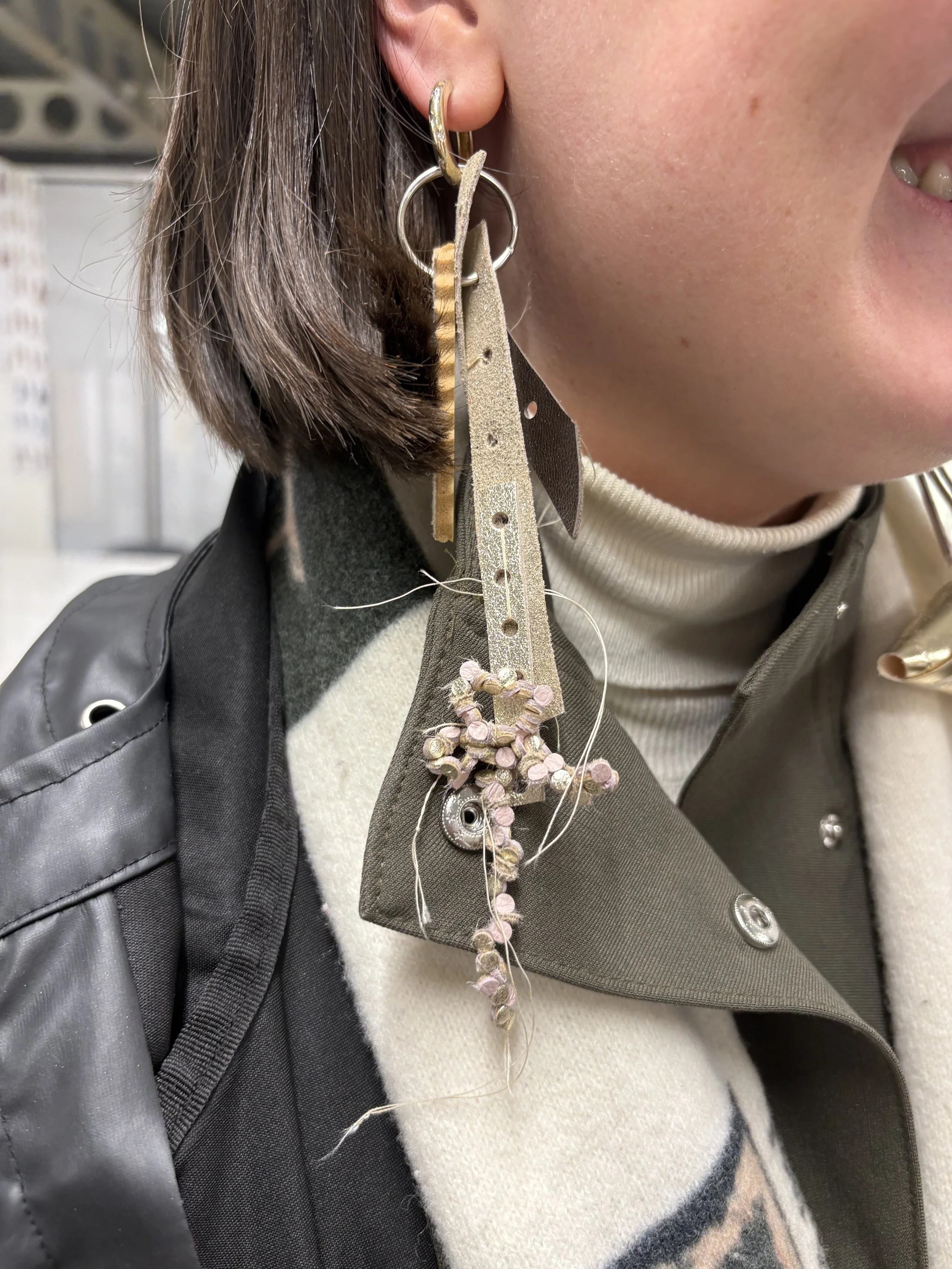
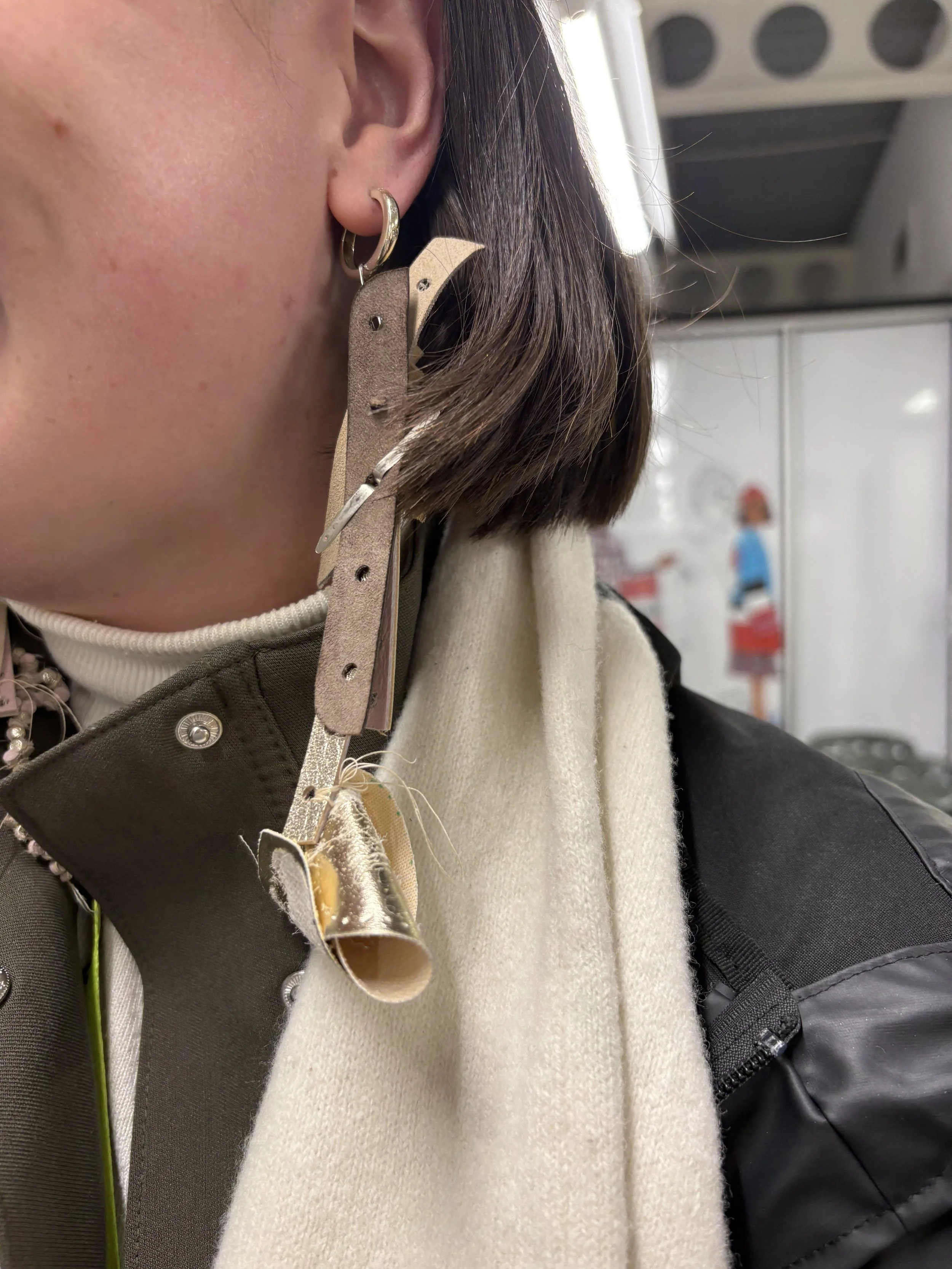
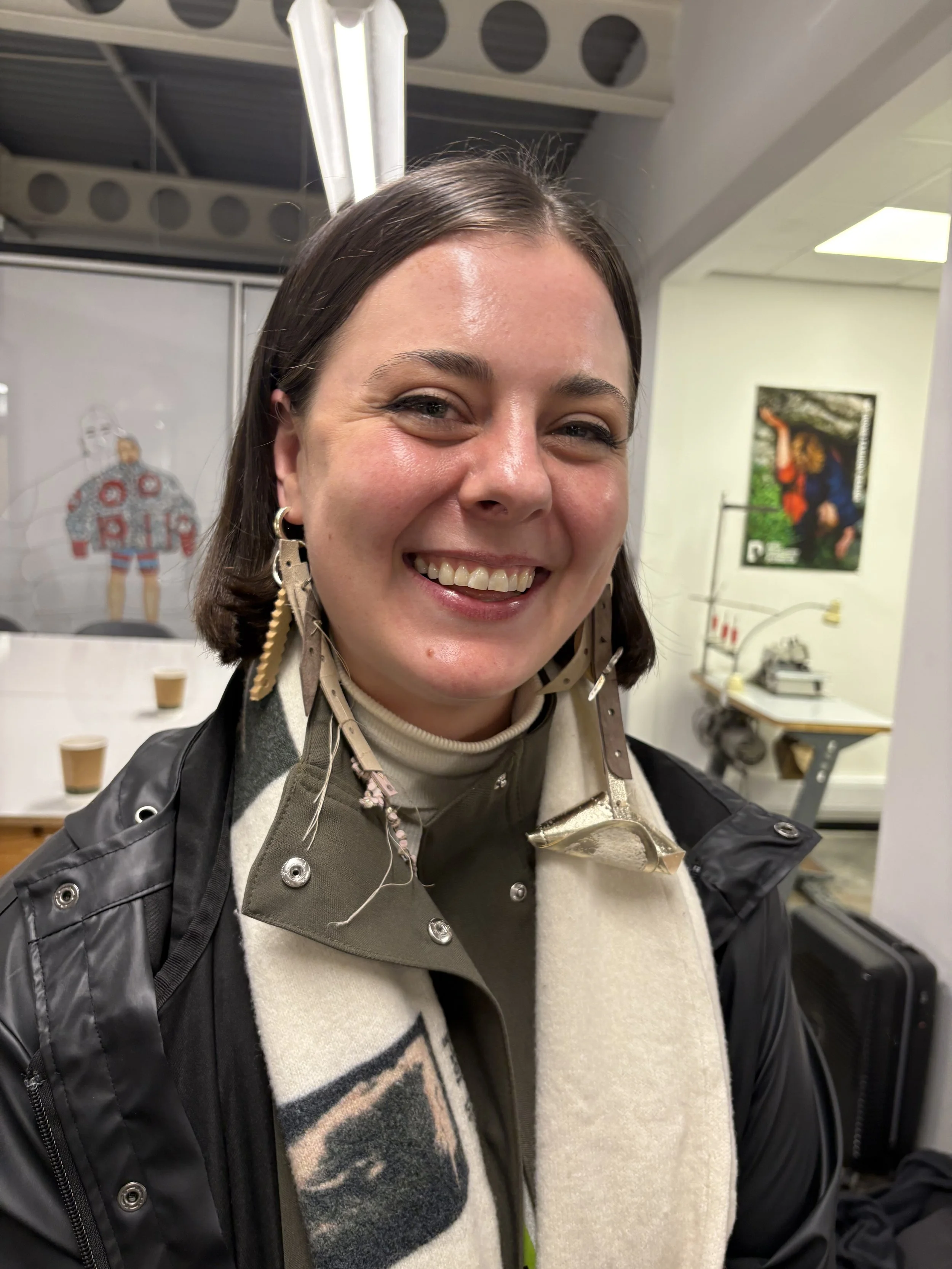
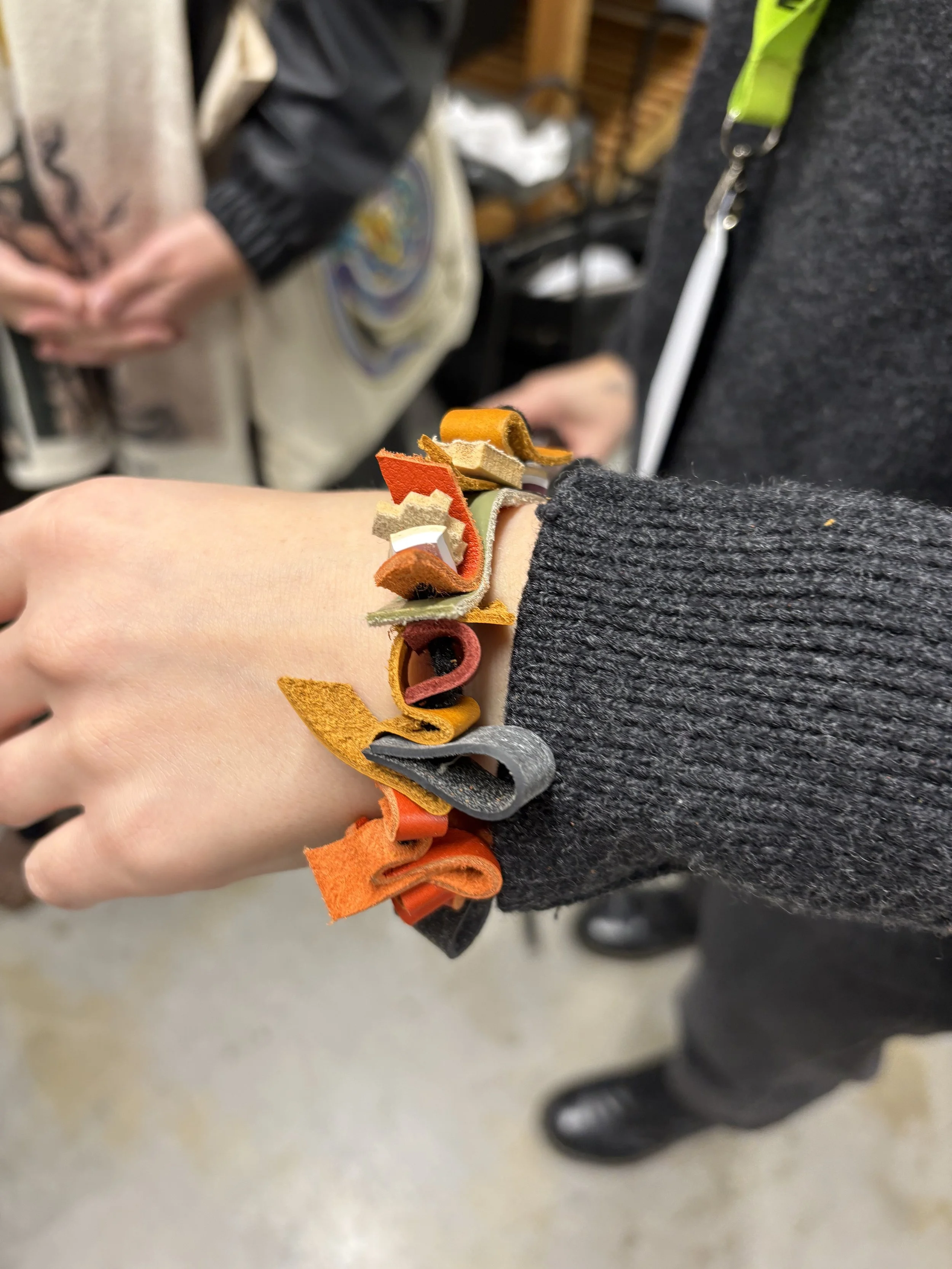
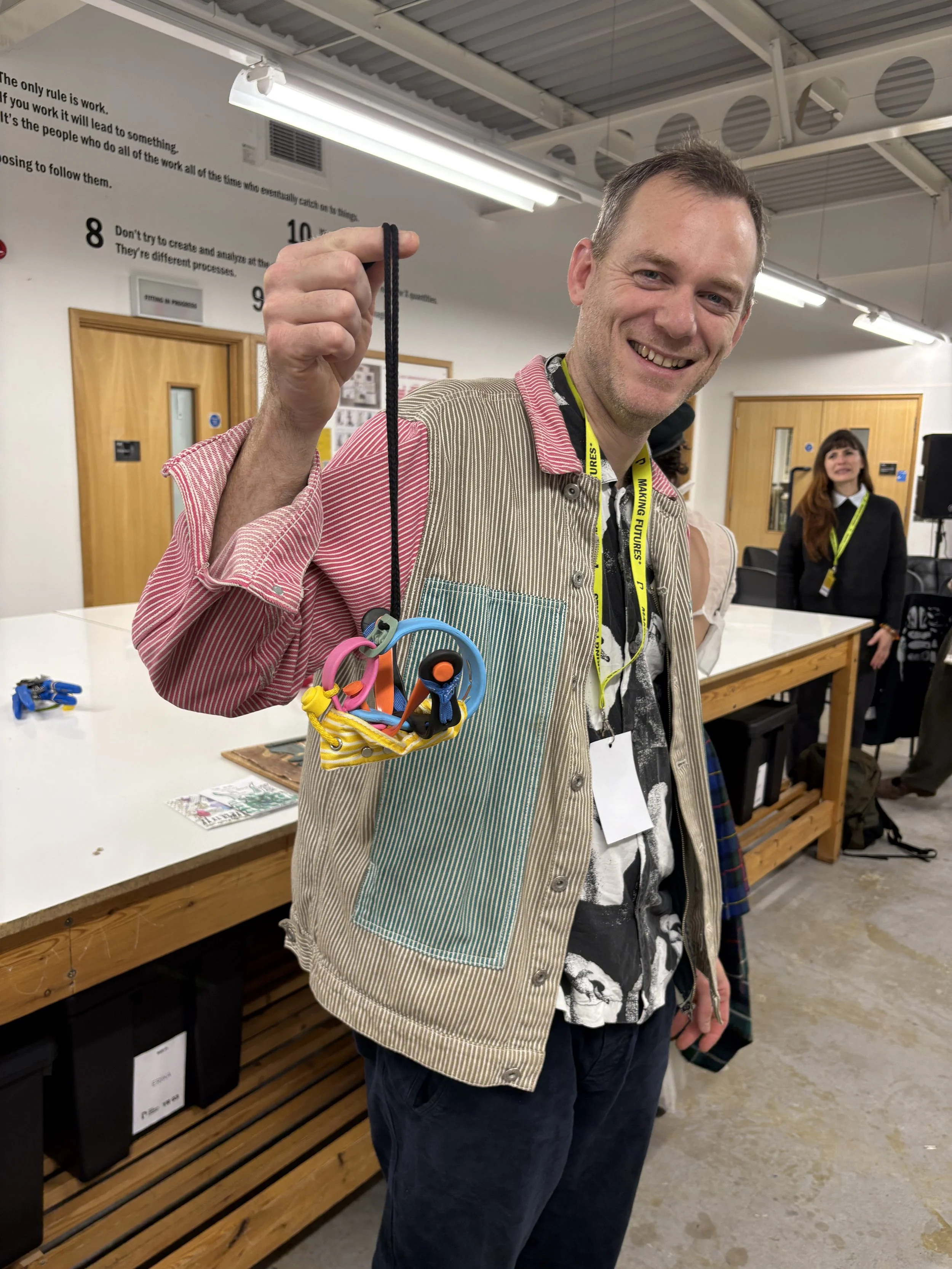
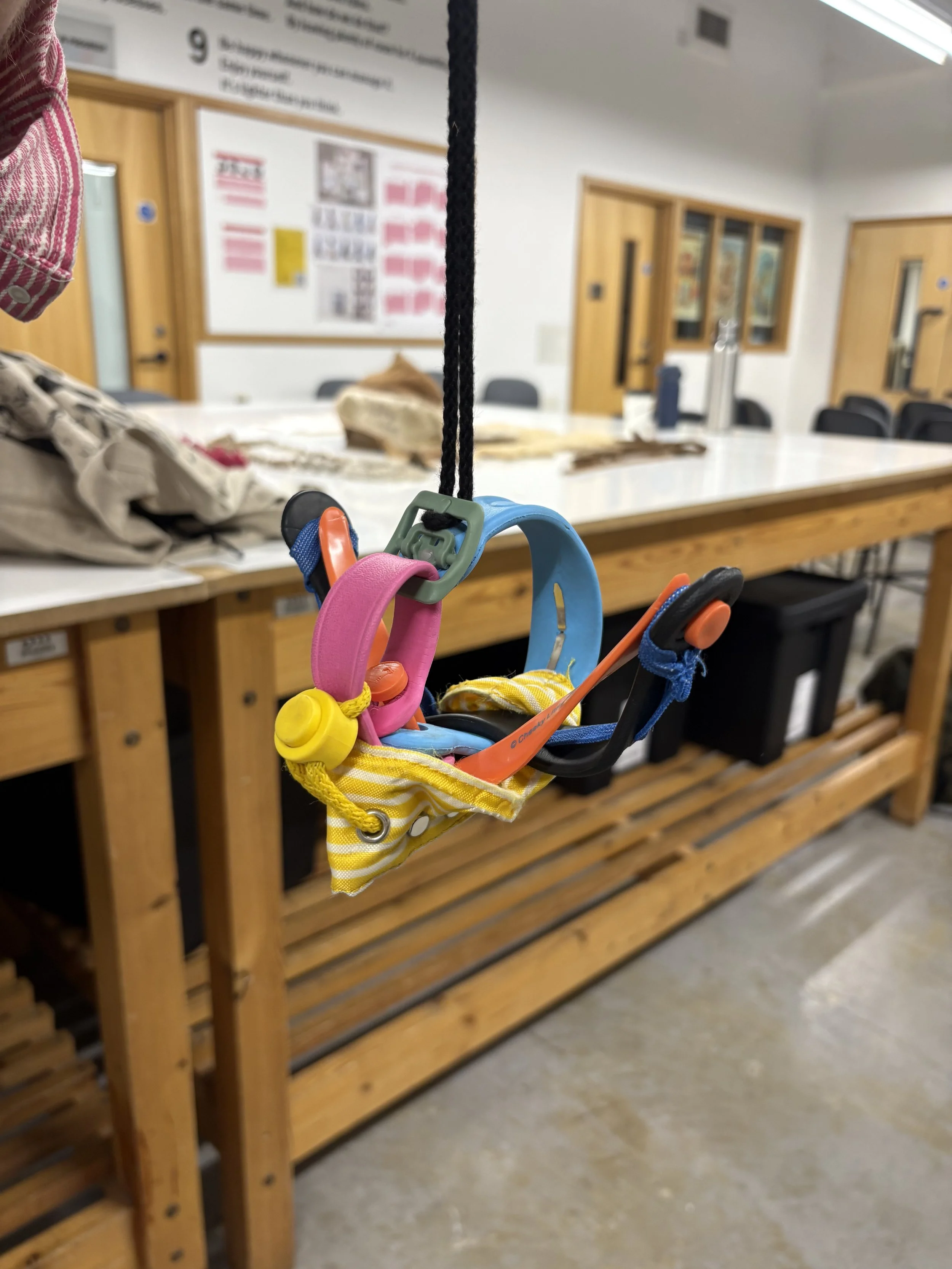
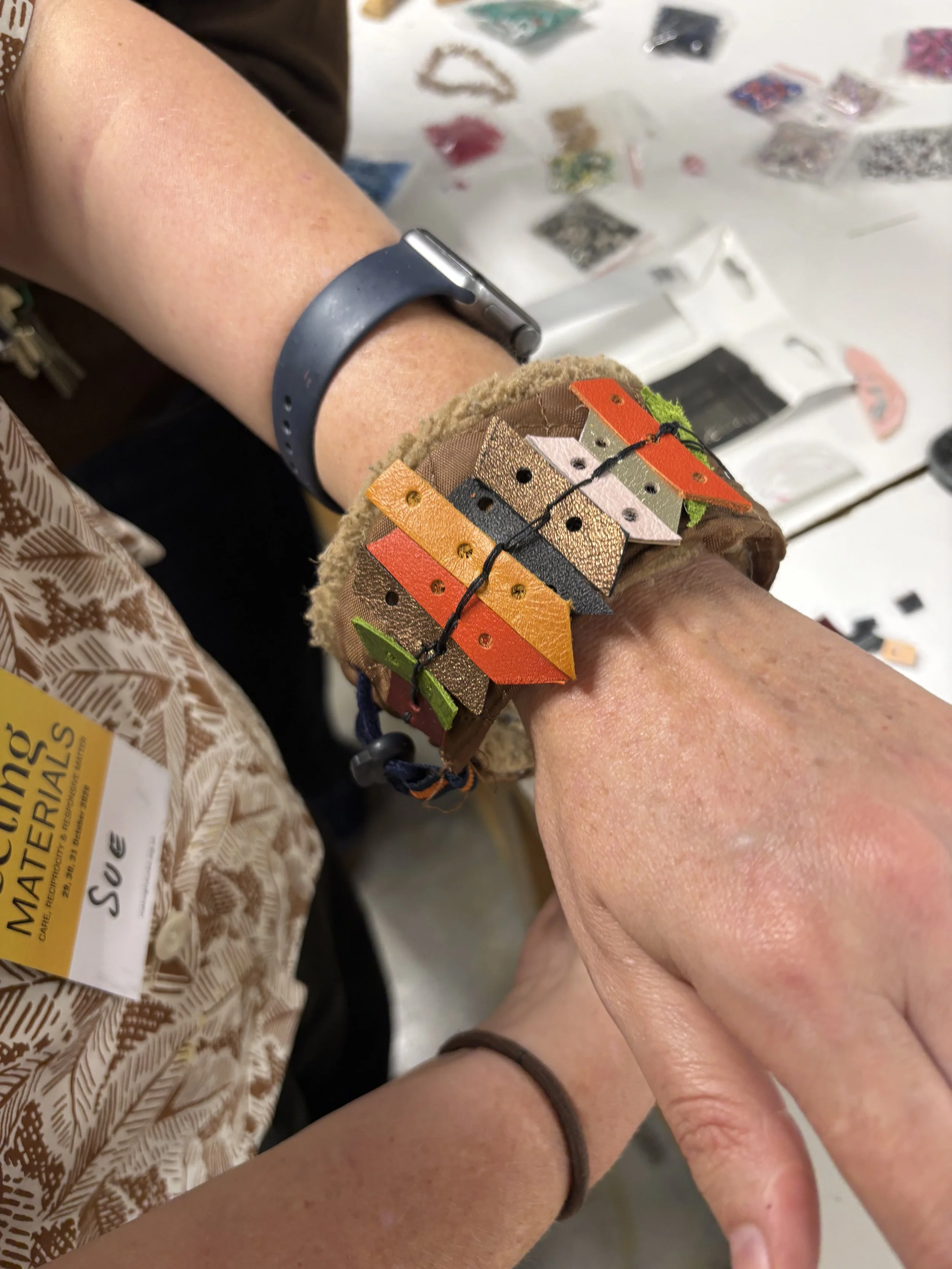
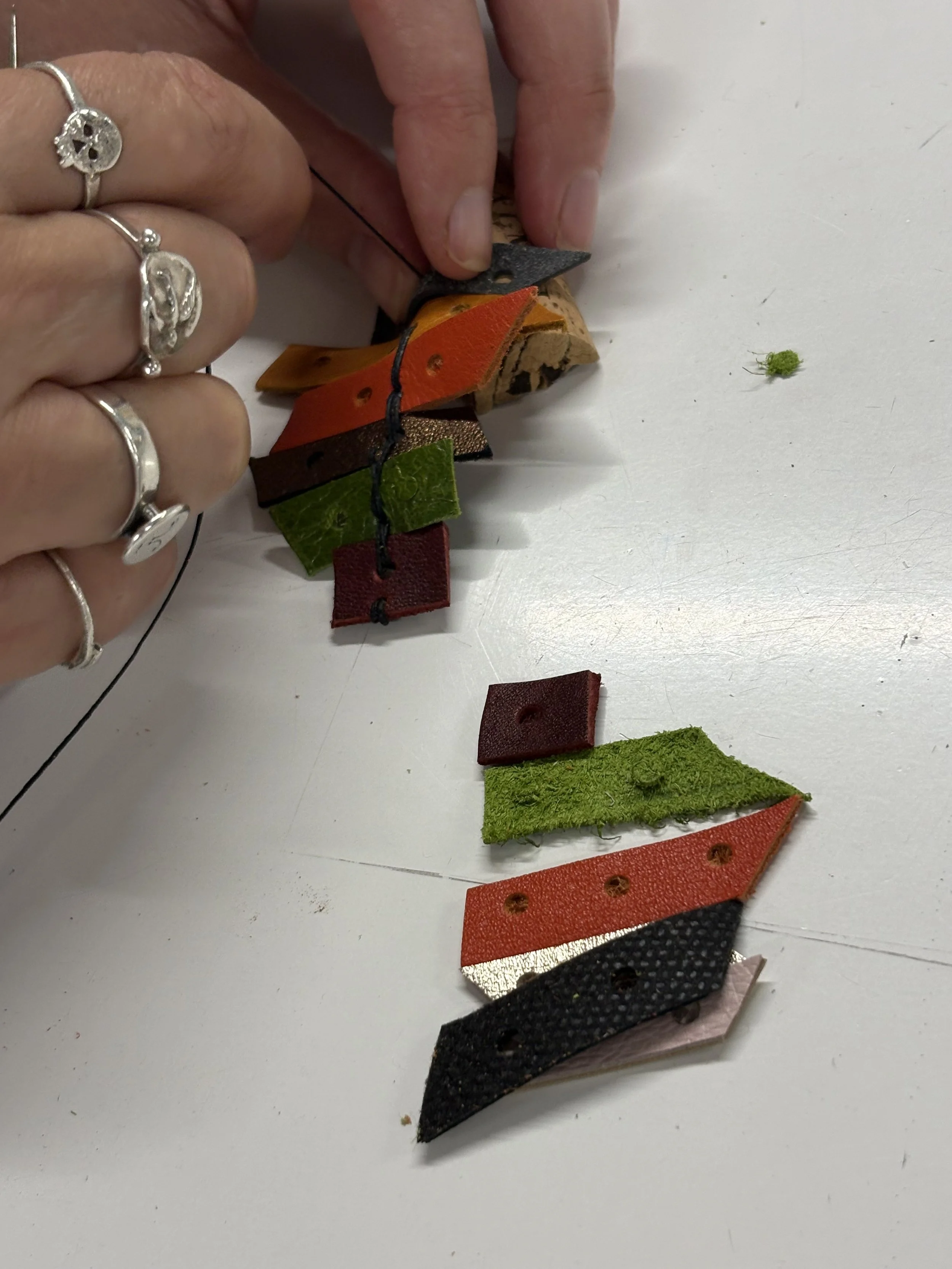
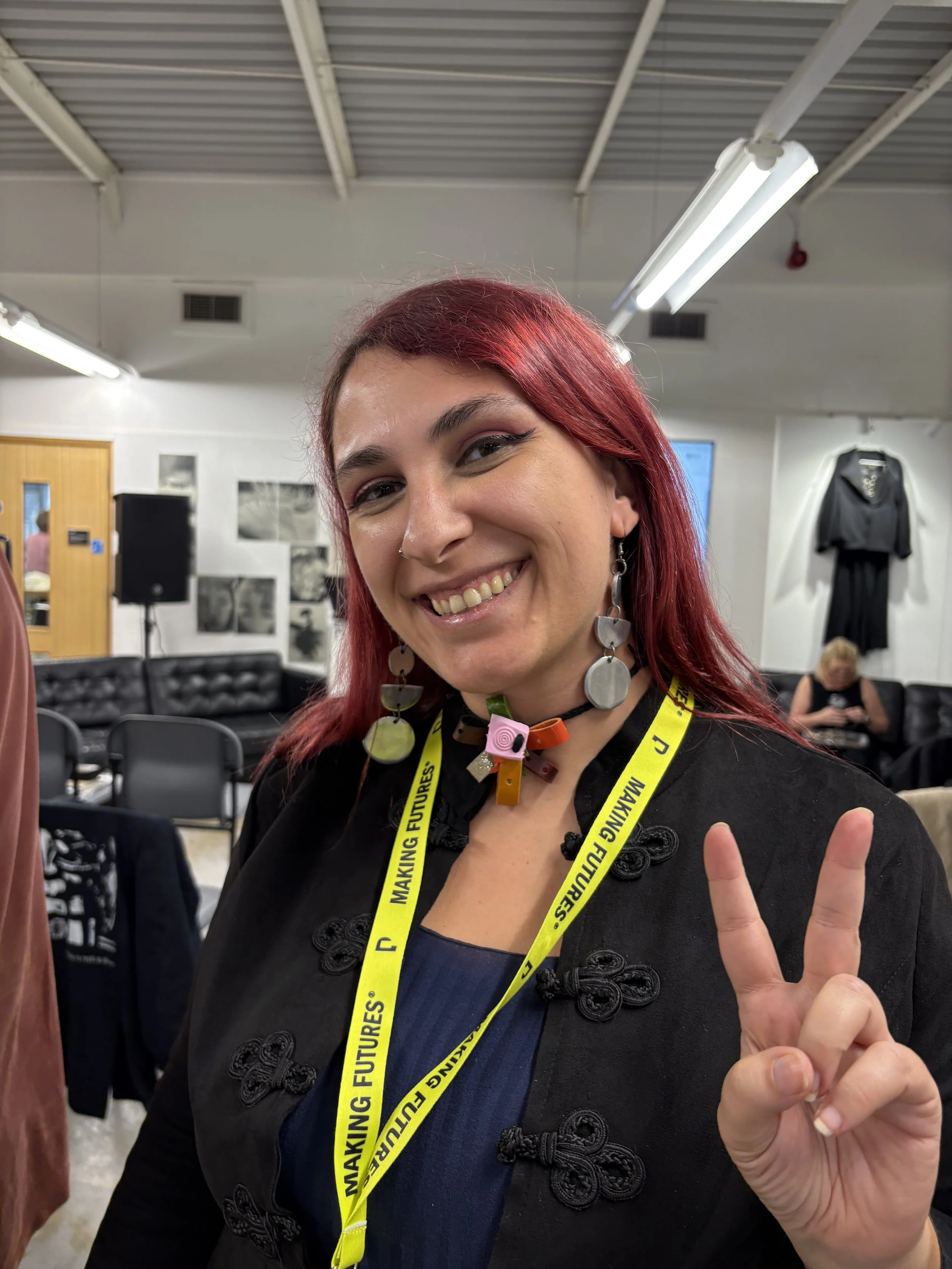
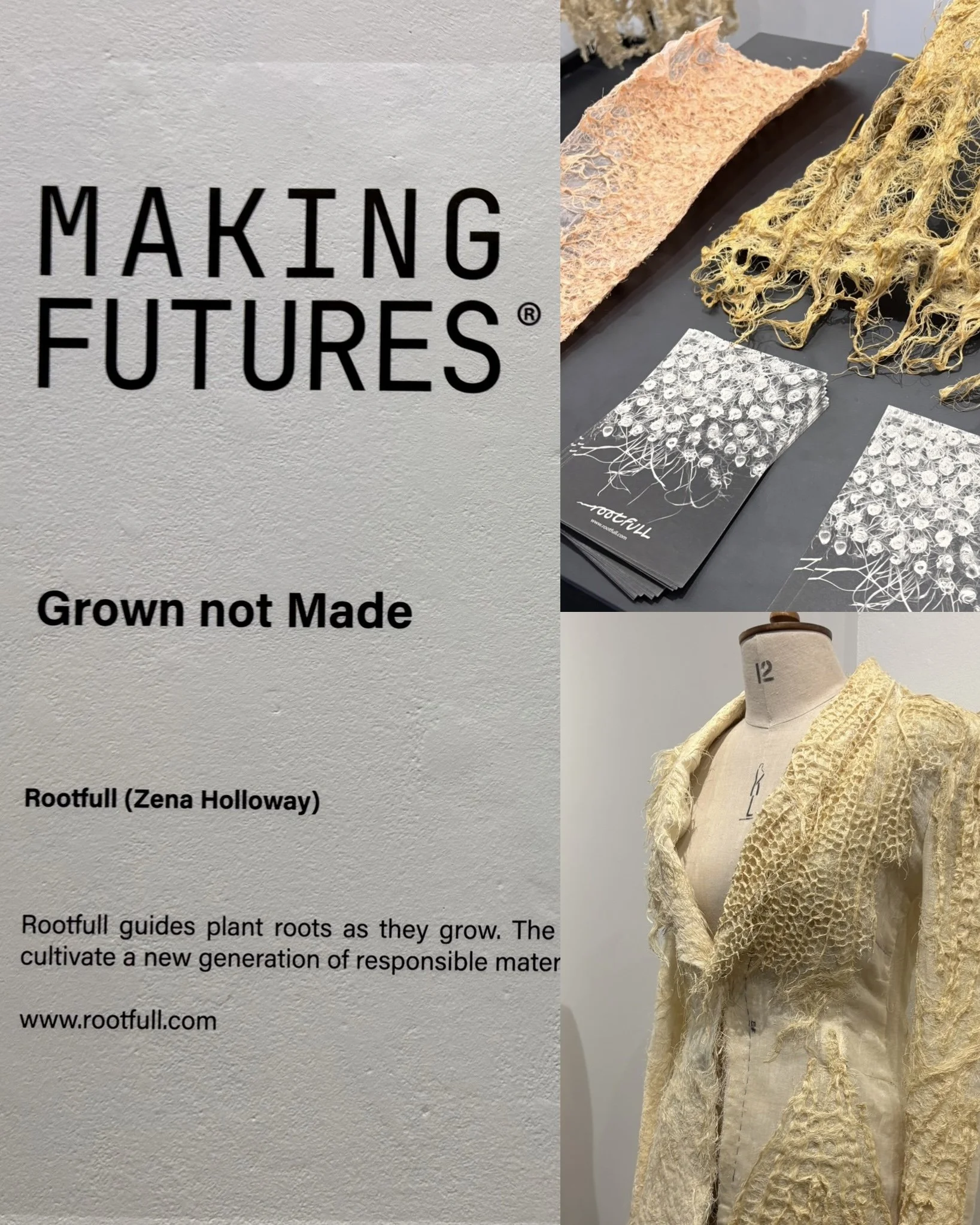
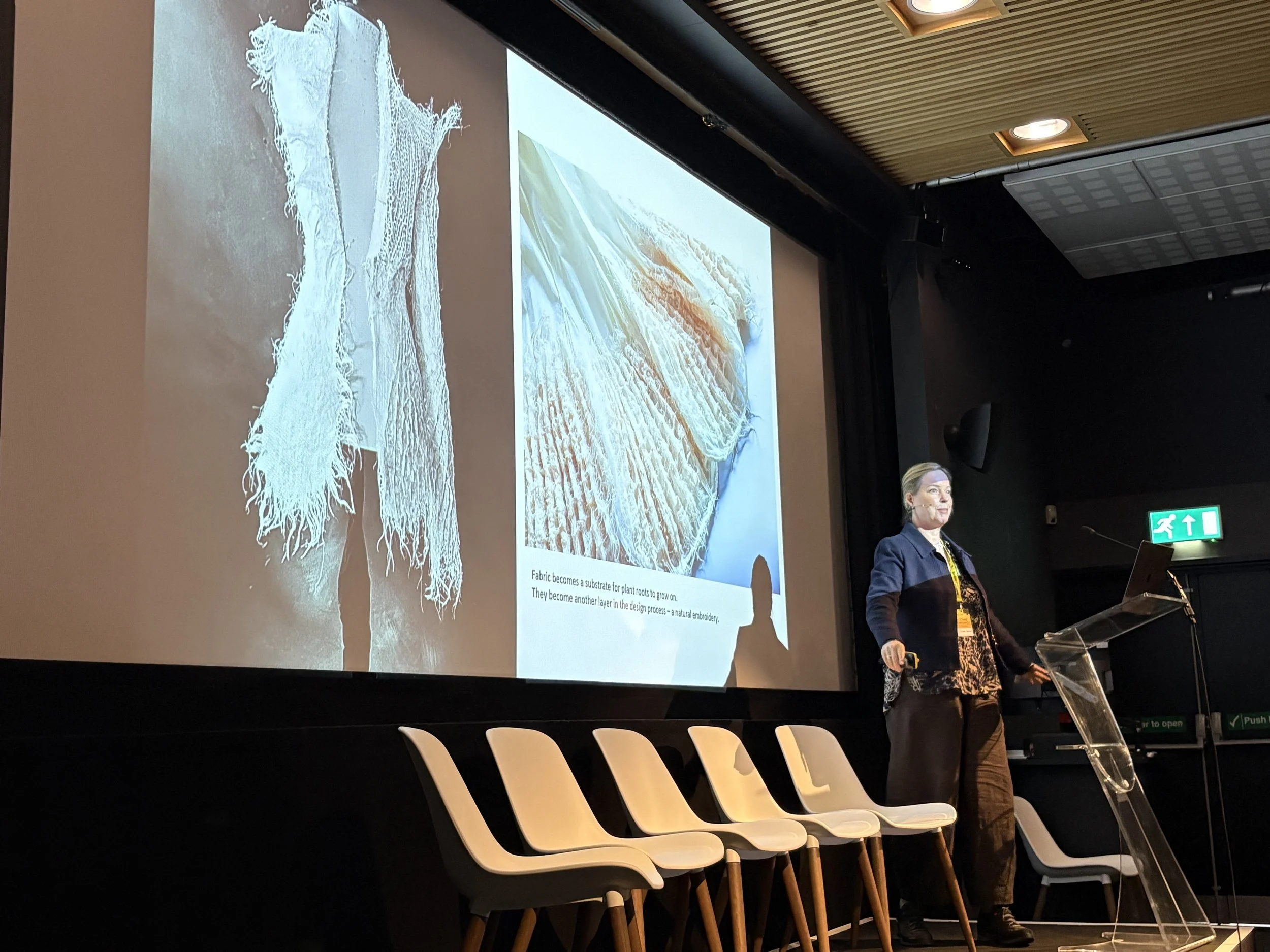
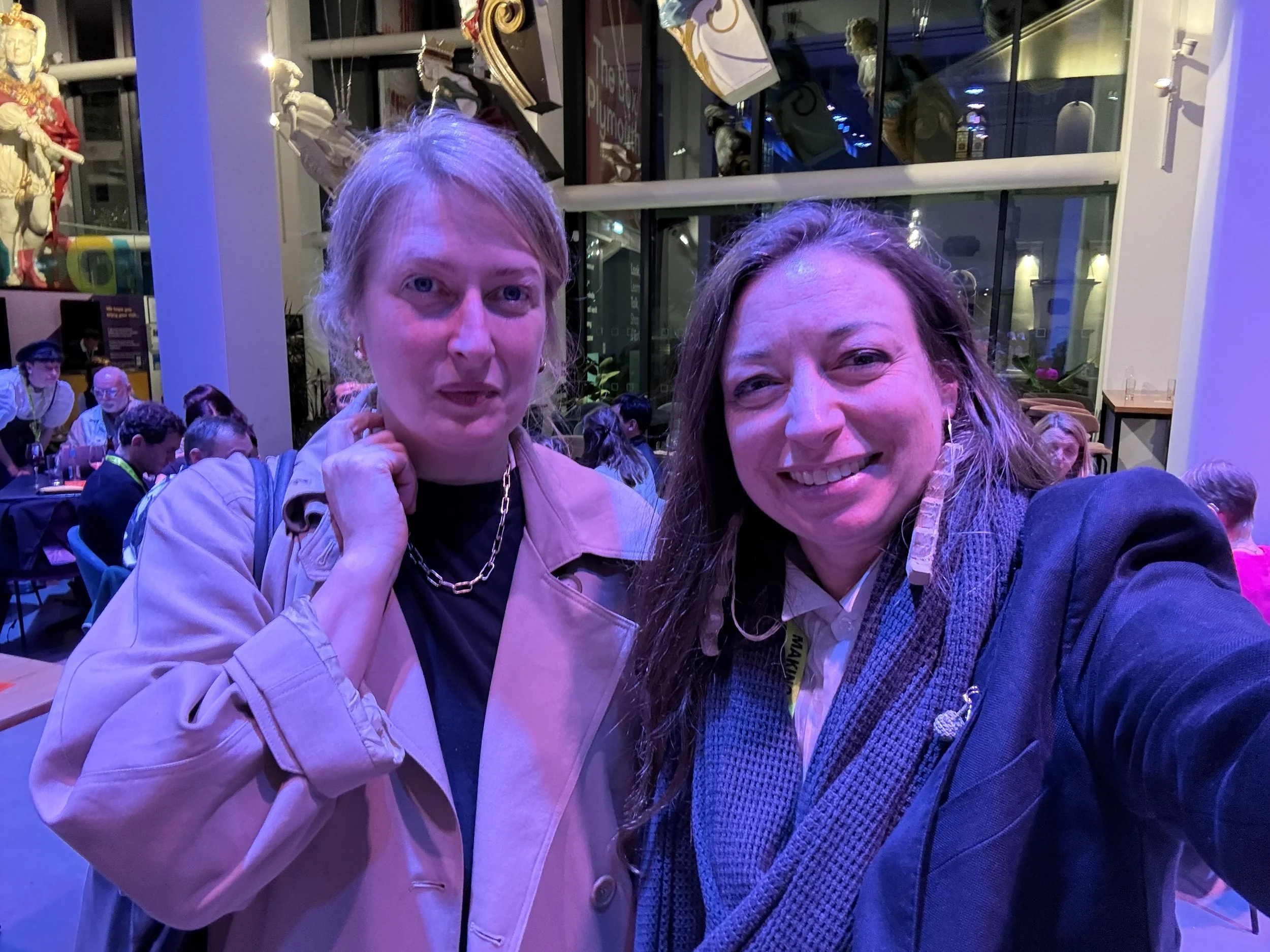
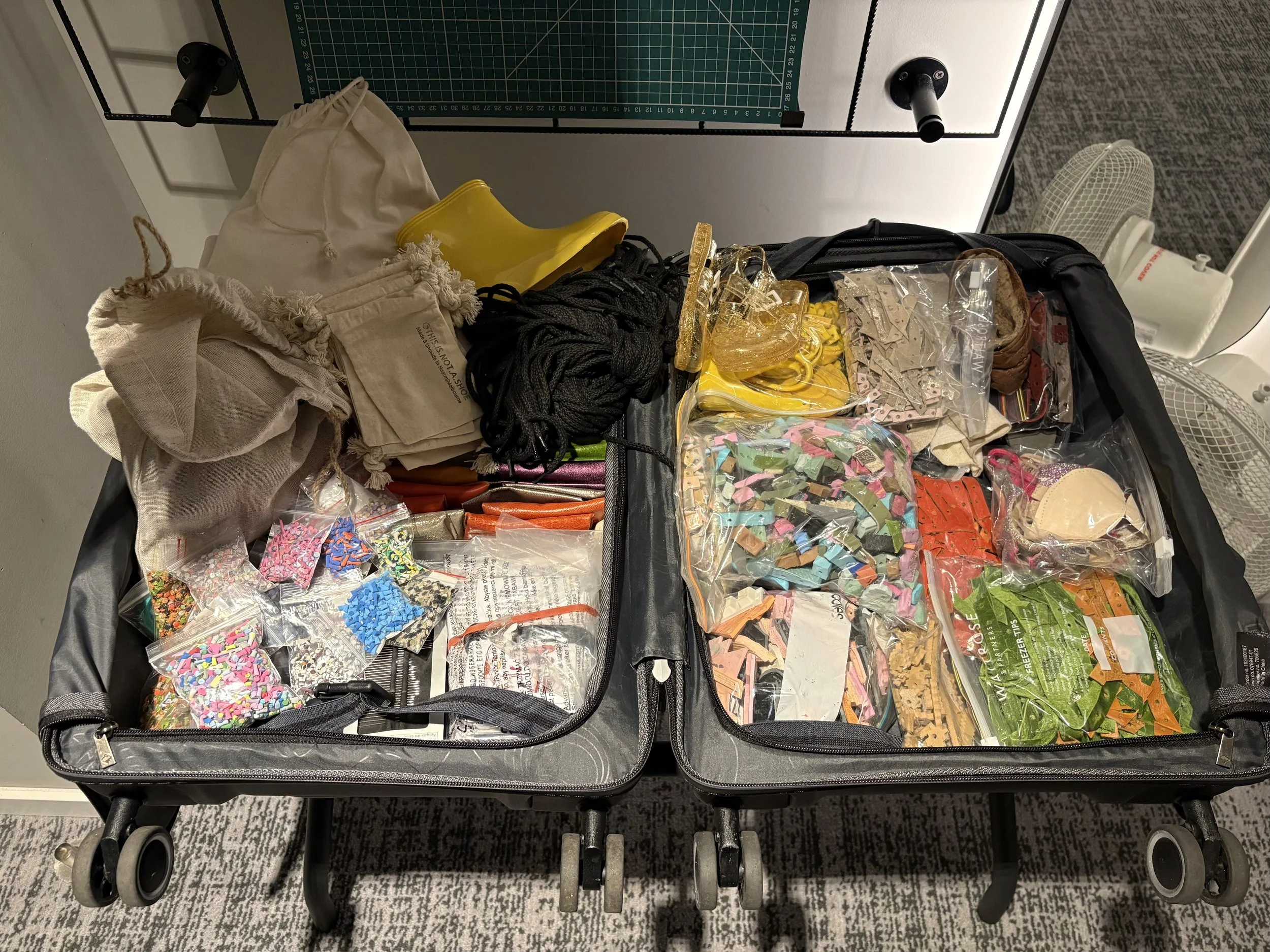
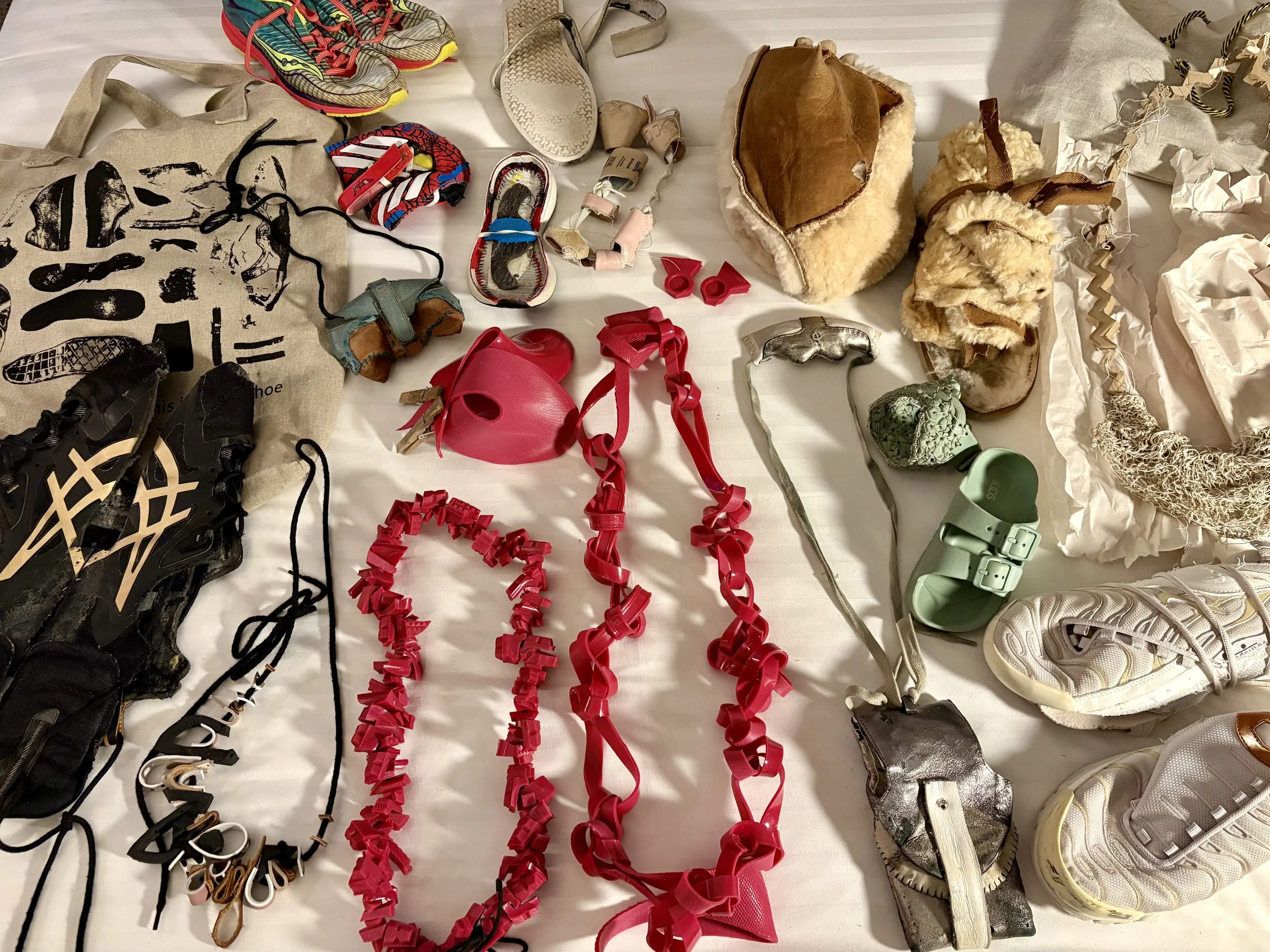
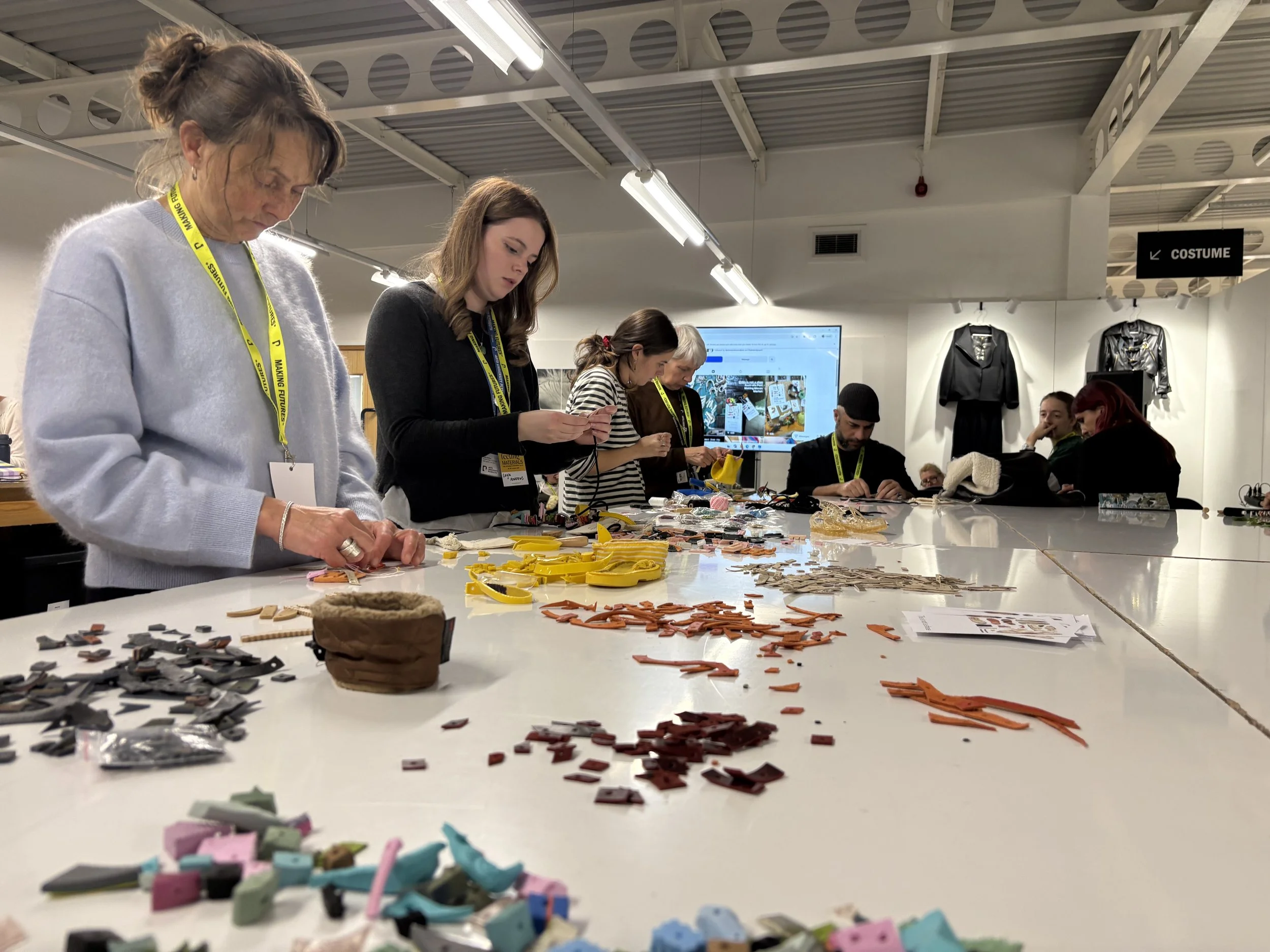
Photographs by Ellen Sampson and Alexandra Sherlock 2026
And I think certainly what we are starting to notice is that the project is morphing and changing depending on who gets involved with it, which is why I was super excited to consider what the project might look like if delivered in the Northern Hemisphere.
So I'm delivering now this workshop with Wendy Ward in Sheffield tomorrow. So which will have happened by the time this airs. So I'll put some photographs, and perhaps we'll reflect in the next episode on what actually happened in that workshop. Sheffield Cathedral very kindly has offered us a venue um to be able to do that.
Emily [26:45]
that's exciting.
Alex [26:46]
It's really exciting. So so what we're gonna do is we're actually combining Wendy's activities that she has developed through her PhD. Notably love letters, or in this case break-up letters, um, and also rubbings of clothes, which she has always done with garments, items of clothing, but now we're going to try with the shoes as the introductory part of the This is Not a Shoe workshop. So what participants will do is they will start, as usual, by sharing the stories of the shoes. They will do rubbings of the shoes and of the soles, which she's already experimented with and noticed that actually through the rubbings, it's drawn her attention to the wear of the shoes, the memories that they hold, and that's starting that process of reflection. And then, we're gonna dismantle the shoes, do flat lay artwork, make it into other things. Um, but then we're also gonna finish by writing a breakup letter with those shoes, which is this sort of part of this whole process of divestment, which is what we realise this activity is all about.
10. Deconstruction as Managed Divestment: Cleaving together and cleaving apart [27.47]
Alex [27:47]
What people bring to these workshops are shoes that they have a deep attachment to, but they can't bear to get rid of. And in many ways, these objects then become a bit of a burden to them, but also to the people that come after them. We think about when someone passes away and we don't know what to do with their shoes. Um there's lots of reasons to manage the divestment of our clothes in a way that we have control over. And this is the perspective that Ellen brought to this project, where she said in that podcast, if you remember, what you're doing is like managed divestment. And I was like, my goodness, that's exactly what it is. So the breakup letter at the end of the workshop is an opportunity for participants to reflect on that process of divestment, that saying goodbye, but also think about what they're keeping, through the process of dismantling those shoes? Are they keeping the story? Are they keeping the connections that they've developed through the workshop? Are they keeping an item that they've made from them? Are they keeping the skills and the experience? Are they keeping the rubbings, as a permanent record as they separate themselves from the shoes? And what Professor Ellen Sampson would call is that's the process of cleaving, which is has two meanings. It means attaching oneself to something, cleaving together.
And also cleaving apart,
Emily [29:03]
Yes.
Alex [29:04]
so pulling away from something, Um, so yeah, the research paper beautifully reflected on all of those kind of um themes, and we're gonna see what that actually looks like in practice in Sheffield tomorrow.
11. Footwear Rubbings and This is Not a Shoe at Sheffield Cathedral [29:19]
Emily [29:19]
yeah, and that's something just as you were talking about that and cultural practices, a little light bulb went off in the back of my mind because when I was a kid growing up, hanging in our house were essentially brass rubbings that had been made from medieval tombs in English cathedrals. And there is this cultural practice of sorts, I would argue, of doing these brass rubbings. And I remember when I moved to London, there was actually a brass rubbing activity in St. Martins in the Fields where you could go and do your own brass rubbing. And I made one for my parents, you know, as a like, hey, this is a connection. But just this idea then of doing the rubbings and using that image as a form of connection in itself. So whether it's a form of souvenir for you, which of course is linked to place and memory, or whether it's like to show a connection with that person who you're maybe giving the rubbing to, or even if it's to remember that person and this predates photography, so that might be the only image you would ever have of them or of that object. So, you know, I think this is a really beautiful cultural practice as well, perhaps, you know, not being English myself, but you know, and the fact that you're holding these activities in Sheffield Cathedral as well. You know, that's really a fascinating sort of angle, I think. If we're thinking about shoes and memory, yeah.
Alex [31:04]
Yeah, I'm so glad that you brought that up because you're reminding me of when I was a child and we had a local Abbey and and yeah, absolutely Winchester Cathedral. I remember doing brass rubbings from tombs and things. And it's, you know what it's also reminding me of, is I don't know if you've seen this viral thing online where people go and put ink on like, manhole covers and print t-shirts
Emily [31:24]
Yes, yes, yes, absolutely.
Alex [31:25]
from from aspects of the environment. And you know, so it is very much this this idea of connection to place through these taking records or rubbings or imprints or… So yeah that's it's so poetic and how, yeah, how absolutely extraordinary to be doing that at Sheffield Cathedral. So as I say, you know this activity it takes on a different character and morphs depending on where it goes and who does it.
So I'm really excited to Wendy and I talking about whether the the social life, as it were, of the This is Not Shoe activity will continue with also her sort of techniques as part of it and what I hope as well is that she will continue with her workshops and include shoes. So we've got this again, this lovely sort of knowledge exchange so that's super exciting, and we're gonna ask the participants for permission to be able to take some photos from that workshop and kind of share what those outcomes might look like.
Emily [32:20]
Ah fantastic. Yeah.
12. F/fashion Narratives at Manchester Met [32:23]
Alex [32:23]
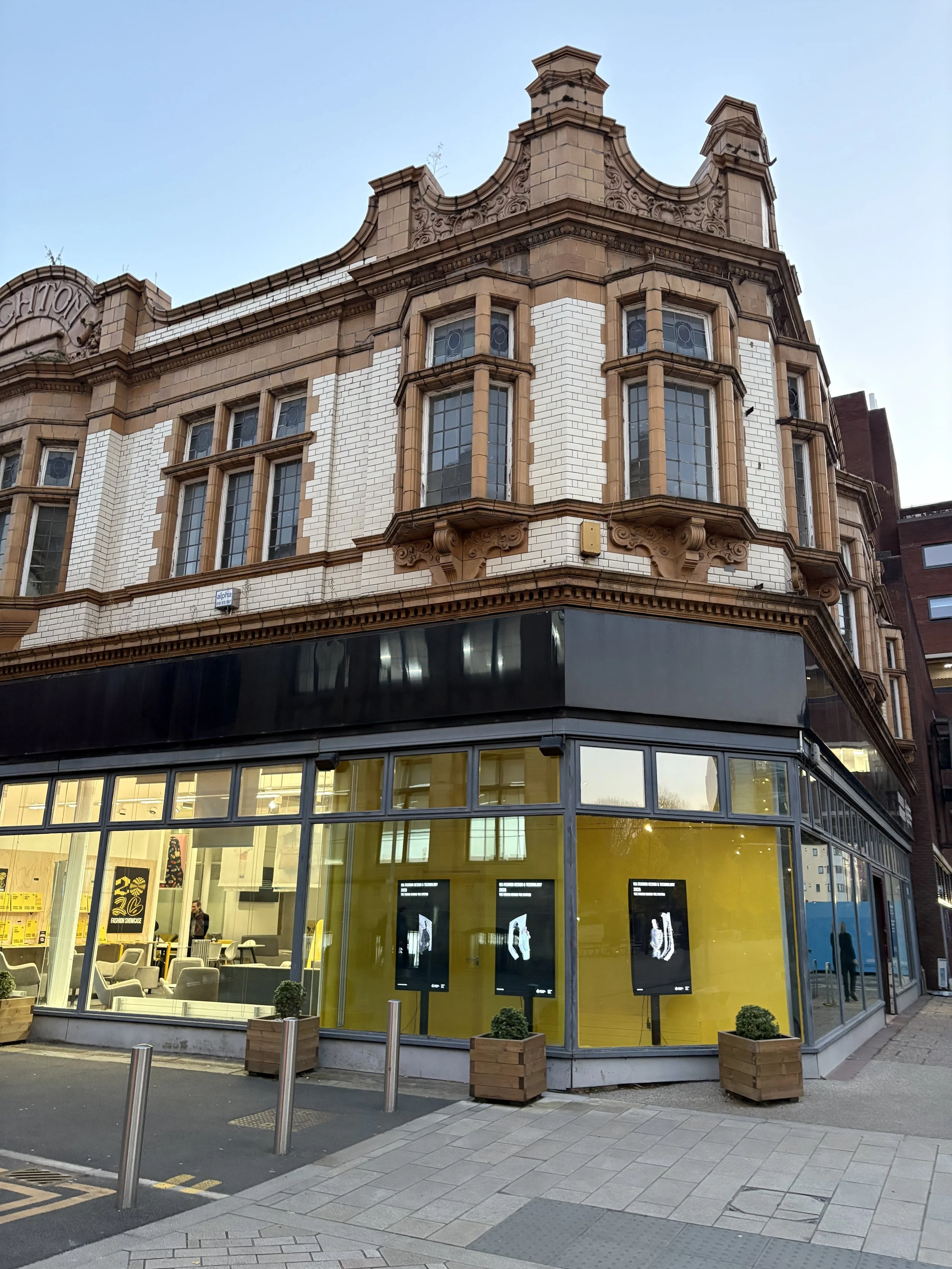
Yeah. the other thing that I did was yesterday I visited Manchester Metropolitan University on the invitation of Dr. Jo Jenkinson and Dr. Benjamin Wilde, who head up um, with another couple of academics the f/Fashion Narratives research team at Manchester Metropolitan University. And fashion narratives, the heading, it's capital F fashion and small lowercase fashion, you know, as like the fashion industry and everything that that comes with that, but also are everyday practices of fashion with a small f. I think the title of that research group is just genius. And they are doing some really exciting work. There's some absolutely incredible researchers who are part of that group. And they invited me along to one of their regular research team meetings, and I heard a little bit about what all of those academics are doing, the publications that they're involved with at the moment and very excitingly, some recent research that they have won some funding for from the Economic Social Research Council, who incidentally is who funded my original PhD, um, called The Emotional Life of Clothes. and I think the reason they invited me was because we'd connected at a previous conference in Vietnam, and obviously, you know, I was talking about shoes as an incredible medium for storytelling and connection and empathy. So it was really lovely to go and actually talk about what we've been doing to that group. I was a bit nervous because I noticed Professor Kate Fletcher had joined us, um, who is
Emily [34:03]
Ooh, she's one of the big wigs.
Alex [34:08]
Yeah. She really is. I mean, she is one of the most cited sustainability and circularity researchers in the world, and you know, is extraordinarily influential. But I was really excited to find out that the reason that she'd come along is she is developing research that is going to include footwear, so I'm hoping to be able to keep in touch with her and hope that the the The Footwear Research Network and perhaps Social Lives of Shoes podcast can help with sharing some of that research and um engaging with it, translating it for impact.
But yes, the f/Fashion Narratives research group, um Benjamin Wilde and Jo Jenkinson and others have won this funding for the emotional life of clothes. So watch this space. I think that will involve some really exciting initiatives to come, and the project is due to run between 2026 and 2029. And let's hope that there'll be an inclusion of footwear in that, yeah, so that was what happened at Manchester Metropolitan.
I was really excited uh to also be able to lay out all of the Shoecuterie materials on the table and examples of things that had been made from shoes for these researchers. Often who, you know, as academic researchers, let's be fair, we are often on our computer writing about things. And as creative people, certainly in fashion and textiles, don't necessarily have that many opportunities to be making stuff. So actually I think everyone for the last part of that session really enjoyed engaging with the pieces of the shoes and making things. So that was a lovely finish to the day.
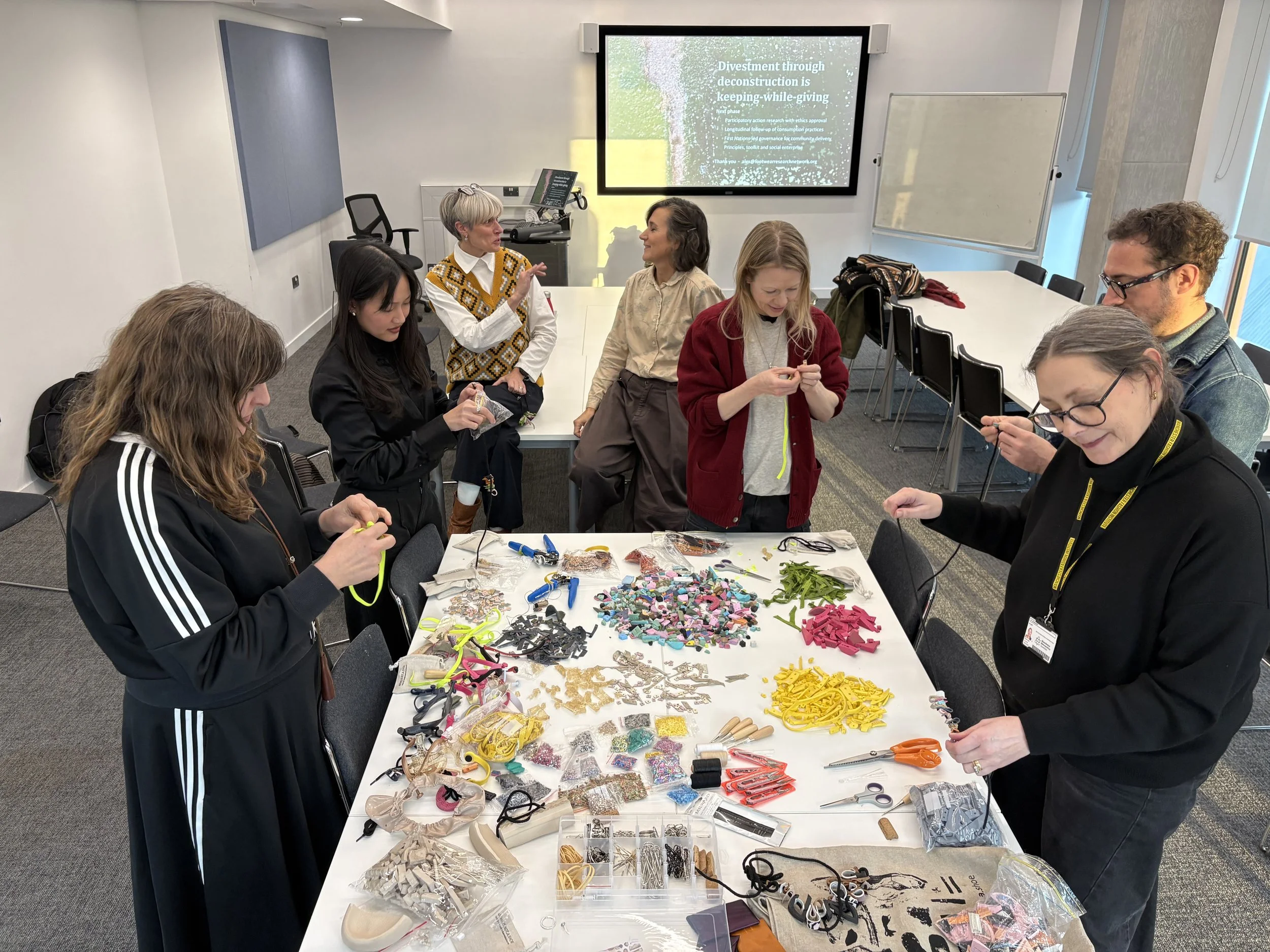
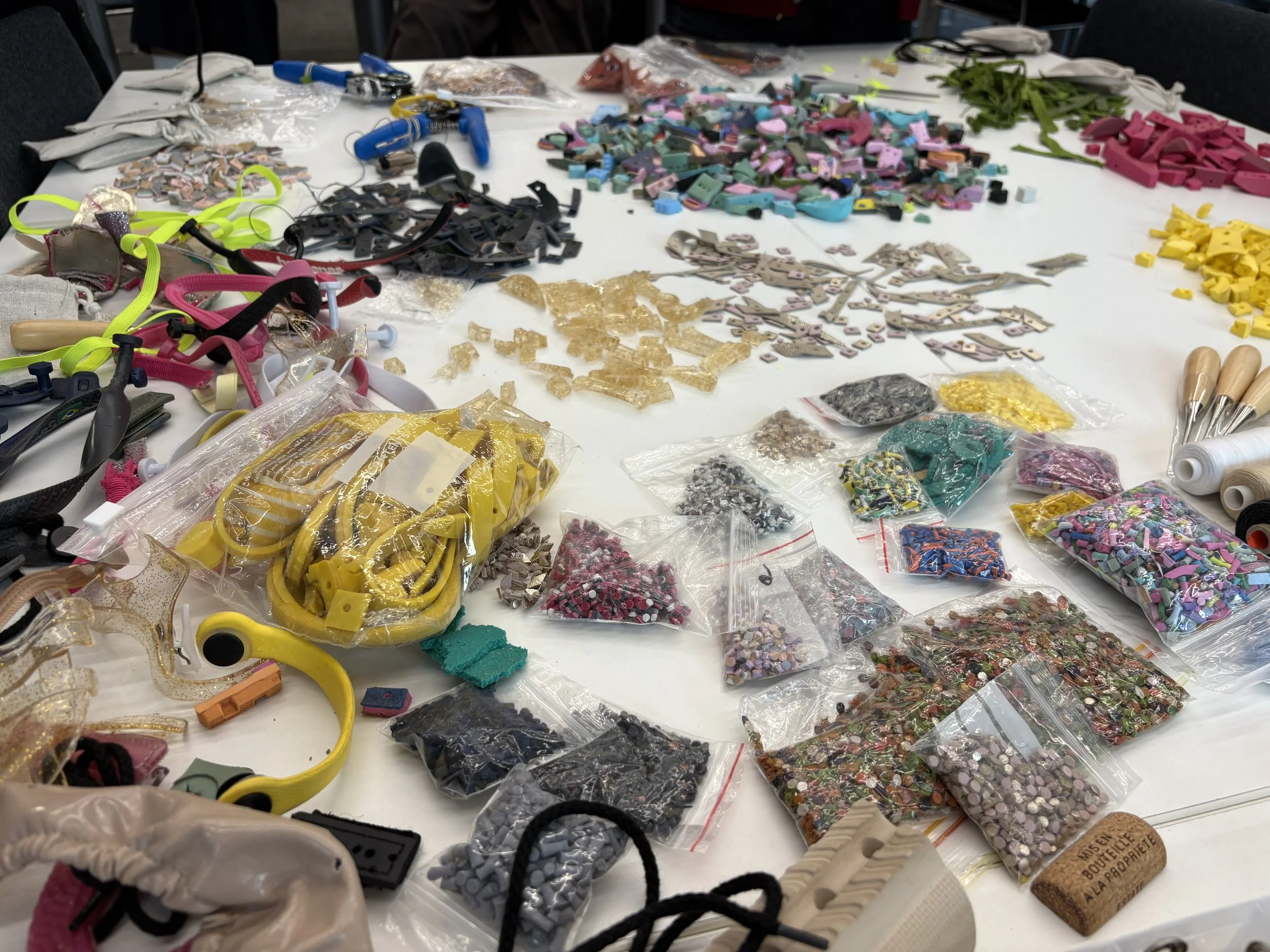
13. Unlearning convention and returning to material play [35:40]
Alex [35:40]
Oh, the other thing that I just wanted to mention as well with the shoecuterie activity, you mentioned before the child that was, or the young woman that was doing the activity at ACRUX and it's just something that I really observed through the shoecuterie activity is that I think people often assume it's for children. What I love is when children do it, they take to it so naturally because they haven't actually been trained into the convention of what shoes and materials are for. So we often explain this, and I think I probably mentioned this in a previous podcast, is that whole cardboard box mentality that for a child a cardboard box has limitless possibilities.
Emily [36:19]
It's a spaceship. It's a dollhouse. It's yeah.
Alex [36:22]
Yeah, exactly. That's exactly right. And then at some point in our lives, we sort of get trained into the fact that, no, this is packaging and it goes in the recycling bin after you finished with it or the bin or you know, whatever. Um and it's sort of unlearning those conventions is what we need to do and kind of just have fun and play around and see the possibilities and the potentials in these materials again, for them to be able to go back into flow, for them to go back into circulation rather than just ending their lives and then just languishing in landfill. So what I find with the Shoecuterie activity is often you see the children teaching the parents.
Emily [37:01]
That's that's lovely. Something that I found doing it as well is that adults would come in and they'd be a little bit uncertain, and a bit shy, and a bit self-conscious. And you know, the workshops that we were running you know, at ACRUX, obviously People paid to attend the event and our workshop was part of the price of admission. And so they'd come in and they'd be like, do we have to pay for this? And I'm like, No, take a seat, it's included in your admission, take a, you know, take a seat, just make whatever you like, And they'd sort of sit down, they'd be a bit shy. And by the end of it, they'd created something that they were really proud of. They wanted to show it off. And they were also keen to donate, which really blew my mind as well. It's like, yeah, you don't have to, but that would be really lovely. And it also is a way I think that they were sort of trying to communicate the value of what they were doing, how they valued that. You know, like there was no hard sell at the workshops. We weren't trying to pressure them to, you know, but that they wanted to like give something back for doing this activity. Even though they could take whatever they'd made, they could make a few things, whatever, off you go. And I just thought that was really fascinating as well.
Alex [38:29]
Value. I just think the whole this whole concept of value and unpacking what value is is something that this activity does and I think possibly could be a research question there, if we're going to take this back into sort of the research domain.
14. Extended producer responsibility as keeping while giving [38:44]
Alex [38:44]
But yes, so some wonderful observations there about. like what we've been seeing, what we've been noticing, so yeah the paper that Ellen and I presented on behalf of Ellen, myself, Pennie and Bianca at Arts University Plymouth at the Making Futures Conference, that will be available to read at some point. And then Ellen and I were talking about possibly actually recording the paper that was delivered on the day, which will be about sort of 20-25 minutes, which we can release through the Footwear Research Network for anyone that's interested in listening to that, which I would say is probably going to be quite interesting for industry, as industry are starting to think about… hopefully more than starting to think about, responding to extended producer responsibility legislation, which is where brands are increasingly going to be responsible for products such as shoes at the end of the shoes life. So one of the points you'll recall Ellen made was that it's wonderful to have take-back schemes, but pointless if people aren't motivated to engage with them. So I think what our activity, This Is Not A Shoe, does is think about what actually motivates people to divest themselves of their objects and so they can go back into flow, so they can become a creative opportunity or whatever. So hopefully that paper will be useful for industry as they're starting to think about actually really creative strategies towards extended producer responsibility rather than just ticking a box and a legislative requirement.
Emily [40:20]
That's a really great point. And I can definitely see that happening in the sneaker industry because people are so passionate about their sneakers or trainers as you call them in the UK. Sneakers come in so many weird and wacky colours and patterns and you know, the brands you know, that are either stitched onto the sneaker or embossed onto the sneaker, can be a really potent symbol that people might want to keep. They might want to use it as a patch for their clothing. Like there are so many opportunities there, I would argue, for the big sports sneaker brands as well. And this is fresh in my mind because I took my nephew shopping yesterday, um for his birthday and his brand trainers had literally fallen apart on his feet. He loved them so much. And the only reason we were buying him new ones is because these had such epic holes in them. But he still wanted to keep them. He still wanted to wear them. So,
Alex [41:24]
Yeah. So this is part of what we discuss in that paper is this concept of keeping while giving, that you're you are giving something, you are divesting yourself or something, but you're keeping something. Um and you know, and I just do think that actually there's an opportunity here for brands to build consumer loyalty by actually offering creative solutions and opportunities to help people separate themselves, cleave apart, as Ellen would say, from these shoes. It can be quite a dilemma. And definitely when people bring their shoes to one of our workshops, they need a solution. They don't know what to do with them, it's problematic.
15. Developing effective engagement strategies [42:00]
Alex [42:00]
Um, so on that note, I just wanted to highlight as well that what I'm also noticing, is that when we do independent workshops, this is not a workshop, bring your old shoes, make them into something else, we don't get an awful lot of uptake. And I think it is because it is such an alien concept. People don't understand it, and it feels so antithetical to what you're supposed to do with shoes, which is make them last and keep them in one piece. This idea of actually breaking a shoe apart seems wrong in many ways. And so it is difficult actually to get participants to sign up to these workshops, but as you said with the ACRUX event, if they have the opportunity to do it, once they've done it, they fully understand and feel really passionate about what's happened and really value what's happened. So I think what we're thinking about at the moment is actually how to overcome that barrier. And I think what I've kind of come to the conclusion of is the workshop is best delivered as part of something else that participants are already attending, like the ACRUX event, or, and and then what we're doing is we're piggybacking on something to introduce these ideas gently, also almost using something else as the Trojan to be able to engage people in these themes in a way that they wouldn't normally.
So it's really interesting to think about strategies there for engagement.
Emily [43:25]
Yeah, that's a really good point. And I think this idea of shoes and community is also really important. Because people are sitting, people are communicating, people are thinking, they're being introduced to new ideas, yeah, so you know if larger manufacturers want to start thinking about how they can imbue some of these divestment strategies
Alex [43:46]
Mm. And also I think how industry and brands can use divestment strategies to build communities and connections between people. So
Emily [44:54]
Absolutely, yes, absolutely.
Alex [44:55]
So it's not an isolated transaction between the consumer and the shop. It's actually that the activity of divestment is something that actually connects people to one another. And I think that is what people are so desperately craving at the moment, aren't they? Is connection with other people. So yeah.
Emily [44:14]
Yeah. A in-store day? Hey, today we're going to be running our divestment workshop. You can, write a breakup letter, um, meet other people connect, you know, in different way and build that brand loyalty, Yeah, I think this is a really great idea.
Alex [44:30]
Yeah, just on that note, if brands do want to use any of these techniques, obviously we're more than happy for them to, but please do acknowledge us if you do that, because that's evidence of impact that we can actually get funding for, and then continue our work. So don't just take those ideas, do credit them to us. So that would be wonderful. Or even better, collaborate with us and um yeah, and we'll bring all of our academic integrity with us. Um but yeah, I think those kinds of ideas really will facilitate meaningful change. both for wearers and brands.
16. Next of the TINAS tour: Reflections from Sheffield [45:00]
Alex [45:00]
So look, I think we've covered most of the stuff there that I wanted to. I just feel like that was a really great conversation. Thanks so much, Emily, for sort of debriefing with me. And and yeah, it's always helpful sort of chatting with you because it helps me realise things that I'd not really kind of thought about, which I think is really important for this this project.
So we will be reflecting on what happened in the Sheffield workshop. It is a small number of participants, but actually I'm really looking forward to the small number because I think it will mean that we can actually really go quite deep on these particular shoes. And also Wendy and I are hoping that there will also be time for us to actually deconstruct some shoes um in the workshop as well and reflect on our own shoes, which would be nice because we can sort of sit around and do that with the participants. And Yeah, I will have news in the next of these three episodes about hopefully what else I might be doing whilst here. Um, so I won't… I'm excited, let's just put it that way,
17. Award News: Bronze for Thought Leadership at the Signal Awards [46:02]
Alex [46:02]
Emily, we've got another piece of important news that listeners might be interested in. What's that?
Emily [46:09]
I am so excited about this one. We have won a prize.
Alex [46:13]
We won an award.
Emily [46:15]
So shout out to the Signal Awards, which are the Global Podcast Awards. They're held out of New York. And we won bronze in the thought leadership category for our podcast, The Social Lives of Shoes.
Alex [46:30]
Yeah, it was pretty extraordinary. I mean the Signal Awards is, you know, Oprah goes for it, Mel Robbins goes for it, Michelle Obama, you know, we thought it was good enough for them, we may as well put our Hat in the ring.
Emily [46:46]
or indeed our shoes. We put our shoes in the ring to completely mix the metaphors.
Alex [46:50]
we absolutely did not expect anything, and we got a bronze for thought leadership, which is exactly the category that as an academic researcher you would want to get an award in. So um
Emily [46:58]
Absolutely.
Alex [47:00]
so that was very exciting. And thanks to all of those who voted for us in the Listener's Choice Award, we didn't win that one, but we got a very respectable score, I think. I can't remember exactly what it was, but we actually got quite a lot of votes, which I was really felt really proud of. So Thank you so much, everyone, for that acknowledgement. That was wonderful.
Emily [47:18]
And also thanks to our guests in particular, who, you know, having such amazing people come on our podcast, I think also contributed to our winning this award.
Alex [47:31]
Yeah, absolutely.
18. Further Acknowledgements: RMIT, Abbotsford Convent, Ink and Spindle, T-Shirt Oz and Lil Bean Zine [47:32]
Alex [47:32]
Um so before I go, I just want to uh Just make a couple of acknowledgments and thanks. So thanks so much to you, Emily, for actually getting involved in the This Is Not Shoe. And it's just been so lovely to join you into that aspect of the Footwear Research Networks projects as well. And also to Pennie and Bianca, who are manning the studio at Abbotsford Convent, whilst I'm away.
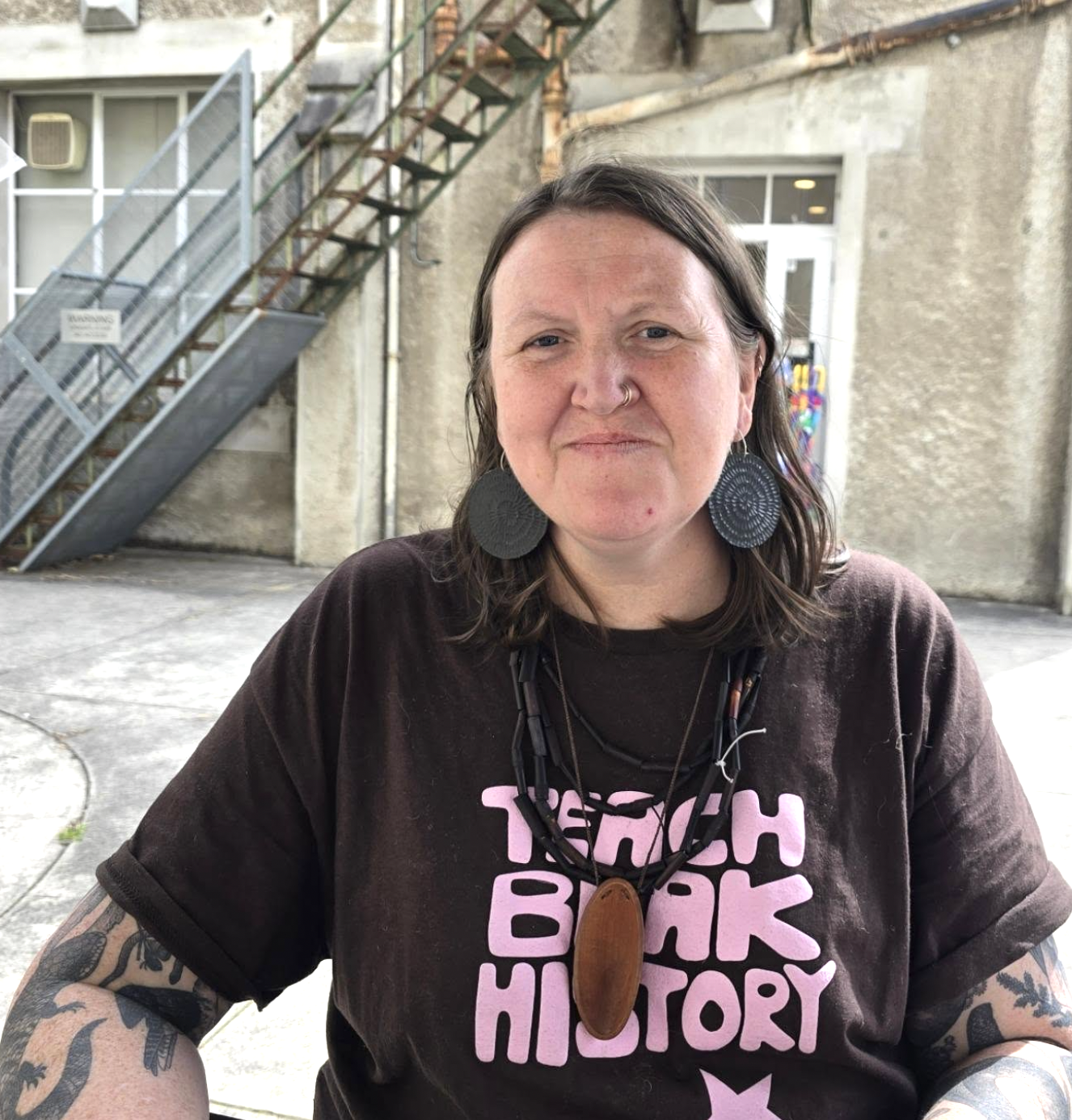
Bianca is actually doing a residency there, which we'll be making an announcement about. So she will be running her own weaving workshops there, as well as continuing some of the This Is Not Shoe stuff. So I would definitely encourage any Melbourne or Australian-based listeners to think about sort of enrolling in some of those workshops. It's a wonderful location, and throughout the summer, over the Christmas period in Australia, it's just a really great place to be.
And also I wanted to thank RMIT's Sustainable Technologies and Systems Enabling Impact platform for giving us a little bit of money so that I could actually pay for some of the train fares and accommodation to be able to disseminate some of this research and some of what we're doing as a sort of pathway to impact. And also to my colleagues at RMIT and the School of Fashion and Textiles who have picked up some of my work. I was planning on finishing the semester, but then the difficult news from my family over here kind of threw all of that up in the air. And I have got some incredible colleagues at RMIT, who have really kind of come in and saved the day and sort of helped me with some of those responsibilities. I completely lost all executive function for a moment there and was just not even able to go on computer at all. So that is just what is wonderful about working in a supportive team and a wonderful school at RMIT. So thank you to them. And thank you to the listeners as well for joining us today and hearing about all of this.
Emily [49:34]
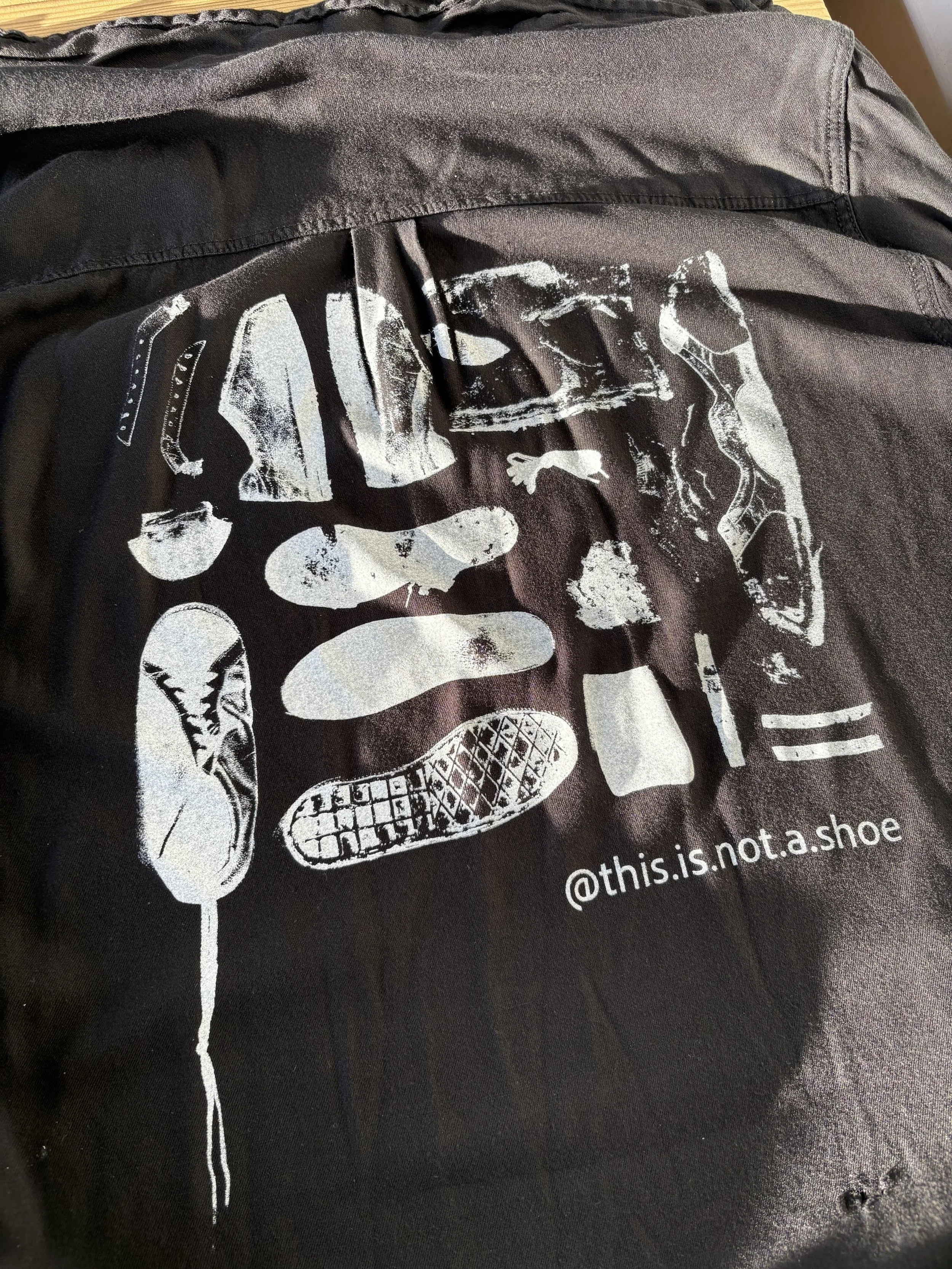
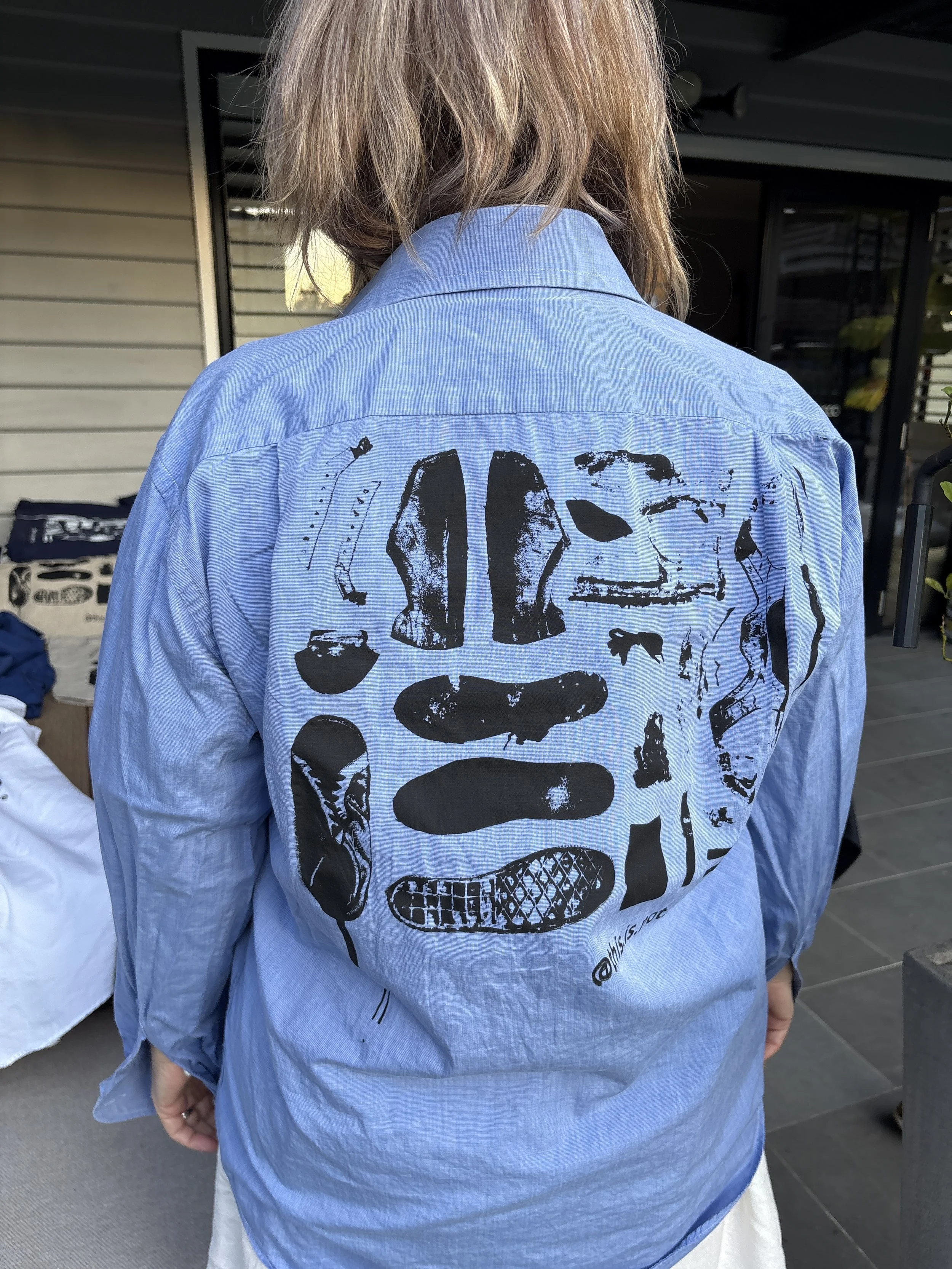
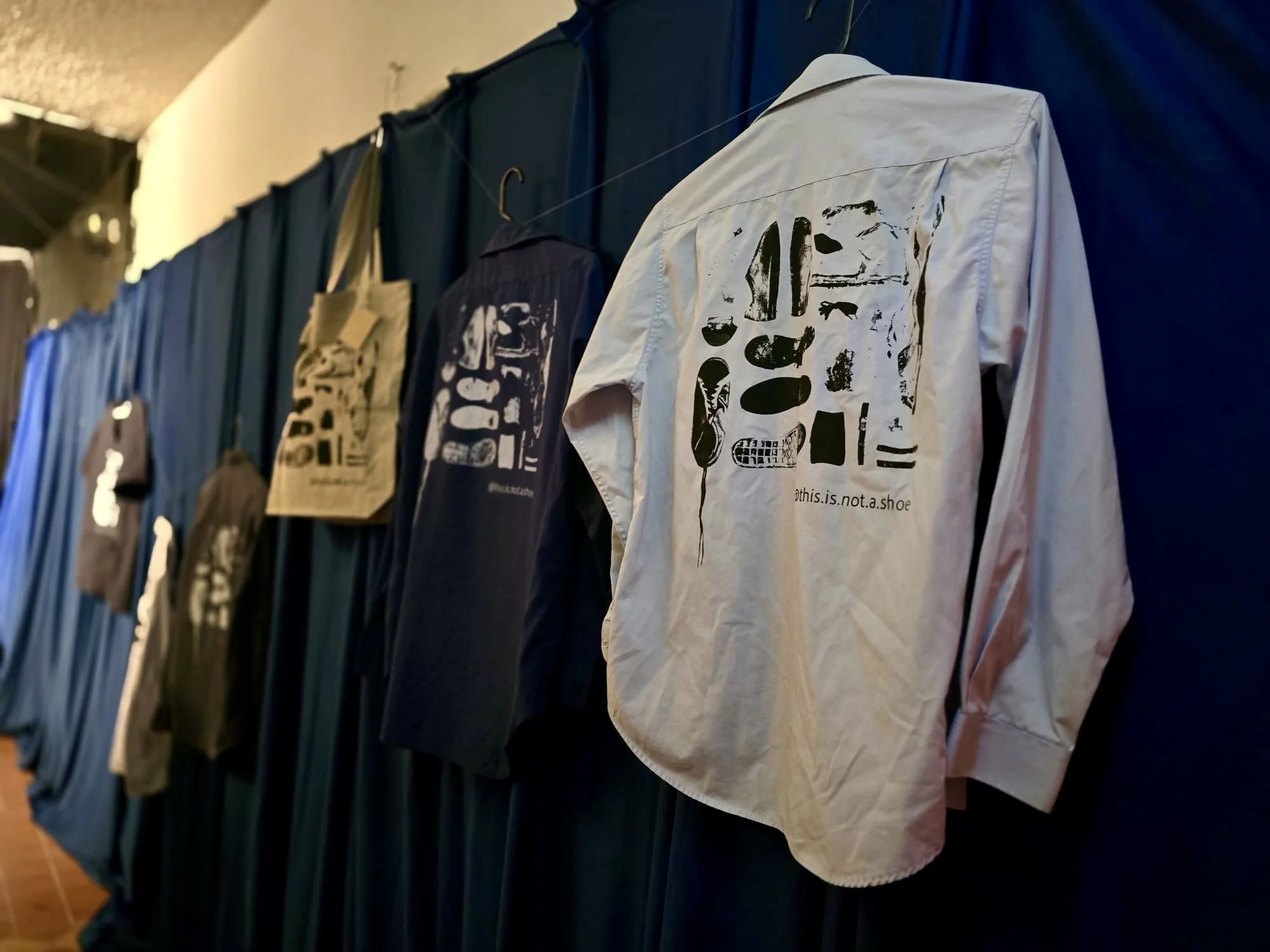
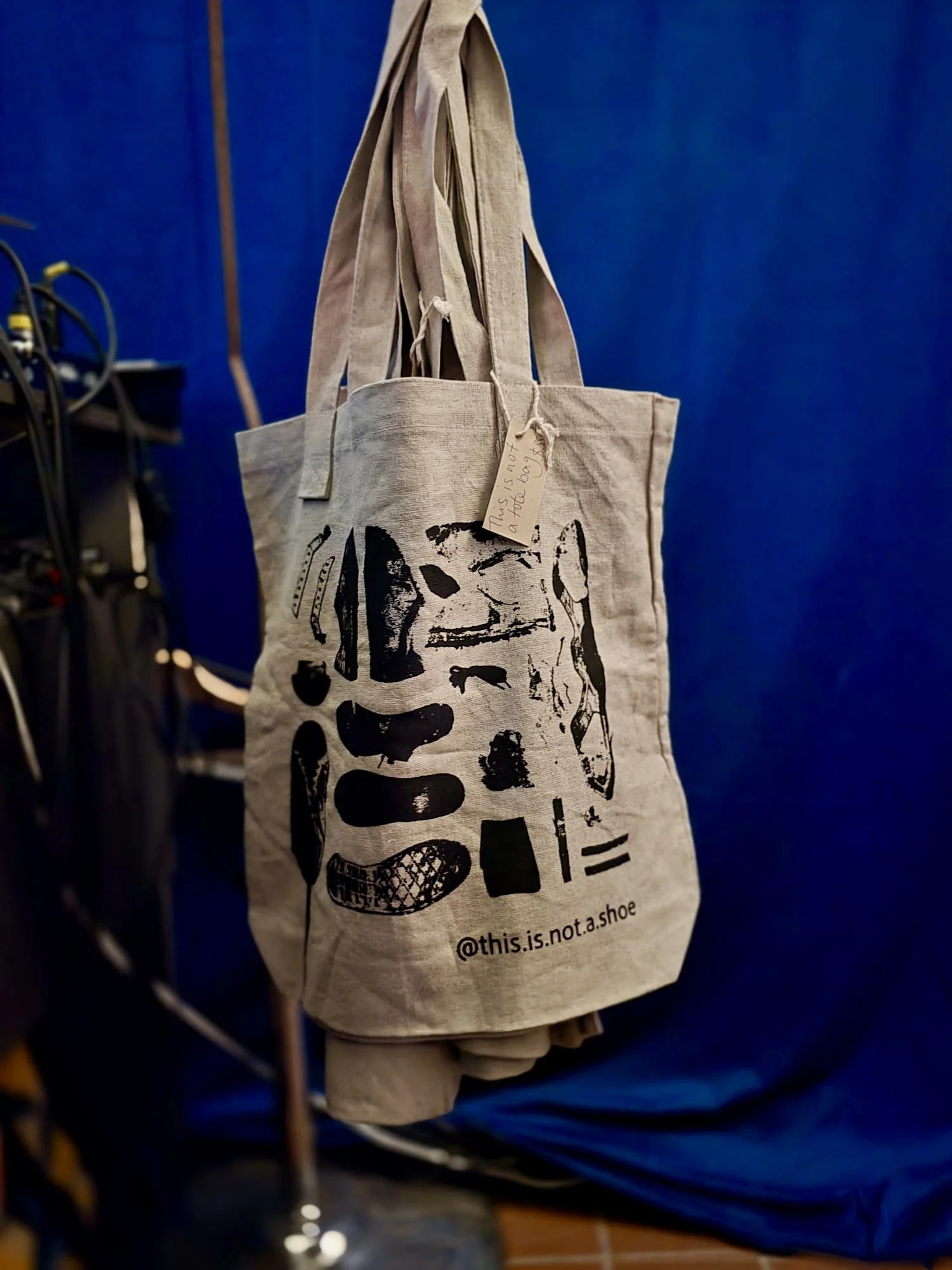
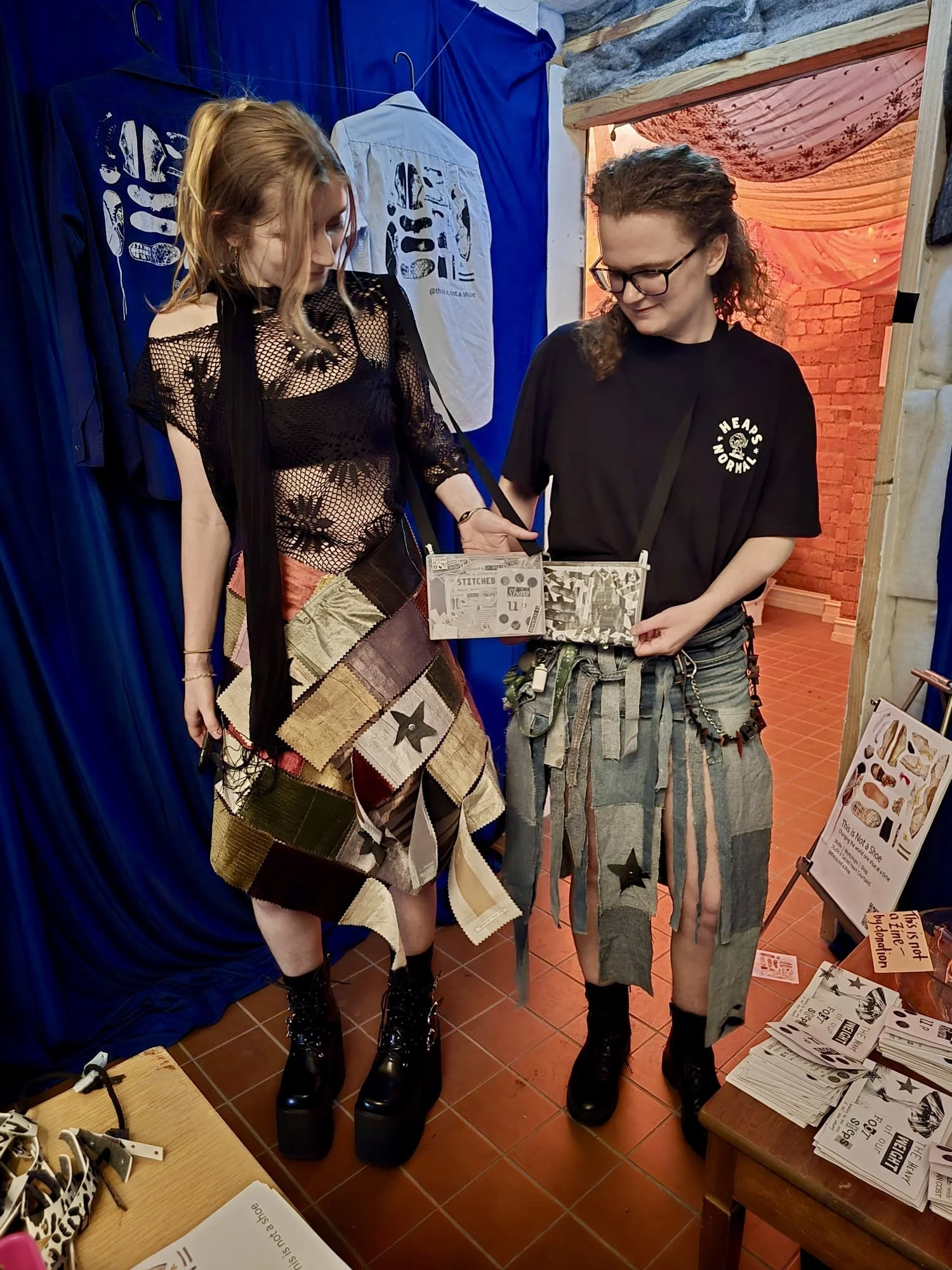
I've got one super quick, shout-out I'd like to give too. So as part of our ACRUX collective event, we sold merch because we are still trying to raise the funds to be a not-for-profit. So our merch was tote bags. This is not a tote bag, and of course, reclaimed shirts, which we upcycled and we screen-printed onto the back of those shirts, and onto the tote bags as well. Our this is not a shoe images and logos. So special shout out and thanks to Ink and Spindle at Abbotsford Convent, who are a eco Australian screen printing textile brand who make the most beautiful textiles for curtains, cushion covers, bags, all kinds of fascinating stuff, for letting us use their heat setter, Hot Betty, to heat set our screen printed merch.
Alex [50:31]
Hot Betty!
Emily [50:33]
So thank you. Shout out to them.
Alex [50:35]
And also to T-shirts Oz, and we'll put these links in the show notes as well, who printed the silk screen design for us to be able to print these shirts. And I'm hoping at some point we might have some of those to sell online to raise money as well. Um those are upcycled end-of-life shirts that got were bought for three dollars from the Rummage room at Helping Hands in Airport West, things that can't be sold in charity shops. So again, everything that we do is reused and repurposed and giving a second life. Um, all in line with the social lives concept.
And, let's not forget Lil Bean Zine, the amazing Sasha and Kathleen who produced some amazing zines explaining that this is not a shoe project and also one for the ACRUX event, which were available to participants on the day. And we'll see about how we can distribute those more broadly because they were absolutely wonderful. And so we will put all of these links on the web page for the podcast, which you can find at footwearresearchnetwork.org. And this time I'm going to include images of all of the events and everything that we've been talking about integrated into the transcript. So you can go back through the web page and have a look at some of the images.
So on that note, I think we'll leave the listeners to get on with their day, whatever they're doing, and and check back in for the next episode. Thanks so much, Emily. It's great to catch up.
Emily [52.09]
My pleasure.
Bye everyone. We'll talk to you next time.