This is Not a Shoe: What Happened When We Brought Unwearable Shoes to Melbourne Fashion Festival
Melbourne Fashion Festival 2026 has drawn to a close, but ‘This is Not a Shoe’ is still very much alive. Thanks to an overwhelming reception at Pennie Jagiello’s studio in the Sacred Heart Courtyard at Abbotsford Convent, we’re extending the exhibition over the coming weeks to welcome community visitors, school groups, and anyone who’s curious about the hidden lives of the things on their feet. The end of the festival feels like good moment to pause and reflect on an incredible couple of weeks and where this project might be going next.
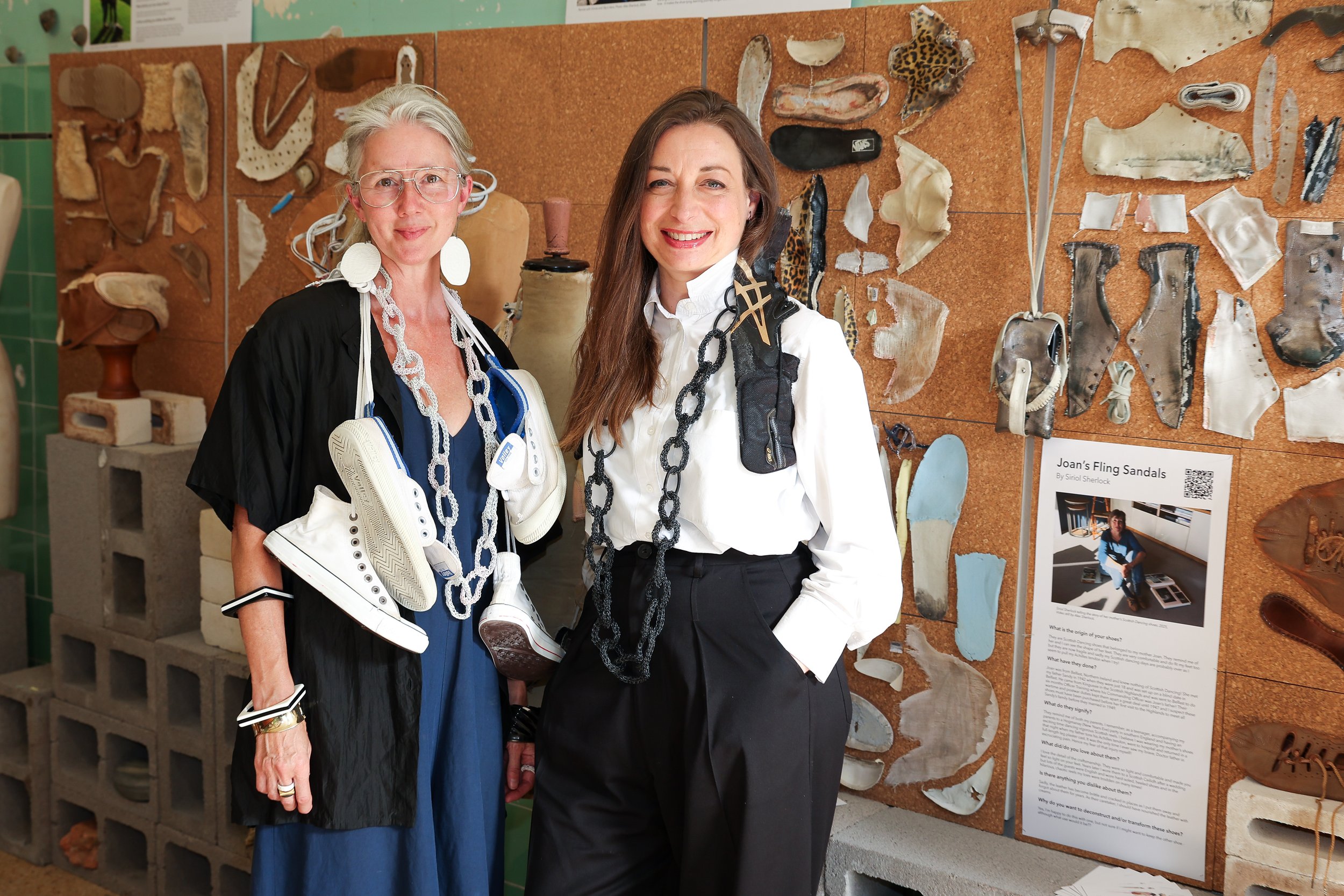
Pennie Jagiello and Dr. Alexandra Sherlock in Pennie’s Abbotford Convent Studio. Lucas Dawson Photography, 2026.
The Melbourne Fashion Festival activation represents the most recent, and most public outcome of a four-year teaching and research collaboration between contemporary jeweller Pennie Jagiello and footwear researcher Dr Alexandra Sherlock, both Lecturers at RMIT University’s School of Fashion and Textiles. We also want to acknowledge Dr Tassia Joannides, whose assistance with the original research and analysis in the early days of this project helped shape the journey that has followed.
Where It All Started
The activity at the heart of this project was originally developed as the first assessment task in the course Fashion Design Body Artefacts and Accessories, part of the Bachelor of Fashion (Design) at RMIT University in response to findings from Dr. Alexandra Sherlock’s 2017 doctoral research. Since then, it has been adopted and delivered by other institutions, including within the Bachelor of Footwear Design at De Montfort University in the UK, and through a project-based learning enquiry with Melbourne’s St Columbas College - developments that speak to the broader relevance of this kind of learning beyond any single program or context.
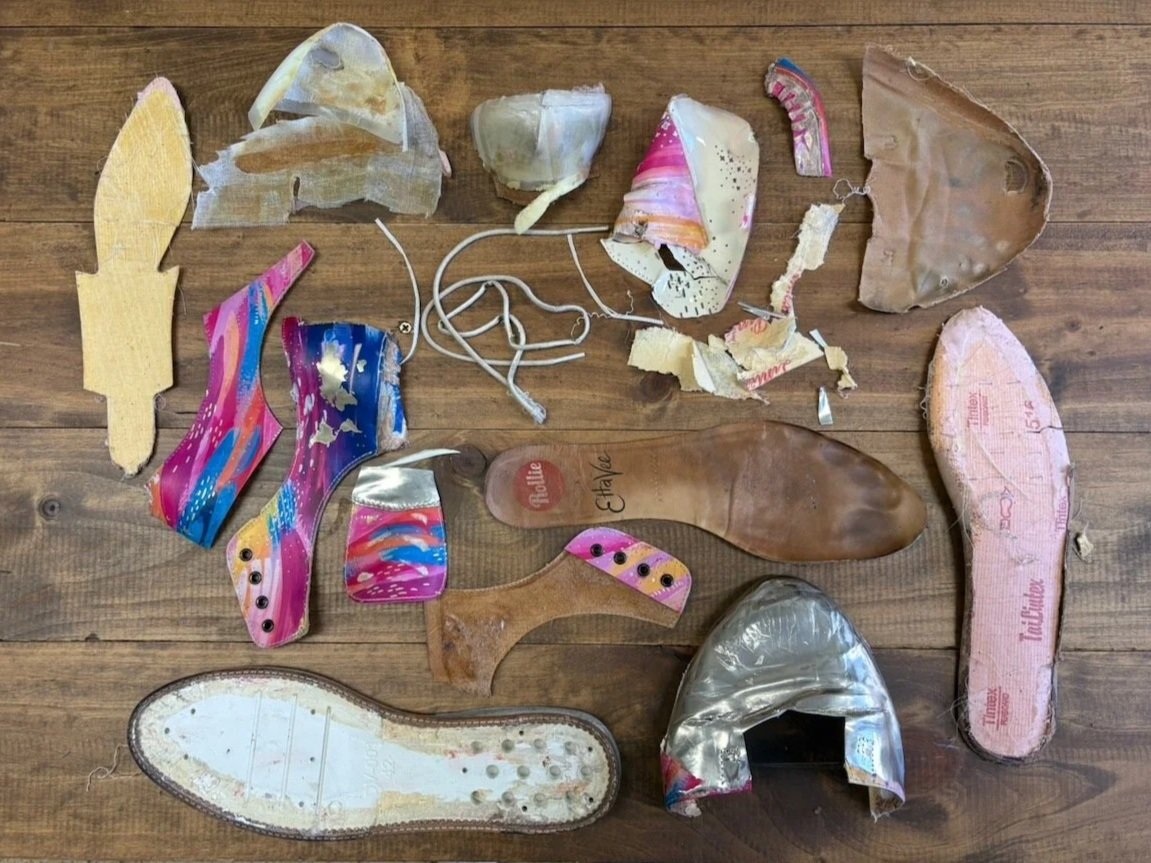
Workshop participant Jemima’s deconstructed Rollie Shoe. Alexandra Sherlock, 2026.
The premise was deceptively simple: give students a pair of used shoes and ask them to take them apart and construct something new from the component parts. What emerged from those early sessions was anything but simple. By physically dismantling shoes, pulling at stitches, separating soles, encountering the layers of leather, synthetics, foam, fabric and adhesive inside, students were forced out of the conventional, design-led approach to materials they had arrived with. Instead, they found themselves in a genuinely material-driven relationship with what was in front of them: collaborating with the materials rather than dictating to them. The outcomes that resulted were truly innovative, with the learning enhancing students’ creativity through playful enquiry and problem-solving.

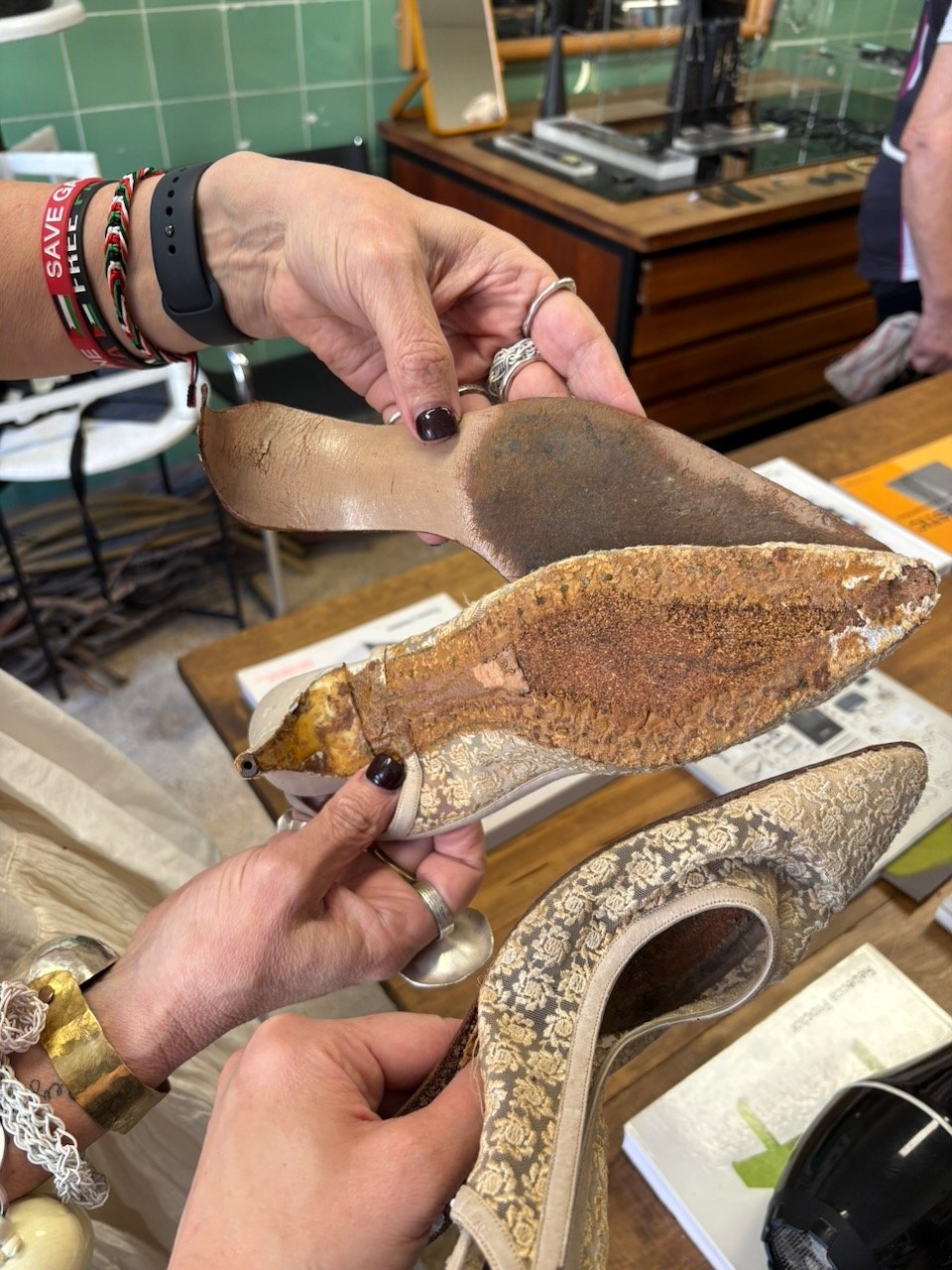
One of the original purposes of the activity was also to make better use of what we already have. Rather than producing new materials through unsustainable processes, we wanted to ask what happens when we start with what exists, and let that guide us. The concept aligns closely with a move towards circularity, and, taught within an Australian context, has been influenced by Indigenous approaches to regenerative and non-exploitative ways of being.
The research underpinning the activity draws on Ecological Psychologist J. J. Gibson’s theory of affordances, the idea that what we perceive in an object is not its objective features, but what it offers us. Children understand this instinctively. It is why a child will often be more absorbed by the box a toy arrived in than the toy itself: they have not yet been conditioned by convention, by the received knowledge of what things are for and how they ‘should’ be used. Over time, that innate openness is trained out of us. The ‘This is Not a Shoe’ activity, in part, is an invitation to recover it.
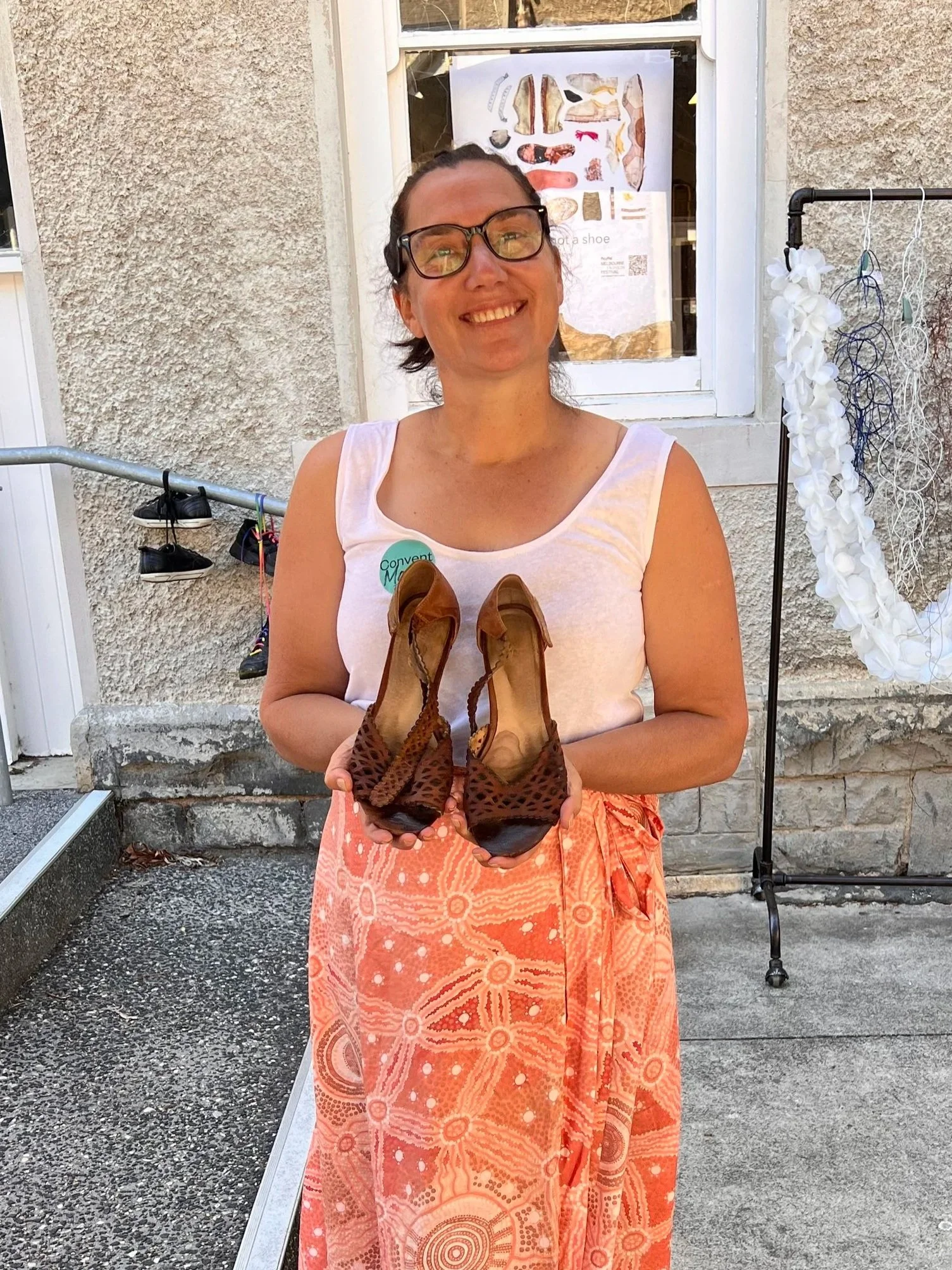
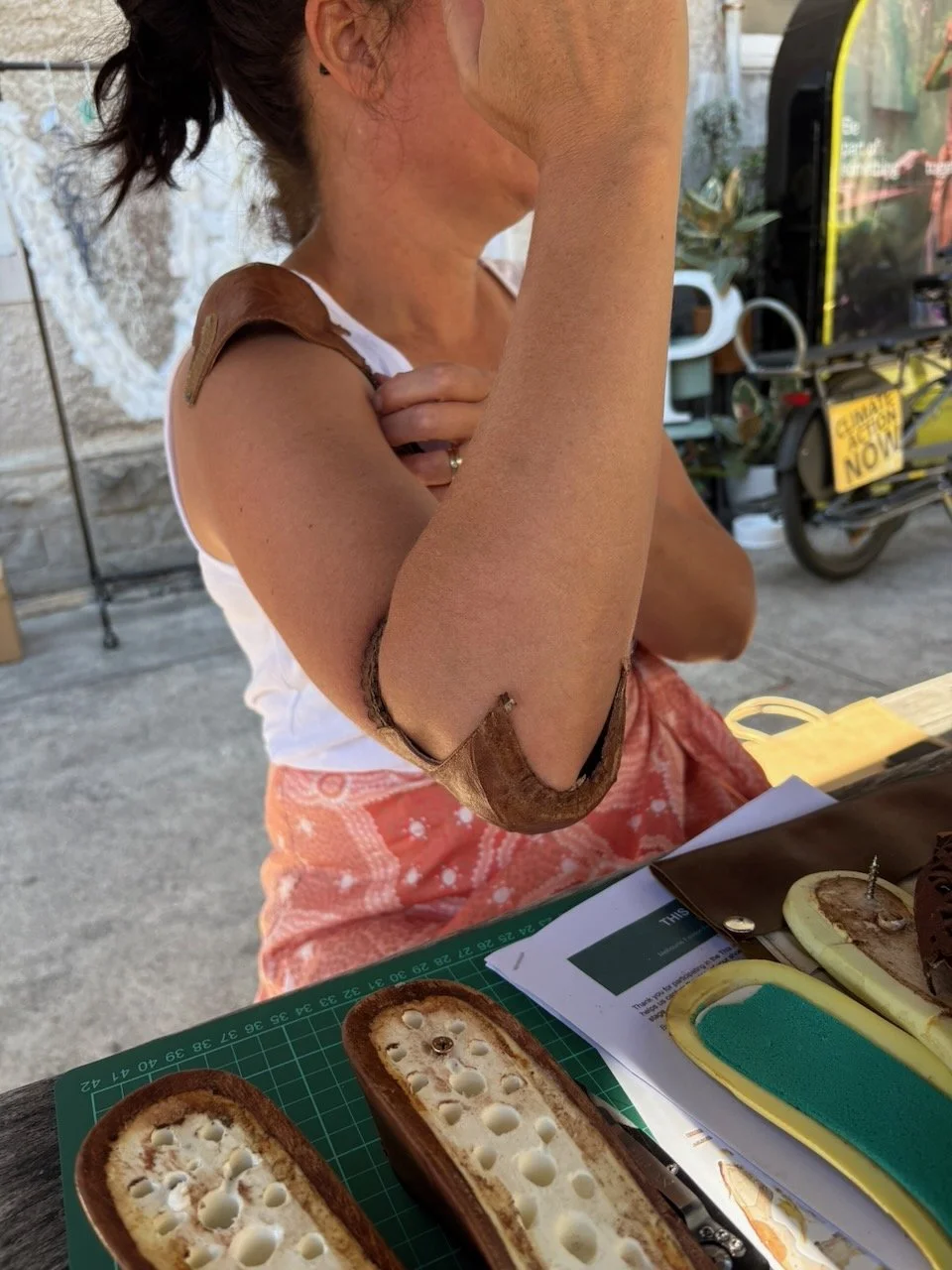
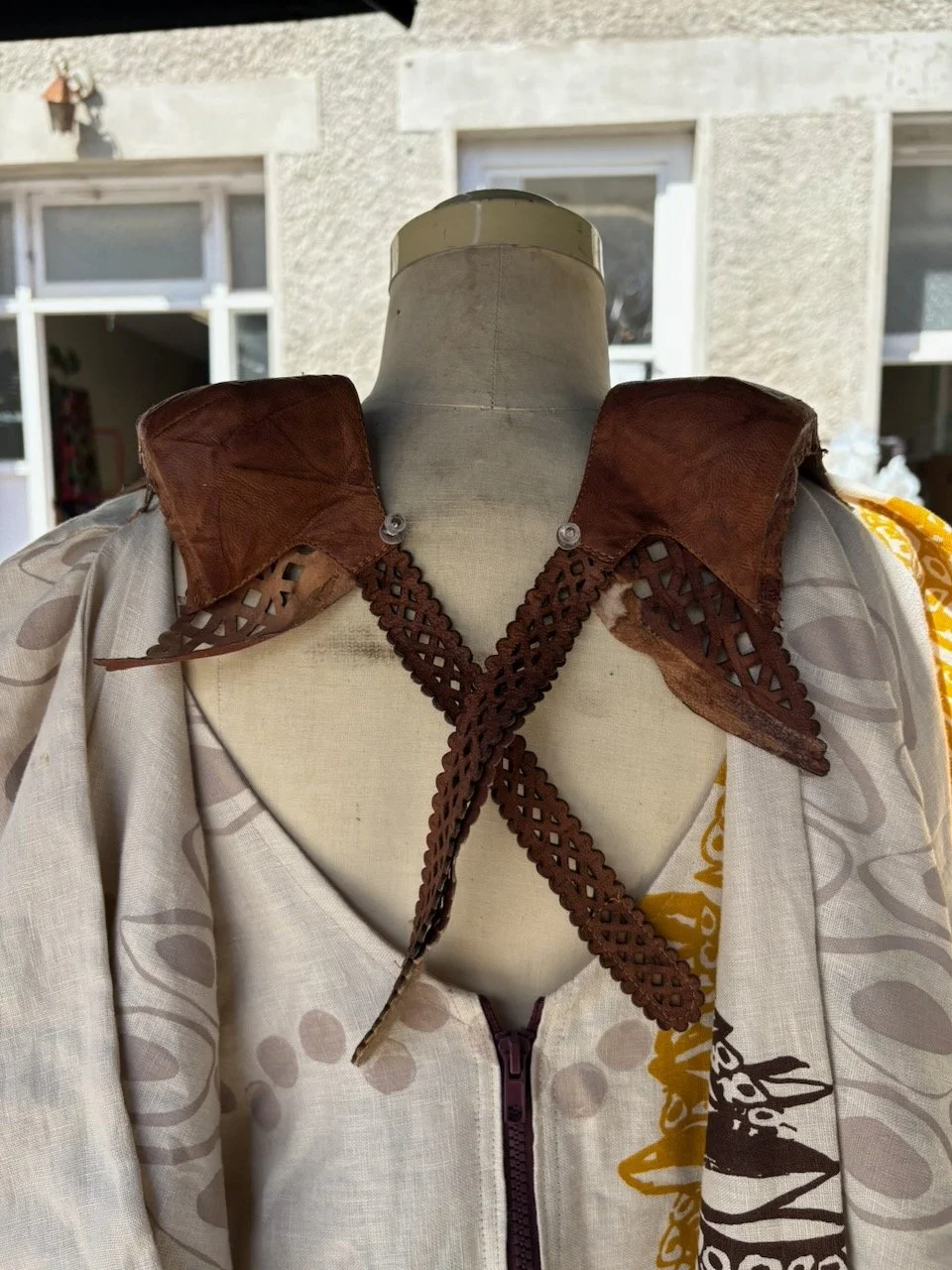
When a shoe can no longer function as a shoe, when we think of it as ‘not a shoe’, its conventional affordances dissolve, and something else becomes possible. Students and participants encounter what we’ve come to call ‘novel affordances’: unexpected design possibilities that can only be discovered through hands-on, sustained engagement with materials, something many have become increasingly disconnected from because of the loss of local manufacturing and offshore mass production. The result is a fundamentally different understanding of materials, creativity, and the value of what we already have.
What Four Years Have Taught Us
Over time, Pennie and I have come to understand that this activity has a dual educational purpose that we hadn’t fully anticipated at the outset. The first is the purpose we designed it for: educating designers to think about the end of a product’s life, to design with disassembly in mind, and to understand the principles of extended producer responsibility and circular design.
But the second purpose has become equally compelling: educating consumers. Circular footwear infrastructure, the systems for repair, reuse, and recycling that the industry urgently needs, will remain limited in impact unless the people buying shoes understand and are motivated to engage with the value of material life cycles, the flows of materials beyond their conventional use as finished products, and the importance of quality production processes that make repair and recycling genuinely possible. Disassembly, in particular, only works when a shoe is designed to come apart. Developing these innovations takes time and money that consumers are currently unwilling to pay, making them financially risky for brands.
The price of sustainable shoes is a huge barrier for many, particularly with cost-of-living pressures. But if a pair of shoes seems too good to be true, it almost certainly is. With over 22 million pairs produced annually, and few options for scalable reuse and recycling, the true cost of cheap shoes impacts the workers who make them, the environments in which they’re produced, and ultimately the landfills where they end up. A living wage for the people who make our shoes and good quality materials is not a luxury: it is a precondition for an ethical and sustainable footwear industry. We propose that helping people understand what goes into a shoe, the craft, the labour, and the materials, is one of the most direct ways of shifting those assumptions.
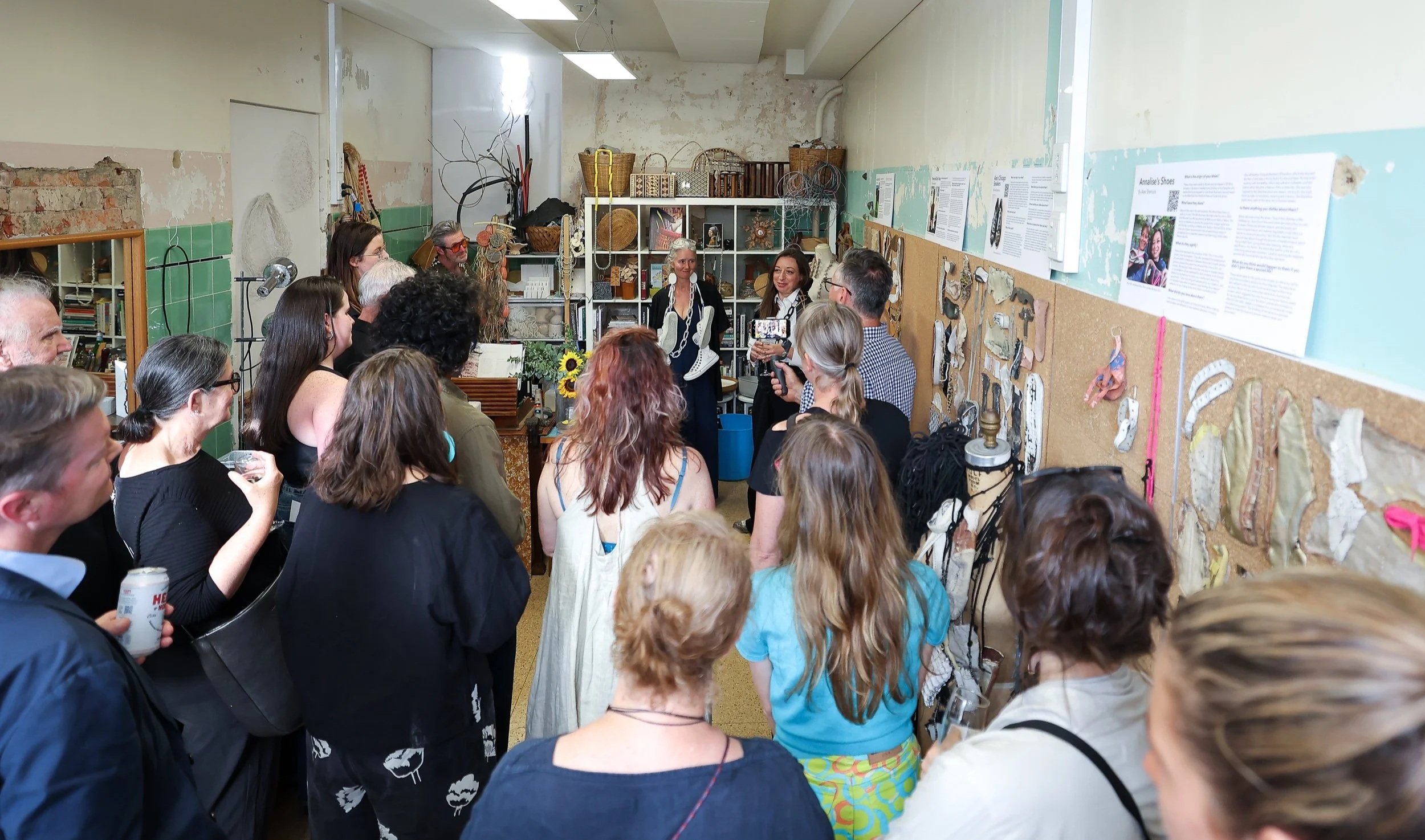
‘This is Not a Shoe’ Exhibition launch as part of the 2026 PayPal Melbourne Fashion Festival Independent Program. Lucas Dawson Photography, 2026.
Melbourne Fashion Festival 2026: A New Direction
Delivering the workshop within the context of Melbourne Fashion Festival’s Independent Program, with generous support from Bared Footwear, gave us the opportunity to expand the activity in a direction we had been quietly hoping to explore. For the first time, we invited participants to bring a pair of their own shoes that held a significant story or memory. None of us was sure exactly what would happen, but what unfolded exceeded anything we had anticipated.
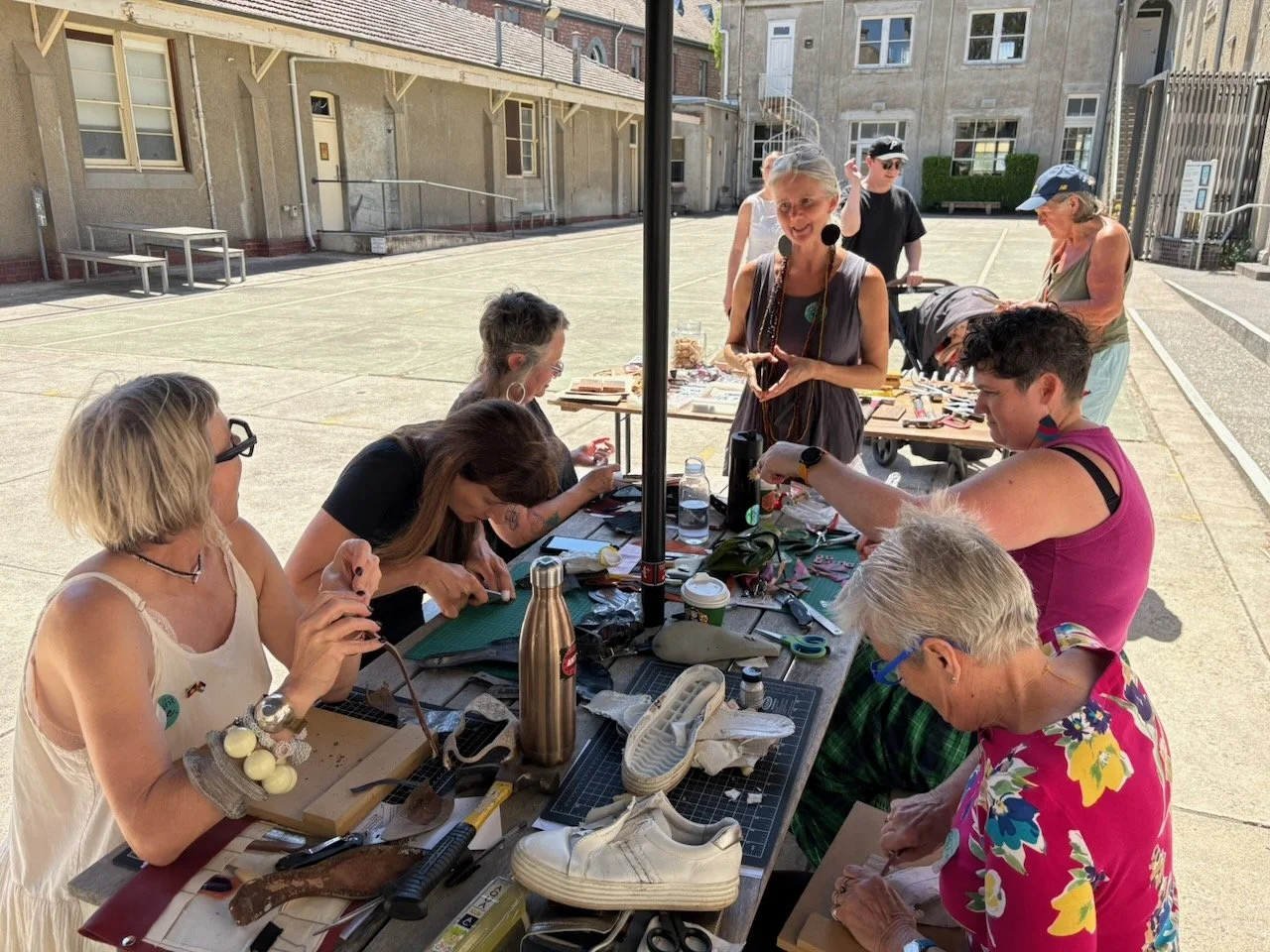
Workshop participants engaging in footwear deconstruction and conversation in the picturesque Sacred Heart Courtyard at the Abbotsford Convent. Alexandra Sherlock, 2026.
Shoes are vessels. Artist and maker Jo Cope, whose practice centres on the stories objects carry, has long spoken about this quality in her own work with footwear, and it was the subject of a recent episode of The Social Lives of Shoes podcast. As we sat together with shoes that had earned an afterlife, in the sunshine and beautiful surroundings of the Abbotsford Convent (a place with its own deep and complicated history), something shifted. People from entirely different walks of life found themselves sharing stories, connecting across experiences they might never otherwise have exchanged. The shoes provided the medium. The workshop provided the time and the permission to slow down and actually pay attention to these meaningful objects, and to each other.
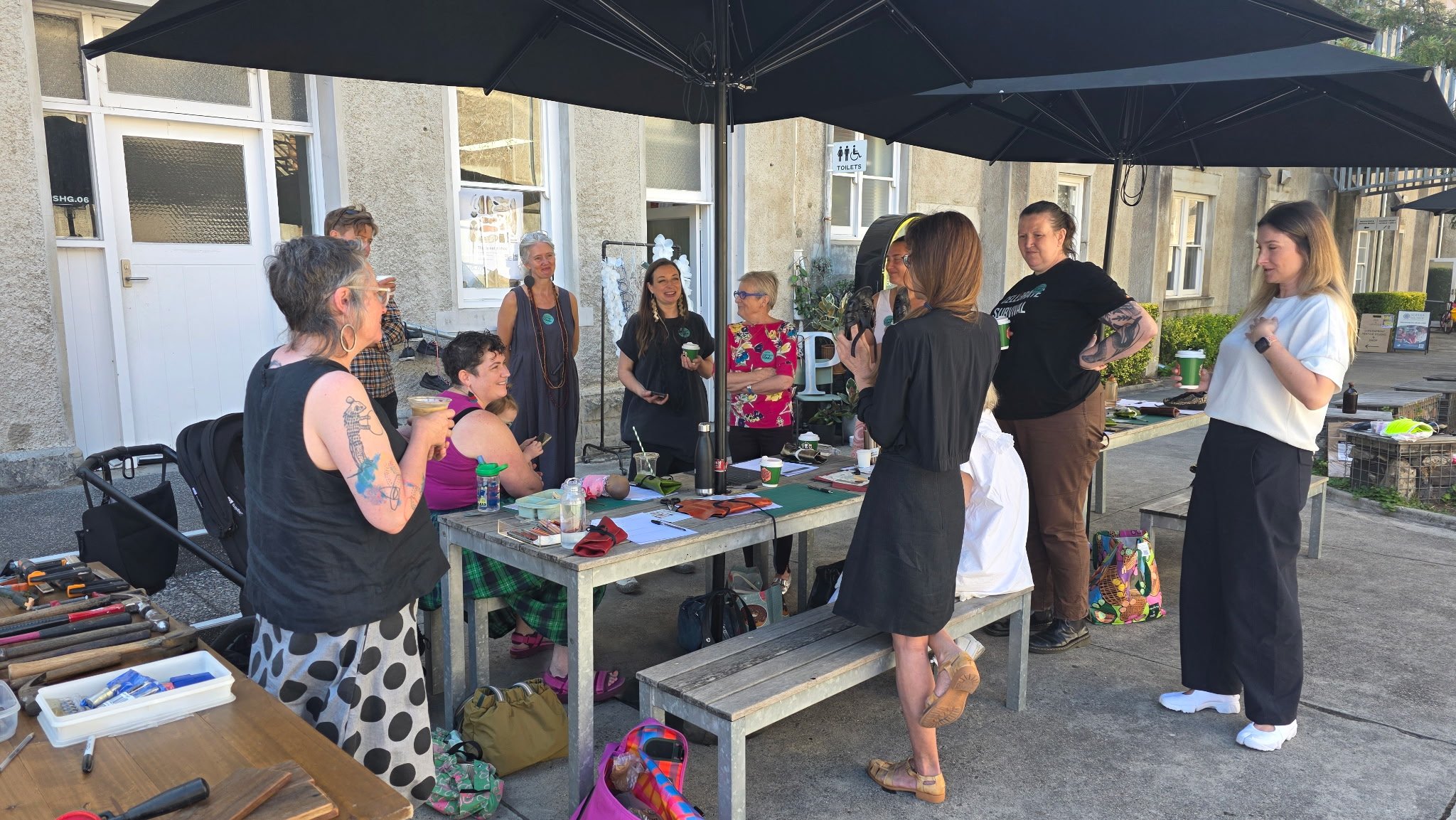
Sharing shoe stories to commence the ‘This is Not a Shoe’ workshop. Alexandra Sherlock, 2026.
For many participants, the process of carefully and mindfully deconstructing a beloved pair of shoes, taking them apart stitch by stitch, encountering the materials inside, was genuinely therapeutic. Rather than discarding something with emotional weight, participants were able to transform it: keeping what matters, without holding on to it in its original form. In a period of considerable disconnection and uncertainty, the workshop offered something quieter and more unexpected, a sense of connection, and a sense of renewal.
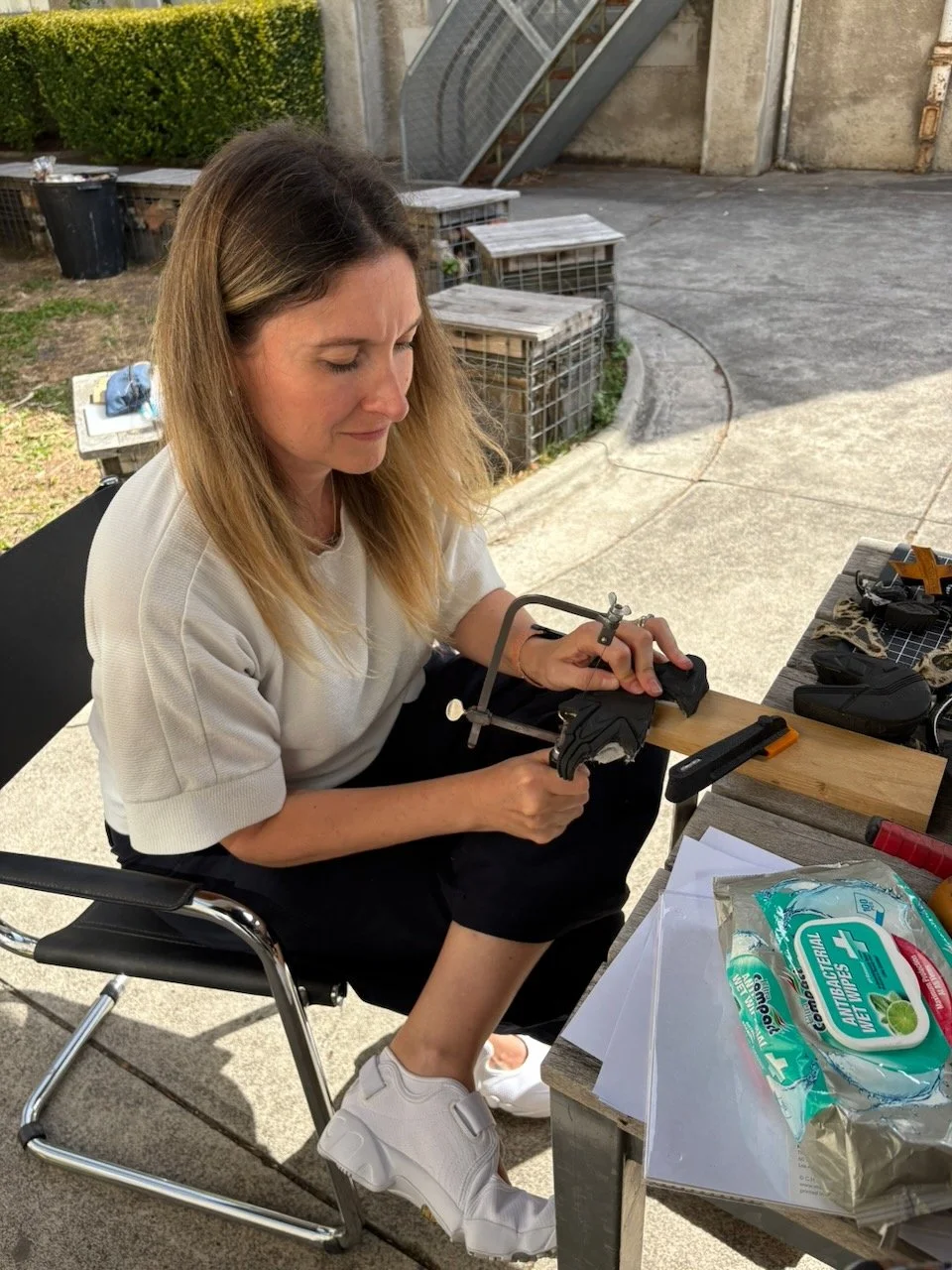
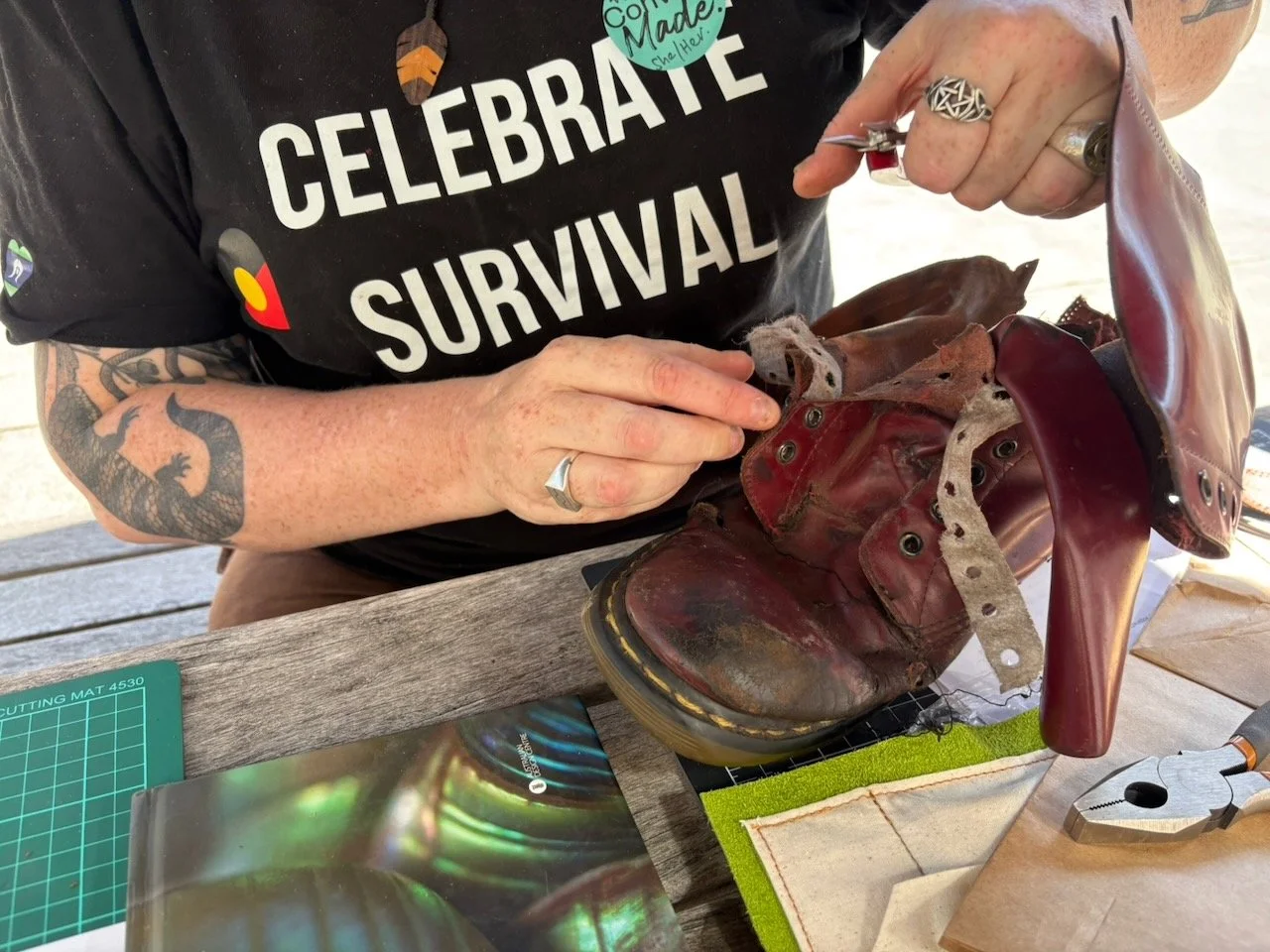
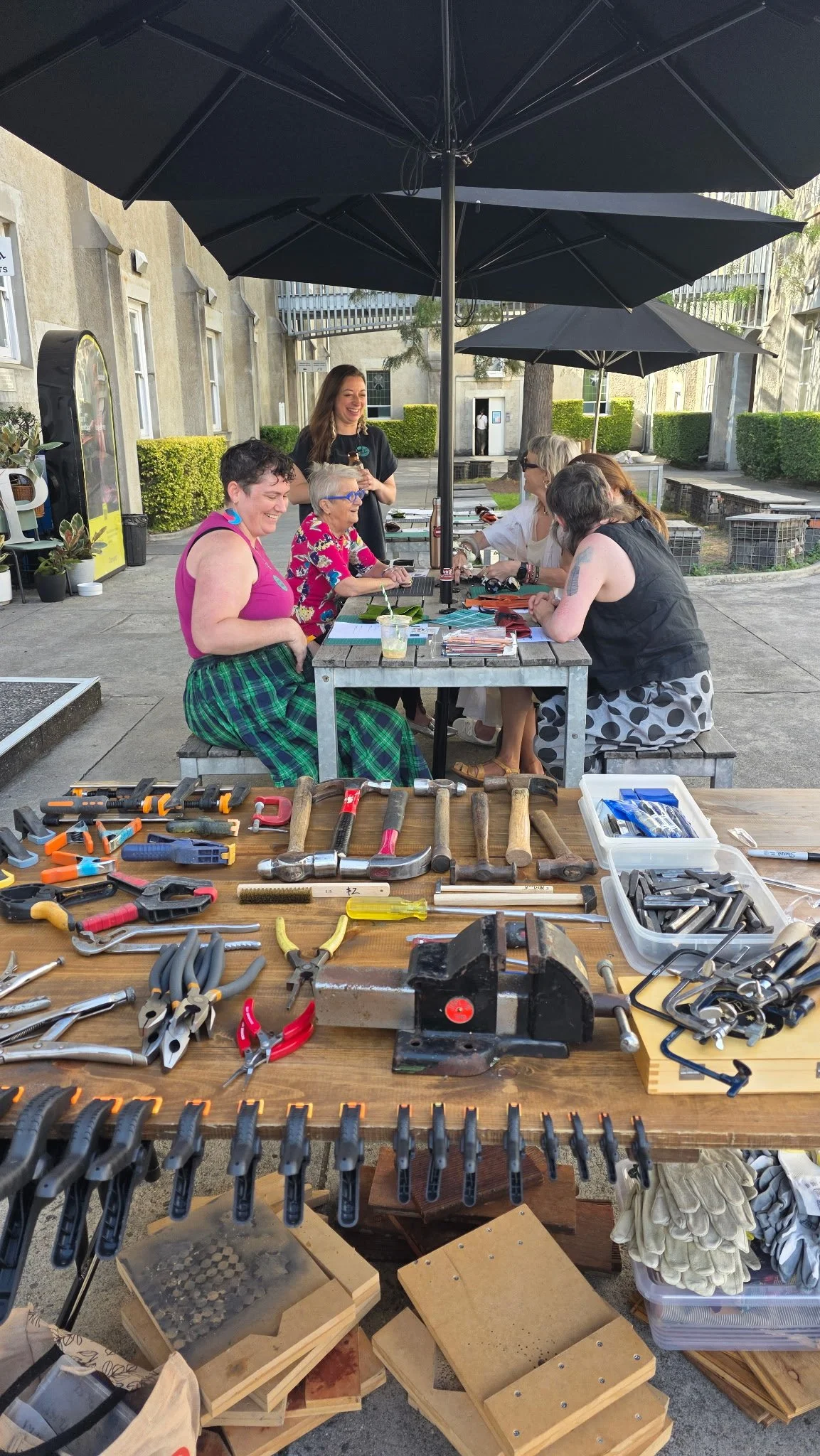
The exhibition opening was generously supported by Bared Footwear and attended by the Deputy Premier of Victoria and Minister for Education, the Honourable Ben Carroll MP, who said:
“It’s wonderful to see Victorian creatives, educators and world-class brands like Bared Footwear coming together to inspire and educate the broader community about the impacts and implications of the things we buy and wear. ‘This is Not a Shoe’ is a fantastic example of what makes Victoria such an innovative and vibrant place. I look forward to seeing this project grow.”
Millie Richards, Sustainability Lead at Bared Footwear, added:
“At Bared, we’re proud to support the arts and university research, because so many of our innovations start exactly there: curious minds, bold ideas, and makers willing to rethink what’s possible. The connection between research and art is a wonderful way to inspire innovation and change in the industry.”
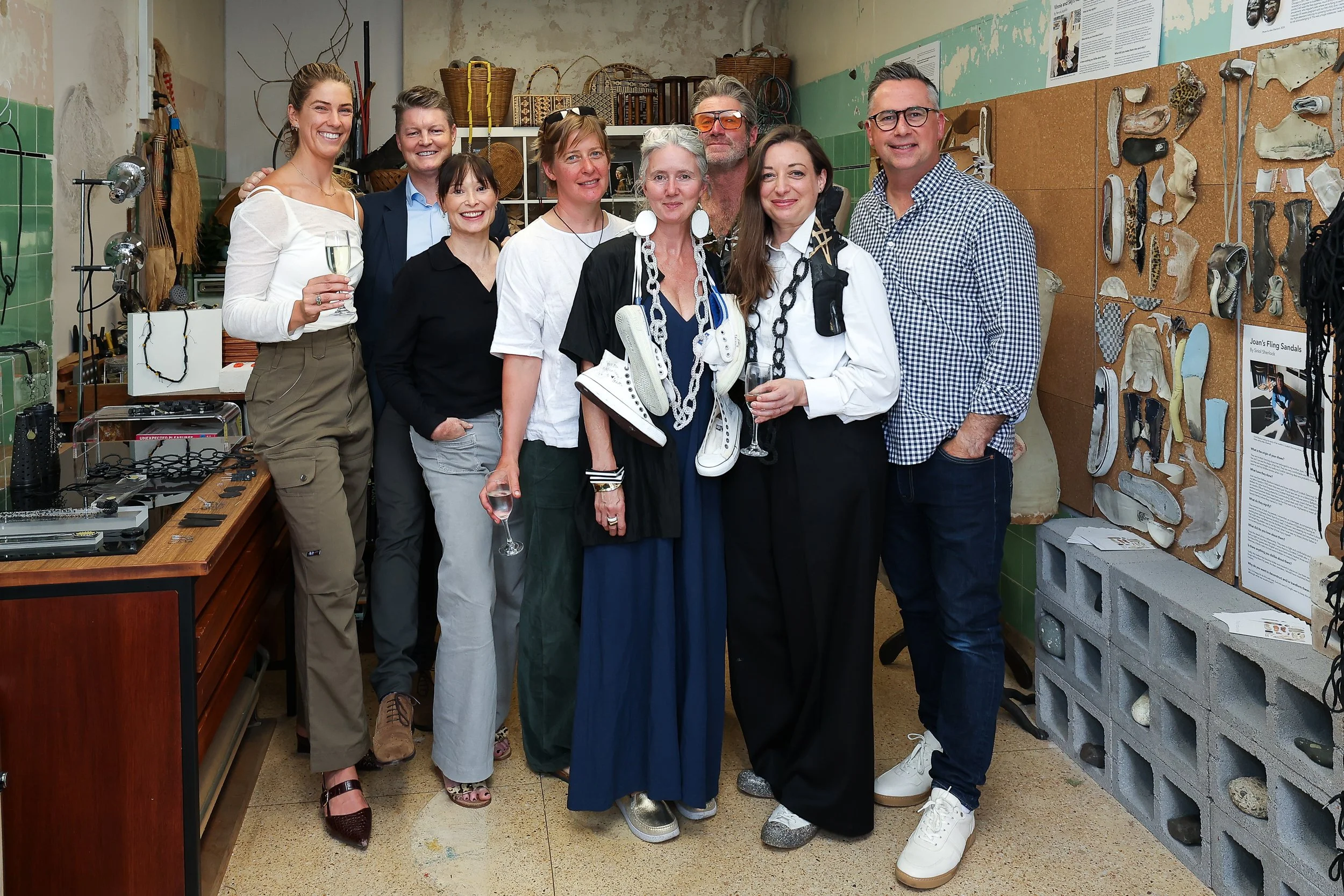
‘This is Not a Shoe’ launch party for the Paypal Melbourne Fashion Festival. From left: Millie Richards, the Hon. Ben Carroll MP, Fiona Rothwell, Annalise Gehling, Pennie Jagiello, Steve Hay, Alexandra Sherlock and Steve Pellegrino. Lucas Dawson Photography, 2026.
The Exhibition: Unexpected Conversations
Pennie’s studio sits within the Sacred Heart Courtyard at Abbotsford Convent, a space with a regular flow of passers-by who would never have planned to visit an exhibition about shoes. What struck us most about those unplanned encounters was the consistency of one particular response: “I’ve never thought of my shoes like this before.” It became, in its own way, the most honest measure of what this project is for.
The guestbook tells its own story:
“Really interesting and thought provoking. I’ll be thinking more about my next shoe purchase!”
“Fabulous, thought provoking. Never really thought there was so much meaning to shoes. I immediately thought of my children’s first shoes I kept, so much emotional and sentimental attachment.”
“I will be more aware of what’s on my feet from now on and say ‘thank you for protecting my feet’.”
“I love the idea of unpacking the shoes and displaying them. I myself go to the op shop as my retail therapy and buy second hand shoes. I like the thought of walking in someone else’s shoes and giving them a new lease on life. Here’s to old souls!”
“Thought provoking about the nature of the objects we use.”
“A very interesting and insightful exhibit. What’s underfoot?!”
Video of the This is Not a Shoe Exhibition. Alexandra Sherlock, 2026.
In Participants’ Own Words
The workshop participants themselves captured something about the experience that we could never have envisaged:
“I learned so much!!! I spent time with awesome and interesting people. I bought the coolest ever toolkit and was supported to create a new vision for my most favourite pair of shoes that I had completely trashed and worn to death.” (Instagram: @emmastenhouseart)
“Absolutely astonishing workshop! Loved every single moment of being in the presence of insanely solid women of great achievement, adventure and wonder.” (Instagram: @chaynes_paint)
“What a wonderful workshop it was! So eye-opening to discover that an old shoe can have a new lease of life, as something completely new!” (Instagram: @dr_knez)
“I don’t think I would have considered any kind of second life for them had I not encountered Alex and Pennie at This Is Not A Shoe. I would have wrenched them out of my house and life in a sad plastic bag, after having (of course) thanked them for their service […] Building from items that would otherwise go to waste is incredibly satisfying, much more so than building with new materials. It was very therapeutic.” (Annalise, 2026)
“Taking it apart stitch by stitch, with so many little pieces, was really meditative. Being together with an amazing group of people, sharing stories and finding new purpose for those memories really made my day. […] They’ve been sitting in a box because I wasn’t ready to let them go. Now I understand why. Transforming them allows me to keep what matters, without holding onto them in their original form.” (Priscila, 2026)

Participants of the ‘This is Not a Shoe’ workshop outside Pennie’s studio. Steve Hay, 2026.
What’s Next
We are genuinely thrilled by the reception this project has received, and a little overwhelmed, in the best possible way. A number of brands and organisations have already been in touch to ask how they can support or get involved, and we are applying for funding to extend the project’s reach locally, regionally, and perhaps even internationally.
In the coming weeks, Alex will also be releasing an episode of The Social Lives of Shoes podcast featuring a conversation with Dr Ellen Sampson, author of Worn: Footwear, Attachment and the Affects of Wear, a conversation that digs deeper into the implications of attachment for how and why we divest ourselves of the things we love, and what that might mean for extended producer responsibility and the future lives of objects we’ve made our own.
Meanwhile, the exhibition continues. You are warmly invited to visit Pennie’s studio at the Abbotsford Convent, Studio 7, Sacred Heart Studio, 1 St Helliers Street, Abbotsford, over the coming weeks. School groups and community organisations are especially welcome, and we’d love to hear from educators or facilitators who might be interested in bringing the workshop to their own community.
You can learn more about the project and read participants’ shoe stories at the following link:
Get Involved
You don’t need to wait for a workshop to start experimenting. We encourage everyone to try deconstructing an old pair of shoes at home and see what you find inside, and to share what you make with us by collaborating with the This is Not a Shoe Instagram account (@this.is.not.a.shoe).
If you’d like to share your own shoe story and transformation, with the possibility of appearing on the project website, please complete this form.
We also invite anyone, from the footwear industry, the education sector, the arts, community organisations, or simply as an interested person, to reach out and start a conversation about how we might work together. This project has always been collaborative at its core, we have learnt so much from each participant, and we believe its most exciting chapters are still ahead.
Contact us at alex@footwearresearchnetwork.org or through the Footwear Research Network website.
Further Resources
A short film including images and the opening speeches by Alex and Pennie will be available in due course on the This is Not a Shoe Instagram account and via Youtube, which offers an overview of the exhibition’s purpose and origins. We encourage you to follow the account to witness the project as it continues to unfold, and to see the many extraordinary journeys and transformations of participants along the way.
Read more about the project: https://alexandrasherlock.com/this-is-not-a-shoe
Follow: instagram.com/this.is.not.a.shoe
Visit the exhibition: Pennie Jagiello, Studio 7, Sacred Heart Courtyard, Abbotsford Convent, 1 St Helliers Street, Abbotsford VIC
Contact: alex@footwearresearchnetwork.org
This is Not a Shoe is a collaboration between Dr Alexandra Sherlock at the Footwear Research Network and contemporary jeweller Pennie Jagiello, supported by Bared Footwear and presented as part of the PayPal Melbourne Fashion Festival 2026 Independent Program.