What Does Your Shoe Rotation Do For You?
As shoe collectors and aficionados, we know that our rotations say a lot about us—our sense of self, style, even what daily activities we have on that week.
There’s something peculiar about the times when we stand before our collection, peruse our shoeboxes, and decide which pairs will enjoy a brief sojourn in our rotation by setting them aside near the front door or a wardrobe. In doing so, we make them ready to wear. Our research team has observed that this routine has evolved into a ritual for many shoe collectors and a common topic of discussion among fashion enthusiasts, basketball players, runners, and sneakerheads, who often talk about what’s currently in their rotation.
But what do our rotations do for us?
In our recent article in the European Journal of Marketing (November 2025), we examine how consumer collectors manage and curate their sneaker rotations, and explore the practical benefits of bringing beloved pairs into day-to-day use. Drawing on interviews with 21 sneaker collectors, purposively sampled to reflect diverse ages, occupations, and living situations, we share several key insights from our sneakerhead participants.
Rotations Streamline Everyday Shoe Choices
We love our shoe collections. For some of us, that means a wall of boxes stashed away somewhere at home; for others, it’s an entire closet we take great pride in. But let’s face it—choosing a pair from such an extensive array of attractive options can be very time-consuming. On busy weekday mornings, We don’t always have the time or mental capacity to spare as we rush off to school or work.
To manage this problem, our participants make choosing a pair far easier by maintaining a rotation that is physically separate from their wider collection, most often located in a home entranceway or near their wardrobe. Nearly all of our participants updated their shoe rotation weekly.
Our participants were strategic in their choice of pairs. Beyond pairs that tickle their current fancy, participants also include pairs that offer comfort for days with a lot of travel, their rarest and flashiest pairs to impress at social events, and pairs that help them deal with bad weather, such as rain and snow.
The idea is to have a rotation that is flexible enough to adapt to emergent situations across a week. Consider the rotation of our participant, “Bruno”. At the time of his interview, Bruno had rotated in a pair of New Balance 990v5s and some Adidas Ultraboosts for comfortable weekday rushing to work, an exclusive pair of Nike x Off-White Air Prestos for an upcoming Friday-night house party, and a trusty pair of Converse Chuck Taylors in a classic black/white colourway for bad weather. This latter pair steps in for other, more delicate pairs because they look even better when they become beat-up and build character.
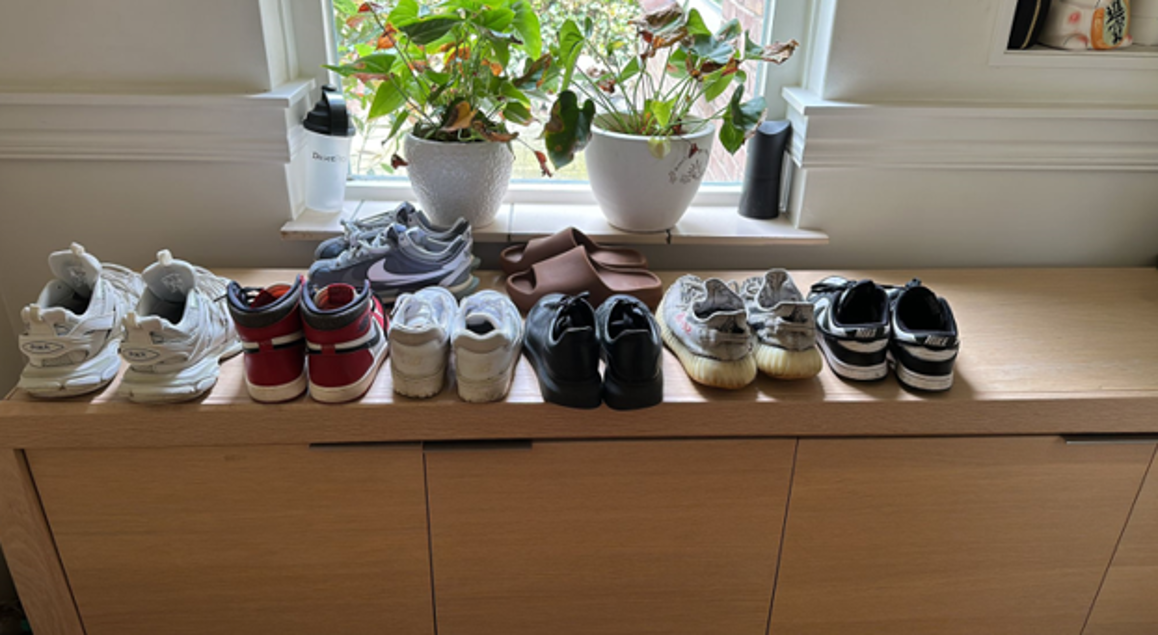
“Vance” and his sister display their weekly sneaker rotations side-by-side (split down the middle, left and right respectively) on top of a cabinet located in their family’s front hall entranceway. (Image: The Authors, 2025)
‘Beaters’: The Unsung Heroes of Shoe Rotations and Collections
Speaking of “beater” sneakers, we find that these pairs are at the heart of many rotations. Beaters help our participants manage an all-too-familiar dilemma: feeling torn between the desire to wear beloved pairs and the risk of wearing them out. If the conditions aren’t right—such as bad weather or the prospect of a lot of walking—beaters come to the rescue by subbing in for more finicky (though often more expensive or hyped) pairs.
In this way, our study casts a light on beater pairs as the unsung heroes of rotations and collections. They’re rarely rare, and they can be boring at times, but they nobly absorb the daily grunt work of keeping our feet protected and supported. This means that pairs such as the humble Converse Chuck Taylor All Stars, general-release Nike Dunks, and the timeless Adidas Stan Smith can play important supporting roles in a collection. While sold-out special edition “holy grail” sneakers can turn heads on the streets, deep down, we know that it is the ever-reliable and comfortable beater pairs that often hold a special place in our hearts.
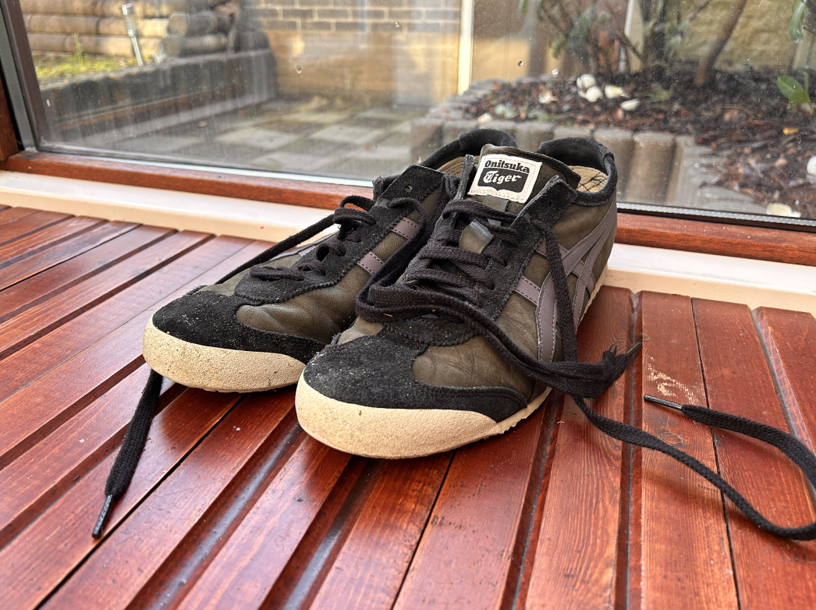
Pao’s 10-year-old beaten-up pair of Onitsuka Tiger Mexico 66s. (Image: The Authors, 2025)
Lasting Longer by Staying Smitten
While beaters often do the heavy lifting of supporting the longevity of other pairs, curating sneaker rotations can extend the lifespan of an entire collection in other ways. For starters, maintaining a rotation distributes wear across a larger number of pairs, so each individual pair lasts longer. However, we find among our participants that shoes not only face the risk of physically wearing out—their special meanings can be eroded in a similar way.
“Familiarity breeds contempt,” as the saying goes. You may start to fall out of love with a pair you’ve worn frequently, feeling they’ve become ordinary and lost their magic. Many of our participants managed this risk by rotating particular pairs out of circulation, thereby temporarily separating themselves from them. In this way, another cliché is apropos: “Absence makes the heart grow fonder.”
Indeed, participants shared stories of rekindling their love for specific pairs after time apart. Some feel like a surprise again, with warm, nostalgic memories flooding back when they are pulled from storage after a year. Others prompt new realisations about their broader cultural significance once the initial release hype has faded. Following these reflections, the pairs often enjoy another sojourn in the rotation.
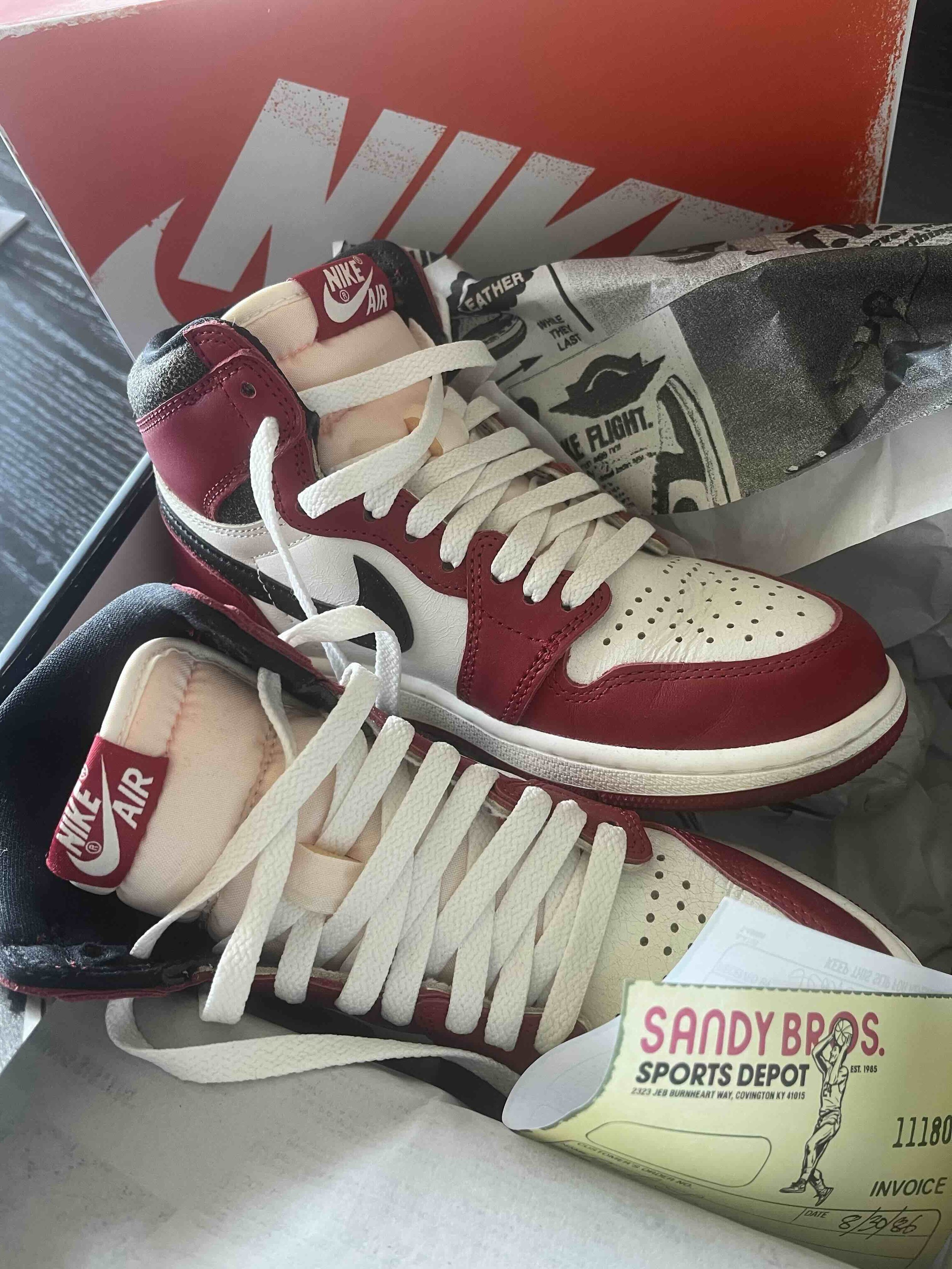
Ming’s much-coveted Jordan 1 Retro High OG Chicago “Lost and Found” sneakers that she won in an online raffle. This pair is a throwback to the 80s, when shoeboxes were often lost in inventory stockrooms and only found again years later. (Image: The Authors, 2025)
Sneakers, Space, and Significant Others
We were surprised to discover that rotations can also help collectors negotiate (some) peace with family members who are less smitten with sneakers. Shoe collections require significant storage space, especially if you are adamant about keeping them in their original boxes. Many sneakerheads do not have the luxury of building extravagant displays of their entire collections in high-traffic spaces at home and instead opt for more efficient and discreet storage in places like bedroom cupboards and garages. But what if you still want houseguests to know that you love shoes by putting some on display?
Once again, rotations come to the rescue, with some collectors turning their rotation locations into compact shrines for the pairs they’re currently into. In doing so, they can circumvent unenthusiastic partners who are reluctant to donate family floorspace to collection displays. Gussying up some otherwise sad shelving near a doorway turned out to be a handy loophole through which rotations could scratch one collector’s itch to show off.
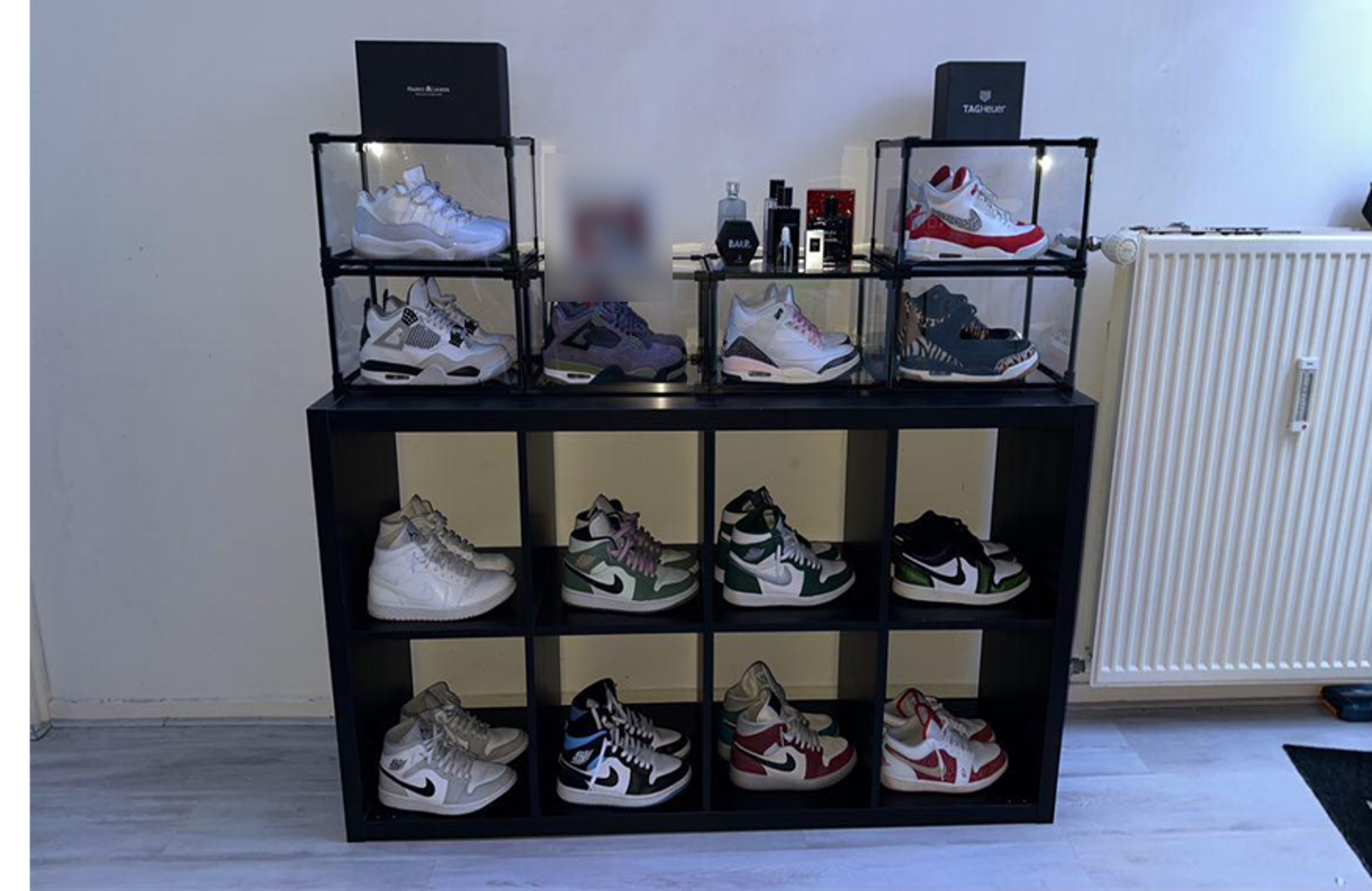
A participant’s strategic rotation display. (Image: The Authors, 2025)
Lacing Up Some Loose Ends
Our study maps out the many ways that shoe rotations not only say things about us, but also what they do for us. Rotations make choosing a pair to wear each day far easier, sparing us the daunting task of picking from a wall of shoeboxes. They give “beater” shoes a chance to shine as they bear the brunt of daily wear. In related ways, rotations help pairs last longer and remain special. Perhaps surprisingly, rotations can even play a part in relationships with family members at home, including those who may not share the same enthusiasm for sneakers.
If you would like to check out our study, please use the link below to access it in the European Journal of Marketing. This article has been published open access, so it can be downloaded by anyone.
https://doi.org/10.1108/EJM-12-2023-0885
Now, if you’ll excuse us, we have to make some difficult choices over what pairs will be in our shoe rotations this week.