Understanding attachment and divestment for a circular economy with Dr Ellen Sampson


OVERVIEW
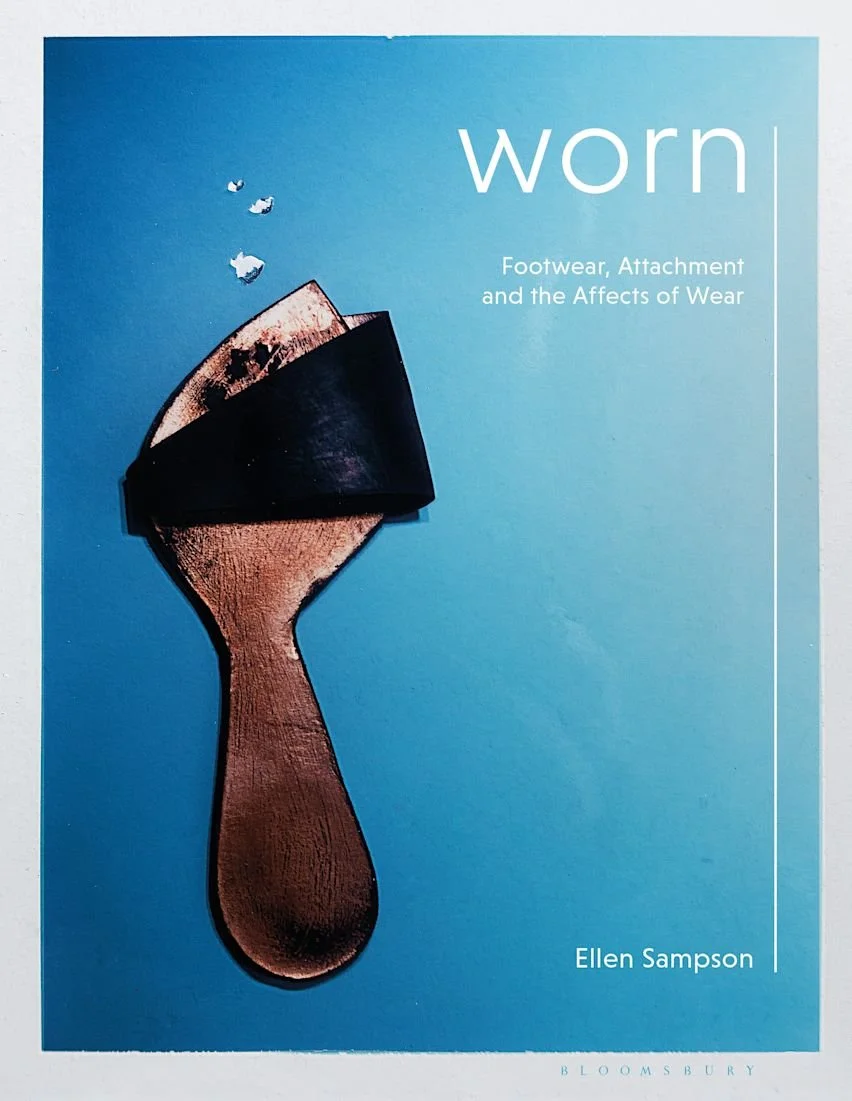
How and why do we become attached to particular shoes? What does this mean for disposal? How might ideas of attachment inform circular and sustainable business models and consumer practices? In this episode Dr. Alexandra Sherlock speaks with Dr. Ellen Sampson author of 'Worn: Footwear, Attachment and the Affects of Wear' about how and why we become attached to shoes, and the implications of these attachments at the end of a shoe’s ‘life’.
Credits
Interviewee: Dr Ellen Sampson
Presenters: Dr Alexandra Sherlock & Dr Emily Brayshaw
Produced and edited by: Dr Alexandra Sherlock
Links
Guest
Dr Ellen Sampson's website: https://www.ellensampson.com
Resources mentioned in the episode
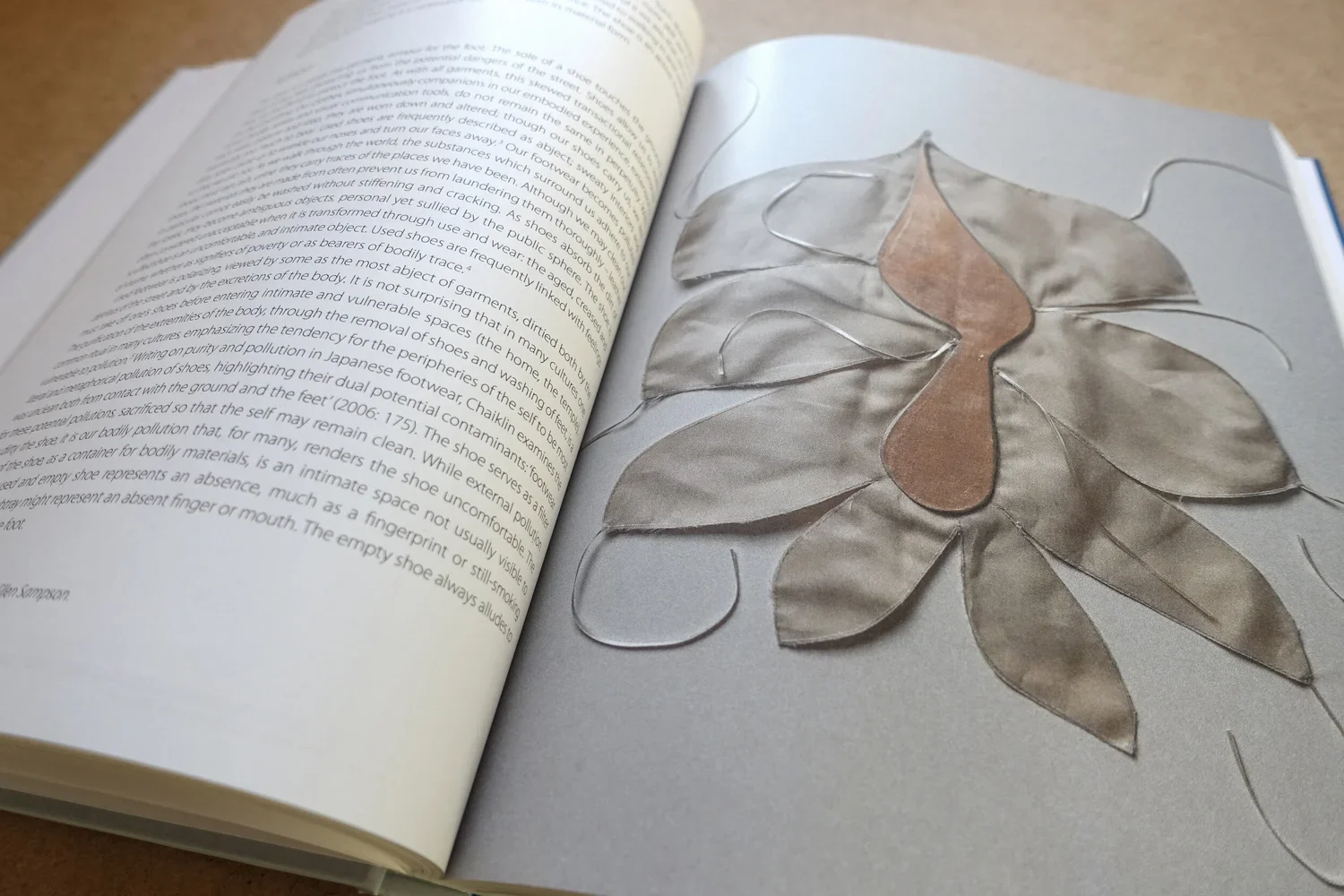
Worn: Footwear, Attachment and the Affects of Wear — Ellen Sampson (Bloomsbury Visual Arts, 2020): https://www.bloomsbury.com/uk/worn-9781350087187/
Emotionally Durable Design: Objects, Experiences and Empathy (2nd ed.) — Jonathan Chapman (Routledge, 2015):https://www.routledge.com/Emotionally-Durable-Design-Objects-Experiences-and-Empathy/Chapman/p/book/9780415732154
Dressays: An Anthology of Writing about Clothing — ed. Rosie Findlay (Bloomsbury Academic, 2026): https://www.bloomsbury.com/uk/dressays-9781350473256/
Barbican exhibition Dirty Looks: Desire and Decay in Fashion (25 Sep 2025 – 25 Jan 2026): https://www.barbican.org.uk/exhibition-guides/dirty-looks-exhibition-guide
Onomichi Denim Project, Japan: https://www.onomichidenim.com
Museum of Broken Relationships: https://brokenships.com
This Is Not a Shoe workshop (Dr Alexandra Sherlock & Pennie Jagiello) —Instagram:https://www.instagram.com/this.is.not.a.shoe
Wendy Ward — Instagram: https://www.instagram.com/thatwendyward
Ellen and Alex on the Feeling Fashion Podcast, interviewed by Dr Adele Varcoe.
Further reading
Jean-Sébastien Marcoux, 'The "Casser Maison" Ritual: Constructing the Self by Emptying the Home', Journal of Material Culture, 6(2), 2001: https://journals.sagepub.com/doi/abs/10.1177/135918350100600205
Professor Jayne Wallace — research on ongoingness, memory and end of life, Northumbria University: https://www.northumbria.ac.uk/about-us/our-staff/w/jayne-wallace/
Valerie Steele's work on fashion and fetishism via The Museum at FIT: https://www.fitnyc.edu/museum/research/valerie-steele.php
Sherlock, Alexandra, Book Review - Worn: Footwear Attachment and the Affects of Wear by Ellen Sampson for Fashion Theory: the Journal of Dress Body and Culture. Available at https://alexandrasherlock.com/alexandra-sherlock-blog/book-review-worn-footwear-attachment-and-the-affects-of-wear-by-ellen-sampson
Chapters
[00:58] Episode 8 Introduction
[02:27] Emotionally Durable Design and Jonathan Chapman
[07:48] Attachment and Shoes — The Palimpsest
[16:57] The Pros and Cons of Durability
[25.05] The Concept of Cleaving — Attachment and Detachment
[27:59] Fetishising Shoes - Meaning and Metaphor
[30:16] This Is Not a Shoe — Detachment Through Deconstruction
[34:12] Divestment Strategies and Managed Letting Go
[37:09] Ongoingness, Narrative, and Resale Platforms
[48:42] Circularity, Loss, and Material Life Cycles
[50:28] Resources and What's Coming Next
[52:21] Key Takeaways — Emily and Alex Reflect
Trancript
Emily (00:10) What if shoes could speak? What might their stories, and the stories of those who make and wear them, tell us about the ways we live, our values and our impact on the world?
Alexandra (00:22) Welcome to the Social Lives of Shoes, a podcast brought to you by the Footwear Research Network that brings to life one of the most underestimated and humble aspects of consumer culture.
Emily (00:32) Whether you design, produce, make, market, sell, or just wear shoes. These conversations will transform how you think about them and reveal new possibilities for a more sustainable future.
Alexandra (00:45) This episode was recorded and produced in Australia on the unceded lands of the Wurundjeri Woi Wurrung people of the Eastern Kulin Nation. We pay our respects to their ancestors, elders and custodians.
1. [00:58] Episode 8 Introduction
Emily (00:58) Welcome back listeners to episode 8 of the Social Lives of Shoes. Today our interviewer in the house was Dr. Alex Sherlock. Tell us who you interviewed Alex and why.
Alexandra (01:11) Hi Emily. Well, this week I have interviewed as the first episode of another new little trilogy, Dr. Ellen Sampson who is the author of an incredible book, one of the few sort of academic, quite philosophical books in the field of footwear studies called Worn: Footwear Attachment and the Affects of Wear.
She is actually a shoemaker. She also did her PhD at the same time as me and we used crossover occasionally. And I just found so much of her research really helpful and useful in terms of the way that I was thinking about things. So I was desperate to get her on.
So yeah, in this episode, we are talking about how and why we become attached to particular shoes. And what does our relationship and our attachment to shoes mean for disposal and divestment and how might ideas of attachment inform circular and sustainable business models and consumer practices. So this, I think, is what is helpful for listeners to be thinking about as we're going through the conversation, which at times gets quite sort of philosophical and I hope we explain everything as we go along. What do you think Emily? Did we successfully achieve that? I don't know.
2. [02:27] Emotionally Durable Design and Jonathan Chapman
Emily (02:27) I think so. I think so. And I don't necessarily think it's a bad thing to be a bit philosophical when we are approaching these topics because it helps us kind of unpack the complexity of these topics a little bit as well. So, you know, I think it's a good thing and —You do mention Jonathan Chapman a bit, and that kind of might assume a bit of prior knowledge. For example, I hadn't read Chapman. So could you maybe give a bit of context? I know, I'm a bad academic.
Alexandra (02:53) Yeah, absolutely. No, no, no, but this is great. No, not at all. Because I mean, also, why would you though? Because I mean, because I work in the field of design practice, so teaching design students. And I know you teach design students as well, but you're kind of giving the historical and social and cultural context.
But I think in terms of actually the practice of design, there's been this movement towards this idea of emotionally durable design, which sort of Jonathan Chapman introduced with this quite sort of pioneering book really for the time, which was in 2005 was the first edition and the second edition has been released more recently. But it's called Emotionally Durable Design: Objects, Experiences and Empathy.
And so his focus was very much thinking about why do we become attached to things and how can we actually design in a better way to encourage attachment. And so he aligns our relationships with things to the way that we have relationships with people. And so actually the things that we own need to evolve with us, they need to change with us and they need to adapt as we adapt and as we change for an emotional attachment to sort of occur.
And Ellen and I are both a huge fan of Jonathan Chapman's work, as a lot of people are, because it really made us think about actually, if we design to enable people to become attached to their artefacts, or shoes or clothes, they're more likely to look after them and repair them or pass them on or think about how they're getting rid of them in kind of appropriate ways. If we don't care about these things, we can just dump them. You know, as we might — I don't know if you're thinking about human relationships — dump a person! You're not giving me anything in response to what I'm giving you, so therefore I am getting rid of you! So it is this kind of exchange, I think, with the things that we — which I love, I love this idea of it.
But what Ellen points out, and I think I haven't really realised until we had this conversation, is that it is difficult to design that in, because you can't always account for how and why people become attached to things, and people become attached to things differently in different contexts.
So I think really what this episode helps us to understand is the importance, if you are in the industry, for example, of actually not presupposing or guessing how people become attached to things. It's actually doing that work of listening and understanding because then that will help inform how you design for the end of the life of the things that you're designing or what kind of business models you might need to collaborate with the emotional relationships that people have with their shoes, for example. So I think, for anyone listening to it, hopefully that gives a little bit of context to Jonathan Chapman's ideas. Does that sort of help to explain that?
Emily (06:02) Yeah. It does. It does. And it also ties in with these ideas of authenticity and the stories our objects tell about us, why we choose things, why we want them, why we form these attachments. But also, the overarching theme of our podcast, which is the social lives of shoes. Right. So we're really anthropomorphising these objects, if you will, these ideas of biographies, what's going to happen to them when they die? And so, you know, I think it's sort of tying a lot of these big overarching ideas together that we talk about throughout the podcast series.
Another thing is this idea of divestment. I think you mentioned again, end-of-life strategies. You know, there's something. Yeah, yeah, so.
Alexandra (06:48) Divestment strategies, yeah. So I'd not actually heard that term described in that way before.
Emily (06:55) No, no, only in an economic sense, of course, which is why it ties to these ideas of what we value and why we value them, right?
Alexandra (06:59) Yeah absolutely, and thinking about what divestment strategies we already practice. And I think we can point to this a little bit towards the end. We'll come back and do a little bit of a — you know, what are the key takeaways?
And also, we will put all of the links to all of the resources that Ellen and I talk about if people do want to go down that rabbit hole and learn a bit more about some of these concepts to inform, you know, their own practices, whether it be from an industry or a consumer perspective.
So yeah, I hope people really enjoy it. I certainly did, but I might be biased.
Emily (07:40) No, I thought it was great. So without further ado, let's get into it.
3. [07:48] Attachment and Shoes — The Palimpsest
Alexandra (07:48) Hello, Dr. Ellen Sampson. Thank you so much for joining us on the Social Lives of Shoes podcast by the Footwear Research Network. I'm so excited to chat with you today. I wonder if you can start by telling us a little bit about who you are and what you do.
Ellen (08:02) Hello, it's really lovely to be here and great to see you again. So I'm Ellen Sampson, I'm an artist and material culture researcher whose work really explores the kind of intersection of fashion, materiality and embodiment. I'm the author of a book called Worn: Footwear Attachment and the Affects of Wear, which was published about five years ago. And my work really focuses on the ways that people develop attachments to objects and specifically shoes, through use and the material outcomes of that attachment — so the marks of use and wear, the way things change over time.
Alexandra (08:40) Yeah, wonderful — you mentioned shoes there. I don't know if you would agree but I sort of find sometimes there's something quite particular about shoes in terms of this kind of attachment that we build with the things that we wear. I wonder if you can talk a little bit about what does that sort of attachment look like and how does it happen with shoes?
Ellen (08:59) I think that was really what I was trying to explore with Worn. I'd come to the project through being a shoemaker and I was really interested in why people develop such strong attachments to shoes and attachments that seems perhaps greater or more pronounced than to other objects. And also why worn shoes, why used shoes were quite often so poignant and so powerful — why, you know, an empty pair of shoes seems to represent loss in the way an empty garment of another kind might not do. So I was really interested in that.
And what I thought about through Worn, through that piece of research, was this idea that shoes — we wear shoes for longer usually than other garments. So that we carry on wearing the same pair and that their particular structured form, the fact they sort of mirror the shape of the body, lends them a particular kind of capacity to contain our bodily trace. So I was really interested in this idea that these, as we wear shoes, they become sort of mirrors for our bodies, ourselves.
But I was also interested in the way that the fact that these objects do become these sort of durational, long-term kind of mirrors of our body — in the way it changes and the journeys we take — also means that when we take them off, when we remove them, when we stop using them, they have a particular kind of poignancy as a particular record of a particular body in a particular period of time.
Alexandra (10:31) Mmm, and I think that attachment that shoes have to the bodies that are wearing them, whether it be our own or people around us — that's definitely something that when I was sort of working in the If the Shoe Fits project at the University of Sheffield a few years ago, you would hear often about people who had passed or, you know, and the inability to be able to throw away a favourite pair of shoes.
And I should mention as well that this isn't the first time we've had a conversation about this topic. We actually had a previous conversation in Dr. Adele Varcoe's podcast, Feeling Fashion, which kind of looks into the psychological aspects of our relationships with fashion. And she very kindly invited both of us on to have a conversation, didn't we? I don't think Adele really got a word in edgeways, because we just talked the whole time.
So we won't cover too much, I guess, of some of the stuff that we covered in that. But yeah, absolutely, we talk at length in that, don't we, about attachment —
Ellen (11:33) I think the thing that I would sort of draw out of that conversation that came up kind of for both of us in both our research is this idea that shoes become a sort of extended part of the self, extended and distributed part of the self, so they remain sort of part of your body's schema, part of your sort of relationship with the world even when you're not wearing them. And I think that has some really interesting implications when you think about things like reuse, wearing, storing, you know, and how you sort of maintain your relationships with your clothes.
Alexandra (12:03) Mm. Absolutely. And so there are two key concepts in your research that I think have been particularly salient for me and I remember when I first heard you speaking about your research at the World at Your Feet conference in Northampton, convened by the Boot and Shoe Museum at the time? It's now Northampton Museums and Galleries isn't it? I think.
Ellen (12:31) It's always been called Northampton Museum and Art Gallery, but everyone, I think, in the entire world calls it the Shoe Museum.
Alexandra (12:40) Yeah. And yeah, Rebecca Shawcross, who I think is going to feature on the podcast in due course — amazing conference that was bringing people together. And I'm not sure anything quite like that has occurred since. But that's when I first heard your research and you talked about two concepts that I, in terms of understanding what I've been observing through my research, is so useful for helping me understand participants' relationships with their shoes. So very briefly, because I know we talk about this idea of the palimpsest in Adele's podcast, but yeah, do you want to explain that quickly before we get onto this idea of cleaving, which is what I really want to get my teeth into?
Ellen (13:22) Of course, yeah. Well, I mean, the idea of the palimpsest comes from the idea of a scroll or a piece of paper that's been reused so that it's being marked onto, so written onto, but then things are being erased and marked over, but the things that are being erased never fully disappear. And what I was writing about kind of in those early stages of my PhD and then later in Worn, was this idea that when you wear something, and particularly shoes because they have this structured form, because they're often made of leather or PU, which kind of takes records very well — that what happens is you inscribe a material memory, an experience onto them by walking and using them, but then that is partially erased by the next experience, the next wear, the next thing that you do. So what you get is this kind of layered series of memories, but one is beginning to obscure the other until they kind of build up in something which is both poignant and powerful, but also somewhat unintelligible.
And I think that's a really important thing — that actually what you're not getting is this kind of clear straightforward imprint like a single footprint, but something that is kind of layered and nuanced and where you might be able to understand certain things that happened but not the whole of an experience. And I think that was probably…
Alexandra (14:38) So this idea of sort of — I guess it's accumulated experiences, memories, feelings that become associated with those shoes and then those shoes then can become a trigger, I guess, for the recollection of those feelings and memories and emotions.
Ellen (14:55) And I mean I know we've talked about this before but one of the things I find really useful about your work is… because my work doesn't tend to deal with narrative and I think your work really does, and so one of the things I'm really interested in is that intersection between the object as a material record and the way that you then can draw narratives out of it — but that those narratives may not be a kind of complete or whole story, you may have some particular shoe stories, but at the same time this idea of something as a sort of almost eidetic sort of memory object, something which has retained almost everything, means that you can never kind of fully understand all of the memories or experiences kind of embodied or materialised within a shoe.
Alexandra (15:37) But I guess they can be that sort of gateway potentially, can't they? I think — and that's what, yeah, that's what I found, I think, so fascinating — and I guess helps us to understand how particular pairs of shoes can become so powerful and so difficult to throw away. Which I think is where I, yeah, wanted to get onto the relevance of your research in relation to some of the conversations that we're having around extended producer responsibility. So what happens to the shoes at the end of their lives and how that might relate to consumers' experiences of their shoes and attachment or detachment, I suppose.
But also this idea of durability that we hear about in relation to the ESPR incoming legislation — eco design for sustainable product regulation. I think often with shoes we are preconditioned around this convention that with a pair of shoes it needs to be durable. It needs to be indestructible. But actually with your research, it kind of shines a light on why that isn't necessarily always the case and why in some cases that might not be a good thing. So yeah, I wonder if you can talk a little bit about this idea of durability and the pros and cons of it.
4. [16:57] The Pros and Cons of Durability
Ellen (16:57)
I think it's a really big and really complicated subject because, there is both a sort of orthodoxy around the idea of a pair of good shoes and a pair of good shoes as being built to last and that's very entwined both with the historic shoe industry, I think, and the idea of that, and the fact that shoes are really important practical tools. So that actually you need shoes which work and function for you.
But at the same time, I think there is something around a sort of resistance to showing the marks of wear, which can become quite problematic because things don't last. And so if you want something to remain sort of immaculate and undamaged, the only option really is to get something new as soon as that thing stops working. And I think there is a thing for me around how you sort of engage with and value those marks of use and wear, which I think is really important.
But I also think that's been manifest sort of in kind of shoe worlds for a long time. So, you know, that idea of sort of — you know, people in the long 18th century getting their butlers or valets to wear their shoes so they didn't look kind of, you know, too worn and they looked a bit, you know, sort of rakish or whatever — or, you know, the idea that certain things, certain kinds of shoes can look — are allowed to look damaged.
But I also am really interested in how — what happens when you allow things to fall apart or allow things not to last. And I mean, I am not sure I totally align with his work in all ways, but Jonathan Chapman's emotionally durable design was really helpful for me during my PhD in thinking about this idea that we position durability as a solution, but that that fails to engage with the fact that we crave newness — and I'm not sure it totally applies to shoes but I think it is a useful way of thinking through the fact that actually something lasting isn't necessarily always the solution and it's certainly not always the solution with shoes.
Alexandra (19:14) I love Jonathan Chapman's work as well but as you're talking I'm kind of thinking — does the emotional durability of shoes have to be connected to the continued existence of that shoe? Is my question. Because like when I've thought traditionally about emotional durability in Jonathan Chapman's terms, and the participants that I worked with wore Clarks Originals shoes, which are leather with the crepe soles — they wear really beautifully. They develop that patina. They become the palimpsest as you were talking about and they become, you know, significant objects.
And it's difficult for those participants to part with those. And often they won't. They'll just keep them under a bed or, you know, in the back of a wardrobe.
But is it the case that the fact that we know that they will die at some point, encourages us to value them more and love them more and make the most of them and — yes, and this idea that actually our emotional attachment to the objects that we have does sometimes extend beyond the physical existence of that shoe. So we remember, don't we, even if we don't have a shoe anymore, we remember a memory of the shoes that we were wearing at the time. And so they still become narrative objects through which we're able to recall memories and tell the stories of our identities, even though we don't have the physical shoe.
So I suppose this is a really long way of me — and I'm sort of thinking as I'm speaking — but kind of thinking actually what if we then detach this idea of emotional durability and the durability of a shoe from the physical shoe itself? So it's that kind of — am I making any sense at all?
Ellen (21:04) No, you are. I'm thinking it through because I think it's really interesting. I think the first thing I'm thinking is that the thing that has given me pause with Chapman's work, which I really, really like, is the idea that you can design in attachment, if that makes sense.
Alexandra (21:23) Yeah, right.
Ellen (21:24) And what I was thinking as you were speaking is, yeah, no, I totally think you could potentially detach these two elements, except that you can't control how people develop attachments to things.
Alexandra (21:35) No. And people can become attached to the most odd things. You can't predict it, can you? Because it's a certain set of circumstances or maybe it's a gift or... So you could have a mass produced shoe — that is made, as you say, from PU, not leather. It doesn't have any of those characteristics that perhaps Jonathan Chapman might say would lend themselves to a product improving with age and changing with the wearer. And yet someone can nonetheless become really attached to it. Yeah, sorry, I interrupted you there.
Ellen (22:12) Yeah. No, no, no, not at all. I mean, that's it. I mean, it's not like I have a clear position on this. It's that I sort of am still thinking it through — that sort of sense that, you know, one of my master's students at the moment is doing a really beautiful piece of research about attachment and knitting. But the thing she's working with is a jumper that I think she would admit is not fancy or, you know, it's polyester. It's something she bought in her early twenties. It's not a traditionally nice object, if you know what I mean. It's something she loves very much and that she, you know, has had this relationship with.
So it's interesting that — what would happen — because I mean, at the same time, my pause is that I know that certain materials and certain ways of making, production methods and certain methods of disposal are better for the environment. So it's — yes, I don't know how you sort of — do you need to promote more and more attachment to things or is trying to design attachment in a bit of a fool's errand in some way? Does it sort of, you know, not allow for the complexity of what our actual relationships with things are?
Alexandra (23:28) Mmm. Mmm.
Ellen (23:30) Yeah, I don't know. That's quite a controversial statement, I think. Yeah.
Alexandra (23:33) I don't think it's either one or the other, is it? And I think it also depends on what exactly product you're talking about. You know, I know that Jonathan Chapman does, you know, talk about shoes. And there's a whole conversation around leather and the kinds of materials that you can use as well and which ones lend themselves perhaps more to durability.
The problem with shoes as well in any kind of fashion item — and I think this is where I think a lot of people are scratching their heads in relation to the eco design for sustainable product regulation — is that people's styles change and also with kind of changing fashions there is always going to be probably a stylistic obsolescence. I mean I know Emily and I previously have talked about iconic shoes and how they tend to withstand those kind of changes in fashion.
And that's also sometimes about those sort of modernist design ethics that kind of seem to end up being kind of timeless, which is wonderful, because that means that you can keep something for a long time. But the fact of the matter is that, with a lot of fashion, and particularly with shoes, we don't always want to keep them for a really long time. And sometimes, actually, there are shoes that — you know — we need to get rid of and it's problematic doing so for whatever reasons.
So let's talk a little bit about detachment then. Yeah, how does detachment then kind of come into this conversation? So what we're talking about, I suppose, is that this is your concept of cleaving together and cleaving apart.
5. [25.05] The Concept of Cleaving — Attachment and Detachment
Ellen (25:05) So I mean, I think when I was beginning to think about disposal and about getting rid of things — and I don't do a lot of work on getting rid of things, I'm also extremely bad at getting rid of things, just to say, so I'm like the worst person to talk to about this. And I've just written something which touches a bit on that, which is a new book which will be out — I think in May — by Rosie Findlay, Dressays. And I've written something called Rummaging, which is partly about my acquisitive nature, the fact I love buying things and the fact I love buying secondhand things, but begins to talk also about my beginning of my ability to get rid of things.
That said, I think when I was thinking through shoes specifically, I started thinking about the fact that as we wear things, we become attached to things, but we aren't attached to things with the same intensity and same kind of resonance the entire time, if that makes sense. So that you can't just become more and more attached to everything around you because that will become completely dysfunctional. So that you are both physically — as you sort of wear something — meeting something and then pulling apart from it, but also that you're doing that emotionally. So I was thinking about that idea that you both become close to something and step away from it, you put on a pair of shoes, you take it off, you put on a jumper, you take it off.
But also that that's a sort of simultaneously a process that's going on emotionally — that you know, you are becoming invested in and emotionally connected with something. But then that investment might wane. And to think about that, I drew upon some writing by Freud in a paper called The Antithetical Meaning of Primal Words, which is really a confusing title —
Ellen (26:51) — but where Freud talks about a single word that can have two opposing meanings. And one of the examples he uses is the word to cleave, which means something that can join together and pull apart. And so I was thinking very much about that idea that implicit in attachment is also detachment — you know, there is that way. And in doing that, I also was drawing on some other bits of kind of psychoanalysis where they think about this idea of cathexis and decathexis — which are kind of investing something with a particular emotional resonance or a particular desire and then that object becoming less significant and so it's sort of importance waning.
Alexandra (27:35) That's a great explanation of Freud's idea of the antithetical words and this relationship to the idea of cleaving together and cleaving apart. I was also very happy to see a footwear researcher talking about Freud and not talking about sexual fetishism of shoes, which was quite unusual. Yeah, using more of Freud's repertoire there.
6. [27:59] Fetishising Shoes - Meaning and Metaphor
Ellen (27:59) Yeah I think there — I mean, I think there's a, you know, it is really valid and interesting to talk about fashion and footwear in general in terms of sort of psychoanalytic writing around fetishism. And I think that's a very, you know, there's a very clear sort of intersection there. And I think there's been some really good work where people like Valerie Steele on that. However, I think for me, what's useful about psychoanalysis is it thinks about attachment and it thinks about the way one relates to both external, so real material objects, and also internal objects — so that something can both be — say a shoe can both be something you have as a memory but also can be something that lives actually really in the material world. And that sort of blurring or confusion between — says sorry I realise we're not talking about disposal and sort of —
Alexandra (28:53) Well, look, no — I think we can get onto disposal here. So what I want to — I mean, aside from that, this whole idea of fetishism, I just think is just — the whole idea of fetishism I think is fantastic. Like I think often we go to the sexual fetishism, but actually it's really important to just acknowledge here that we fetishise all sorts of things with meanings. And just the very act of shoes becoming metaphors, I suppose, and kind of standing for something else or standing in for something else is, I think, really sort of intrinsic to all of the things that you're saying there.
But I think what I'd like to do actually is that there's an activity that I've been running recently with a colleague of mine, Pennie Jagiello, which just feels like it chimes so perfectly with your research. And I just am interested to maybe sort of use that as an example to tease through some of these ideas of detachment and the importance of detachment.
And potentially actually, if we're thinking about the footwear industry and footwear brands collaborating with consumers and their experiences of attachment with the shoes, to kind of — I guess — address some of these problems around detachment and disposal.
7. [30:16] This Is Not a Shoe — Detachment Through Deconstruction
Alexandra (30:16) So yeah, the project that we've been working on for the last four years that we've taught in our fashion design program is called This Is Not a Shoe. So it's a riff off the Belgian surrealist artist René Magritte's painting This Is Not a Pipe — or Ceci n'est pas une pipe — which is a sort of deconstructivist work where he shows a picture of a pipe and then underneath is the script this is not a pipe. And that kind of contradiction arrests — I suppose — or disrupts viewers' automatic perception of the image and perhaps provokes them to think, no it's not a pipe, it's a picture of a pipe — or, why is this even a pipe anyway, why is it called a pipe? And so it disrupts all of these kind of conventional processes we have in terms of interpreting what something is, why it is like that, how we use it.
And so by saying this is not a shoe, presenting someone with a shoe and saying this is not a shoe, it kind of opens up all of these possibilities to think about — okay, well, what is it? What could it be, you know, beyond these kind of conventional terms — which speaks to this idea around sustainability and circularity, because often I think we find it quite difficult to see beyond the shoe and everything it represents that you've just been talking about, the connection with the wearer and meaning of the shoe, the brand or whatever.
So we've actually got people to physically deconstruct the shoe into all of its component parts to distance themselves from their understanding of the shoe to rethink what could be done with it in a circular and sustainable way. And also through that process it connects them to the materiality of the things that we wear and a lot of people say I've never thought of a shoe in this way before. It encourages them to be more conscious consumers.
However, recently we did the workshop with a group of people for the Melbourne Fashion Festival and this time rather than any old shoe — where previously we were getting people to bring shoes from an op shop or a charity shop that could be quite abject and disgusting because it was worn by someone else — these were their own personal shoes that had some kind of significance to them. The workshop started with them sharing their stories about what the shoes were, what they represented. And some people had brought actually shoes that were quite difficult for them — they had perhaps taken them through a time in their lives which could have been quite stressful, perhaps it was a real turning point, they represented a previous identity or some trauma.
And it reminds me a little bit of that exhibition Museum of Broken Relationships where people would donate their objects that they couldn't throw away because they were too potent. They didn't want to keep them either, so actually giving them to the museum was this wonderful solution. And so it seemed like people were bringing these shoes — and some of them as well were shoes that they had no attachment to, but they're sustainably minded and they didn't want to put them in the bin and they didn't want to give them to a — I don't know. There were other reasons why they couldn't let go of them.
So they seem to be using the workshop as a solution for taking the shoe apart. And in the more kind of — I guess — emotional attachment cases, the process of deconstructing the shoe seemed to be this reflective process of working through what that shoe represented. And it seemed to become quite this therapeutic process.
And also — and I don't know if I'm conflating two things together — the other thing is that the disgustingness of the shoes, and this is probably getting on to where your research has gone, by changing it from a shoe to something else — and there was a little bit of cleaning involved there as well — but it was almost like it was cleansed by changing its form. In a sense, like it no longer had that association with the foot because it was something different. And it was — I don't know if any of this is making any sense to you but I'm really interested to get your lens or perspective.
8. [34:12] Divestment Strategies and Managed Letting Go
Ellen (34:12) No, it is. There's lots and lots of layers there. And I'm thinking about a hundred things. I mean, I think the first thing I was thinking about is — I mean, thinking about the Museum of Broken Relationships, but thinking about divestment and actually the way that sort of managed divestment of things allows you to dispose of things —
Alex (34:38) Managed divestment, yeah.
Ellen (34:39) that actually it's really hard to give — I mean, it's something I'm just sort of — didn't quite touch on it, but in this chapter Rummaging, I wrote for Rosie. I'm talking about beginning to be able to sell my clothes. And I realised that I can sell clothes in a way that I can't give them away. And it's something about kind of passing them on.
And there's a really beautiful article I really like by Jean-Sebastien Marcoux — or Marco, I think — a Canadian scholar about older people who are going into assisted living facilities, divesting themselves of possessions and not everything. And about the way that you're handing over some responsibility — I guess is what he's getting to — to someone else. You're asking someone else to sort of in some way take care of some of these loaded and meaningful objects. And I think there's something there about being able to sort of hand something over in a — safe space sounds glib, but do you know what I mean? To be able to share a story and to somehow — manage or pass on some of that value and meaning which perhaps makes things easier or —
Alexandra (35:50) Because we both were at a conference not that long ago where we ended up having a conversation with someone who worked in re-commerce for a brand, you know, that they were actually really having trouble getting stock because nobody wanted to let go of these shoes — this particular archetype. And I know both of us were just like, well, what happens if those stories went with those shoes.
Ellen (36:11) Yes, and I think that's also what I keep thinking about is, is there a way of allowing those things to kind of carry on being. There's another — there's an academic called Jane Wallace who does a lot of stuff about sort of memory and end of life and thinking about how memories carry on and she uses this term ongoingness which I really love.
It's really — and she's often writing about things like people in hospice care who are thinking about how they can kind of carry their memories forward in material form. So perhaps a kind of converse of what you're thinking about, but there is something in that idea of ongoingness. And would you be easier to detach from say something which still has a real use value, but that you kind of don't want to get rid of because it's special, you know, it's meaningful — if you could hand over some of that story, some of that, in some way.
9. [37:09] Ongoingness, Narrative, and Resale Platforms
Alexandra (37:09) — or that you knew that the shoe's afterlife was in some way going to honour the attachment and the relationship that you'd had in life — like, as in — I can't get away from this idea that sometimes we do sort of anthropomorphise shoes a little bit. Like we do talk about them being — it is interesting isn't it that we talk about them being at the end of their lives or, you know, I've worn them to death — or, you know, this idea that you would die.
And I guess when we think about — I mean, I'm actually going to do an interview with a colleague of mine, Pia Interlandi, in a little while who talks about fashion and death and the death of bodies. But, you know, it is important for us to — with the things that we're attached to — to understand that wherever they're going to go is going to honour their kind of existence. And how do we feel about our shoes being shredded up into crumb and downcycled into, you know, the playground floor to then end up in landfill when that playground is decommissioned or whatever — you know, it doesn't really seem like a fitting kind of — as you say — ongoingness for these shoes that have taken us everywhere and, you know, or enabled so much.
So yeah, I think that kind of the divestment strategies is something that I'm fascinated by that you're saying there. And actually, I think, yes, we've got extended producer responsibility now, but to what extent can that actually be a real strength in a brand that they actually assist with divestment strategies in a way that actually resonates with the consumers' experiences of the shoes in their life.
Ellen (38:48) I think I'm very aware there's some really good work going on about extending the life of objects and there's really interesting work going on. A colleague of mine, Anne Pearson-Smith, is doing a lot of stuff about repair and repurposing.
But there is a point before that, which is this point of divestment, which seems like another kind of tricky or tension point. It seems like what you're talking about. And it's really interesting. I mean, because for me, when you have talked about the workshops — I feel slightly terrified of the idea of cutting up my shoes. I find it like a really — and I mean I used to be a shoemaker. Like I know how to cut up a pair of shoes, you know? But it is actually quite complicated, isn't it? And it's interesting to imagine something being able to be something else, either for someone else or for yourself, and what that might do.
Alexandra (39:44) Mmm. It is — and you know to the extent that we've actually had to do like a pre-participation questionnaire to make sure that they're absolutely informed and sure that they want to take the risk with a particular pair of shoes. So I mean my mother's shoes that she donated — and we had quite a conversation about it — were my grandmother's Scottish dancing shoes that she bought in the 1930s. And because she — she was Irish and she married a Scottish man and she had to learn how to do Scottish dancing — so she bought these Scottish dancing shoes, they're incredible, they're really old.
And it is their uniqueness and their rarity that I think is the thing that makes us want to keep them. But having said that, they were in the wardrobe, never looked at, never to be used, kind of disintegrating.
It is that — you know — that decision of, well what would happen to it if you didn't recycle it, sort of upcycle it, repurpose it, you know, give it back to the store for someone else to wear them and continue their life. They would waste away and then ultimately someone else is going to have to throw them out for you if you can't throw them out. And so it's almost that kind of like rescuing them before they get to that point — and actually with these shoes that these people are using in these workshops it's almost better if they rescue them before they completely disintegrate because then it is possible to kind of transform them into something else and they're not too far gone. I don't know if that makes sense.
Ellen (41:33) Yeah, no, completely. I mean, I think that's also — I mean, I think what really inspires me about your workshops is that even if it's a one-time activity for a lot of people, it's giving people a sense of materiality of these objects, which also gives them that knowledge of the point at which something kind of hits like a kind of — the end of its useful existence. And I think that's — you know — what you're saying there is people need to be able to make a choice about sort of passing on if they're able to — if they don't need to carry on wearing something, because obviously some people really need to just use something until it ceases to be comfortable — but you're saying that they could be, you know, knowing the point at which they need to be sort of passed on.
Or, so there's something there again about sort of knowing the point at which you can detach from something — which I think is really interesting. I — yeah — I think there is — I don't quite have an answer or a kind of fully resolved sort of set of thinking about it — but there is for me something about how both we as individuals but also how industry manages divestment.
Alexandra (42:40) Hmm.
Ellen (42:41) And I think there has been a bit of a fantasy that if you say to people — give us your old shoes, give us your old — that people will just go, yeah, okay, I'll do that. And actually that's quite a difficult thing. People kind of want something else out of it, if you know what I mean. I think, yeah.
Alexandra (43:00) Mmm. Mmm. It needs to be some kind of exchange, doesn't it? It is that sort of —
Ellen (43:04) Yeah.
Alexandra (43:09) It is that sort of inalienability — that actually when you give a pair of shoes that you've become attached to, you're also passing forward a bit of yourself with that. So you kind of want to make sure that — I don't know — are we overly romanticising this? I mean, I know a lot of people don't have really any attachment to some of their items, do they? But then equally, maybe they still, you know, care.
Ellen (43:28) Yeah. Yeah. I don't know, I think we probably are. I think we're both people who are hugely invested in objects and who study objects for a living and who make things and so we are almost inevitably going to overthink this. Yes, I think there are lots of people who don't develop strong attachments in quite the same way.
That said, I think thinking deeply through attachment and processes of sort of disposal is really interesting. I mean, I think there's something there which is sort of — I've been thinking about this a lot in the context of resale platforms at the moment, and I haven't worked it out, but I'm really interested in the way people use narrative in resale platforms. And I'm hoping to do some work on it and something about the way that people hand over kind of — and I haven't thought about it specifically in the context of shoes, so it may not be totally helpful here, but I think there is something there about —
Alexandra (44:33) It's almost like needing to know something about — who you're getting it from — like, who — and identifying with that person and the connection that you have with that person and how you identify with them as opposed to it having no story and it could be from — I wonder whether it is also a response to, you know, this idea of fast fashion and nothing having any meaning and nothing having any provenance — that we're kind of craving again this sort of authenticity that comes from the stories that generate around things, and the fact that they were there at a particular time in a particular place, touched by a person, incorporating into these stories.
Ellen (45:12) There's definitely something about authenticity. I mean whilst it is slightly pushing me over the edge to the extent to which Y2K is now like the, you know — I'm old enough that obviously I wore all of those sort of 2000 clothes. There is something around authenticity and sort of linking things which I think has become really important to people.
And the extent to which people will talk about something being authentically 90s seems to be a really, really important thing. Yeah. I think there is something about preserving narrative as well as perhaps what my previous work thought about, which was the sort of specificity of the material form — the way the shoe was a physical record — but something about the intersections of that narrative and that materiality, which is really important. I was giving a talk, I was in a panel discussion at the Barbican in December where we were talking about imperfection and fashion and trace — both about sort of fake imperfection, you know, of manufactured imperfection and about actual imperfection.
Alexandra (46:23) Mm. Mmm. So there you're talking about the Balenciaga kind of shoes that look, like poverty-chic shoes that are really kind of worn in and —
Ellen (46:29) Yeah, so we were talking about that and so there were really interesting things were coming up about ideas of the authentic and how important that was in terms of trace and sort of — so thinking about there's a project in Japan in Onomichi which is on the Bay of Islands where jeans are sent out to sort of people who have authentic jobs to be worn and then sort of then sold having been worn. You know, it's called the Honourable Denim Project. Ailey Duffy, who's an amazing writer who writes quite a lot about imperfection, has written about it. So I'd look that up.
Alexandra (46:59) Oh my goodness. Wow, my god that is fascinating. Right, well I think this is — we probably need to wrap up because you have to go don't you? But I do think that this is kind of pointing the way to perhaps a part two at some point, because you have touched on your research with the — and your work that was displayed at the Barbican around the abject nature of worn clothes and stains and all of that stuff which I think is really relevant certainly in terms of divestment and resale of shoes.
Ellen (47:36) I think so, yes. Do look up Jane's — just the more you were speaking, the more I was thinking — you need to look at Jane Wallace's work on ongoingness. Because there's something there that I think you — just when you were talking about your grandmother's shoes, obviously she's doing it at a particularly loaded time in people's, you know, sort of life stories and journeys — but there's something there that I think you would find really, really interesting about —
Alexandra (48:02) But also if you think about sustainability and circularity in general, just the concept of circularity is that nothing ever disappears, really. Every kind of material, every kind of thing — whether a shoe is in its shoe form or whether it's in landfill or whether it's been made into something else — it still continues. Those materials still continue to exist. They're just in a state of flow. And obviously at the shoe point, they're arrested as a shoe. But I think it's very important for us to deconstruct that to understand it more as in the material life cycles and actually how we can better engage with and play around with that — celebrate it!
10. [48:42] Circularity, Loss, and Material Life Cycles
Ellen (48:42) I think what you’re saying also for me feels very resonant with thinking about approaches to loss more generally — and that actually — I'm not saying that you have to view an equivalence between material things and people, and you shouldn't — but that actually what — you know, the way you're talking about things never really going away is the way that people talk when they talk about grieving, isn't it? And it's the way they talk about sort of moving forward from or resolving grief. And is there — is there stuff to be learned from thinking actually about the way we deal with loss in other places and things moving forward, which would be helpful in the context of sort of changing relationships with —
Alexandra (49:24) And I just think it is this kind of acceptance of the fact that in all of our lives we all have to encounter some kind of loss and come to terms with it. And I think this comes back to the idea of shoes actually. I just find shoes so fascinating for all of the reasons that you understand and appear in your book. They are such a wonderful opportunity and vehicle to explore all sorts of human experiences and conditions for some reason, whether it be metaphorical or whatever. And I just think, yeah, what you've hit on there in terms of thinking about shoes in connection with this idea of loss — and how loss actually can be viewed potentially as an important thing and a positive thing and something that can enhance and encourage growth and learning and reflection. So yeah, I think tying that back to this idea of durability and thinking about unpacking that term durability, what it actually means is — yeah, I think is fascinating. Such a rich conversation.
11. [50:28] Resources and What's Coming Next
Alexandra (50:28) And I think we definitely need to come back to this at another point. But in the meantime, yeah, where can people find out about you and what you do and any things that are coming up that you might be involved in or currently involved in that people might want to go and have a look at?
Ellen (50:47) So I would suggest going to my website, which is just ellensampson.com, which I'm terrible at updating, but I do tend to have an events page where I talk about when I'm speaking, when I'm talking. I'll be running a symposium in July about making things, which I'll send you some details of so you can share those with the podcast. And I think, my more recent work is coming out in Rosie's book Dressays, which will be out in May. And then the Barbican catalogue for the exhibition Dirty Looks, which I made a photography portfolio for — which really thinks about that idea of imperfection and bodiliness and trace but in high fashion garments.
Alexandra (51:34) How could I forget the name of that exhibition? It's absolutely inspired and I need to get hold of one of those catalogues before they undoubtedly will sell out. So yeah, I'll need to go to your website.
Ellen (51:45) They had completely sold out at the end of the — I'm sure there are more now, but they'd sold out at end of the exhibition. It was like, where did they go?
Alexandra (51:50) I bet they did. I can understand that! It's an absolutely brilliant topic and I just was so excited to see that you were involved in it. So until the next time, Ellen, thank you so much for this lovely conversation. I always really enjoyed chatting with you and yeah, part two to come at some point, I expect.
Ellen (52:04) Yes. Thank you. Yeah, no, thank you so much for inviting me and yeah, your work is always really inspiring. So it's really exciting to talk about.
12. [52:21] Key Takeaways — Emily and Alex Reflect
Emily (52:21) So congratulations on that interview. Ellen is so warm and articulate and there's just so many rich ideas for manufacturers, but also just for consumers as well. I think anyone who buys shoes, particularly like we were talking about in the beginning — the divestment strategy. So, you know, what are your key takeaways from this interview?
Alexandra (52:47) Yeah, absolutely. I loved it when she said — you know — I think there's this assumption that if we say, we're offering a take back scheme, bring us your shoes back, and then just being a bit confused and surprised when people don't. And I think that really does betray a lack of understanding of how people actually engage with a brands shoes and — they need motivation to be able to bring them back and they need help to be able to detach themselves. So you know, thinking about why people don’t want to let go of things and how we can help them with it. So thinking about a circular economy. It is not helpful for people to just hang on to things for eternity. Because ultimately what is going to happen is that stuff is going to end up in landfill. If someone passes away and all their treasured possessions are in the wardrobe and nobody knows anything about them, they're just going to be binned. And how do we actually feel about that?
So actually there's a lot to be gained emotionally, psychologically by having some control over how we let go of things and what happens to them in life. And really nothing — as I say in the episode — ever really goes. Everything continues in flow. Just because a shoe doesn't perform its function as a shoe anymore, that doesn't mean that it ceases to exist.
So it is important to help people let go of things for them to go back into circulation in one way or another — whether it's as a shoe or deconstructed or recycled. And so on that, I would really encourage listeners who are really interested in this idea to look at some other kind of practitioners who are doing research in this area. So one person I always refer people to is Wendy Ward and you can find her on Instagram at @thatwendyward.
And she's wonderful. She does these amazing creative experiments about writing letters to the things that you want to get rid of. Even if your relationship with them has broken up and they didn't fulfill their promise — when you write a letter explaining to that garment or pair of shoes why it didn't fulfill your expectations, just the very act of reflecting on that prevents you from making the same mistake again.
And also she does things like drawing things. I mean, I remember with a pair of shoes that I was really attached to and when I was backpacking, I had to get rid of them because I couldn't carry them around with me anymore — they were so cherished that I drew them before I put them in the bin. And funnily enough, I met someone, Jo Jenkinson, at Manchester Metropolitan who I told about my workshop for upcycling shoes. And she said, oh no, I wish I had done that with this particular pair of trainers that I had (or sneakers). But I did take a photograph of them. And I said, really? And she said, yeah, I take a photograph of all of my shoes before I get rid of them as a record.
So these are all divestment strategies. These are all ways that people — they know they need to get rid of something, but how do they still keep the memory of that thing? How do they still keep the connection with it? And that's what Ellen and I were talking about — about the inalienability. People need something back. And it's not necessarily just money or a discount off the next pair. It's deeper than that. And so I think there's so many creative opportunities for industry there that I think is really exciting to think about.
What were your sort of — what did you find interesting about the conversation or surprising or useful do you think?
Emily (56:18) Yeah, definitely. So a lot of those points are amazing. And what I also found with this idea of divestment is — it sort of comes back to how we historically think about clothing and shoes because they used to be incredibly expensive and labour intensive to make. So even this word invest, divest — etymologically it's all about putting on and taking off our garments. And, you know, Ellen mentions the idea of cleaving — this contronym — and how, you know, attachments can be built up through these waves and cycles. And essentially that's what we're doing when we're investing and divesting. We are putting on our shoes, we are taking them off. We talk about investing in a good pair of boots, right? So these dual meanings really point to the complex relationships that we have and that we develop with our objects. And I think that's really important too.
With this idea of like getting people to divest of their objects, it can also be a form of grief labour. So there are so many cases whereby — you know, a loved one will die and it'll be left on the family members to go and clean out the estate. And so I think if we are thinking about divesting, it's important that sometimes we don't want to do that because we have to acknowledge our own mortality through the end of life of these objects. And so that can be a really big conversation that we have to have.
Alexandra (58:00) Well, it's interesting that you say that because the next episode is with Dr. Pia Interlandi, who is an expert on everything to do with clothing and death. Actually, yeah, absolutely — what we can learn about the sort of mortality of our own garments in relation to our own mortality and all of these things that we can kind of think about that inform a more sustainable and circular economy, values. Just ways of being and understanding and knowing the world — which I think will be really interesting. Shoes and death, I mean, what a topic.
Emily (58:39) I think it's fantastic as an old goth. I am here for it. So I think that's great. And hopefully we'll get a part two with Ellen at some point as well. Is that correct?
Alexandra (58:50) That is correct. There was this whole other aspect of her research because she was heavily involved in the Barbican's recent exhibition, Dirty Looks, that we can talk more in depth —
And yeah, so I think for this episode, all of the links to the resources that people might be interested in following up on are in the show notes. And also the other thing that I just wanted to point out is that the creative project — the workshop, the shoe deconstruction workshop that Pennie and I are running at the moment and is sort of continuing to evolve — there is more about that to come. And we would love it if people would like to get involved and do it themselves. So I'm going to be releasing sort of a worksheet and we've got a great Instagram — @This.Is.Not.a.Shoe — which is punctuated with full stops between each of those words.
I felt very self-indulgent to be talking about one of my own projects, but I really felt like it sort of embodied everything that she was talking about. And I actually genuinely did want to get her perspective on what exactly is going on that I'm observing.
Emily (59:53) And it is a lovely project that's running and it does so very much tie in with — I guess — the social lives of shoes, with these ideas from Magritte that you were talking about. This is not a pipe. This is not a shoe. I know my own husband, for example, had a pair of hiking boots that he climbed Kilimanjaro with 30 years ago and they eventually died, if you will. But instead of divesting himself of them, throwing them out, we turned them into a pot plant and the boots now have plants growing in them. So, you know, they're —
Alexandra (1:00:29) Oh! You shared the picture and we shared it on the grid. Basically I want to populate that grid with as many ideas for what shoes can be when they no longer function their intended purpose — to really get people thinking beyond — to really think about material life cycles and how we can put things back into circulation. So yeah, I definitely encourage listeners to follow along and follow @This.Is.Not.A.Shoe to get involved with that — it's great fun. It's a great fun thing to do and even better if you do it with other people as well.
Wonderful. All right, well let's call that one to a close and we'll be excited to come back with the next episode in due course.
Emily (1:01:12) We'll see you next time. Bye.
Alexandra (1:01:16) We hope you've enjoyed this episode of the Social Lives of Shoes from the Footwear Research Network. Please go to our website for the show notes, including a full transcript, links and images. You can find us on LinkedIn and Instagram. That's footwearresearchnetwork.org.