9. Death and shoes: dressing the dead, decomposition and material afterlives with Dr Pia Interlandi
Episode 9 OVERVIEW
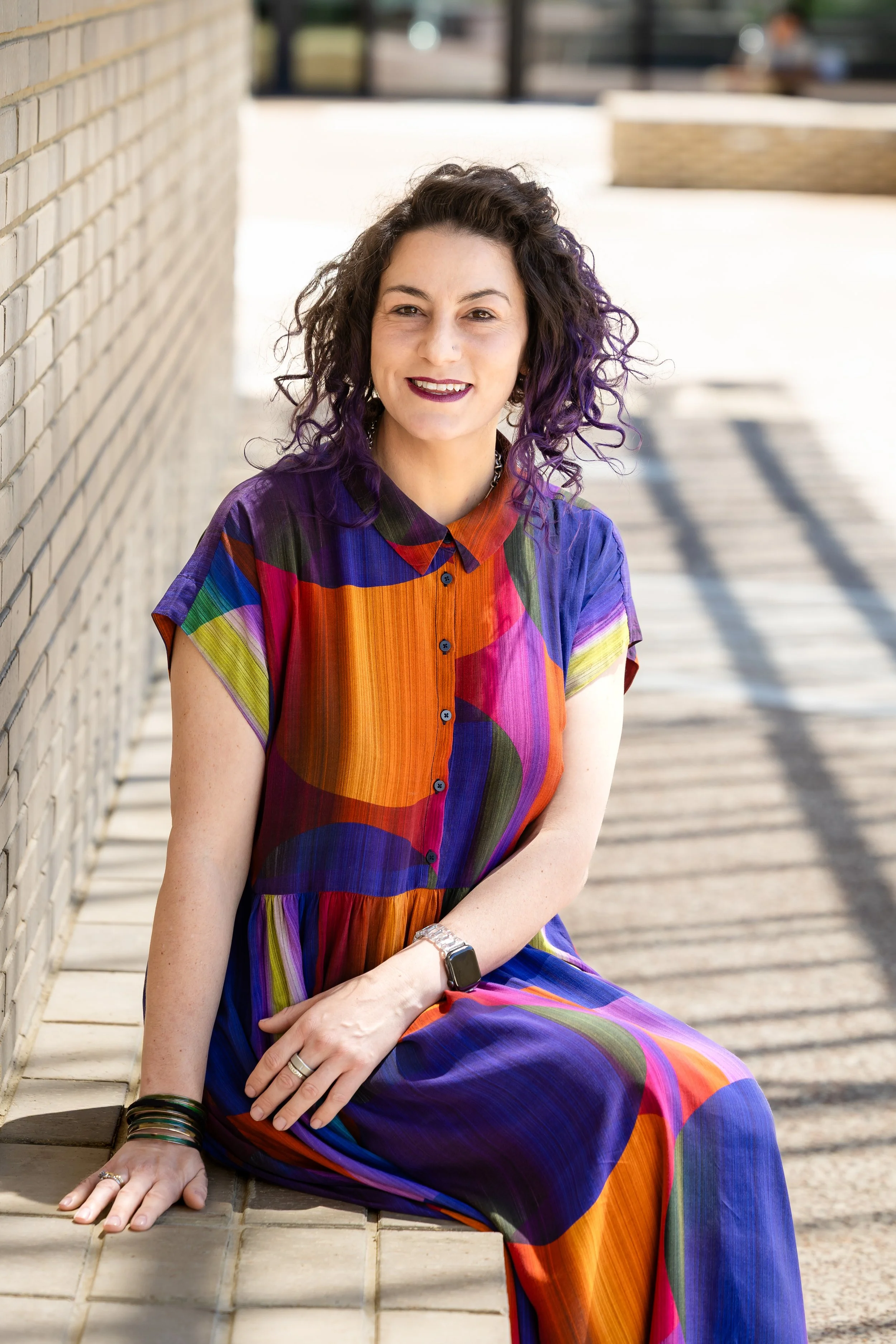
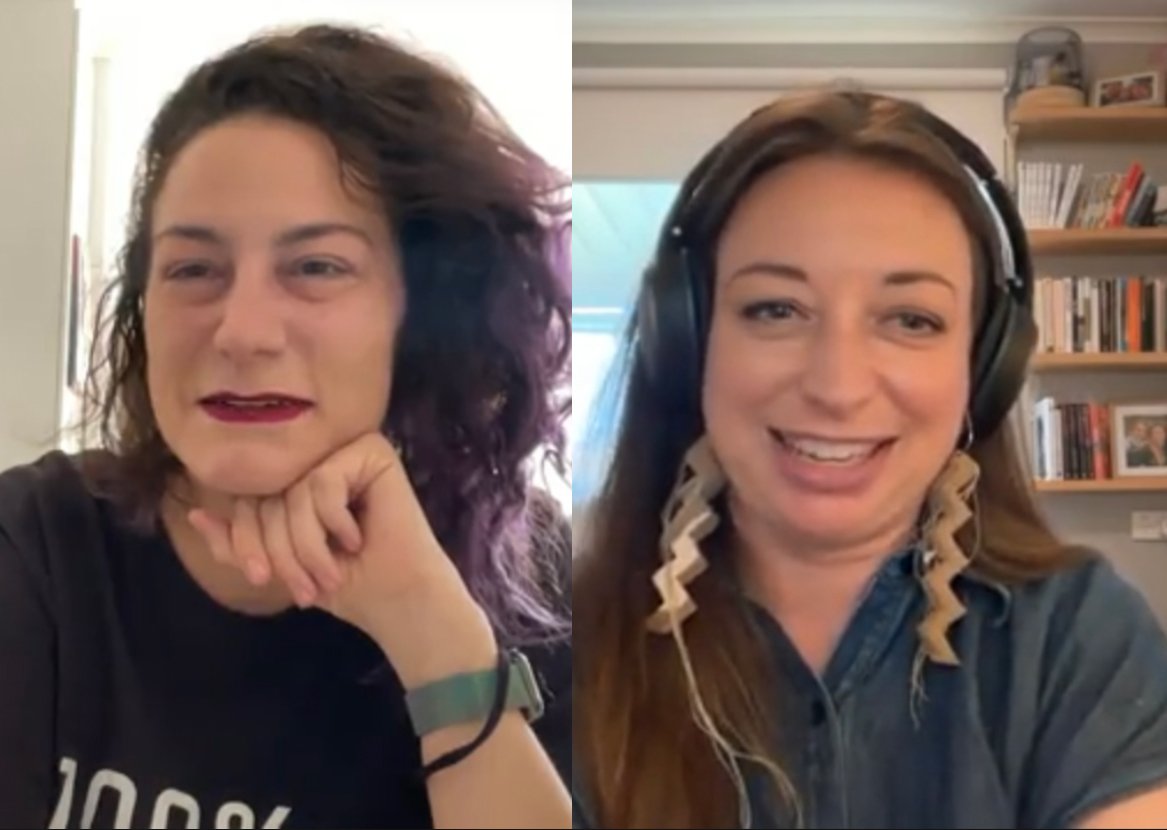
Why do we dress the dead, and why do we so often insist on shoes for bodies that will never walk again? In this episode Dr Alexandra Sherlock speaks with Associate Professor Pia Interlandi, founder of Garments for the Grave, whose practice interlaces fashion, funerals and forensics. Together they explore what dressing the dead, natural burial, and Pia's pioneering research into textile decomposition, from The Pig Project to alkaline hydrolysis experiments on Ugg boots, Adidas Superstars and Clarks school shoes, can teach us about material life cycles, circularity and the ends of shoes' lives.
Content note: This episode contains detailed discussion of death, dying and dressing the dead, and mentions cancer treatment and animal use in research. If this episode brings anything up for you, please visit https://findahelpline.com for grief and crisis support local to you.
Credits
Guest: Dr Pia Interlandi, Associate Professor of Creative Practice at Curtin University
Presenters: Dr Alexandra Sherlock & Dr Emily Brayshaw
Produced and edited by: Dr Alexandra Sherlock
Links
Guest
Pia Interlandi's website: https://www.piainterlandi.com
Pia Interlandi on Instagram: https://www.instagram.com/garmentsforthegrave
Pia Interlandi's Curtin University staff profile: https://staffportal.curtin.edu.au/staff/profile/view/pia-interlandi-98079d37/
Interlandi, Pia (2013). [A]Dressing death: fashioning garments for the grave. RMIT University. Thesis. https://doi.org/10.25439/rmt.27351243
Resources mentioned in the episode
(De)compose: Exhumations & Interlacings — exhibition by Pia Interlandi, Curtin University (April–May 2026): https://www.curtin.edu.au/dbe-exhibitions/de-compose-exhumations-interlacings/
Death Down Under (dir. Kathy High with Cynthia White) — the documentary record of The Pig Project: https://www.kathyhigh.com/videos/death-down-under/
The Pig Project — Pia Interlandi: https://www.piainterlandi.com/the-pig-project/
Dialogue Between Fashion and Death — Giacomo Leopardi (1824), trans. Giovanni Cecchetti, reproduced in Cabinet Magazine: https://www.cabinetmagazine.org/issues/49/leopardi.php
The Denial of Death — Ernest Becker (Free Press, 1973): https://www.simonandschuster.com/books/The-Denial-of-Death/Ernest-Becker/9780684832401
The Psychology of Clothes — J. C. Flügel (Hogarth Press, 1930)
Death, Memory and Material Culture — Elizabeth Hallam & Jenny Hockey (Berg/Routledge, 2001): https://www.routledge.com/Death-Memory-and-Material-Culture/Hallam-Hockey/p/book/9781859733790
Rosi Braidotti — https://rosibraidotti.com
Zygmunt Bauman — Mortality, Immortality and Other Life Strategies (Polity, 1992)
Linda Nurk — performance and textile artist: https://www.lindanurk.com
SymbioticA, University of Western Australia — art–science research laboratory: https://researchimpact.uwa.edu.au/research-impact-stories/symbiotica/
Alluvium Water Cremations, Tasmania: https://alluviumwatercremations.com.au
'Death in Advertising: The Case of Lynx Metamorphosis' — Margaret Gibson (2005): https://www.academia.edu/68381270/Death_in_Advertising_The_Case_of_Lynx_Metaphorphosis
Taking the Fear Out of Death, 14th October, 2024. (Rachel's story) for the ABC - https://www.abc.net.au/news/2024-10-14/taking-the-fear-out-of-death/104472058
Previous episode: Understanding attachment and divestment for a circular economy with Dr Ellen Sampson: https://footwearresearchnetwork.org/podcast/understanding-attachment-and-detachment-for-a-circular-economy-with-dr-ellen-sampson
Find a Helpline — free, confidential support wherever you are in the world: https://findahelpline.com
Chapters
[01:07] Episode 9 Introduction and Content Note
[06:51] Meet Associate Professor Pia Interlandi
[09:37] Fashion and Death as Sisters
[14:27] Garments for the Grave — Dressing the Dead as Ritual
[18:12] The Denial of Death — Becker, Capitalism and Legacy
[26:40] "Why Are We Putting Him in Shoes?" — Dressing Nonno and Nonna
[35:06] Mummified Feet, Personhood and Planning a Good Death
[41:19] Pointe Shoes — Linda Nurk, Rachel and What We Take to the Grave
[46:51] The Pig Project — Decomposition, Data and Disgust
[1:01:26] What Happened to the Fibres — Protein, Plant and Plastic
[1:09:44] Alkaline Hydrolysis — An Alternative End for Bodies
[1:12:22] Dissolving Shoes — Uggs, Superstars and School Shoes
[1:17:52] Debrief — Transformation, Cinderella and a Pair of Crocs
[1:21:54] Debrief — Surrogate Bodies, Disgust and Pia's Ongoing Work
[1:28:11] Bonus Story — The Lynx Effect
Transcript
Emily (00:10) What if shoes could speak? What might their stories, and the stories of those who make and wear them, tell us about the ways we live, our values and our impact on the world?
Alexandra (00:22) Welcome to the Social Lives of Shoes, a podcast brought to you by the Footwear Research Network that brings to life one of the most underestimated and humble aspects of consumer culture.
Emily (00:32) Whether you design, produce, make, market, sell, or just wear shoes, these conversations will transform how you think about them and reveal new possibilities for a more sustainable future.
Alexandra (00:46) This episode was recorded and produced on the unceded lands of the Wurundjeri Woiwurrung people of the Eastern Kulin Nation, the Wangal people of the Eora Nation, and our guest this week is speaking to us from Boorloo, Whadjuk Noongar Country in Western Australia. We pay our respects to their ancestors, elders and custodians.
1. [01:07] Episode 9 Introduction and Content Note
Emily (01:07) Hi Alex, and once again we have another wonderful episode of our podcast, The Social Lives of Shoes.
Alexandra (01:16) Hi Emily. Yeah, this one follows on from the last one looking at attachment and divestment with Ellen Sampson. It follows naturally actually into a conversation with Associate Professor Pia Interlandi at Curtin University, whose specific area of research is fashion and death. So today's episode is death and shoes, which, I mean, what a topic that is.
Emily (01:44) It is. And so with that in mind, I would like to give listeners a little bit of a warning, because there's actually some sensitive topic in there. Pia doesn't shy away from addressing the really big, heavy subjects. I had a friend's parent pass away recently, and I'm not ashamed to admit that I sort of had a little bit of a cry during this episode.
Alexandra (02:11) Yeah, I think that's a really important acknowledgement, and thank you for sharing that. I think the whole point of Pia's research, I suppose, is to bring the topic of death out of the shadows and into the light, because there's so much to be gained by acknowledging death and facing our own mortality rather than denying it. And that follows on from some of those themes around durability and impermanence that we covered last time.
But yeah, absolutely, in this episode we do talk about people who have died, and actually very detailed descriptions of dressing the dead, which Pia talks about from her own experience in her own practice. So any listeners who are feeling particularly vulnerable, or this might be a bit close to home at the moment, so just be mindful of that.
Also, the other thing I wanted to highlight is that this was recorded a little while ago. It's taken a while to get to editing it, for a number of reasons, not least of which, Emily, is that we do this alongside our existing jobs. And, listeners, if you value the work that we're doing, you can support us so that we can roll these out more regularly.
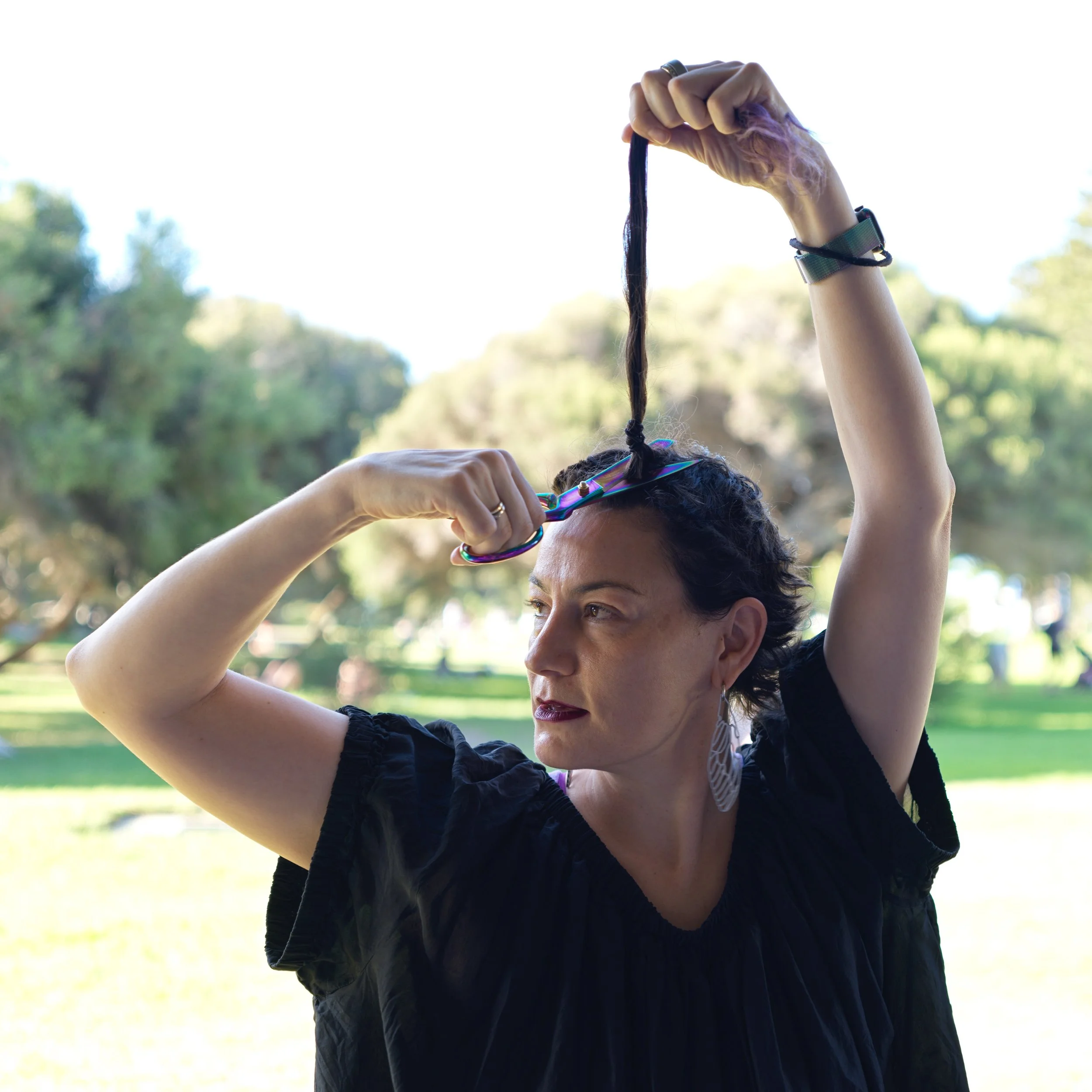
But yes, it was recorded a little while ago, and in the interim Pia has been undergoing treatment for breast cancer, and she's quite happy for me to mention this. So we wish her very well with that. She's undergone a full course of chemotherapy and is now undergoing radiotherapy. So she lost her beautiful hair in between recording this episode and it going live. And obviously that situation Pia is currently facing is very close to home in terms of her own research, so it has actually been quite fascinating to see her sharing that journey on Instagram and so on, to kind of demystify a lot of these things, these facts of life that we encounter at various points.
It does get to about 19 minutes before we actually get into the topic of shoes, is worth mentioning. So we do talk about the relevance of death, and we talk about that in relation to the impermanence of bodies and also materials and material decomposition. There are lots of transferable lessons to be learnt from death that can contribute to ongoing conversations about material life cycles and material decomposition, which is very topical for footwear at the moment, because we know that, well, most of the footwear we have worn in our lives, still exists somewhere in the world. So Pia's research into material decomposition through engaging with the topic of death is hugely valuable, I would say. So it is a long episode, and I would absolutely encourage listeners to listen all the way to the end, because there is some really promising research she's been doing that I think could be directly translatable to footwear at the moment.
Is there anything else, Emily, having just listened to this episode, that you think would be good for listeners to know about before they listen?
Emily (05:39) Ooh, that's a good question, which is my stock answer for when you've put me on the spot.
(laughter)
Alexandra (05:43) We've done the content warning. Oh, there's another thing I wanted to mention: you'll notice some of my responses to Pia are a bit delayed. That's not because I'm slow at interpreting what she's saying, or that her jokes aren't funny, it's just that there was a bit of a delay. I guess as well, look, Pia and I have known each other for a long time, and we do tend to sometimes address the topic of death with a certain amount of humour, as many people do, and that's not meant to be disrespectful in any way. I think people have different ways of engaging with the topic, and sometimes humour is a good way to engage with difficult themes.
Emily (06:27) Agreed, agreed. So without further ado, let's just rip into this magnificent interview. Well, it's actually more of a chat, really, I guess. You and I, Alex, will have a bit of a debrief at the end, and listeners can hear our analysis then.
Alexandra (06:49) Wonderful, thanks Emily.
2. [06:51] Meet Associate Professor Pia Interlandi
Alexandra (06:51) Hello, Associate Professor Pia Interlandi, Associate Professor of Creative Practice at Curtin University in Western Australia. I did just pause very briefly before saying your title there, because you have recently become an Associate Professor in your move from RMIT University, where you worked with me.
Pia (07:11) For many years, many years.
Alexandra (07:13) Yes, long time. We've been talking about having this conversation about the overlap between our respective areas of expertise, so mine shoes and identity, and yours death and fashion, for a long time. And I'm so excited to be able to have this platform now to properly formalise that conversation. But, Pia, welcome to the Social Lives of Shoes.
Pia (07:36) Thank you for having me.
Alexandra (07:38) It's such a treat. Can you start by telling us who you are and what you do?
Pia (07:45) Okay, so my name is Pia Interlandi. I am an Associate Professor of Creative Practice at Curtin University, in the School of Design and the Built Environment. It's still fairly new, because I was at RMIT for about 22 years, and only moved towards the end of last year. One of the reasons that motivated me to make the leap into design and the built environment was because I had been in fashion and textiles, and my practice is in fashion and textiles, but I was constantly having to validate not just fashion and textiles as disciplines worthy of academic inquiry, but the fact that I partner fashion and textiles with death and dying. And so I felt like… it's pretty niche what I do.
Alexandra (08:39) You're a niche within a niche, yeah.
Pia (08:41) Yeah. But my practice, which did start through a PhD in 2007 and 2008 (that's when I started putting the application together), was to look at why do we dress dead people, who dresses dead people, and what do we leave behind.
So I'd come out of undergrad in fashion. Half of my grad show collection was made out of dissolvable fabric, so I was deeply into clothing as metaphor. When I did this kind of "what have I been interested in", it was always ephemerality and transience and mortality. And so the connection between fashion and death was always, like for me, it’s so clear, that fashion and death are the same thing in some ways. There's a dialogue between the two.
3. [09:37] Fashion and Death as Sisters
Alexandra (09:37) Yeah, so that interaction, can you explain that a little bit more?
Pia (09:43) There are a couple of quotes that I used in my PhD that still ring true fifteen years later. So there's that fashion feeds on its predecessors and grows out of death. And death itself is a way of taking things out and then decomposing them and turning them back into something new.
I often use this line, which is from a Smashing Pumpkins song, which is hilarious because it was the last line of my PhD, but it's also become the title of a lecture I do called "The Beginning is the End is the Beginning is the End", or "The End is the Beginning is the End is the Beginning". When something dies, it is the food for something else to be born.
Pia (10:40) I think the best reference I've got is four or five pages of text, a dialogue, a script between fashion and death. So Giacomo Leopardi wrote this in 1824, so it's over 200 years old, this little bit of text, from a book called Dialogue Between Fashion and Death. In it, the characters are Fashion and Death, and Fashion is chasing Death, trying to convince her that they're sisters, that they were both born of transience, that their mother is ephemera. Death doesn't want to believe that Fashion is her sister, but Fashion eventually convinces her with enough evidence of their shared genealogy. And that was the framing of the PhD, that these two things are deeply connected, that they are sisters.
When I explain the practice now, the thing I come to is deeply connected to human evolution, or evolutionary psychology. Human beings are a really weird animal in that we wear clothes and we have knowledge of death. And as far as we know, there are other species who have a relationship with grief and mourning, and other species who have a relationship with adornment, different crabs and insects and things like that. But for the most part, one of the deciding factors of our species was when they were digging up very, very old humans and finding them in graves with stuff, with grave goods, with adornment, with dressing. Why would you send an animal off… why would you bury it rather than eat it? Why would you create ritual? The ritual very much was then around the stuff that they were wearing, and that itself was what gave evidence of our ability to have kind of abstract thought, like there must be something after.
Pia (12:50) And I think that's going all the way back to making garments that dissolve. When I was doing that in undergrad, and I took it into the first project of my PhD, I used a lot of Flügel. Flügel was very closely aligned with psychoanalysis and Freud, and we know how problematic Freud is, but let's take some of what was produced and build from it. Flügel had all this theory around clothing as protection, protection from the elements, protection from one another, and it turned into this psychological protection. Then there was a further step: that clothing is what gets put onto us moments after being removed from the womb. In some way, clothing is our mother. We are formed inside the landscape of our mother's body, and when we are expelled from our mother's body, we are wrapped in clothes, and we continue that throughout our lives. And when we die and we are returned, and I will use "the mother", when we are returned to the earth, returned to the soil, returned to the atmosphere, or whichever way we choose to be disposed of, and we return to the whole or the environment, we generally do so in clothes. There are some practices in the world where a body may be naked, but for the most part, we go in cloth. We are dressed bodies, and my practice is in the funeral industry.
4. [14:27] Garments for the Grave — Dressing the Dead as Ritual
Alexandra (14:27) Mmm. Yeah, so what is your practice? What exactly do you do alongside your work as a university lecturer?
Pia (14:36) So I have a, it’s sort of a label, a consultancy, it sort of changes, how I describe it, but the final project of my PhD, it was called Garments for the Grave. It’s what do you take with you? There's a process that makes it easier to put onto people, personalised, but the garments themselves have a focus on biodegradability. And so I generally work with someone who is terminally ill, and it's usually always the client who reaches out to make contact, to commission something or to work on it with me. We start the process together, and they will bring family members in sometimes to decorate or to make, or just to say, hey, this is a thing I'm doing, I'm having a garment made that I'll be dressed in after I die, and I would like for you to dress me in it. That's the exchange. It's not a garment that a funeral director puts onto a body, it's a garment that is designed for people who love the person who is dying to come into the space where their dead body is, which is something no one wants to do. No one's like, "yay, I can't wait to dress..." This is heavy, heavy, heavy stuff, but to fashion that ritual of dressing, using cloth as a tool or a utensil to get people across the threshold, to do this very, very hard, emotional ritual that is also deeply profound, is what the practice is.
So in some ways the garment itself doesn't really matter, but it's the setup around it to say: ‘here is the garment I would like to be my last, this will literally and symbolically decompose or become part of my body as I go into whatever comes next, and I would like for you, my loved ones who love me and care for me, to dress my body.’ I usually work with the client, meet the family, and if I do my job really well, I'll be on the end of the phone helping the family to do this themselves, but often I'm also there helping to dress that person, because you build a continuity of care with the family, you're a constant.
In a system where someone is expected to die, it's hyper-medicalised, and then you move into the funeral industry, so you've got all these new people coming in. And if you've got any constant, someone who knew your person when they were alive and transitioning into after they've died, we talk about continuity of care. So that's one of those moments where I've met the person, I've met the family before they die, I've been brought in for this really particular task, to help with that task, and I'm usually then asked to be the funeral celebrant, or help with arrangements, or do grief work further down the line. So I become this other person during this quite intense time, and I feel extremely lucky to do that work.
5. [18:12] The Denial of Death — Becker, Capitalism and Legacy
Alexandra (18:12) Mmm. Yeah, and it's such important work, isn't it? I'm thinking about my own experiences of death, and as you're talking about, it's become so medicalised, and we've become so separated from it. You think about cultures and traditions in the past, and all around the world, death is very much a community and a personal ritual, where you're able to say goodbye to your loved one, and through the ritual of dressing, and come to terms with their passing. But I think increasingly that is denied of us, it's taken away from us, and I think sometimes that can cause problems in terms of being able to detach oneself.
Pia (18:55) I think it is the leading problem. I think that our species is very scared of insignificance. There's a lot of theory that came out of a guy called Ernest Becker, who wrote The Denial of Death after World War Two. And he was looking at the relationship between our anxiety of death and knowing we will die, and then needing to deny death in order to live, this constant backwards and forwards.
Alexandra (19:33) Mmm. So there's an entire industry based on the fact that we don't want to get old, we don't want to see our wrinkles, we want to deny the ageing process. So when you're talking about the end being the beginning, what you're talking about is something really profound, which is reframing death. Reframing death, and ageing, and decay, not as something to be feared or dangerous, but actually something that is the beginning and the renewal. I think this work you're doing, reconnecting people with death and with the rituals of death, and the detachment that comes through those rituals, is so important for reframing some of these narratives that we see extending into so many aspects of our culture, that have really significant consequences for sustainability, for the environment, also just for society and culture.
Pia (20:19) Mm. Well, okay, that is capitalism. Rosi Braidotti, another theorist I listen to a lot, talks about how we've got the cure to this anxiety we feel about the state of the world and our existence: it’s go shopping. Fill that void you feel with stuff. Constantly get something new, get something to make you look better, look younger. So this is once again death and fashion, that is this constant dialogue between the two: are we fashioning something new and exciting, or are we dying? And for me they are hand in hand, because the moment something dies, something is born. All of this idea around ageing and fat and voluptuousness and fertility is something that was corroded.
Alexandra (21:31) Yeah, I think one of my favourite quotes is Zygmunt Bauman's, that death is the skeleton in the closet of modernity. And if we actually fully accepted the fact that we will die, and that the ones we love will die, we'd probably stop, you know, that is one motivation to want to keep consuming, is this wanting to fill these voids or deny these fears. We talked a little bit about this with Ellen Sampson, loss, grief, all of those things, it's a fact of life.
Pia (22:04) So, to be really clear on this idea of death being repositioned as something new: it's only the last couple of hundred years where we haven't done this. Human culture has always addressed their dead, and there are plenty of cultures that still do. But there are also plenty of cultures who had an amazing relationship with death and the environment, seeing everything as part of a cycle, who were colonised, whose set of rituals and beliefs were stripped away from them in favour of this white, westernised purity idea.
I'm going to go there, Alex, if we need to cut it out, we can. My favourite quote from Becker is that we are "gods with anuses". That we can imagine all this stuff, but we are just animals. We are animals.
Alexandra (22:56) Yeah.
Pia (23:00) So we’re seeing pushback, I think this refashioning of death is happening at the same time as so many of these other big movements that are starting to get gravity behind them. This whole youthfulness, you can't hold onto it. We can pretend, but we're still going to die. Our bodies might look younger, but our cells aren't. We still only have, between 80, 85 years' life expectancy, for some very wealthy people.
Alexandra (23:31) Hmm. is it also, I guess it’s like a desire for immortality when we think about one way to reconcile yourself with the prospect of death: thinking about what legacy you're leaving behind.
Pia (23:47) Well, if I leave something that lives beyond me, then I never die. I will have made an impact, I will have left something behind, I'll have a legacy, I won't have been insignificant. And Becker turns this into a theory around culture, so you could leave behind, he talks about architecture, I'll leave a whole building, no one will be able to forget me if I've left a whole building, or I leave behind a book, or I have children. Something of me continues. Over a really long time period that ends up looking like culture, a set of values.
And so then his is where the theory gets really intense: when your mortality is threatened, you double down on that set of values, and it becomes the hill you're prepared to die on, because if your belief is in direct contrast with someone else's belief, and they are right and you are wrong, once again you fall into insignificance. So world wars have come over this battle of values, which for me is really much a fear of death and insignificance.
Alexandra (25:11) Yeah, it's interesting, isn't it, I think very few of us think about the legacy we're leaving behind is mountains and mountains of landfill. Is that a legacy we want to be remembered by, or leave behind?
Pia (25:19) Yes. Yes.
Alexandra (25:25) So we’ll get onto those things in a minute. I mean, look, at this point I want to take stock of what we've talked about, because I think we've made quite a convincing case at this point for the relationship between death and fashion and clothing and dress. You've touched on lots of really interesting things there, in relation to capitalism and consumption, and how there's a lot to be gained by addressing these things head-on, and thinking about how liberating it might be if we're able to accept the fact of death and decay and ageing, and what opportunities that then opens up.
But what I want to do now is talk to you about how this relates to shoes. So you have said that you’ve worked in the funerary industry, and you have dealt with a lot of people after they've passed, and you've seen the things that they’ve been dressed in and you’ve seen the things people have wanted to dress them in, and you've had a lot of thoughts about that. I wonder if you can talk a little bit about your avenue into thinking specifically about not just dress but also shoes, in relation to how people think about the end of life.
6. [26:40] “Why Are We Putting Him in Shoes?” — Dressing Nonno and Nonna
Pia (26:40) Okay. So one of our first points of tension between you and I was, I say, "I hate shoes, I don't get shoes, I hate shoes." And part of that stems from this irrationality of footwear in death, and we will debate this out a little bit, because you have convinced me in some ways. But look, my origin story, where I had been looking at metaphors and moved into practice, was that I was making dissolvable garments about decomposition and revealing mortality and whatever, and then real death happened.
My dad's dad, my Nonno, died at 89 years old. He had a fall and a bleed on the brain, and he went into hospital, and received some not-so-good care. So I was going in, cleaning his face, and building this relationship with my grandfather that I hadn't had in life, that just came from some care. And when he did eventually die, I wanted to extend that care, and so I said, can we dress him?
It wasn't something my family had a history of. We're Italian, there's a lot of visible, you know, coffins being open at funerals, and things like that, but this dressing wasn't part of that. But I wanted to take Nonno, who had died in a hospital gown, and put him back into clothes.
And my Nonna, his wife of a million years, had chosen a suit. And my auntie and I went to the funeral home. He was presented to us under a white sheet, there was the big reveal, so many weird fashion terms, literally a reveal. Dressing him is up there with, I'd say, four of my most transformative moments of my life.
And the moment where I went, like ‘dead body’ into ‘hold on this is my grandfather, there was tis moment where I had to, it's difficult to dress a dead body, and so to put a shirt on, you kind of have to do it upside down and backwards, and you put your arm up into the sleeve, you bunch it, and then you have to pull their arm through. So I'm like, dead body, cold dead body, and as his hand came through the sleeve, it was his hand, and I was holding his hand. So I was like, here's this dead body, and now I'm holding my grandfather's hand. He became a person again. So going from a naked, cold body back into clothes was beautiful. But a pair of shoes had also been included. And I was teaching material studies at the time, so I had a bit of an idea of properties and durability, not necessarily specific decomposition, but I knew what deteriorates and what doesn't. And putting this pair of dress shoes, leather dress shoes, onto him, was like, why are we putting him in shoes? He's not going to be walking anywhere. And that moment made me go, well if these clothes are designed for life, to be walking in, to be vertical, because everything drapes differently when you're horizontal, but the shoes, I just was like, leather, plastic sole, this stuff is going to outlast his decomposition. This stuff is going to be here for much, much longer than his fleshy body will. Why are we putting him in shoes? And that became, okay, what does it look like to design for death, for decomposition? And so I had this, my prototype Garment for the Grave includes a foot bag, because it was important that the entire body is addressed. But, you know, having feet together makes things a little bit easier, so I had all these ideas around this foot bag.
But when my grandmother, my mum's mum, died about a year later, and I offered to dress her, that was a very different death. She'd had dementia for quite a long time, and everyone was kind of, she was ready. She had left the building, left her body, long before her body died. There was a lot of relief when she died, but she was quite a distinguished woman, who had a very strict colour palette that she wore in life, that nice 80s autumnal colours. But had died, and I remember going to visit her and she had this pink t-shirt on that said, "I'm a princess, just ask my daddy."
Alexandra (31:42) Mmm.
Pia (32:08) Going, 1. that's not her clothing, but she wouldn't be caught dead in this. So finding the last of her twin sets to dress her in became important for what we sent her off in. But I thought, well, I'm not putting her in shoes, because she's not going to be walking anywhere. And I was at the funeral home, my mum had come to support me in dressing her. And I'd dressed her in the shirt and skirt, and then I looked at her feet, and I went, she looks really cold. She's not cold, she's not feeling anything, but the psychology, or the perception of her feeling, was something that made me run to the car and get her slippers, because I didn't want her to be cold. Her feet looked really cold, so...
Alexandra (33:03) Hmm.
Pia (33:08) This is what then led to the foot bag in some regards, that her entire body had to be addressed. So I've softened on the shoe front, but I do a lot of work that is related to natural burial, and so it is about biodegradability, and shoes generally don't make it across that threshold. So when someone is being prepared for natural burial, they're generally not wearing shoes, because of the materials in shoes that would be around in that grave for far longer than anything else.
And there are some other weird things about shoes that I've witnessed firsthand and read a lot about. One of the first academic texts had… it was a forensic study where boots from World War One had actually been found relatively intact. So the entire body is skeletonised, but there's this boot left behind with a foot inside it, and they were able to identify who these soldiers were, based on the shoe, like where it was made, which military group they were part of, what the size was, how the tread is worn, to be able to use that to identify who the person was. So shoes have this weird kind of additional preservation, that the foot might actually be protected and therefore mummify inside the shoe. And so I've got a couple of like, what the apocalypse looks like? It'll be skeletons with nylon tights and mummified feet. Shoes do something different in the context of burial.
Alexandra (35:04) Mm.
Pia (35:06) Yeah.
7. [35:06] Mummified Feet, Personhood and Planning a Good Death
Alexandra (35:06) Gosh, it's so fascinating, because I’m thinking, there’s so much I want to unpack here. What you're talking about there is that a shoe potentially mummifies the feet. You think about mummification, I'm no expert on Ancient Egypt, but mummification was obviously to prepare and preserve the body or body parts for the next life.
I think this is part of the reason we've become so close, because I've always had a fascination with death, and my master's project looked at symbolic immortality through our digital remains, and how those can be reanimated after life, which has become fascinating in the age of AI and all of those things. But my PhD supervisor, Jenny Hockey, who I know you've encountered through your research as well, wrote a book, Death, Memory and Material Culture, and she started the If the Shoe Fits project, which I did my PhD as part of, because of this, I think, fascination around death.
What she found fascinating, and I know we had participants who talked about their experiences of death and grief, was that you'd have a woman, like for example with your Nonna, who had experienced a social death long before their physical death, and actually restoring the clothes they would have chosen themselves, when they were of right mind, was a way to restore the personhood of that person in death, and to be able to part with them, in relation to the identity that you became attached to, that you had a relationship with.
So yeah, what you're saying here is that shoes after death, when you are buried, there’s so many consequences to them, and there are so many things that in a logistical and logical sense make no sense, and yet we have this tendency to want to do it, because of this intimate relationship between identity and, I'm also I’m thinking about what shoes I would want to wear in the grave, and it would be my slippers, because I'd want to be cosy. I think it tells us a lot about how we feel about death. I sort of feel about death almost like a long, well-earned rest, I just want to be tucked up and comfortable and warm in my Uggs. So this idea of paying attention to what you want to be buried in, and thinking about that before you're anywhere near being buried, is fascinating in terms of coming to terms with your own mortality. Sorry, there was a bit of a ramble there, but it's all the things that came to mind while you were talking to me. It's fascinating.
Pia (37:48) No, no. To be honest, planning these things when you're alive and well is really the best time to plan them, because when people get sick, and when it gets closer, it becomes harder and harder to initiate those conversations. We often find the person who's dying wants to talk about their death, but their family may be saying, no, no, no, don't, you're still going to be all right, I don't want to think about that, as though talking about death will somehow make death come quicker. And that's not the case, but talking about these things in a fun way, when you're alive and well, sharing that with your family, sometimes becomes the thing they can hang an entire funeral on.
You don't need much. Maybe it's a favourite colour, maybe it's a favourite garment, a favourite photograph or a favourite song. As long as you were communicating something to your people, they can get this… There’s a lot of things that make up what constitutes a good death, and one of them is this fulfilment of wishes, in some regard. If you don't communicate what you want, there is a gap that family have to fill, that's often done very quickly, it’s highly emotional, very symbolic, and usually very expensive, if it's through the funeral industry, that is meant to somehow give you this soother around your grief. So if you don't tell people what you want, even at a very basic level, you strip them of the opportunity to care for you, and you open up all sorts of potential for conflict between family members, who say, no, this was their favourite, no, this was their favourite.
When my Nonna, my last grandmother, died, I had lots of conversations with her about what she wanted, whether it was the black set of rosary beads or the white set, this dress or that dress, which version of Ave Maria was it. We had lots of family dinner conversations, and if she started talking about this, I'd get the phone out and record it, so that when she died, I could send it to everyone, and we were on the same page. And it made some of that really special, because from her mouth, we knew that's what she wanted, and so you are completing someone's wishes. But if you don't tell someone, they have to make it up, and it doesn't feel as good as when you know.
But I want to come back to some of the stuff you were saying, from the project you worked on, because you did change my mind on shoes, and it was a really specific archetype of shoe you mentioned, connected to, I think one of your participants, an older woman who had been a professional dancer, and her wanting to be buried with her pointe shoes, as part of reuniting her with her identity.
Alexandra (41:11) Mmm.
8. [41:19] Pointe Shoes — Linda Nurk, Rachel and What We Take to the Grave
Pia (41:19) I did this very strange collaboration with an amazing practitioner called Linda Nurk, who's in Sweden. We'd never met in person, but we connected on social media after she completed her Master's, and there was something similar about our practices, and we felt we needed to have a conversation, there’s something here. And we had probably fifteen hours of conversation, recorded over Teams during the pandemic, or was it after that when I was on maternity leave, it was something. And We decided we were going to put something together for a conference, and decided our conversation would lead us to what we would do together. We recorded about ten hours of conversation, and AI had come out, so we used AI to help summarise the transcript. And we ended up doing this very strange performance piece: we said, can you repeat our conversation in the style of Giacomo Leopardi's Dialogue Between Fashion and Death, but we will make it two hundred years into the future. So we added in contemporary references, and Linda, as Fashion, makes a comment to me as Death: "are you still weird about shoes?" because I'm in my garden, dressing this dead body in my silk wraps, and she is fashioning this pair of pointe shoes as Fashion, and passes the shoes to me through the screen, and I put on this pair of pointe shoes onto my ‘body’ in the garden, and I dissolve this body, because it's not just burial now, there are lots of other options, including something called alkaline hydrolysis, where you dissolve the body. But of course what remains on the body is this set of pointe shoes.
Alexandra (43:06) Mmm.
Pia (43:15) But it goes even one step further, because my client Rachel was never really expected to live through childhood, but she got into her forties, and she was just like, "Pia, are you still making shrouds? I want a pink natural burial one." So we started a collaboration, and I was telling her about the collaboration with Linda, because Rachel was also an avid, she started doing pointe lessons as an adult, and so her life was highly medicalised, she often needed to be in isolation, but she'd go to these ballet classes, and there were videos of her doing pointe. She was buried with her pointe shoes. They weren't on her.
Alexandra (44:01) Mmm.
Pia (44:15) We had this conversation; this was recorded for the ABC, so she was very generous in sharing her planning. She said, "I'd like my pointe shoes to come with me, but I don't want to be wearing them, because I wouldn't want to be stuck in pointe shoes forever." So the pointe shoes went into the grave, but she had multiple pairs.
Alexandra (44:16) Hmm.
Pia (44:39) One pair was with her, and one pair was actually put on top of her burial plot. Even though this was natural burial, I’ve got a pair of pointe shoes here, pointe shoes are largely meant to be silk, and there's lots of canvas and cardboard.
So pointe shoes have become the motif, or a test sample, in a lot of my current research, because of the conversation you and I had, that then became an object in a collaboration with Linda, which then became a weird video I was able to show to Rachel, which then informed her burial practice, and what she took to the grave with her. So there are these things that are really. It’s beautiful, right?
Alexandra (45:11) Mm.
My goodness. Yeah, so I think this is where I think we get into a really interesting transition, which I think is probably the relevance of, this what is quite philosophical conversation about identity and culture and death rituals, but then the very real implications that has for the ends of lives, of not only people, but the things that belong to them, and what happens to them after death. The death of the shoe that is no longer usable, it's fulfilled its intended purpose, but also perhaps the death of the wearer. I think sometimes that's something that can put people off buying shoes from op shops, that you don't know who they belonged to, and they could have belonged to somebody who is dead. And you have those sayings, don’t you, like "dead men's shoes", and all of the superstition associated with that, which connects with what we were talking about before, the unknown and the fear of death, and this idea of contamination in some way.
I want to go back very quickly, because you didn't actually talk initially about what you actually did for your PhD, which was thinking about the biodegradability of things once they enter the grave, and what happens to things, which I guess you can draw a parallel to landfill, but also you can think about how you lean into that process for dressing the dead.
9. [47.00] The Pig Project — Decomposition, Data and Disgust
Pia (47.00) So there were four projects as part of the Creative Practice PhD. So I had come straight from undergrad and honours into a PhD, so it was creating practice through this, well, why do we dress dead people, and what do they leave behind. The first project was dissolvable garments. The second project was, well, the body becomes the landscape, and I made all these figures, I filled mannequins with soil and seeds, and would flip them over, and get all this branching root pattern you couldn't predict. So it was building the idea that as designers, we can set up scaffolds, but we surrender to them, we surrender to nature, we surrender to the process. The third project, I'd dressed a few of my relatives during those first two projects, and I needed to explore the reality of dressing a dead body, but also the reality of the garment and body dissolving and decomposing, and that body being placed into the landscape and growing into the landscape. From metaphor and analogy and poetics into the reality of it, because I was very aware I could fashion beauty into all of these concepts, I could make peace with decomposition by making these beautiful, ephemeral, transient garments and documenting them. But I wanted to look at the reality of it, how do textiles actually decompose with a body, but also, for me what happens to the body.
Everything I'd been reading was very much aligned with death being horrifying and leading to some sort of existential crisis, so a lot of Julia Kristeva, the abject, and the fear around seeing a dead body. It just wasn't my experience with dressing my people, they were dead bodies, but they were their bodies.
Anyway, I wanted to look at the reality of what was going on, so I went to SymbioticA, which is in WA, and SymbioticA connected an artist or designer with a scientist, that was their framework. I was paired with Ian Dadour, a forensic entomologist, and we designed an experiment to look at clothing and decomposition using pigs. Pigs being a stand-in for a human body, because the Anatomy Act prevents the use of donated human cadavers for the purposes of research; they can be used for teaching, but not research. Pigs are the forensic stand-in for a human, because of the fat deposit, the way their organs are arranged.
So me being quite a staunch vegetarian, I really struggled with the idea I would sacrifice an animal for the research, but being partnered with Ian, and learning what the forensic relevance was, we don't actually know, there's not a lot of study on how long it takes for textiles on bodies to decompose, and so the forensics relevance of that to homicide investigations, saying, well, we found this person, they're wearing this garment, it's in this state, what can that tell us about how long that body's been there. But also for identity, I'm now much more interested in the print and the colour and the tags, and what that embellishment on a garment tells you about that person, what their brand of jeans would say, what their shoes, the quality of their shoes, would say about that.
Anyway, so there was this very big reckoning about doing this collaborative project, that for statistical significance, for it to have an academic grit to it that would hold up for forensic evidence, meant we had to have statistical significance which meant that to do a one-year decomposition study, taking samples every 50 days for one year, so that's seven digs. For statistical significance to be there, we had to have three samples and a control for each dig, which meant there were 21 pigs that were sacrificed for this piece of research. And they were all dressed in a garment that I had designed. And they were all buried, and every 50 days for one year we would go and dig up three pigs and one control garment that did not have a pig in it.
And what that project revealed is that I very much thought I could rationalise and find poetics in all of this, but I didn’t find my grandfather disgusting, I hadn't found my great-aunt disgusting, but I knew that somewhere along the way was this idea of the body that gets used in horror, that decomposition and matter that's out of place, and things where you don't expect them to be, are elicitors of disgust, what smells and what sights. I went in asking, well, where is disgust for me, where in this process?
The first dig, those pigs were beautiful, I named them all, I dressed them all, I went and visited them before they were sacrificed, or "killed sacrifice" is the technical scientific term for the use of animals in research. These were pigs coming from the human consumption food chain; I'd specifically asked for ones that were out of season, that weren't going to be used for human food, that were deemed unsuitable for human consumption, so a lot of them were quite sick, with significant hernias and things like that, so I tried as best I could to make wise decisions. But t hose pigs were killed in 2009, and I'm still talking about them, and I will talk about them forever. I get more cancel culture now than I ever did back at the time.
Alexandra (53:48) Mmm. I'd just like to interject there, as a close colleague and friend of yours, I've seen the way that you work generally, and you have just the utmost ethical standards, you're an empath really, aren't you, you have empathy for everything and everyone. I can see that using pigs in this research absolutely would not have been necessarily what you would want to do, but the outcomes and the benefits you understood would come from that research compensated for that sacrifice, and all of those sacrifices, as you say, were made with the greatest respect. Now, you consider what would have happened to those pigs had they not been ill, and ended up in the food chain, they would not have had the legacy that they have, and the impact.
Pia (54:42) No, people don't remember the piece of bacon that they ate. But those pigs, I, those pigs become part of my legacy. That's the biggest project, like people know me for that project, because I have changed people's opinion on disgust and burial because of those pigs. And I can tell you, once again, Nonno's dressing was one transformative moment, and the second was going through digging up these pigs. There were certainly moments, 100 and 150 days in, where I was like, holy, I make frocks, I make frocks, what am I doing here, waist, chest deep in a grave digging up dead pigs, because I had to separate the pig tissue from the garment, as we were taking the garments for sampling but the pigs were being buried again. There's a documentary where it’s filming me examining a piece, going backwards and forwards over whether it's skin, or pig, or dirt, or roots, or fabric. It's wild that I had lost the ability to differentiate between what was what.
But it was really at the 300 and 350-day mark, the last dig, I'd started in a hazmat suit and ended up just in my shorts and t-shirt with a pair of gloves.
Alexandra (56:26) Right.
Pia (56:27) When you could see where the pigs were buried by the end, because this plant had grown, this is in Perth, very sandy soil, and this succulent grows out called pigface. You couldn't make up the fact that what grew out of the pigs is a native succulent called pigface, with these bright purple and pink flowers. This is what I will have on my grave.
But when I was digging up those last pigs, I had to cut all these roots, the plant rooted into the body, so I was really interrupting this process. When I got to these last pigs, there's the polyester fragment, I'd embroidered polyester, sothat was still there on the bones, there was a bit of cord, definitely cord, I'd used a polyester cord, and there were a couple of bits of silk and a little fragment of hemp, but really not much. But this pig skull I pulled out of the ground was absolutely riddled with roots, so embraced and absolutely held and wrapped in roots. There's a picture of this, where are we now, 2026, this is 2009, 2010, and I still get goosebumps over it, this skull had roots following all the little cracks on the skull, one root circling around inside the eye socket, and one from the nose that looked like a breath coming out of the nose. So we've gone from, holy shit, this is so disgusting, this is really, really disgusting, really intense, and wildly weird, to, ‘ahhhhh’, here is this skull that is all the poetics.
Yes, the body becomes the landscape, the body dissolves, the garment dissolves, and what is left behind is this skeleton wrapped in nature, that is literally the umbilical cord between the body and the surface of the earth. And there's kangaroos coming and eating these succulents, and little bugs and bees around that are. And that was the pig, the pig was the pigface, the pigface was feeding the other things, and I was like, the poetry is real, the science is real. It was the closest I've gotten to my entire brain lighting up, not just the aesthetics, but it was the science and the evidence matching.
It was, as I said, one of those moments I will be able to recall for the rest of my life, and find deep peace in the embrace that you have from being composed inside your mother's body with cells and elements, to being decomposed, where each of those little notes is taken away and reused. That brings me a huge amount of peace.
Alexandra (1:00:11) Yeah. It's extraordinary, the way you describe it is just so beautiful, and I love the way you write about and describe your research generally, it's just so poetic, the way you're able to describe that from a process people just assume is so revolting, or to be feared and avoided. The way you're describing it to me there is almost like you look at what happened to the pig and go, my goodness, this is what it's all about, this is it, this is circularity, i mean, this is the circular system, and cultures around the world describe the earth as the mother, don't they. When you're talking about it, you're talking about this incredible trajectory from being in your mother's womb to returning to mother earth.
So tell me, when you were clothing the pigs, you were using a variety of different materials and fibre types, cellulosic, protein, synthetic. We know what happened to the pig's body, but what happened to the different fibre types when we're thinking about them being returned to the earth?
10. [1:01:26] What Happened to the Fibres — Protein, Plant and Plastic
Pia (1:01:26) Well, so all of the samples went missing for a very long time, over a decade. There were shifts at the university, and the garments and samples went missing. About three years ago I got a call from Yonat Zur at SymbioticA saying, Pia, we've got these, someone's dropped off these black garbage bags, they smell, we think they're yours. The data was never published, because the samples went missing, and then they've been found, so I came back to Perth for this exhumation of the pig project, and now all of the garments and the data are stored at Murdoch with their forensics team. But we're doing all this collaboration around the exchange between design and science, what happens when you have a multidisciplinary team looking at the samples, because it depends on the soil type, the pH, the season, there's a lot of information that happens in the ground that can't necessarily be replicated. So data needs to be really robust to transfer into a different context. The plant-based fibres, the hemp linen, went first, but there's always an anomaly, there's always something that sticks out. I used a silk-hemp, like a binding, a satin, everywhere; it's one of my favourite fabrics in the world. So I had protein represented there. had protein or casein buttons that were buried in a pocket. I had silk.
Alexandra (1:03:00) And so when we're saying protein, just to clarify, we are made of protein as well, aren't we? So silk, leather, wool, all of those animal-derived products are protein, aren't they?
Pia (1:03:07) We are, yes. I'm now doing a project with alkaline hydrolysis, which is aquamation, dissolving of a body, which only dissolves protein, so the fibre composition becomes really specific.
So plant fibres decompose, protein fibres decompose along with the body, and synthetics are forever. You could wash the polyester off and reuse it. So since I did that work, I've done a lot of work in the funeral industry, working at natural burial sites, but also freelancing for different funeral companies around Australia, where I come in to do pretty tricky work. One of those was for an exhumation of someone who'd been buried for over 40 years. That's a long time to hold the fact that your person wanted to go back to another country, to say, ok after 40 years we're digging them up, cremating them, and taking them home. But digging up and seeing what was in a nine-foot grave after 40 years, coffins are lined with a plastic sheet, and that plastic sheet was absolutely intact. The wrapping from the flowers, the cellophane around the flowers, was still in the grave. So that plastic is there for a really, really long time.
I had originally thought, do I want to offer clients the opportunity to embroider their name, or a poem or a lyric, into the garment, so it will be with their skeleton for future archaeologists to discover, could I design in intentional remainders. But after I finished the PhD, and I think my website somewhere still says "online store coming soon", I never found a way to commercialise my practice that felt comfortable. I've had business coaches, I've tried lots of different models, demi-custom, full custom, partial custom, off the rack, but the point was that when I did this work, it was about family leading funerals, and you can do this yourself.
And so I'll get calls from people saying, my sister has died, can you send a garment, and I'll say, you have everything you need, what are their bed sheets made out of, what are the clothes they've kept for years that they don't wear, you don't need basically a high-end fashion designer to come in and make something quickly, you can do this yourself. And that's become
Alexandra (1:06:28) And that’s kind of the point of it
Pia (1:06:29) Yes, yes! And so you don’t need to buy a brand new funeral outfit. When I work with clients now, we base it on garments they already have, we repurpose. Because, I’m not collecting garments and thinking, alright well this means something to me, but it’s landful for someone else. So I guess that’s got to come with me. And I’m having a lot of thinking about my own death now, and what I would take, and what I'm proposing I would take is the stuff no one wants, that I have kept, cards from people, photographs, old journals, random broken bits of jewellery that I've kept since I did ballet myself, as a 12-year-old. I'm a collector, and no one wants that, no one wants to inherit it. There's definitely, bring everyone over, have everyone go through and take something they want, please, if there's something of use, come and take it and honour it. There are funerals where you bring the person's books, or their collection of knick-knacks, and say to everyone at the funeral, please take something, because the reality is we have so much stuff that no one is going to want, that's going to go into landfill. So my future burial will probably be a time capsule, or my own little personal landfill, I don't know, let me rest on all of my treasured stuff.
Alexandra (1:08:13) (laughs) I feel like there's a cartoon there somewhere. I'm aware we probably have to wrap up, there's a couple of things I want to cover before we do, I know you have to get on.
I think I want to make this connection between what we learn from the end of the life of the body, and what happens to it when it's returned to the earth, mother earth, but also you've touched upon other treatments for bodies after we have passed, and how that might inform the end of the lives of our things, notably in the context of this podcast, the shoe. So we've talked a little bit about the connections between biodegradability, and I love that you touched on the intentional durability of synthetics, in terms of what traces you might purposefully want to leave behind with your skeleton, which is interesting in itself. But let's go into, when you're talking about the alternative ends of the body, can you explain quickly what alkaline hydrolysis is, and why it's an alternative to burial, and how that might inform the disposal of particularly protein-based materials.
11. [1:09:44] Alkaline Hydrolysis — An Alternative End for Bodies
Pia (1:09:44) Yep. So for most of human culture, we see body disposal, the way we remove the body from our realm, is either by burying it or cremating it. Burial can look really different, it can be in the ground, some Indigenous cultures have put people up in trees, it's about the body being reused. Alkaline hydrolysis is actually not new, they've been using it for animals for a really long time, but alkaline hydrolysis is about dissolving proteins, so dissolving tissue and breaking it down into tiny little peptides, which is basically ingredients for amazing fertiliser. But the issue is that when bodies are placed into this machine that dissolves you, they're usually naked, because the cloth, if you said to a family, dress them in 100% wool, or dress them in 100% silk, the yarn used to stitch that together, the finishes placed on it, the tags, the buttons, the zips, the fact you can say it's 100% wool, but if you've got under 5% of another fibre composition, you can still say it's all wool, but you could have 5% acrylic in there that's going to get caught in the machine, or get put into the fertiliser, which then has consequences.
The way we label and treat fabric and fibre is so out of sync with, it’s what's the origin, what was this originally, it's not what it is now, because a black cotton t-shirt has all this other stuff, a machine-washable wool usually has a nylon finish on it that makes it do something the fibre isn't meant to do. We've got a real problem here with the way we have increased the durability of natural fibres by making them not perform like natural fibres. That not performing like natural fibres is about preservation, and getting them to last longer than they're intended to. And I think all of that extension of life is problematic, and speaks to the fact that we need to know it's okay to let things go. We just, when they're ready to go, we shouldn't be designing things that are designed for far longer than they're ever going to be used.
12. [1:12:22] Dissolving Shoes — Uggs, Superstars and School Shoes
Alexandra (1:12:22) So the alkaline hydrolysis was fascinating to me, when you put in different pairs of shoes, one of them was a pair of Ugg boots, another was an Adidas Superstar, and another was a Clarks school shoe.
Pia (1:12:38) School shoe.
Alexandra (1:12:40) I think for me what was absolutely arresting about that was how it supercharged the process of decomposition, to show the distinction between these different kinds of materials when they're mixed together, when it comes to disposal. So, I don't know if you just want to finish quickly, explaining what happened there and what that means.
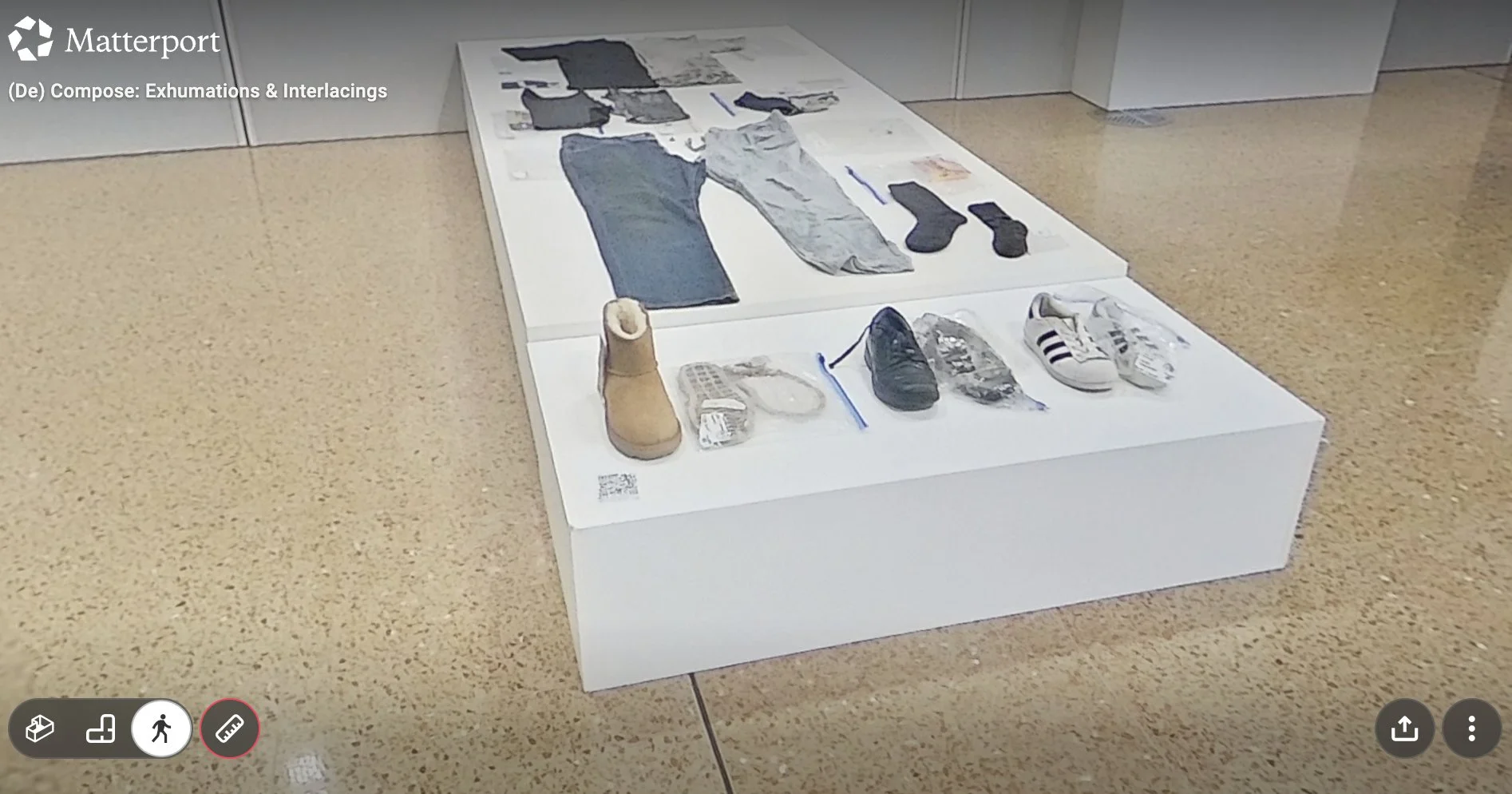
Pia (1:13:06) So last year I was able to go and do a piece of research in Tasmania, where there's an alkaline hydrolysis company, Alluvium, there are amazing humans there as well, to test out a range of materials that are often in or on the body at end of life. So I put through about 40, I did two tests, but there's about 80 samples in this database, and they’re traditional fashion materials, materials I use in my practice, materials I thought could be used for future rituals, and conventional funeral materials. But for you, my darling Alex, I also put through three pairs of shoes. This was a really intentional archetype,
Alexandra Sherlock (1:13:58) This was just the most beautiful gift you could ever have given me.
Pia (1:14:05) To put through a couple of pairs of shoes to see what happened. So the pair of Ugg boots, I wanted to know, is leather that is so treated and manipulated from being the skin of an animal, does it still register chemically as protein? So I put through a pair of Ugg boots, a pair of Clarks school shoes, and a pair of Adidas Superstars. And they all had a leather upper or various bits and pieces, but the leather did absolutely just dissolve. It was amazing, I didn't know what to expect.
But of course, out comes this Ugg boot, which is literally just the sole and the stitching and the binding from around the top, and the labelling. I was like, okay, well, this is a good news story, this tells us you could put sheepskin into this vessel and have someone lying on it, you could use someone's belt and collect the little metal bits afterwards and do something with them. But also, and I know you were like, could this be recycling for shoes, could this be a way of getting those bits out? Yeah, I don't think it's going to be alongside the bodies of the dead, but alkaline hydrolysis is interesting, and I'm still doing a lot more work.
Alexandra (1:15:31) Yeah, and I think I want to finish on everything you're doing, it's all academic research, and what we saw with the shoes was absolutely extraordinary, and there are all sorts of questions still to be asked about that, what is this solution, what can it be used for. In the footwear industry, when we're talking about the problems of disassembly for disposal, and then you’re talking about protein dissolving and leaving the synthetic parts, I think that could have quite significant implications. I would encourage any listeners who might be in industry, interested in, part of the point of the Footwear Research Network is to join the connections between academic research and industry, to reach out to Pia and inquire about how this kind of research might be supported, to think about circular and sustainable systems for fashion and footwear.
Pia, this conversation has been absolutely extraordinary, I so massively appreciate you as a friend, and I love the various tangents our conversations take. I can hear you typing there, because you're overlapping meetings now.
Pia (1:16:55) I better go. We could keep talking forever.
Alexandra (1:16:58) Yeah, we could keep going, as we sometimes do, I should point out, for another four or five hours, but that would be an absolute nightmare for me to edit. But we should definitely do another episode at some point, because I want to go into the concept of matter out of place, and danger, and disgust, a bit more, because I think it has huge implications for the ends of lives of shoes, with respect to secondhand and all of those kinds of things, which we touched on with Ellen. Maybe I can get you and Ellen onto one episode together, and we can talk about that, because I feel like you've got loads of amazing crossovers between your research.
Pia (1:17:22) Ooh, well, funny you say that, because Ellen and I were meant to be having a chat soon. So maybe that is a way of making that happen.
Alexandra (1:17:36) I'm going to put it out there. Thank you so much, and have a wonderful day.
Pia (1:17:47) Thanks Alex, I'll speak to you soon. Bye.
13. [1:17:52] Debrief — Transformation, Cinderella and a Pair of Crocs
Emily (1:17:52) So what a wonderful episode.
Alexandra (1:17:55) Yeah, I mean, Pia and I do tend to go on these long conversations, so I did have to chop a few bits out. I'm hoping it still flowed in a way that people were able to follow the conversation and get a lot out of it. I got a huge amount out of it. I think it's really useful to put things into perspective. But what were your thoughts?
Emily (1:18:17) Yeah, so really three key themes came up for me. One of them is this idea of transformation, and the power that shoes and clothing have to do that. These ideas are so powerful and so prevalent in our society, they come through historically, through stories, so of course when we talk about clothing and shoes and transformation, obviously we think about Cinderella and her transformation, and her magic shoes. But just this idea of Pia dressing her grandfather, putting on his suit and his shoes, and that transformation from essentially a cadaver back to her loved one, and how people remember him, and imbuing those qualities that they remembered and loved about him, and how that came through dress and through shoes particularly, I found that incredibly powerful, because as both you and she make the point, we don't need shoes, we're not going to be doing much walking in the afterlife, but they are such a key part of our personality, how we express ourselves, our relationship to the world.
And it made me think of my friend's father, who passed away recently from cancer, and he had this horrible pair of Crocs that he loved, and he loved to garden in, and he had a wonderfully dark sense of humour, and his family was just like, we're going to bury you in those, and they did, because they were like, "we hate those shoes, you love those shoes, let's go." For them it was part of this comforting legacy, again, of dressing the body, and restoring, in a way, the person that he was, and the memories of those conversations they'd had, and the jokes they'd made, through those shoes. That's a very important part of the grieving process as well.
Alexandra (1:20:19) Yeah, that's such a valuable story, gosh, I had no idea, I'm so sorry to hear about that, Emily. I think, as we've been talking through this podcast, shoes are an incredibly useful avenue into all sorts of complex and difficult topics. I noticed, as I was talking about the shoes I wanted to be buried in, you can see actually, that conversation, that question, or someone jokingly saying, "I want to be buried in my Crocs" or whatever, is actually a really accessible and safe way into what is otherwise a really challenging topic. I have a number of death-deniers in my family, and it's very difficult to have those conversations with people who don't feel comfortable talking about it. So again, using shoes as a tool, as Pia uses cloth as a tool.
I also talk sometimes about the idea that shoes are sort of animate in some way, and bodies sort of animate shoes, and I think what this episode highlighted to me as well is this blurry distinction between bodies and shoes, and in some senses we certainly see in popular culture, don't we, where shoes will stand in for the body, or on a card they will replace the body, and sometimes I think that distinction between the body and the shoes is less clear-cut.
14. [1:21:54] Debrief — Surrogate Bodies, Disgust and Pia's Ongoing Work
Emily (1:21:54) Or even in military rituals around the world, when a soldier has fallen, comrades will salute the boot, and their boots will be there as part of the burial ritual, part of allowing the other service members to grieve. Those boots will act as a sort of surrogate body, in a way, and I think that's really important too, in times of war, because sometimes it's not possible to physically dress a person's body, and so this is a really tangible and poignant connection, that it can be a stand-in body that nonetheless indicates the loss of that person.
Alexandra (1:22:44) Yeah, and that brings to mind, obviously, those shocking mountains of shoes at Auschwitz and in the concentration camps, signifying the loss, the absence, again so powerful because of the intimate and very personal connection we have with our shoes. So yeah, in death, shoes are incredibly significant and powerful, but also, I think, this idea almost of the shoe as a body in itself. When it came to that experiment with alkaline hydrolysis, this idea of disposing of shoes in a similar way that we treat bodies, I thought it was a really interesting, strange, but intriguing concept, that I think potentially has a lot to lend the idea of circularity, in terms of sustainability and disposal of objects.
Emily (1:23:44) Definitely. Because also, in modern funerary practices, quite often people's bodies will have a lot of chemicals involved in that process of embalming, preparing the body. There are trends around having natural coffins, where people are buried in the earth, and the coffin will decompose, the body will decompose.
Alexandra (1:24:04) Hmm, yeah, we do add all sorts of things, don't we, to bodies after death, but also to products, that can compromise the decomposition.
The exhibition Pia put on, called (De)compose: Exhumations and Interlacings, at Curtin University, ran from April to May, so that's finished now, but people can access some of the exhibition materials and content, and we'll provide links in the show notes, and I'll also find out if there's a way to access the documentary about Pia's pig project.
Just that description of the pig, this idea of being wrapped in Mother Nature, and Mother Nature reclaiming, to produce this lovely circular system, but then the picture of the coffin lined in plastic, that prevents that process from happening, or as you say, embalming, that preserves the body, why, for what purpose, I think those are all interesting questions.
Emily (1:25:12) There's another topic I would like to bring up as well, around this idea of death and shoes. I think part of why we get a bit squirrely and maybe don't so much want to address these historically, are these ideas around poverty and disease and disgust, these anxieties due to really poor urban living conditions, lack of hygiene, and lack of vaccines as well. People historically would spend a lot of time trying to keep the dirt at bay, and shoes were a very important part of this, because you could signal that perhaps you weren't so poor, so you weren't so prone to being diseased, but then also shoes being that barrier between ourselves and the filthy ground of these impoverished city streets. I think these ideas come through, and are manifested through these conversations around death as well.
Alexandra (1:26:08) Yeah, yeah, definitely, and I think that also speaks to the anxiety around death, is a constant reminder that actually we're not in as much control as we would like to think we are, all of those things around the realities of bodies, which Pia is very much facing herself at the moment. As I say, we wish her well, and she is absolutely trooping through this process, and part of me wonders whether, through her research, she's actually prepared herself really well, and so has been able to tackle this head on. Interestingly, when she lost her hair, she added her hair to her materials database, which is an ongoing database that was part of what was exhibited at the (De)compose exhibition. Pia's work is very much ongoing. I didn't cover this in the episode, but highly recommend following her on Instagram at Garments for the Grave, all one word, where you'll find links to all the work she mentioned, the exhibitions we talked about, and her ongoing reflections on the experience she's currently going through.
We'll put any other relevant links in the show notes and images as well. Pia did share one story that didn't make it into the final edit, but was absolutely brilliant, and I think it's a nice way to finish and tie it all up, with one quite humorous story that relates very closely to fashion and consumer culture. So, thanks Emily.
Emily (1:28:08) Great, thank you, bye.
15. [1:28:11] Bonus Story — The Lynx Effect
Pia (1:28:11) There's a Lynx commercial, God, it was so good, Margaret Gibson, I think, wrote an analysis of this, the Lynx Effect. You've got this young guy who sprays a heap of Lynx deodorant and goes out on the town, and all these women just look at him and want to come and devour him. He brushes past this older guy, and the Lynx Effect goes onto him too, and some young woman looks at this older guy and goes to have sex with him, and he dies when they're having sex, and his body is buried, and a maggot comes out of his grave and ends up in a bottle of tequila, or mezcal, whichever the Mexican one is. So there's this guy at the bar, shotting down alcohol with the maggot at the bottom, that has come out of this guy's body, that was buried after he'd been brushed past by this Lynx Effect. Of course he shots it, and instantly this woman across the bar is like, so the Lynx Effect. Sex and death and attraction have all been connected. It's so good.
Alexandra (1:29:22) Thank you for listening to this episode of the Social Lives of Shoes by the Footwear Research Network. Please visit footwearresearchnetwork.org to access the show notes, links, transcripts and images. Please also like, comment and subscribe to the show.
You may have seen that recently we've released a funding campaign on GoFundMe, to raise money to register the Footwear Research Network as a non-profit social enterprise. We're therefore asking for the support of you, our listeners, to donate a little or a lot of money, whatever you can afford, to support the work we do and continue delivering such valuable independent footwear insights from around the world.
Before we go, this episode did touch on some difficult topics around loss and grief, and we know that can bring up a lot for people. If this is the case for you, please don't sit with it alone. Wherever you are in the world, please visit findahelpline.com, which can point you to grief and crisis support local to you.
Please take care of yourselves, and we'll see you next episode.