Overview:
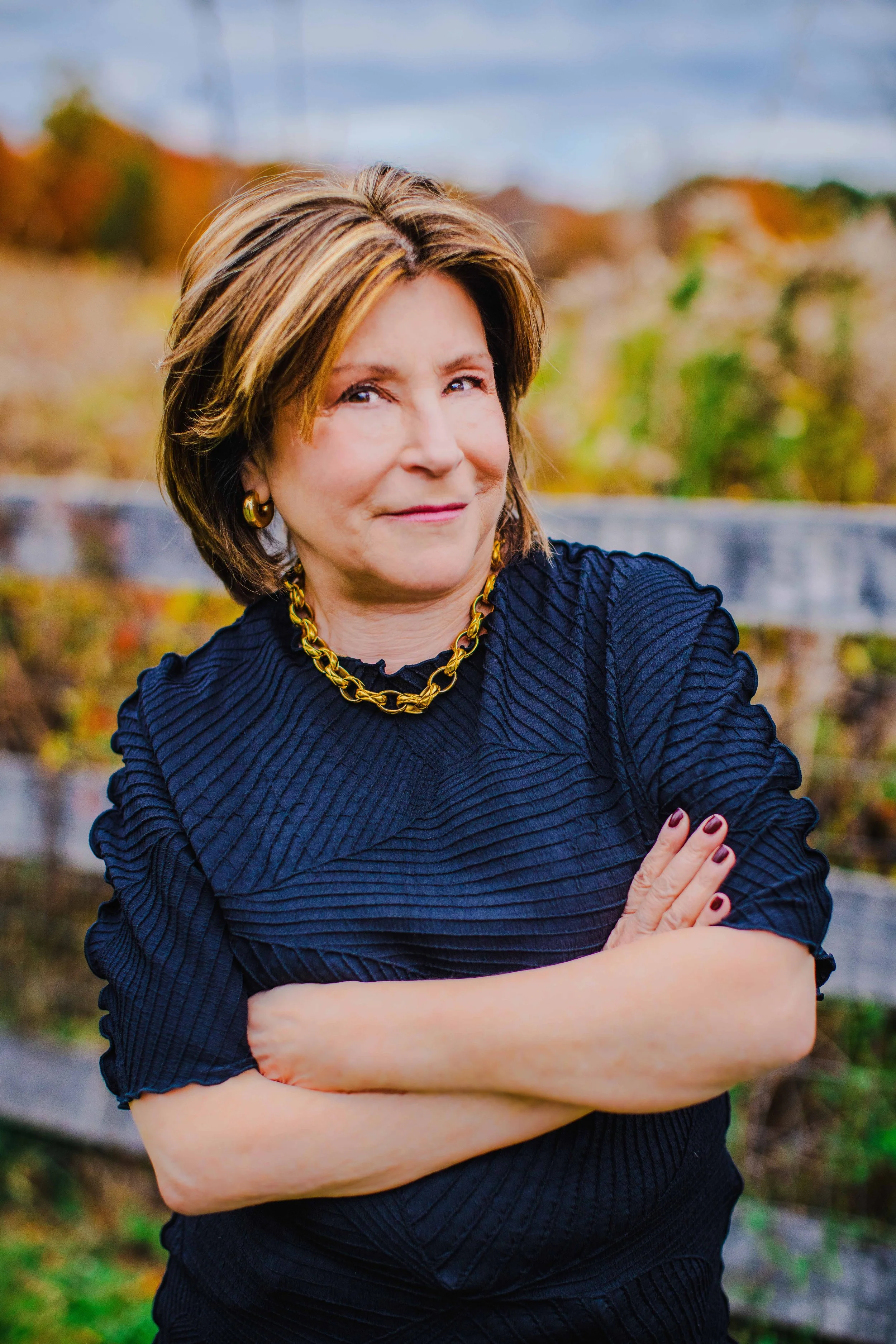
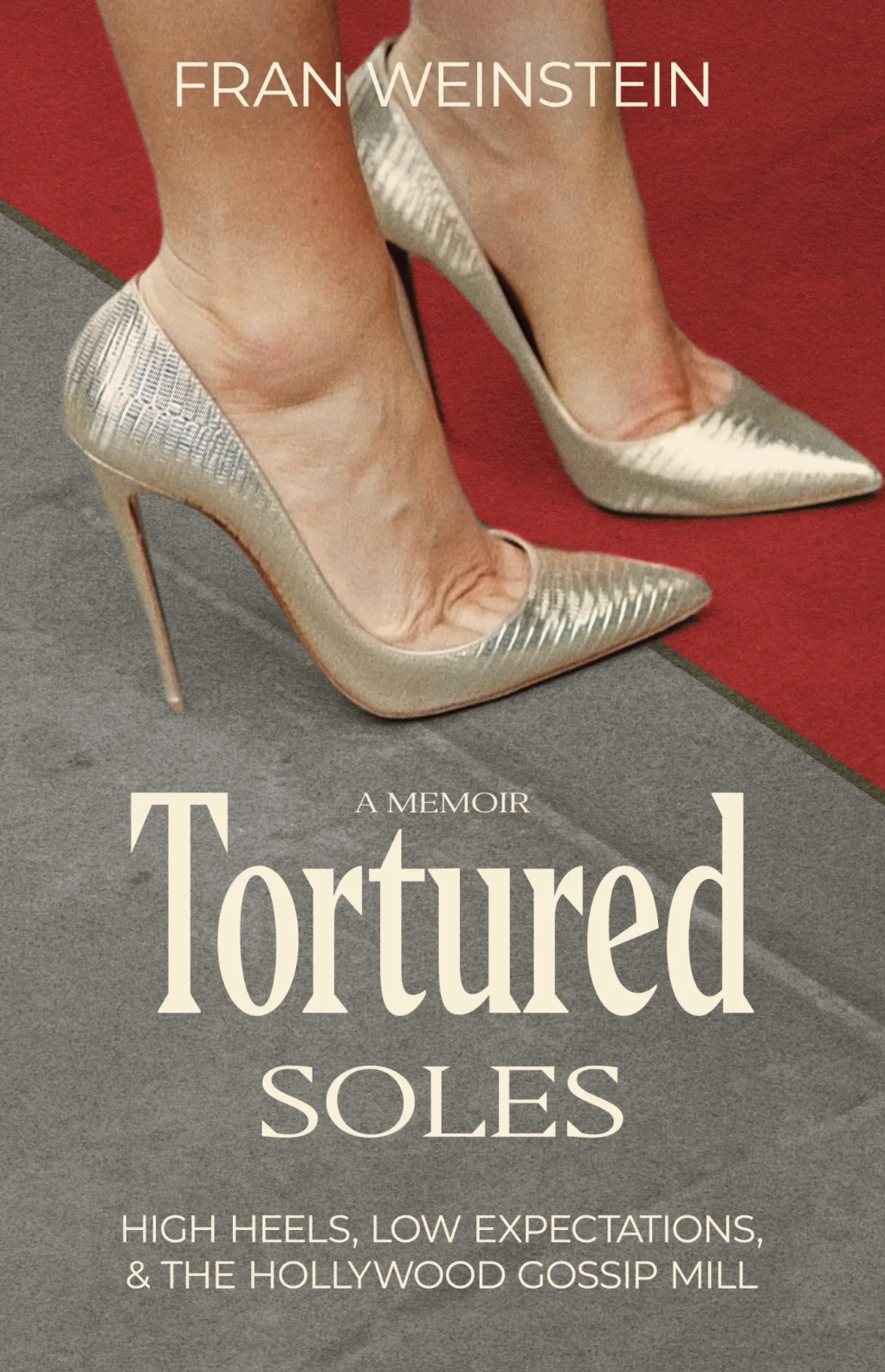
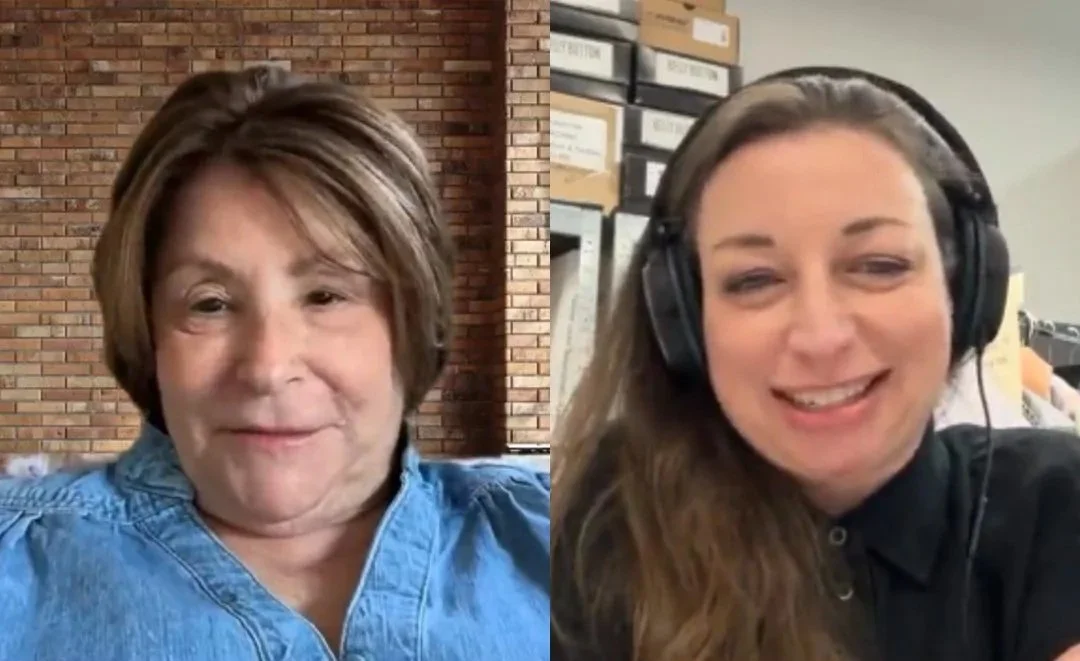
For our season finale, Alex sits down with retired entertainment reporter Fran Weinstein, whose memoir Tortured Soles tells the story of a remarkable career through her shoe collection. Fran's stories from the red carpet open into a deep conversation about femininity across the life course, the ethics of the gossip industry, women's rights, the mental health toll of living our lives on show, and how our shoes carry our memories.
Credits:
Presenters: Dr Alexandra Sherlock & Dr Emily Brayshaw
Guest: Fran Weinstein
Production and Editing: Dr Alexandra Sherlock
Links and resources
Fran Weinstein's memoir
Weinstein, F. (2026). Tortured Soles: High Heels, Low Expectations and the Hollywood Gossip Mill. Atmosphere Press. https://atmospherepress.com/books/tortured-soles-high-heels-low-expectations-and-the-hollywood-gossip-mill-by-fran-weinstein/
Fran Weinstein's website: https://www.franweinstein.com/
Also available in hardcover, paperback and Kindle from Amazon, Barnes & Noble and Strand Books.
Further reading: shoes, femininity and the life course
Dilley, R., Hockey, J., Robinson, V., & Sherlock, A. (2015). Occasions and non-occasions: Identity, femininity and high-heeled shoes. European Journal of Women's Studies, 22(2), 143–158. https://doi.org/10.1177/1350506814533952
Hockey, J., Dilley, R., Robinson, V., & Sherlock, A. (2014). The temporal landscape of shoes: A life course perspective. The Sociological Review, 62(2), 255–275. https://doi.org/10.1111/1467-954X.12154
Related writing from the Footwear Research Network
Sherlock, A. (2024). What Kamala Harris' Converse All-Stars tell us about how shoes shape our identity. The Conversation. https://theconversation.com/what-kamala-harris-converse-all-stars-tell-us-about-how-shoes-shape-our-identity-242777
Sherlock, A. (2013). Larger than life: Digital resurrection and the re-enchantment of society. The Information Society. Full reference and open-access link: https://alexandrasherlock.com/publications
Also mentioned
Empathy Museum, A Mile in My Shoes. https://www.empathymuseum.com/a-mile-in-my-shoes/
Follow and support the show
Footwear Research Network: https://footwearresearchnetwork.org/
Instagram: @footwearresearchnetwork
Support our non-profit registration via GoFundMe: https://gofund.me/187a2894c
LinkedIn: https://www.linkedin.com/company/footwear-research-network
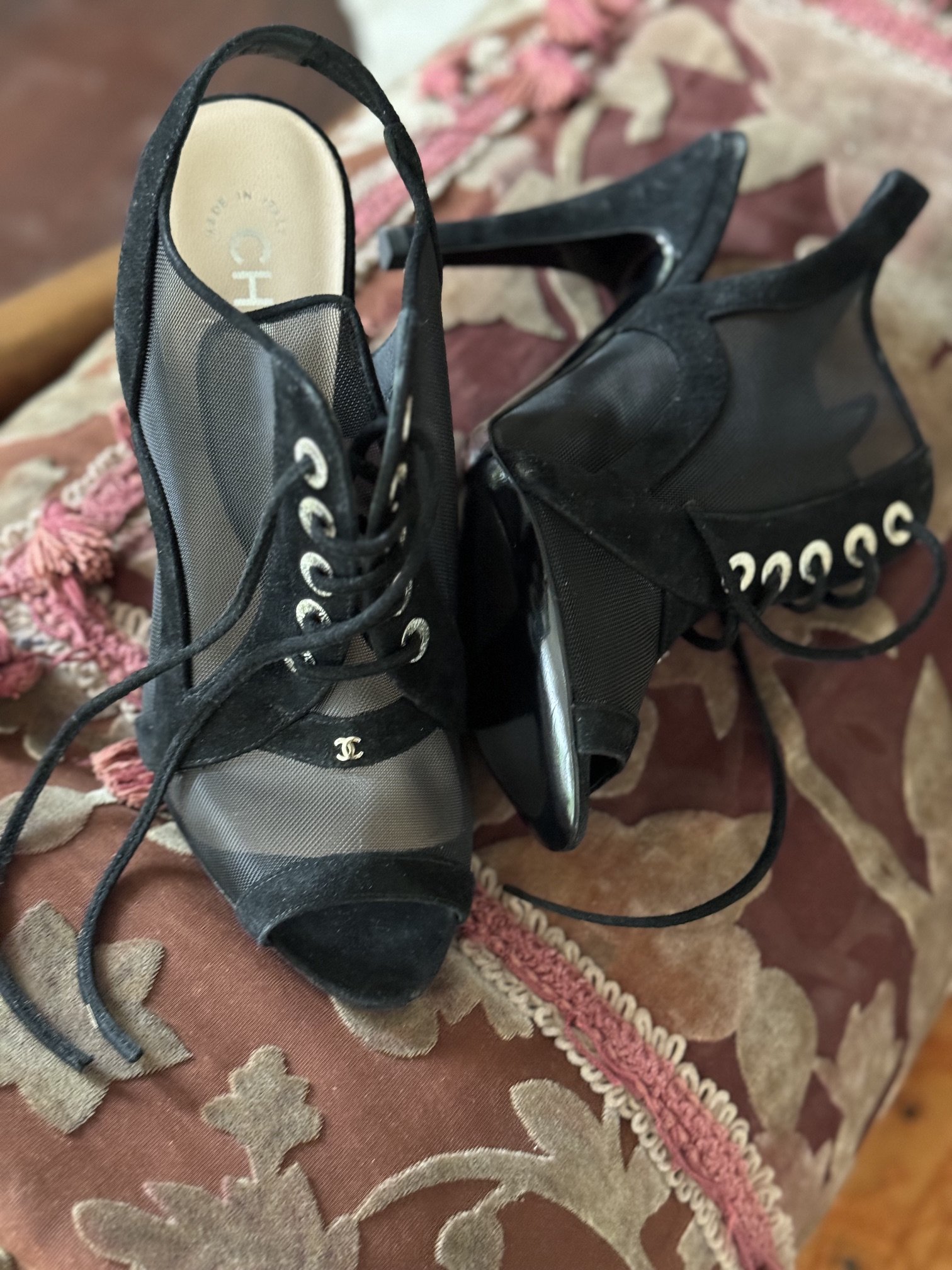
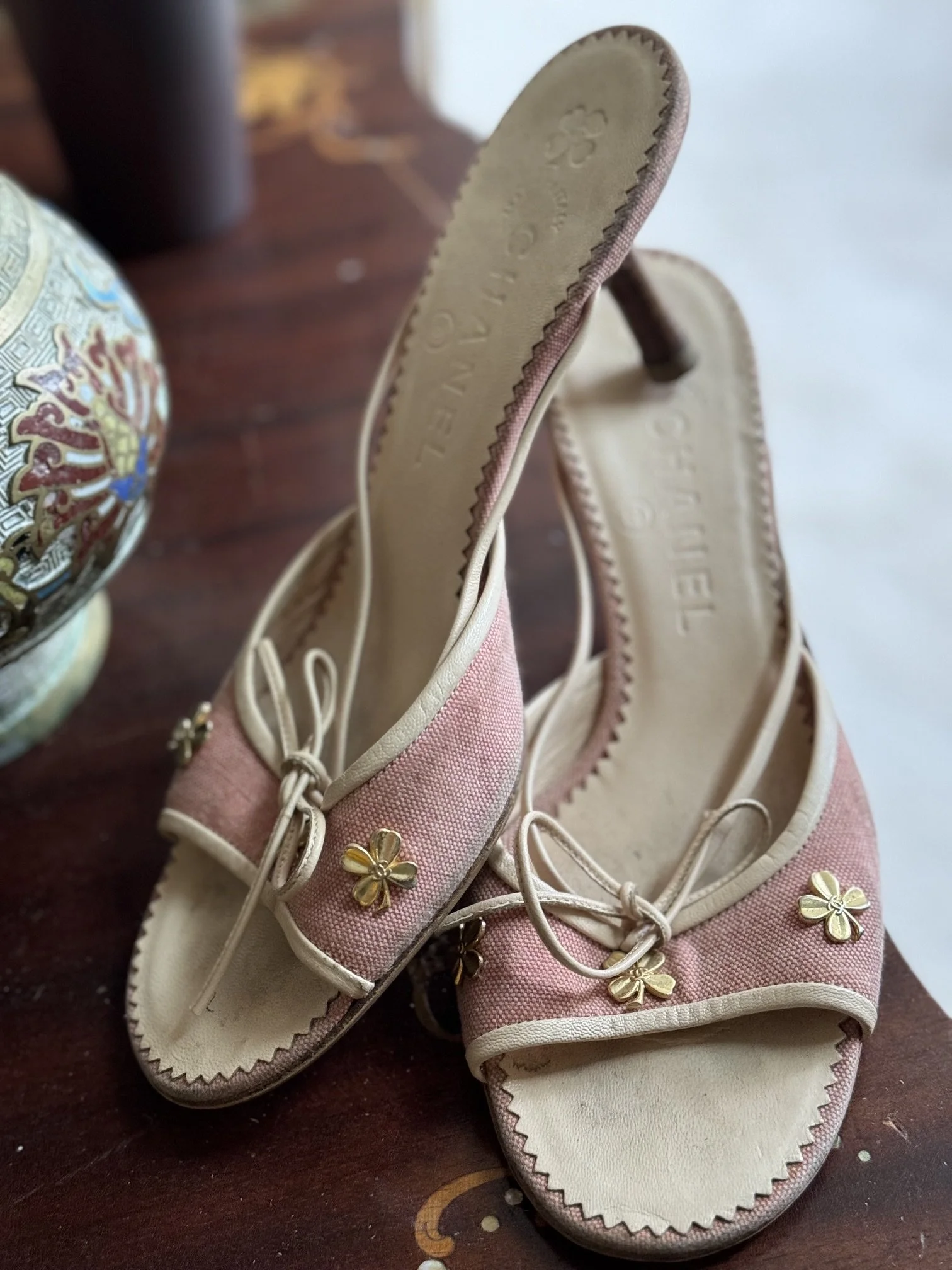
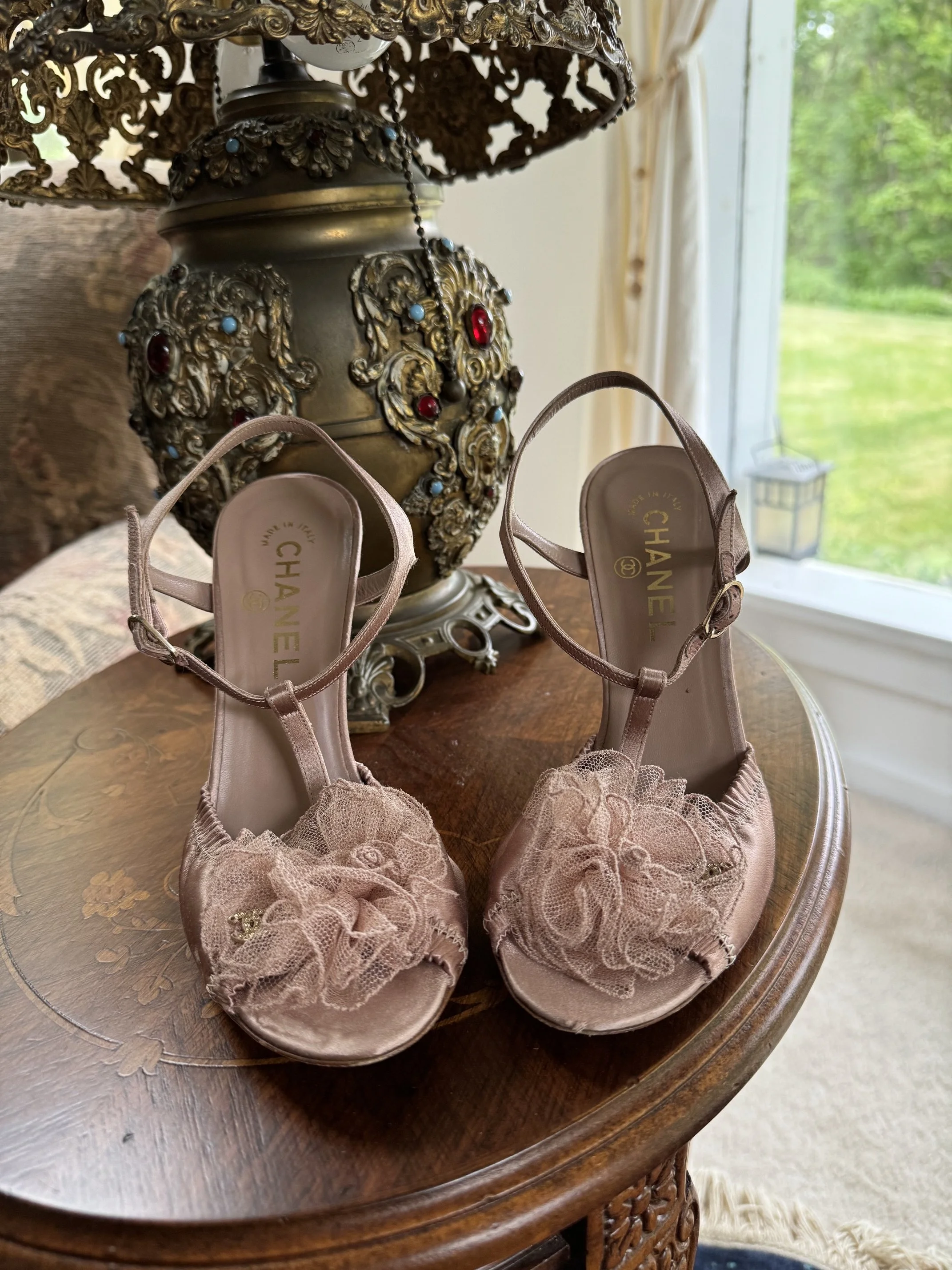
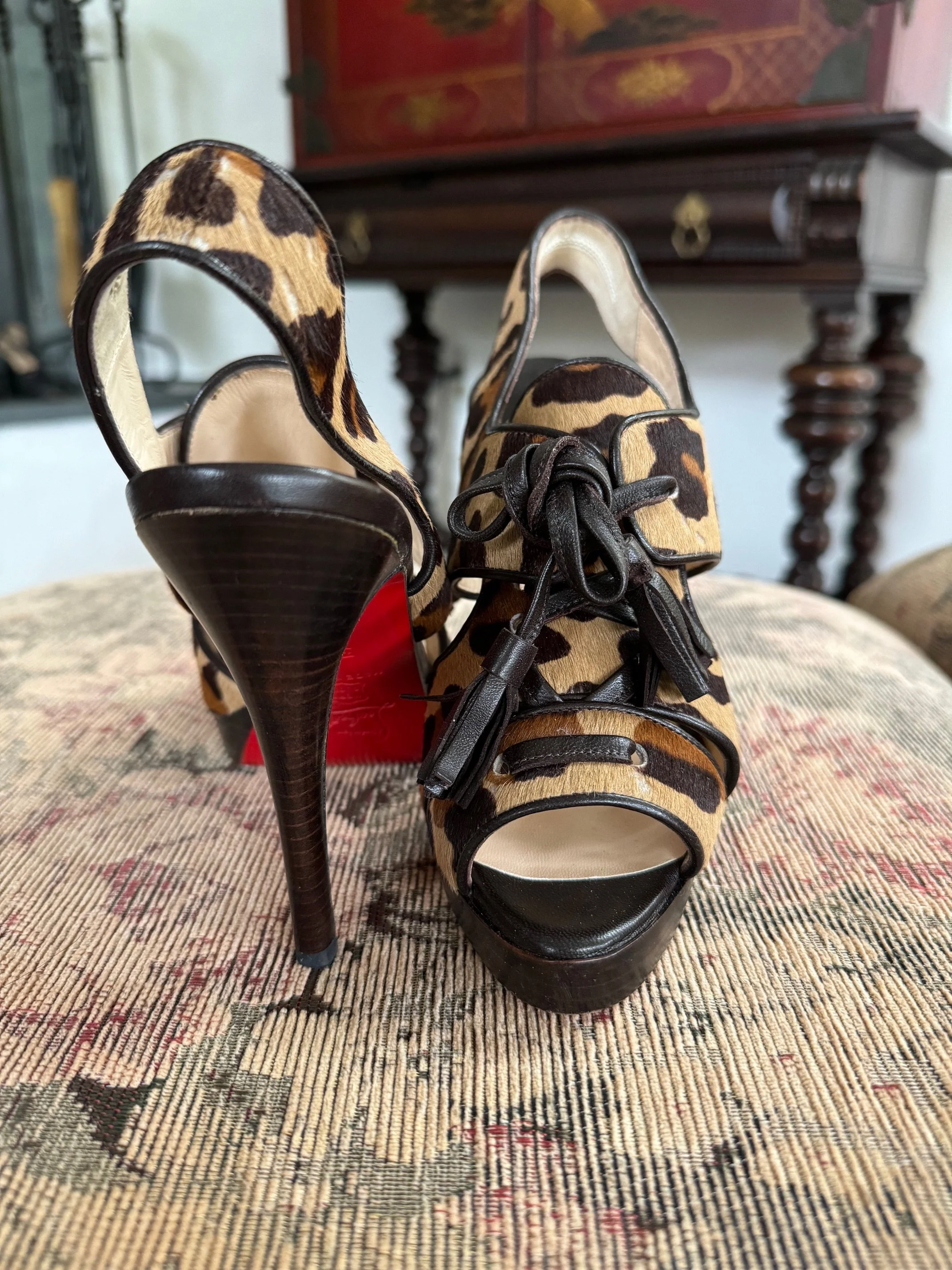
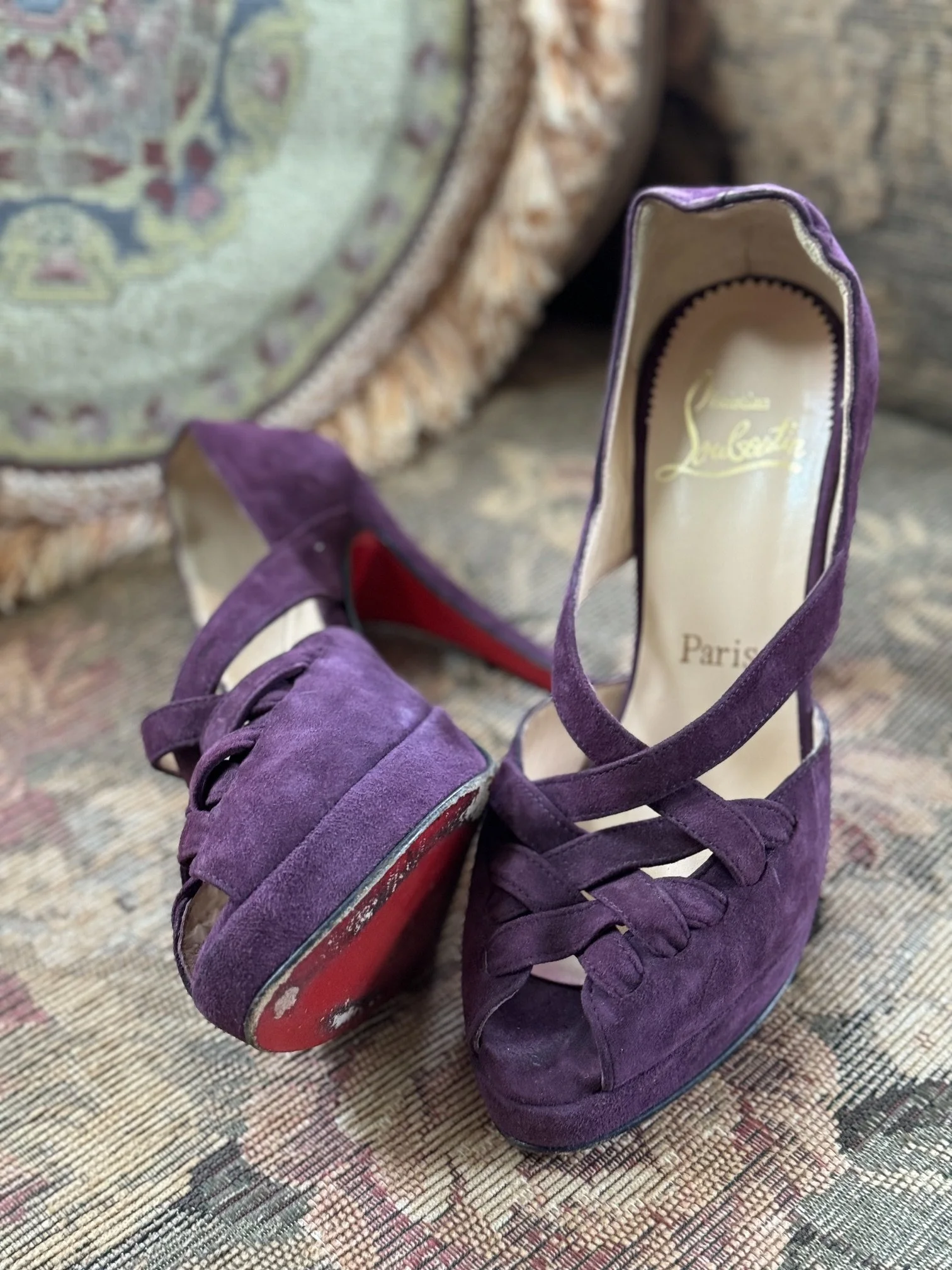
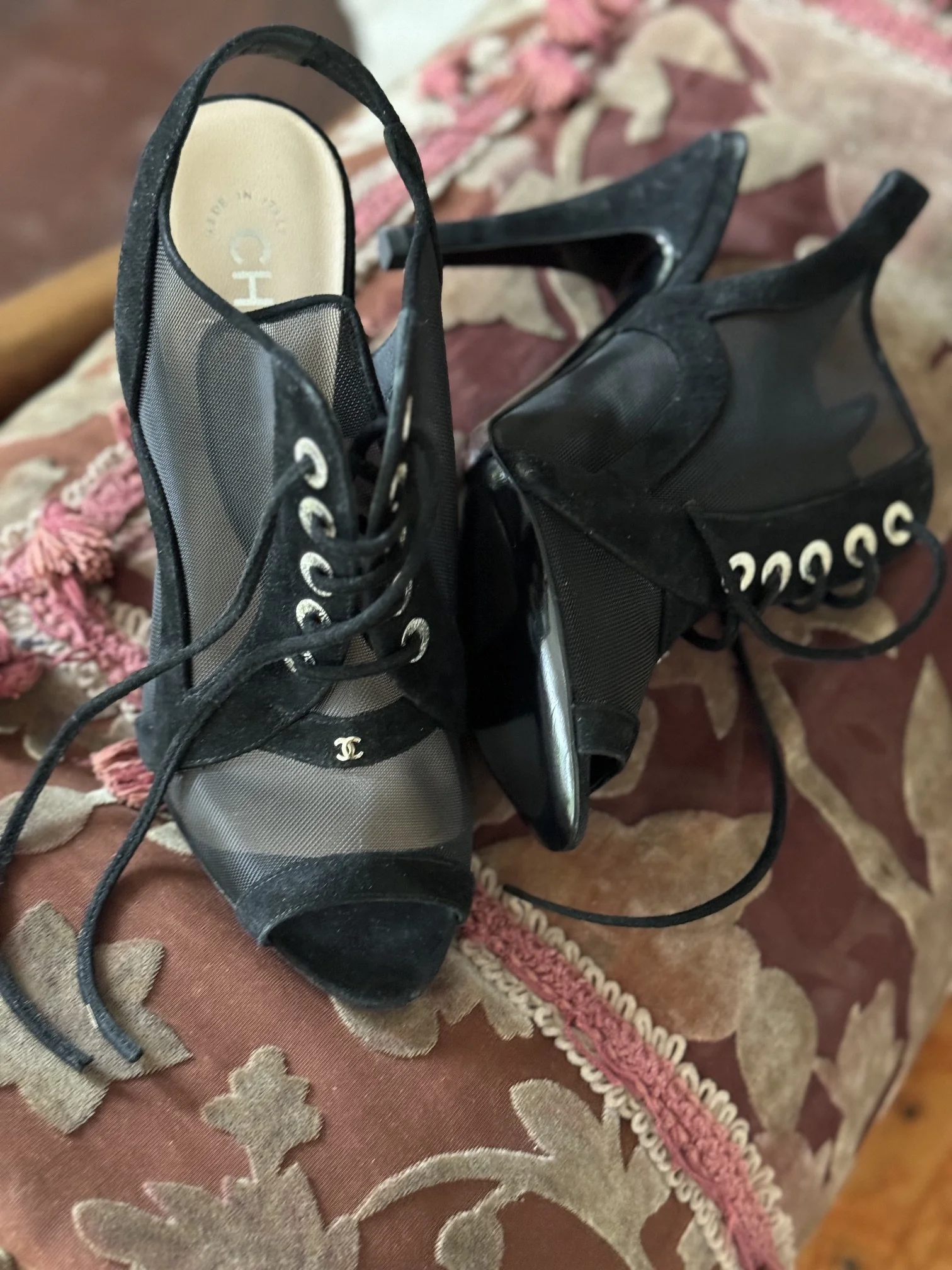
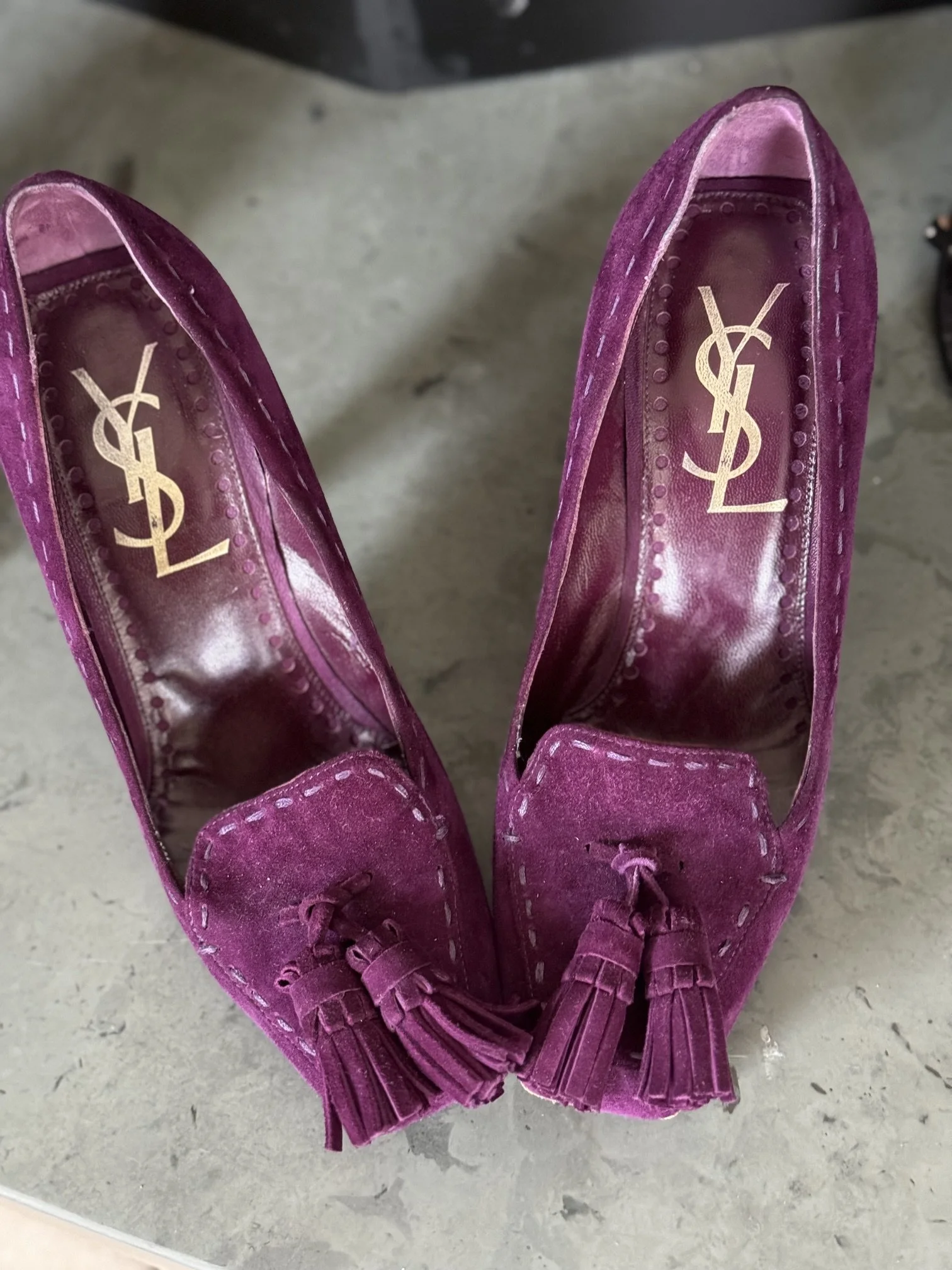
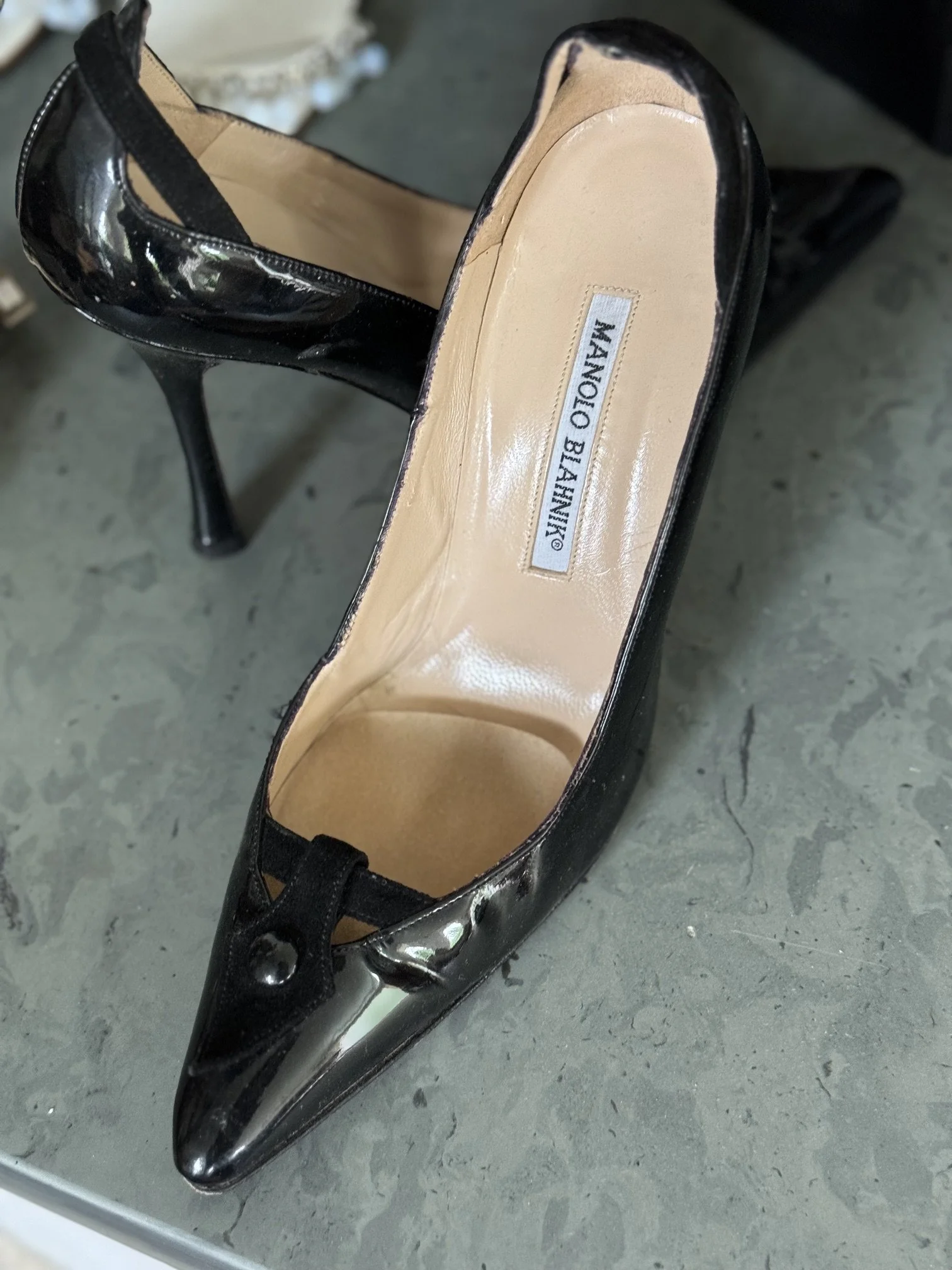
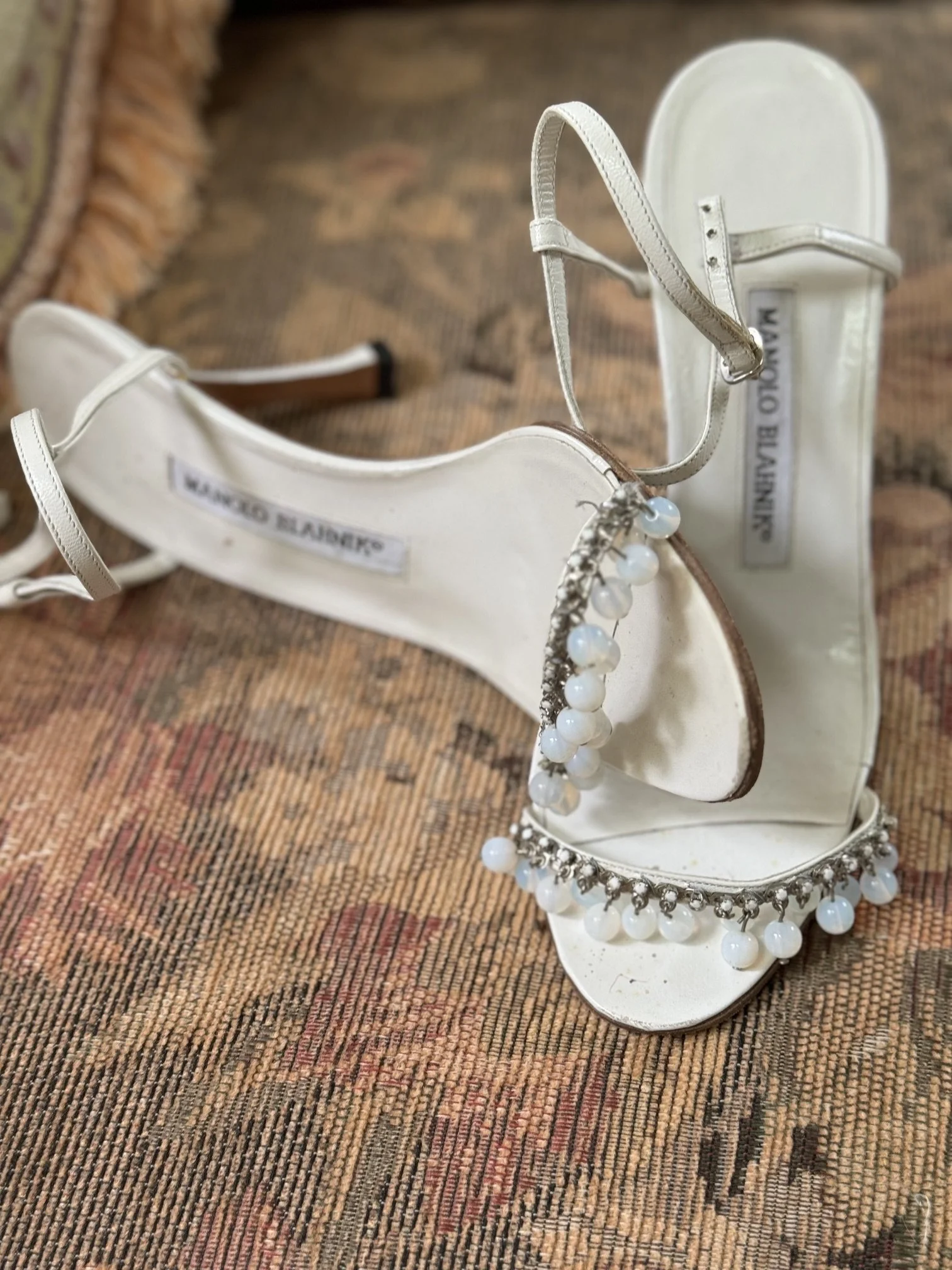
A selection of Fran’s significant shoes and associated memories
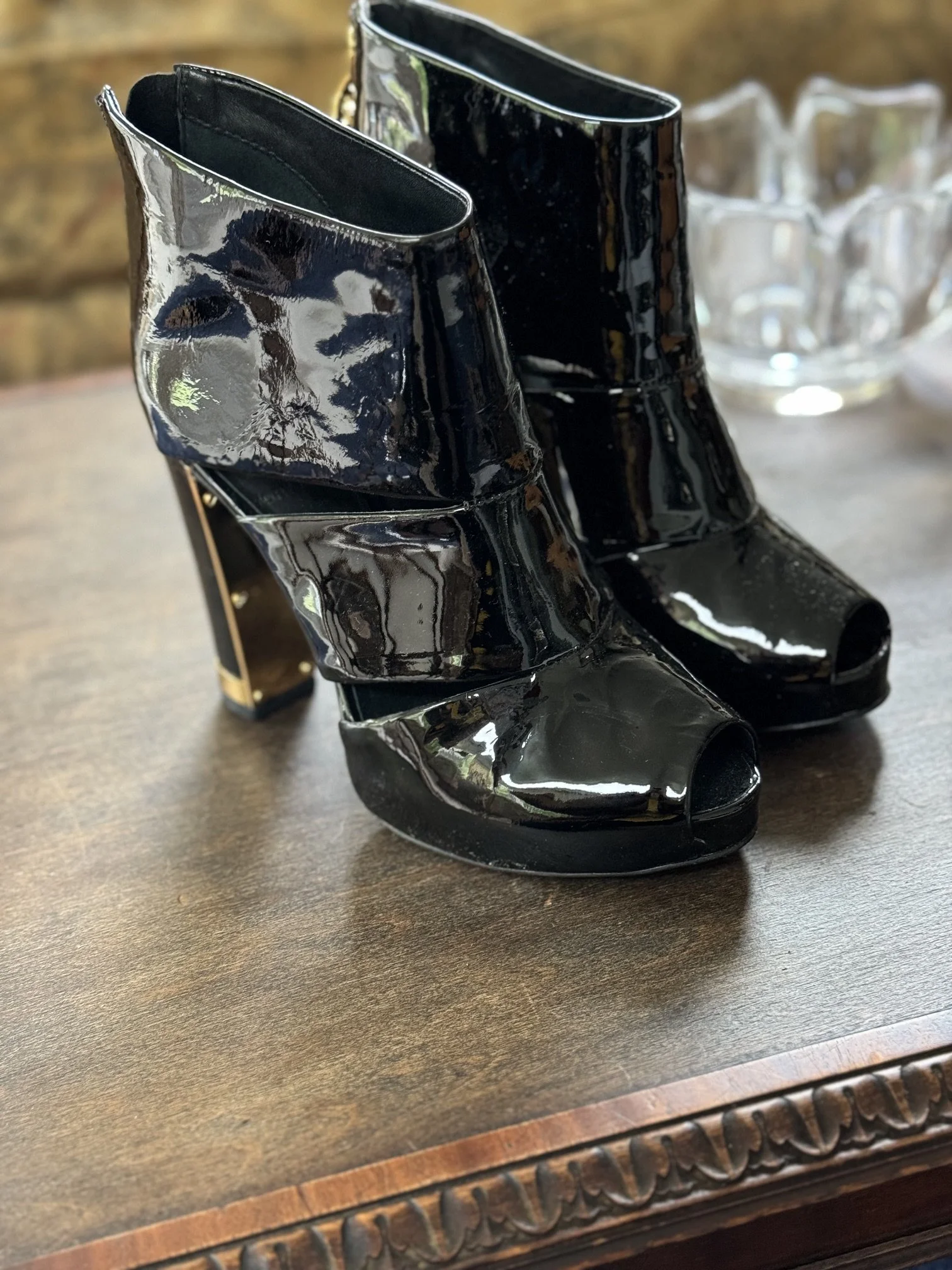
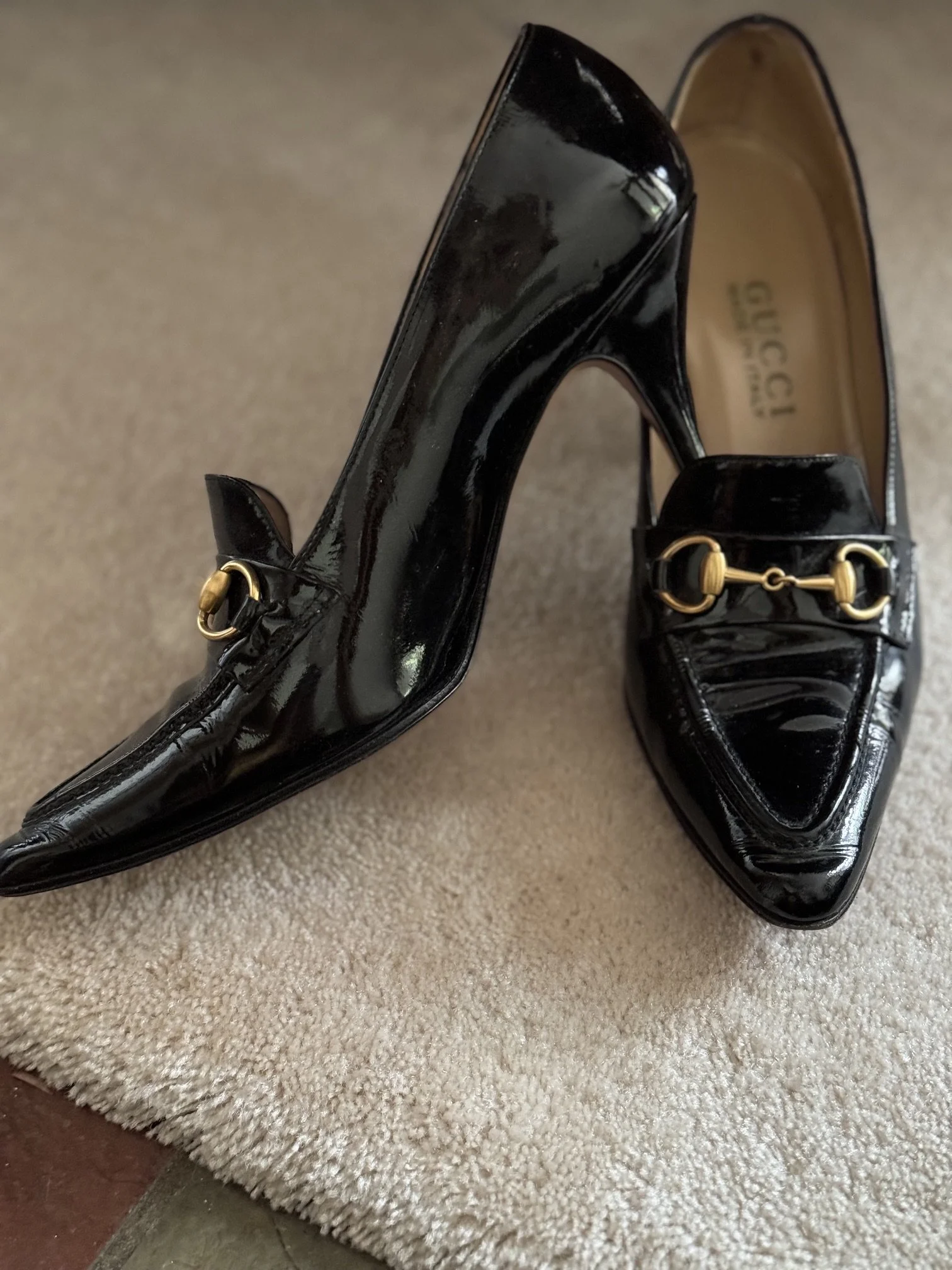
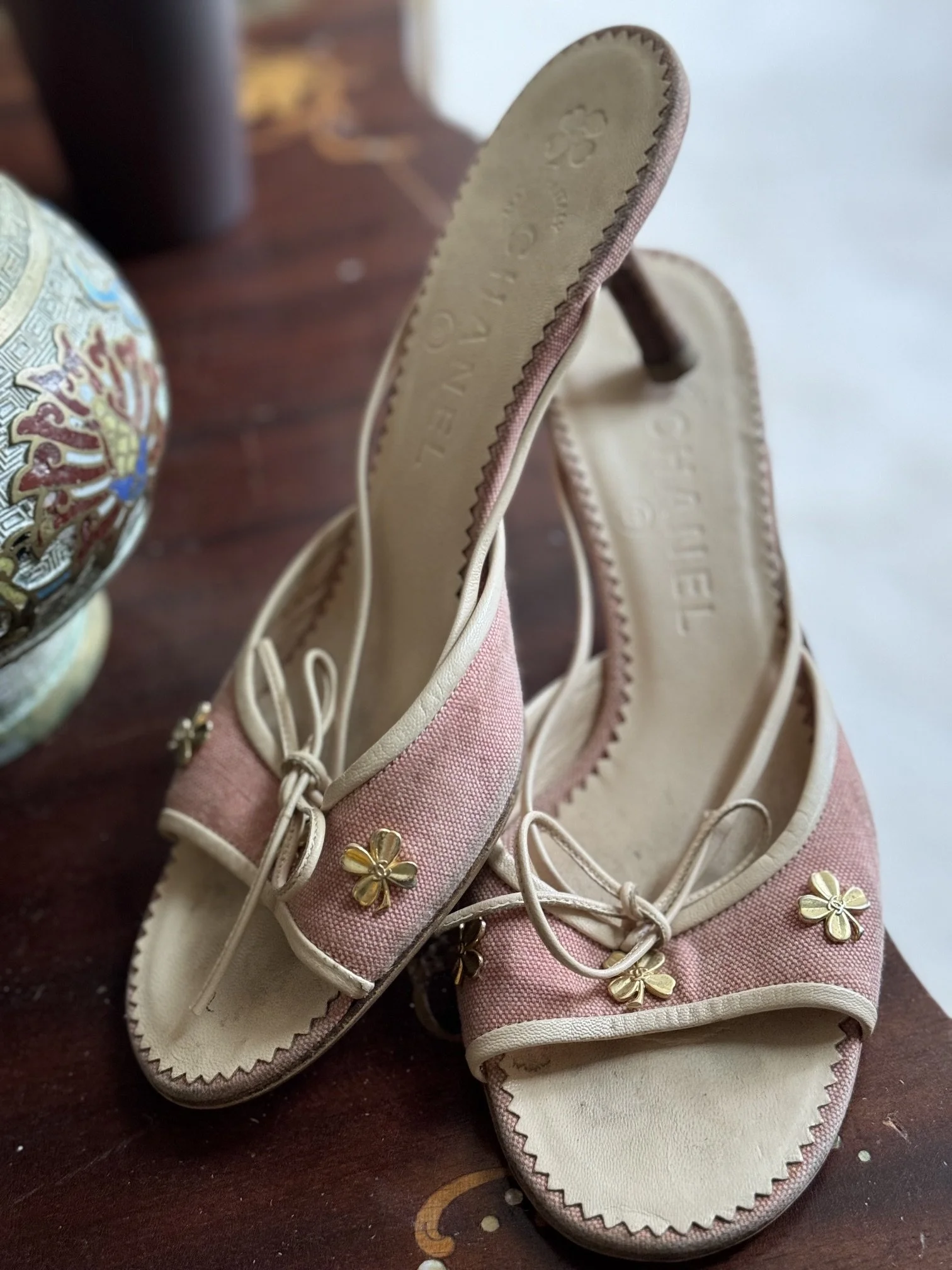
Chapters:
[00:00] Welcome and Acknowledgement of Country
[01:00] The season finale: introducing celebrity reporter Fran Weinstein
[03:54] The politics of heels: femininity and choice
[07:11] A life on the red carpet
[09:02] Writing her memoir Tortured Soles: High Heels, Low Expectations and the Hollywood Gossip Mill.
[10:09] Where we didn't belong: 9/11 and Michael J. Fox
[14:30] The reporter/celebrity unwritten contract - Clooney and Jamie Lee Curtis
[16:32] Short and being seen, in 200 pairs of designer shoes
[18:56] A first-generation Bronx childhood and Captain Kangaroo
[22:03] Reading people, and the seven-year-old consigliere
[29:31] The Anne Heche tape, the Chanels, and the kicked-in door
[40:11] Celebrities as gods, reporters as messengers
[46:55] The night it ended: a fall in Stuart Weitzman boots
[48:41] Crossing the line: Heath Ledger and the modern industry
[52:55] Everyone is on show: mental health impacts of social media and 24/7 visibility today
[55:44] Coming back down to earth: Birkenstocks, thongs and a reconnection with nature.
[1:02:43] The 2003 blackout in Chanel mules
[1:04:07] Advice for women: stand in your truth
[1:06:49] Analysis with Emily and Alex: power, ageing, feminism and "tortured soles"
Transcript
1. (00:00) Welcome and Acknowledgement of Country
Emily Brayshaw (00:10)
What if shoes could speak? What might their stories, and the stories of those who make and wear them, tell us about the ways we live, our values and our impact on the world?
Alexandra Sherlock (00:22)
Welcome to The Social Lives of Shoes, a podcast brought to you by the Footwear Research Network that brings to life one of the most underestimated and humble aspects of consumer culture.
Emily Brayshaw (00:32)
Whether you design, produce, make, market, sell, or just wear shoes, these conversations will transform how you think about them and reveal new possibilities for a more sustainable future.
Alexandra Sherlock (00:45)
This episode was recorded and produced on the unceded lands of the Wurundjeri Woiwurrung people of the Eastern Kulin Nation and the Wangal people of the Eora Nation. We pay our respects to their ancestors, elders and custodians.
2. (01:00) The season finale: introducing celebrity reporter Fran Weinstein
Emily Brayshaw (01:00)
Hello everyone, welcome back to our final episode in this series of The Social Lives of Shoes. I'm Dr Emily Brayshaw. I'm joined by Alex Sherlock, Dr Alex Sherlock. Take it away, Alex, tell us who you spoke to.
Alexandra Sherlock (01:15)
Well, I mean, this was completely out of the blue. Because we're a footwear podcast, I was contacted by a PR for Fran Weinstein, who used to be a reporter and producer for Entertainment Tonight during the celebrity heyday, so all through the 90s and the 2000s. So this interview is about a book that she has written, her memoirs of working as a celebrity journalist through that time. And she uses shoes really as a mode, a device, to be able to tell these stories. And for me, I just think, you know, as an academic researcher who's very interested in ideas around footwear and identity, the themes were very much around femininity, but throughout the whole life course. So that idea of wearing really high heels when you're younger and you're a professional woman, but then right the way through into retirement, and how those shoes change, and reflecting on that. But she's got a fascinating life story and I really enjoyed the conversation. And when do you get a chance to chat to someone who knows people like George Clooney? So it was fascinating on a number of levels. What did you think, Emily? You have listened to it.
Emily Brayshaw (02:32)
I absolutely loved it. I have a kind of a parallel path, like our careers overlapped in some ways. So I worked as a journalist and an editor in London and New York in the very late 90s, early 2000s. And so I was in a different field of journalism. I was in financial reporting, so didn't quite have the glamour that Fran did. But you know, to unwind, I would definitely watch Entertainment Tonight. I would read the celebrity gossip mags. And something that really occurred to me as well is the importance of the shoes that you wear when you're a reporter, when you are in these environments. So I was doing online journalism, so a lot of the time I'd just be sitting in my office doing a lot of phone interviews, so I'd rock up in sneakers. But if I had to go to a press conference, say at one of the main courthouses in New York, or one time I was at a Senate Finance Committee hearing in Washington, I would be suited and booted. I had a pair of kind of replica Gucci loafers that I would wear with my replica Oscar de la Renta suit, to get that profesh boost. So shoes are definitely an important part of the professional woman's toolkit. They're a power tool, as Fran says.
3. (03:54) The politics of heels: femininity and choice
Alexandra Sherlock (03:54)
It's wonderful. And I think we'll go into a bit of analysis at the end, because there's lots to dig into here. I didn't ask her about this specifically, but I would have been fascinated to know how she feels now about this idea of shoes in relation to this sort of validation as a professional woman, being judged on the shoes that you're wearing, or the need to wear a particular pair of shoes to be taken seriously. I wrote an article a little while ago for The Conversation. It was before Trump was elected, during the campaign when he was up against Kamala Harris. And I wrote an article about how interesting it was that she was often wearing Converse All Stars on the campaign trail. I know that under Joe Biden, a lot of the women in the White House, it was quite accepted to be wearing sneakers and to be dressed in a comfortable, one might say down to earth, way. But of course under Trump we see again a return to this elevated heel.
Emily Brayshaw (04:56)
Republican Barbie, they're called. And again, this absolute, it's a performance of conservative femininity that is happening, right? And it is, it's a gender performance, that ties in with this ultra hard right Christian nationalist femininity that they are performing as their gender performance. And high heels are very much part of that.
Alexandra Sherlock (05:26)
Yeah. And so, as I say in the interview, I don't want to be disparaging about anyone who wears heels, because obviously it's everyone's choice as to what kind of femininity they express.
Emily Brayshaw (05:33)
I love them. I used to love my heels. I have so many pairs of gorgeous Italian designer heels that I just can't wear anymore because I had a baby and my back just couldn't deal with it. And I'm like, I love you, but you're uncomfortable.
Alexandra Sherlock (05:49)
No, and this is the whole thing about the particular pairs of shoes that you wear throughout your life, and how actually changing between different styles is almost like a rite of passage. You do sort of move, don't you, between different styles. But I think, in terms of feminism, it is this idea of being able to have the choice of how you want to express your femininity, rather than being expected to look a particular way, I think is the thing. So what comes out of this is there's much more to this topic than just purely wearing high heels on the red carpet. It is political. There are all sorts of themes going through there in terms of feminism.
Emily Brayshaw (06:26)
Absolutely.
Alexandra Sherlock (06:27)
And what is really fascinating about Fran is that now, having retired, she has lived through periods of time in America, in New York, around women's rights, women's liberation, the sexual revolution. So to get that kind of insight from these incredible matriarchs who are able to pass on their wisdom, I suppose, and in this case through the stories of her shoes, which was just so beautiful.
So before we go any further into the analysis, Emily, shall we let the listeners have a listen and we'll come back to do a bit of an analysis at the end.
Emily Brayshaw (07:08)
Great idea.
4. (07:11) A life on the red carpet
Alexandra Sherlock (07:11)
Fran Weinstein, thank you so much for joining us on The Social Lives of Shoes. It's wonderful to see you.
Fran Weinstein (07:18)
Same, it's wonderful to see you. Thanks for having me.
Alexandra Sherlock (07:22)
So Fran, you're a retired television director and producer, and you describe yourself as a recovering celebrity dirt miner. You've worked for Entertainment Tonight, Lifestyles of the Rich and Famous, and Live! with Regis and Kathie Lee. Now, we have listeners all around the world, so I wonder if you can start by explaining a little bit about what that means. You're retired now, aren't you? And, yeah, what you’re doing now.
Fran Weinstein (07:53)
I'm retired now, happily. I'm the happiest retired person you'll ever meet. I retired in 2013. I have a career in broadcast television, entertainment news, that spans about 35 years. So what I did for Entertainment Tonight was basically I interviewed every celebrity, of the late 80s, early 90s, through the 90s, early 2000s, up until I retired. Every celebrity you can name. Not only celebrities, movie stars, et cetera, I interviewed presidents, princesses, rock stars, you name it, mob bosses. I've basically been on the world's most important red carpets. And I've been in rooms where entry is very exclusive. I've been in every ballroom in New York City. I know the ins and outs of Radio City, Madison Square Garden, where Taylor Swift is gonna be married soon. And all these buildings. Yeah, that was my beat.
5. (09:02) Writing her memoir Tortured Soles: High Heels, Low Expectations and the Hollywood Gossip Mill
Alexandra Sherlock (09:02)
Yeah, extraordinary. So I'm interviewing you today because somebody got in touch with me and said that you had released a book. Well, it's a memoir called Tortured Soles, S-O-L-E-S, High Heels, Low Expectations and the Hollywood Gossip Mill, which is a reflection on, as you have described, a really extraordinary life in relation to celebrity culture, in, I guess, what we might say is the heyday?
Fran Weinstein (09:31)
Absolutely. No, you're absolutely right. That was the heyday. Things are very different now.
Alexandra Sherlock (09:35)
It's very different now, yeah. And I think what I really loved was this reflection from a place, I guess, in retirement, where you've got some perspective and you're now removed from that and you're able to look back. And what I really loved about the book as well is that there's quite a lot of vulnerability in it, in that you are quite critical in many ways of the industry that has now built up around this idea of salacious gossip.
Fran Weinstein (10:03)
Yes.
Alexandra Sherlock (10:04)
Is that sort of what you had aimed for? What did you set out to do with the book?
6. (10:09) Where we didn't belong: 9/11 and Michael J. Fox
Fran Weinstein (10:09)
Well, I really just wanted to tell my story. And what was important to me, when I was talking about show business and entertainment news, was how some of these personal stories really impacted me. At the time, I was nicknamed Pitbull because I would go out there and get the story no matter what it was. And I really never stopped to think about what it was that I was doing. And then there were a few stories that came my way where I felt, I don't know if this is really right. This is just morally kind of wrong. Not that I'm biting the hand that fed me at all, but there were a few places I felt like we didn't belong. Like, for instance, 9/11. I was at Ground Zero. I was dispatched there on the morning of. And when I got there, the person who was kind of put in charge, I guess, of bringing in reporters and news outlets said, where are you from? And I said, Entertainment Tonight. And he looked up and he said, you're kidding me, right? And then of course the scene was unbelievable. So I just didn't think we belonged there.
Alexandra Sherlock (11:27)
Yeah, yeah.
Fran Weinstein (11:29)
Very impactful to me and my crew, both emotionally and physically. So that was one time. And then there were other times where I was dispatched to get a response from Michael J. Fox when he had just announced that he had Parkinson's disease. And I just tried to reason with the powers that be that it really wasn't a great idea. But I went, and then I thought better of it.
Alexandra Sherlock (12:00)
Because you'd had quite a good relationship with him, hadn't you? So being asked to do that kind of compromised your relationship, which probably wasn't in the interest of future interviews or anything like that.
Fran Weinstein (12:13)
And that was exactly right, Alex. I tried to explain that to them, that this probably wasn't the best idea for me, and it would probably jeopardise us ever getting another interview again, because of the vulnerability of the day for him. But they insisted, because I did have a great relationship with him, and they insisted that it had to be me. I said, at least send somebody else. And they were like, no, he loves you, he'll talk to you, you need to do this. And then when I got there, I was standing outside the stage door of David Letterman, where he was going to make this official announcement. And I was essentially going to ambush him. And his limousine rolled up and his publicist jumped out, who I knew. And she said to me, you gotta be kidding me, like, he hasn't even taken his medication yet. And I felt terrible, I just felt terrible. And I said, okay. And I turned to my crew and I said, we're gonna go back to the van, we're not doing this. We're gonna say that he went in through another stage door, which there were many. And that's gonna be our story, right? So, like, omerta, nobody's gonna say a word, right? We all agreed that that was it. And I never told that story before. I would have been fired. But it was wrong.
Alexandra Sherlock (13:48)
Yeah, I think it's that kind of, as we see so often, these short-sighted decisions for benefit now.
Fran Weinstein (13:59)
Yeah, exactly.
Alexandra Sherlock (14:00)
It's just absolutely fascinating. I mean, your whole book is absolutely fascinating. It's just packed with these extraordinary stories that give the reader insight into behind the scenes, I suppose, but also you got to know some of these people quite well. And I found it really lovely that some of the people that I have always hoped are lovely in real life, you confirmed really are lovely. Who are the ones that you would pick out?
7. (14:30) The reporter/celebrity unwritten contract - Clooney and Jamie Lee Curtis
Fran Weinstein (14:30)
Well, George Clooney, of course, is my favourite. He's the most amazing guy. He does not take himself too seriously at all. He loves to have a great time. He loves to laugh. He knows what he has to do. He understands that he's contractually obliged to answer my questions and other journalists'. But he likes to have a good time. So if you could just make the medicine go down a little bit easier, he's your friend for life. So he was fabulous. Jamie Lee Curtis is another one, same thing, a very generous celebrity, a very generous human being. One time I didn't have childcare and I had to bring my son along for the day to an interview. I just sort of tucked him in the back of the room. And she said, well, who's that young man? And I said, well, he's my son, and I'm sorry, I didn't have a babysitter today. She said, no, I want him to come sit right next to you, right out of the camera's range, and he can sit with his mom. And I just thought that was the greatest thing I'd ever heard. So generous and just so authentic. She was great. Most of these stars are wonderful. Most of them are great. It's just the people around them, the handlers, that are a little nervous. And so they sometimes interfere.
Alexandra Sherlock (15:59)
Yeah, so I want to get into the whole aspect of this idea of celebrity culture and our fascination with celebrities. I do find all of that really fascinating. I have written about it a little bit in the past. But since we're a shoes podcast, in relation to footwear and identity, in your book there is a reference to shoes, and I wonder if you can explain why that is, why you have used that, I guess, as a device to tell the story of your life. What is it about shoes for you?
8. (16:32) Short and seen, in 200 pairs of designer shoes
Fran Weinstein (16:32)
Well, first of all, I am 4 feet 11 and 7/8 inches tall. So, having always been short, I always used high heels as a way to belong in the herd, kind of, and be seen, really, is the answer. And so, along the way, I've always been a shoe enthusiast, a shoe collector. But as I got along in my career, I collected basically more than 200 pairs of designer shoes. The idea of tortured soles is because I stood on red carpets for hours in these heels. I stood at galas and banquets for hours, and I ran down city streets, ran around city blocks, ran up and down the steps of courthouses, all in five or six inch heels.
Alexandra Sherlock (17:41)
That’s extraordinary.
Fran Weinstein (17:43)
And boy, did my feet hurt.
Alexandra Sherlock (17:47)
I mean, gosh, that is seriously impressive. So, I'm absolutely bursting with questions. There's so many things that you just said that I want to get into.
Fran Weinstein (17:56)
Great.
Alexandra Sherlock (17:57)
But I think it would be good for the listener. I've read the book, and what I loved in the acknowledgements is that you said that this book came together through a writers' group that you were involved in, and that actually the people in the writers' group had said that they were more interested in your stories than they were about the celebrities that you were talking about. And I would 100% agree with that. You have had an extraordinarily fascinating life. So I think it might be helpful for the listeners to understand a little bit about who you are and where you come from, even back to your early childhood in the Bronx. Because I did get the sense from the book that your earlier life probably did have quite an influence on the fact that you needed to be seen and to be elevated with the shoes, and the industry that you ended up in, and how you operated in that industry. So can you tell us a little bit about your background?
9. (18:56) A first-generation Bronx childhood and Captain Kangaroo
Fran Weinstein (18:56)
Sure. I grew up in a low-income family in the Bronx of the 1950s, the post-war era. My parents were both from Poland, and they escaped Nazi Europe in the 1930s, and they met in America. And I am therefore a first-generation American. My family was extremely dysfunctional. My parents had really tense and vicious fights all the time. And sometimes they turned violent, and I witnessed all of this. And my brother just basically tortured me. We did not have a great relationship. So I was really on my own to take care of myself. And, as I said, I'm from a low-income family. I didn't have any connections of any kind. And I just somehow knew... My mother would read these fan magazines and she would bring them home, either from the beauty parlour or she'd buy them at the corner store. And they were always celebrity magazines, and I would thumb through the pictures and I thought, oh my God, this is a world I need to be a part of. This is a beautiful world with beautiful people, lots of money, and everything they dream about, I need to be part of that. So when I was in, actually I was in first grade, and we did a class trip down to the CBS studios in Midtown Manhattan, to the show that I was glued to as a child called Captain Kangaroo. And we went to his soundstage, and the minute those doors opened, I was just in another world. I was like on another planet. I was like, this is for me. The puppets were sort of on stands now, and Captain Kangaroo and Mr Green Jeans were just sort of chit-chatting. They weren't doing the show. I was like, what is going on? People are running around with paper, large cardboard. They were cue cards. This was just amazing, and there were cameras, and it was amazing, and I knew from that moment on that I surely wanted to be a part of that. So that was basically what set my trajectory. And then when I worked for Entertainment Tonight, I was in my 40s, and I met Captain Kangaroo again, because they had me go to his house on Long Island, where he had retired with his wife, and it was a full circle moment.
Alexandra Sherlock (21:58)
What a wonderful opportunity, how beautiful.
Fran Weinstein (21:59)
Yes, it was great. It was great.
10. (22:03) Reading people, and the seven-year-old consigliere
Alexandra Sherlock (22:03)
So I think one of the things that came through really strongly in your book is just what it means to navigate, I guess, being a woman through the 50s and the 60s, particularly when we're thinking about women's rights, and also with the disadvantage that you had in terms of your height and the need to be able to be seen. Which I can imagine, on the red carpet, I can absolutely see how those high heels would have helped with that. You wouldn't get the interview if people can't see you.
Fran Weinstein (22:32)
No, no, because really what I have found is that you have to look like they look for them to want to connect with you.
Alexandra Sherlock (22:42)
Yeah, right, they need to be able to identify with you. And I guess, I mean, I know, research, what is it, like 16 years or so looking at shoes and identity, shoes are a key way that people identify with one another. You look at someone's shoes and you know whether you want to be friends with them or not, don't you? Have you noticed that then?
Fran Weinstein (22:58)
Absolutely, absolutely, definitely. You can almost, I mean, this is a horribly superficial thing to say, but I'm going to say it. You can tell sort-of a person's character by the style of shoe they wear. You can, of course, tell their station in life by the quality of the shoe they wear, but you can tell the colourful personality, probably, by the shoes that somebody wears.
Alexandra Sherlock (23:31)
So do you notice celebrities’ shoes, and have you ever looked at someone's shoes and thought, well, we're gonna get on, kind of thing?
Fran Weinstein (23:39)
Oh yeah, all the time. I mean, I looked at their shoes, I looked at their whole outfit, but the shoes cap everything off. It's like the shoes are the cherry on the cake. And so I could tell by what they were wearing head to toe that we were gonna get on or not get on. But you know, you're talking about celebrities, so when they come to me, they're styled. They are styled to the tee. So it's very rare that they're wearing some weird thing that you might dislike, although there have been times.
Alexandra Sherlock (24:17)
Yes. So it's really important, then, that those shoes are a way for the people that you're interviewing to feel like they identify with you.
Fran Weinstein (24:27)
Definitely. And many times, while the cameras were just sort of getting focused, et cetera, we would be chit-chatting, and the first thing that they would say, if it was a woman, they would say, oh my God, I love your shoes. Where did you get them? Who's the designer? or whatever it is. So shoes make for a fantastic conversation starter. Yes.
Alexandra Sherlock (24:54)
A conversation starter. I was also going to say, yeah, to the extent that they should have been tax deductible in your line of work. Could you?
Fran Weinstein (25:02)
You know, you're right, they should have been, but they weren't. Believe me, if I would have it that way, they would be.
Alexandra Sherlock (25:09)
It sounds like that would have been quite helpful, by some of the designers that I read about.
Fran Weinstein (25:11)
Very nice. Yes.
Alexandra Sherlock (25:15)
Yeah, wonderful. And I think, as well, what I learned from your early life is growing up in a household where situations could be unpredictable and tense, and you were saying you'd get home from school and you weren't entirely sure what you were going to be walking into, and this importance of being able to gauge the room quickly, to understand how you needed to cool things down. It sounded like, in your early childhood, you played a role in your family of, would we say, kind of mediator, or something like that?
Fran Weinstein (25:52)
Oh, absolutely. Like I say in the book, I was my father's consigliere. I was his counsellor, and I was only seven.
Alexandra Sherlock (26:03)
And so even at the age of seven you were developing skills, then, that later in your career, with these kinds of personalities that you're talking about, would have been quite useful to you.
Fran Weinstein (26:13)
Oh, absolutely. I learned to basically take the temperature of a room in less than a second. And that is what a lot of my job required. You only have a certain amount of time with them, and to really figure out whether you're gonna connect or not. It's up to you to forge that connection and light that match between the two of you, right? So, yeah, it was very, very important that I learned that skill, you know? And I was also raised to be married by 19 years old, and no later than that, and then have children, and just call it a day, just stay home. And that was it. But I had bigger ideas, you know? And so that's what really kind of propelled me. The fact that I knew how to get out of this environment that I was in, the asphyxiating expectations, the horrible tension and nasty vibes, I just had to get out of there, and it wasn't gonna be by their prescription. They didn't even want me to go to college.
Alexandra Sherlock (27:28)
No. Right. So I think, throughout your life, it sounds like you faced an awful lot of adversity and have kind of overcome a lot of hurdles to achieve the career that you ended up achieving, which is quite extraordinary.
Fran Weinstein (27:40)
Yes. Thank you.
Alexandra Sherlock (27:42)
I think what I love about your book, and this is why I was so excited to meet you, is, as someone who is in their mid-forties, I suppose, and in, you know, we might say academia is also a patriarchal culture, maybe, navigating those things as a woman, I just love, I find the same in academia. You often get these female academics who are in their autumnal years, shall we say, who just decide to call bullshit on everything as well. And they just go, with a bit of reflection, they just go, do you know what? I'm just going to call this. And I find it so inspiring, actually, and I find it really valuable to have that perspective. And I just thank you for doing that in this book, because I think it's really important for younger women to hear.
Fran Weinstein (28:34)
Of course, thank you. Thank you for receiving the message.
Alexandra Sherlock (28:40)
I'm going to ask you in a minute what sort of advice you'd give.
So, throughout the book, you don't go into a huge amount of detail about shoes until the end, where you cover particular shoes and their memories and associations. But you do use them as a device, and I found it really interesting where you were doing that to tell the story, obviously in the title. But from the perspective of this podcast, and through my career in footwear, I've realised that shoes are just extraordinary messengers, or mediators, or vessels for telling stories. And you are yourself a storyteller as well. So that has been your job, hasn't it? Telling the stories of the celebrities.
Fran Weinstein (29:21)
Yes, yes, oh yes.
Alexandra Sherlock (29:26)
So I wonder if we can have a few more of those stories through some notable shoes you might recall.
11. (29:31) The Anne Heche tape, the Chanels, and the kicked-in door
Fran Weinstein (29:31)
Sure. So, well, for instance, I tell a story in the book about how Anne Heche, may she rest in peace, robbed me of a videotape of an interview. And I am now running through the halls of a very posh hotel called the St Regis in New York City, in black mesh Chanel lace-up shoes that were absolutely six inches tall. And they actually were so empowering to me that I was able to kick in her hotel room door, to find her and get that tape back.
Alexandra Sherlock (30:23)
So, I mean, you could identify that pair of shoes, because you can remember what it felt like kicking in that door.
Fran Weinstein (30:30)
100%. I'll never forget it. I'll never forget it. And they were bad, they were badass shoes. And, you know, I'm not kidding.
Alexandra Sherlock (30:38)
I bet they were. Have you still got them?
Fran Weinstein (30:43)
Yes, I do. I have all my shoes.
Alexandra Sherlock (30:43)
You've kept all of your shoes. Where do you keep them? And what do you do with them?
Fran Weinstein (30:45)
Well, they are stored in long Rubbermaid bins in the basement of my upstate New York home. There's more than 200 pairs. Why did I keep them? First of all, they're my babies, okay. They were my power tools. I just can't, it's like you have this treasured thing that you just can't get rid of, because they bring you such great memories. They all tell such amazing, all of them tell amazing stories. The other reason why I kept them is because my son is married to someone who's pretty much my shoe size. So I said to myself, oh well, they've been together for a long time, and I said, well, I'm just going to give them to her. Turns out she doesn't want them. She doesn't want them. They're a little too small for her, but she's not a designer chick. She's as elegant as they come, but that's not her thing. Chanels and Guccis and Manolos are not her thing, which I can't understand but...
Alexandra Sherlock (32:06)
No, sounds to me like there's an exhibition there. I know a few curators I can put you in touch with.
Fran Weinstein (32:09)
Yes, exactly. I really think that they are museum quality. I know they're museum quality.
Alexandra Sherlock (32:19)
And not even so much just the shoes themselves, it's the stories that come with them. And I can see how, it sounds to me like each pair of those shoes gives you access to a particular interview or a particular situation or scenario.
Fran Weinstein (32:32)
Yes.
Alexandra Sherlock (32:33)
If you were wearing the same shoes for the whole thing, they'd all blur into one another.
Fran Weinstein (32:36)
You know, the other situation that I was always in was I had events to go to in the morning, lunches in the afternoon, and then there were premieres at night. Now, all of these called for specific pairs of shoes. You cannot wear the same shoe that you're gonna wear in the morning to a press conference that you would wear on the red carpet. Think about it, right? I mean, never. So there were at least three, at least three changes of shoes during each day.
Alexandra Sherlock (33:14)
Yeah. And with that comes the decision-making around the shoes that are going to go with the outfit that is specific to that particular event. So, for example, you've gone to the Met Gala, there'd be a huge amount of decision-making in relation to the theme.
Fran Weinstein (33:26)
A hundred percent. Of course, of course. Exactly. Some are formal, some are more casual, but all of them are five, six inches tall.
Alexandra Sherlock (33:35)
So your shoe collection, then, really does have the capacity to tell the story of your life, and you can really differentiate between all of the different events, because I guess you can remember the shoes that you were wearing at the time.
Fran Weinstein (33:46)
Yes.
Alexandra Sherlock (33:46)
We should go back to the Anne Heche story, just because I know why you had to kick in the door, but for the benefit of the listeners, we should probably just resolve that quickly, just in case they don't get to your book, which I would highly recommend they do. What led to that? Because I don't think you were in the habit of kicking in doors. It was quite an extreme situation.
Fran Weinstein (34:06)
Sure. No, definitely not. Not my style. I was interviewing Anne Heche for the remake of Psycho, I believe it was 1998. And she had starred in this movie, Return to Paradise, co-starring with Vince Vaughn, in that movie, and they reunited to do Psycho, the remake of Psycho. And there were rumours swirling that the two of them had had an affair. And by rumours, I mean, you know, members of the crew saw their trailers, they would go into the trailers, never come out, et cetera. And it was pretty well publicised. So I started asking about what it was like to reunite with Vince Vaughn. When I asked that question, her jaw’s dropped to the floor. And I don't know if she knew where I was going, but she was gonna stop it. But she gave me too much time with her response, with her reaction, which was jaw-dropping. And so I said, rumours had it that you guys were an item while you were making that film. And I mean, she lost her mind.
Alexandra Sherlock (35:19)
Mm.
Fran Weinstein (35:20)
She started screaming at me, I don't wanna talk about that, we're not gonna use this, and blah, blah, blah. And I said, okay, fine, moving on, we're moving on, no problem. She gave me about 15 more minutes, even. We talked about Christmas plans, and she had just started a committed relationship with the comedian Ellen DeGeneres at the time. And they had really declared their commitment to one another. So this was not the time to be talking about old flames, right? And so at the end of the interview, we said our goodbyes, our pleasantries, and she was walking out the door, and she said, by the way, please, I don't want you to use that stuff about Vince Vaughn or me. And I said, I promise you I won't. Next thing I know, I get a knock at the door, I open the door, it's the studio publicist, and she said, you know, Fran, she wants the tape. She wants you to give her the tape. And I said, I'm not going to give her the tape. We don't do that. That's not happening. Tell her I'm not going to use it, it's all good, no problem. She walks out, closes the door. Next thing I know, I get another knock at the door. This time it's her personal gatekeeper. And he says, you need to give Anne the tape. And I said, no, I don't need to do that, and I'm not going to do that. He said, well, if you don't do it, you're never gonna get another interview with her again. And I said, I don't care, I really don't care, this is something we do not do. Reporters don't give out their notebooks, right? So this is what that was. Long story short, I now go to the elevators of this hotel, to leave the hotel, and the doors fly open, and it is Anne Heche herself, and she's wagging her finger in my face, and she says, you know, you need to give me that tape, and I don't want, you don't respect me and you don't respect my girlfriend, and give me that tape, and you're not getting out of here until I get that tape. And I was like, let's take this out of the hallway of the St Regis Hotel, and let's go back to my room, et cetera, et cetera. Time passed, and she was calling her agent, her publicist, her manager, her neighbours, you name it. They all said, just give her the tape. I didn't. And this was going to go on for hours. And so we just sort of sat there. And the next thing I know, she was out the door. I looked in my purse and my tape was gone too. Yeah. And I was mad at that moment. I was mad. And it really got my Bronx up, that somebody, you know...
Alexandra Sherlock (38:08)
Yeah, I love that saying. I've never heard that, got my Bronx up.
Fran Weinstein (38:14)
Got my Bronx up. I was just like, oh no, oh no, she didn't. You know? And so I ran into the hallways screaming, in my Chanel mesh black mule, fabulous lace-ups, and I'm running through the halls of this hotel screaming, she robbed me! Anne Heche robbed me! She took my tape! I've been robbed! It's burglary! And this publicist was scampering alongside of me, and she's like, I said, I'm calling the police! This is robbery! She said, please don't call the police! And I said, no, no, she stuck her hand in my purse and she took my tape, I'm definitely calling the police. In her anxiety, she led me straight to Anne Heche's room. And I kicked open the door.
Alexandra Sherlock (38:59)
Oh gosh, yep.
Fran Weinstein (39:02)
I was so mad. I kicked open the door, and there she was. She was sitting on top of the toilet lid in the bathroom, getting her makeup touched up. And I said, give me my expletive tape. And she said, I don't know what you're talking about, I don't have your...
Alexandra Sherlock (39:19)
Oh God.
Fran Weinstein (39:20)
I said, you stuck your hand in my purse and you took my tape, give it back. I don't know what you're talking about. I ran out of there, and again, still running in the black Chanels, and rumour had it that she told one of her people to throw it in a New York City sewer.
Alexandra Sherlock (39:43)
Wow, that is quite extraordinary.
Fran Weinstein (39:47)
Yes. We did call the police, and she was already on a plane, apparently. And when she got to LA, the police sort of nailed her, and she said, this is all a big... Her people took care of it and they were like, this is all a big misunderstanding. She doesn't have the tape. She never had the tape. And it just disappeared.
12. (40:11) Celebrities as gods, reporters as messengers
Alexandra Sherlock (40:11)
Yeah. And we know what happened with her in the end. And look, I think it's worth reflecting a moment on the whole concept of celebrity. You mentioned earlier, in relation to George Clooney, that he understands it's a quid pro quo, he understands that he's contractually obliged, and actually his job isn't possible without people like you.
Fran Weinstein (40:40)
You know it.
Alexandra Sherlock (40:41)
And so it sounds to me that perhaps she wasn’t quite across, didn't quite have that kind of perspective. It sounds quite messy, I think.
Fran Weinstein (40:54)
Yep.
Alexandra Sherlock (40:55)
I've been thinking a lot, since I found out that I was going to be interviewing you, about this concept of celebrity. There's a lot of stuff written about the parallel that there is between celebrities and this idea of gods, religion. And I know that you mention it quite a few times in your book, this idea of gods and goddesses and deities. And I think, in increasingly secularised societies, where we're becoming more and more detached from organised religion, you can absolutely see the role that these people play in society, their social function. We think about cultures around the world, and the stories and the exploits of the gods, they're moral tales, aren't they? They're the ways that we are able, collectively, as communities or tribes even, to learn what is right or wrong, or establish a sense of moral codes.
Fran Weinstein (41:56)
And we need that. We need that. We need somebody to look up to.
Alexandra Sherlock (42:04)
Yeah, or to learn from, whether it be good lessons or bad lessons. And in cultures and religions around the world, you often have those stories of missteps, or the mistakes or the errors of these gods or these ancestors, for example. But equally, for those stories to be known, you also need the messengers. And I was reflecting on, in Roman and Greek mythology, you've got, for example, Mercury, who's the messenger god, or Hermes in Greek philosophy [sic. mythology], who's the messenger god, who brings the messages from the gods to the mortals. And how funny, as well, that Hermes, or Mercury, wear their winged sandals to traverse between the worlds. And I just couldn't get away from this picture of you almost as that kind of messenger god, traversing between these different realms.
Fran Weinstein (43:10)
Oh, that's a great, great analogy, Alex. That's a perfect analogy, and that's how I felt. That's how I felt. I always had the viewer in mind, and I always had the viewer in mind in terms of what they'd like to hear about, what they could relate to, what they could connect with. And so that's how I approached every interview.
Alexandra Sherlock (43:37)
Yeah. And I think what's also interesting about Hermes, or Mercury, as well, is that they are also understood as being kind of the tricksters, in that the messages from the gods weren't always delivered in the way that they might have been intended, and actually a lot can happen through that process of communication in terms of stories, and how they're received. And again, I thought that was a wonderful parallel, and that sometimes, with that necessity for communication of the messages, comes the risk of those stories not always coming across the way that that god or celebrity might have intended.
Fran Weinstein (44:18)
Well, that's right. That's right. And that, I think, is the journalist's job. You know, they are coming in with an agenda to sell a movie, right? And I'm like, well, I want something more, because it's not just me, it's who I represent. My viewers want to know something about you, that you're godlike, but they want to see some humanity from you.
Alexandra Sherlock (44:48)
Yeah. And also, I think there's something really reassuring, as well, to us mere mortals, that everyone is fallible, and that everyone makes mistakes. It reassures us, I suppose, in our own humanity, doesn't it?
Fran Weinstein (44:57)
That's right, that's right. And these stars are so untouchable to most people that when we see them, we're just in awe. We don't have, in America, we don't have royalty. So that's what these celebrities signify for a lot of fans.
Alexandra Sherlock (45:22)
Yeah, absolutely. And I think they often become more so after they've passed. You often see, like, Elvis, for example, there's a lot has been written about him as being kind of godlike, and martyrs. And there's so many parallels in terms of the religious way that we tend to read culture, or engage with culture.
And, I think as well, there is quite a lot of vulnerability that comes through in your book, in terms of you reflecting on your role in celebrity culture, and how that wasn't always entirely palatable, and you weren't always entirely comfortable with it. But I think it is also really important to understand the social and cultural function of, for example, we might say gossip. It is a way of staying safe, of understanding one's place, and those cautionary tales and all of those things.
But tell me about another example in the book of where you've used shoes as a device to tell your story. The 13th of December 2013, it was a cold winter's night, and you were wearing high heels, and in the book, seemed to come across as a bit of a turning point, where you slipped over and you were just like, I'm done. Tell me about that.
13. (46:55) The night it ended: a fall in Stuart Weitzman boots
Fran Weinstein (46:55)
Oh, yes, yes, yes. Well, of course, that is an incredibly auspicious date. That is the date I decided I was completely done with all of this. Basically, I had just interviewed Leonardo DiCaprio for his movie, The Wolf of Wall Street. And I also had just interviewed the dog from Anchorman 2.
Alexandra Sherlock (47:17)
What? Sorry what?
Fran Weinstein
And it was a frozen, frozen, it was a sleeting, icy day. And I thought I'd be smart, because I'm a New Yorker and I know New York City, and I would cut through the venue where I was interviewing them, which was the Mandarin Oriental Hotel, through to the Time-Life Building, where I wouldn't have to go outside to catch a taxi. And so, unfortunately, everybody was Christmas shopping and tracking in ice and freezing water, et cetera. The floor was just sopping wet, and I slipped, went up in the air, and landed on my bum in my high-heeled boots. They were Stuart Weitzman boots, I'm not kidding. And they were probably, you know, also five-inch suede boots, fabulous with tassels; they were amazing. And I landed on my bum, and nobody came to even see if I was okay. And I looked up and I said, I am done. I am done with this. This is not ladylike. This is just, you're too old for this. And I called the office that day and I said, don't even call me anymore, I can't do this anymore.
14. (48:41) Crossing the line: Heath Ledger and the modern industry
Alexandra Sherlock (48:41)
Yeah. And there were a few things that had led up to that as well. There was the Heath Ledger thing. There were a few things, weren't there, where you were just like, I don't feel comfortable, this has turned into something that doesn't feel good.
Fran Weinstein (48:49)
Yes, yes. Oh God, the Heath Ledger story was a real... The Michael J. Fox story was sort of where I began to say, you know what, this is really, this is not okay. And then, of course, there was 9/11. But when Heath Ledger passed away, it really had an impact on me, because we were standing in front of the funeral home for a week, to see the comings and goings of celebrities, et cetera. And one day, I guess it was the final day, his father had just flown in from Australia. It was so crowded with journalists and onlookers that the poor guy could not get in to see his son in the funeral home without a police escort. And it just made me so sad. It just made me so sad that we are just in this poor guy's face, in his space, in his worst moment of grief. And then, to make matters worse, he got into the funeral home, and then the next thing we know, a box sort of slowly was being roped down to the street, which most reporters didn't catch. And the next thing we knew, we didn't catch the shot of it, but it was actually his coffin, all wrapped up for transport back to Australia, right? So, and my executive producer had called me, I told her what was going on, and she said, you know, follow that hearse to the airport. And I went, I gotta go. And I turned to a younger, less grizzled reporter and said, why don't you do that? Why don't you jump into the car and follow the hearse to the airport? Because it wasn't going to be me at that point. It was just too much.
Alexandra Sherlock (51:02)
Yeah. So, I mean, I think what you're saying is, we were talking a little bit about the social and cultural function of these stories and these cautionary tales and all of those things, and you as the messenger of that. But what we're seeing then, at that point, is this has now become this huge, multi-million-dollar industry. And I just find it interesting that that is driven by the logic of capitalism. And I find it fascinating that you were coming from interviewing Leonardo DiCaprio for The Wolf of Wall Street, which is a story all about this insatiable greed and want for more money, and banking and all the rest of it. And again, you're working in an industry that, in some senses, has become corrupted by that greed, to the extent that you're being required to step over these moral and ethical boundaries.
Fran Weinstein (51:55)
Literally, yes.
Alexandra Sherlock (51:57)
So, what is your perspective, and your view, of the industry today? Is it worse?
Fran Weinstein (52:05)
You know, that's a great question. I think it is worse, because I think there's more of it, and that's what makes it worse. There's way more of it, because it used to be that you could see these stories about stars on shows like Entertainment Tonight, and maybe in magazines. But now everybody is an influencer, and everybody is a gossip reporter, right? And everybody has an iPhone, and everybody is just able to ambush these stars, TMZ and all of that, go to the airport and just put the camera in their faces. There's more of it, and it's way worse. But yet there's an appetite for it.
15. (52:55) Everyone is on show: mental health impacts of social media and 24/7 visibility today
Alexandra Sherlock (52:55)
Yeah, it's so interesting. It's like there is just nowhere to hide for anyone. There's no privacy anymore. There's a huge amount of pressure and anxiety. I was speaking to a student, actually, the other day, who said to me that she had realised that older people, like I assume she sort of meant me, who hadn't been born into digital culture, all of the social media stuff affects them less. And I said, I think you're right. But I said, you know, what does it mean to you to say that you're affected by it? What impact does it have on you? And she said, it's just, I have always just lived online. Everything is viewable. Everything I do is to be posted online. My entire life is evidenced online. You're constantly on show. And through discussion, I got this really fascinating insight into the fact that there was nothing reserved for herself. She didn't really know who she was. She only knew the identity that she was constantly projecting. So it's fascinating that you say that this, what we once saw in relation to perhaps celebrities, with the boom of social media and this idea that there's no hiding now, extends really to everyone. Everyone is on show, and there's nothing in reserve.
Fran Weinstein (54:11)
That's right. That's right. And I think it just says a lot about the state of the world right now. I mean, things are bleak. The economy's bleak. People are hurting, you know? And I think that this is a way for people to express themselves, and maybe even try to find themselves, or maybe try to find some comfort.
Alexandra Sherlock (54:42)
Yeah. So, I think I'm noticing at the moment, actually, amongst my fashion design students, that they are actively removing themselves from these situations. So this particular student I was saying, well what do you do? And she said, you know, well, I have to take myself off for periods, to kind of recuperate. We actually have a lot of students that are kind of, do we say, consciously objecting, you might say, from participation in social media, realising that actually, for their own mental health, they kind of need to do it. So it's not that they're... I mean, in Australia it's made the headlines, because it's actually enforced rules that people under 16 can't use social media. But I think, actually, irrespective of legislation, I find it interesting that young people are opting to do that themselves, because they recognise themselves that it's not healthy.
Fran Weinstein (55:39)
Yeah, that's hopeful. That's really hopeful to me. Yeah.
16. (55:44) Coming back down to earth: Birkenstocks, thongs and a reconnection with nature
Alexandra Sherlock (55:44)
Yeah. I mean, I do question how helpful it is when people are told to do things, as opposed to when people are helped to understand why they need to do it for themselves, to get to that realisation themselves. So I do think that people are looking for ways to reconnect and get that perspective. And I found it really interesting, towards the end of the book, you've got a chapter about nature, where you got out of the city, didn't you, and you reconnected in a way that you'd actually never... My goodness, you had some absolutely wonderful ways of describing your prior engagement with nature. What were some of the examples you used?
Fran Weinstein (56:26)
You know, a little bit of grass might come out of a crack in the concrete sidewalk. I mean, our parks were concrete, they were asphalt. There was no green, there were no trees, there was just nothing. It was just nothing. It was a vast asphalt jungle.
Alexandra Sherlock (56:52)
Yeah. And I think another one was, you said something about the way that you knew which way the wind was blowing was which way your...
Fran Weinstein (56:59)
Oh yes, the way my smoke rings would blow. That's the way we knew whether we were having easterly or northerly winds. Yeah, I mean, it was horrible. And so, when we finally retired and I moved to where I am right now, I honestly was washing the dishes, and some big red thing just collided with my window, and I started screaming, oh my God, what happened? It's blood, there's blood all over the place. And my husband came in and he said, honey, it's a bird, it's a bird, it's a cardinal. I had never seen one in my life. And, you know, honestly, I never looked back. It's so phenomenal to connect with nature. I never, never did.
Alexandra Sherlock (57:57)
I guess, again, that sort of brings some perspective as well. So, we're talking about people living their lives in the public, whether it's celebrities or whether it's individuals, and almost believing your own hype and believing your own image, and not having any connection with reality. And it sounded, as well, like you had, in your career, become quite consumed by that, and lost any kind of perspective in life.
Fran Weinstein (58:19)
Absolutely.
Alexandra Sherlock (58:21)
But now you have this perspective, and you're reconnected, and you're noticing things around you. And now, I'm assuming then, you said all of your shoes are in the basement, in your place in New York. What do you wear now?
Fran Weinstein (58:35)
Hah! Now I wear mostly flip-flops. On the island, I'm really in flip-flops. When I'm upstate, I wear Birkenstocks only, and ballet flats. If I have to go into the city, I'll wear ballet flats. That's it.
Alexandra Sherlock (58:52)
Yeah, wow. Was that a difficult transition? In terms of, your legs would have just become completely accustomed to wearing high heels. So what did that look like?
Fran Weinstein (59:03)
Yes, actually it was painful to come down off of the spikes that I was wearing, because my feet were almost molded into wearing high heels. And I had back problems and all kinds of that, I had no idea why. And once I started wearing flatter shoes... I mean, that is not to say that when I go to an event or a special occasion that I won't put on a pair of heels, but they are not nearly as high as what I wore. You know, I'll put on like a three-inch max. That would be for like some black-tie event. But yeah, it was a difficult transition, but I'll tell you, it's so comfortable. I feel so comfortable now. I feel like myself, you know. It really helped me get literally more closer to the earth, more down to earth.
Alexandra Sherlock (1:00:00)
Yeah, it is really fascinating, isn't it, this kind of proximity to the earth. And I don't want to be disparaging to anyone who wears heels, because often a lot of people will say that they feel themselves most when they're in heels. But I think what I find interesting is that, as one's life and circumstances change, the shoes, by necessity, have to change to make that transition, I suppose.
Fran Weinstein (1:00:29)
Absolutely. Exactly. In fact, I'm going to my grandson's wedding in July, okay. And I really wanted to wear some heels, and I wanted them to be a little more special. And I actually bought a pair of platform gold strappy heels. The reason I wanted platform is so that they would be a little more comfortable for me. And I put them on, and I feel ridiculous in them. Who wears these shoes anymore? I mean, unless you're, you know, 20-something. And I just feel like they're almost like an insult to my womanhood. Like, why do I need to wear such tall shoes? I'm not fooling anybody. They can see that I'm a short person. So it was an interesting revelation.
Alexandra Sherlock (1:01:33)
So it sounds like you've got to a point in your life where you feel confident in yourself, and confident to be yourself. You don't need any compensation for that, where previously perhaps the heels might have...
Fran Weinstein (1:01:46)
Yeah. I mean, I wear, my Birkenstocks are flatforms, so I have like an inch and a half. And I'm good with it, I'm good with it. And when I'm on the beach, my God, and when I'm wearing my flip-flops, I don't care, which is very interesting. I have changed.
Alexandra Sherlock (1:02:05)
Yeah, that is interesting. And the shoes were a necessary part of that transition as well.
Fran Weinstein (1:02:10)
Power tools. They were power tools in every sense.
Alexandra Sherlock (1:02:13)
Whether you're wearing heels or not, they're power tools. That's fascinating.
Fran Weinstein (1:02:15)
Exactly. That's right.
Alexandra Sherlock (1:02:18)
Yeah. So, just absolutely fascinating stories, and I love that you've used shoes as a medium to be able to go through those stories, and that each pair represents a different memory. Just as we finish, are there any other shoes that you feel it would be unfair to leave out, any other particular pairs? You mentioned the ones that you kicked the door down with.
17. (1:02:43) The 2003 blackout in Chanel mules
Fran Weinstein (1:02:43)
Well, I wanna tell you a funny story. I have a pair of Chanel slides that are pink denim, with the clover charms on them, and they're mules. And, as I said, I was never without my high heels. And so I was coming home from Entertainment Tonight to the Upper West Side of Manhattan one night, and I took the subway. And it happened to be the big blackout of August 2003. And I was in the subway, and everything shut down. And I had my cute little Chanels on, but I was made to walk through the tunnels, the filthy, rat-infested tunnels of New York City, in these fabulous shoes. And I walked, it must've been a mile, through the tunnel, to get to this place where somebody, like a New York police officer, took me by the hands and pulled me through this manhole cover. But I was wearing the cutest shoes.
Alexandra Sherlock (1:03:51)
My goodness. And you managed to keep them on your feet. They were mules. Well done. Congratulations.
Fran Weinstein (1:03:54)
I did, yes, yes, yes, exactly. I managed. Alex, they were my appendages. They were part of me. They would just never come off, even in a tidal wave. They never came off.
18. (1:04:07) Advice for women: stand in your truth
Alexandra Sherlock (1:04:07)
Yeah, absolutely extraordinary. Now, just as I say goodbye, Fran, what advice have you got for women of a certain age, as you may have been in the heyday of your celebrity career, who are feeling all of those pressures with children, with families, the motivation and desire to succeed at work and get a sense of value and validation? What is your advice?
Fran Weinstein (1:04:38)
My advice is to stand firm in your philosophies of life. Family comes first, no matter what. When I took my job at Lifestyles of the Rich and Famous, I was probably one of the only women in the early 80s that had a child who dared to be in this business. And when they offered me the job, I said, well, here's my deal. If my kid is sick, I'm going home. And I don't work late, I don't work at night, and I don't travel. And it was the nerve of me. But I really feel, and they went with it, they never looked back. I worked there for 10 years, and it was never a problem. And so I say, stand firm in who you are and what is important to you in life. And to me, that's my family. And that comes first, before any job. And also, you're worth it. You deserve proper compensation for what you're doing. And also, if you're pursuing, well, it's really for any business, but in particular my business, I always advise young people to do their homework, and research absolutely every single iota of information you can get your hands on about the subject you're dealing with, or the person you're talking with, because people can sense a fake.
Alexandra Sherlock (1:06:07)
Yeah.
Fran Weinstein (1:06:08)
And once you're exposed to be fake, you're done. So I say, just stand in your truth, do your homework, and you'll be good. You'll be solid. You'll be on solid ground.
Alexandra Sherlock (1:06:20)
Wonderful advice. Thank you so much. It's been such a pleasure. I feel truly lucky to have had this opportunity to chat with you.
Fran Weinstein (1:06:28)
Same here, Alex. I really enjoyed it, and you asked great questions. I appreciate that.
Alexandra Sherlock (1:06:33)
Well, that is quite the compliment coming from a professional interviewer, which I must say I was a little bit nervous about beforehand.
Fran Weinstein (1:06:40)
You did great. You really asked great questions. I had to think about it for a while. So that's a testament to your questions.
19. (1:06:49) Analysis with Emily and Alex: power, ageing, feminism and “tortured soles”
Emily Brayshaw (1:06:49)
So, I just loved listening to that episode. And, as someone who is very short, I might add, I completely identify with wearing high heels in a corporate environment, or formal occasions, you know, to give yourself a bit of extra height. It's something that does make you feel a little bit powerful. And certainly that's one of the reasons I would wear high heels as well.
Alexandra Sherlock (1:07:19)
Yeah. Well, look, it was such a pleasure to interview her. She was really inspiring. And I think, yeah, this idea of the power tools. But I loved the fact that she talked about, even in later life, shoes still being power tools, even though they didn't have heels, because they were enabling her to get around, in terms of mobility and all of that. So she seemed like she'd always thought of shoes as power tools, irrespective of that stereotypical association with heels.
Emily Brayshaw (1:07:47)
And it is interesting that that is also changing now, as a lot of celebrity women themselves are getting much older. So recently, for example, Fran talks in the interview and in her book about, if you will, transitioning to Birkenstocks, because they are comfy. Like, I'm sorry, but they are. I know I've gone to the dark side. But, you know, Frances McDormand on the red carpet did a Valentino Birkenstock collab a couple of years ago for one of the major events in the US. We are seeing that glamour and comfort are coming together. As you say, these matriarchs are defining what it means to be a powerful older woman when you have zero Fs left to give.
Alexandra Sherlock (1:08:37)
Well, and look, I think this also connects to the point that I wanted to make as well, that just how lovely it is, I think, to feel so comfortable in yourself that you don't have to compensate in one way or another, whether it be through, I don't know, surgery, or the heels, or the clothes that you're wearing. But that reminded me of a point I wanted to make in relation to the title. So, yeah, Tortured Soles. When I first got the book, I was just like, Tortured Soles, and it's about celebrity culture. So it's talking about, yes, her tortured soles, standing for hours on the red carpet in high heels, but also I love the double meaning of, like, almost celebrities as tortured souls in themselves. And it felt strange talking about Anne Heche, because obviously she passed under really terrible circumstances. And, unfortunately, I think a lot of us watched this kind of potentially unravelling, in terms of the insecurities and the hypervigilance that I think possibly come with that level of scrutiny of being in the public eye. And I think that also extended to the mental health impacts on young people who haven't yet had that chance to establish a sense of who they are. The scrutiny that they receive over social media, and this constant self-consciousness about how they're projecting themselves and how they might be seen. So, also, I felt the tortured soles was just so relevant in terms of those conversations around mental health and social media and celebrity and extensive scrutiny, that actually is quite topical at the moment.
Emily Brayshaw (1:10:19)
And I think something too that's coming out, that... So I remember, you know, like I say, I was living in New York in 2003, and I'll talk about my blackout experiences later, and they weren't alcohol related. But this idea of the tortured sole, there was a big kerfuffle in the media at the time, because Sex and the City was still one of the leading TV series. And, of course, Carrie Bradshaw was the shoe fashionista who really elevated designers like Manolo Blahnik into the popular culture and popular mindset. But also, in conjunction with that, there was a lot of scrutiny in the media around women's appearance, but also very critical, very judgmental. And there were a lot of stories in the media about how women would have plastic surgery on their feet to be able to fit into these designer shoes. And these cosmetic procedures were being described in quite gentle terms, but they're actually incredibly brutal and painful. And, again, it sort of taps into that old, old, I guess, misogynistic perspective of women suffering for beauty. In a lot of ways it ties into those urban myths of women getting their ribs removed so that they can wear corsets, you know.
Alexandra Sherlock (1:11:46)
Well, I mean, you've got also, obviously, Cinderella, with the ugly stepsisters trying to fit their feet into the shoe to get the prince.
Emily Brayshaw (1:11:53)
Yeah, and literally, I think it's in Grimm, they actually cut their toes off to be able to do it, in the original Cinderellas. It's really kind of intense. So, you know, those aspects as well of judging women, to have literally, quite literally, a tortured sole, tortured feet.
Alexandra Sherlock (1:12:12)
And, you know, not an area of expertise for me, but my mind is also going to the lotus feet of Chinese women, and the tiny shoes that they would put themselves in, which would immobilise them. So I think there's so much there, isn't there? But yeah, I think one of the things that I thought was really interesting about Fran, in terms of her life, and that was one of the focuses that I really wanted to zone in on, was her stories from her childhood as a first generation American from Polish migrants. So she would have lived and grown up in the Bronx at a time of huge change for women. So there was the sexual revolution, you've got contraceptives, you've got abortions being made legal for the first time.
Emily Brayshaw (1:13:04)
But even social expectations. So, like, in the interview, Fran was saying that her parents expected that she would be married by 19, and that she would not go to college.
Alexandra Sherlock (1:13:14)
Yeah, yeah, exactly. So this huge shift in perception, where you could obviously see these tensions within her own family about what women wanted, but also what was expected of them, and how hard they actually had to fight, paving the way for us to have to fight less hard. I mean, there's still challenges obviously, but I'm hugely grateful for that road having been paved. So, yeah, I mean, Emily, look, you're better positioned to speak than I am, in terms of where does Fran's experience relate to the various waves of feminism?
Emily Brayshaw (1:13:48)
Yeah, so they're the second wave feminists, right? So it's coming out of the civil rights movements of the sixties and seventies. Helen Reddy, I Am Woman, hear me roar, which is so important, because women are fighting for the right to have their own credit card, like, who knew, have reproductive control of their own body. Who knew? Which, of course, is being rolled back in the States as we speak. But I think it's really important, too, that shoes are part of this. And part of what the second wave feminists were really importantly saying is that there's not one right or wrong way to be a woman. If you want to be a Birkenstock-wearing, overall-wearing hippie lesbian, you're still a woman. If you are working nine to five in an office and have to go in in heels and a suit, you're still a woman. You're no less a woman than anyone else. And I think this is something that the debates in society were having at the time as well.
Alexandra Sherlock (1:14:59)
It's kind of really... What do we say? It feels disparaging in many ways that I feel like we're going back again…
Emily Brayshaw (1:15:10)
Oh yeah we are
Alexandra Sherlock (1:15:14)
…to some of these things, which is really frightening. Like, have we not learnt anything? I mean, I just... Which I guess highlights to me, again, the importance of hearing these stories and these voices from the time, to realise how far we've actually come, and what's at stake.
Emily Brayshaw (1:15:28)
And just not to take it for granted either. That's the thing, right? Nobody ever gives you your rights. Nobody gave these women equal rights. They had to fight tooth and nail for everything. And that's something that we need to keep in mind as well.
Yeah, so I think, actually, out of that might come two episodes for us. Like, if we think about the overarching themes, maybe two episodes for our future podcasts that we can start thinking about. So one of them would be shoes and memory, because shoes do hold our memories. And a lot of the people that we've interviewed on this series do touch on that. And another one that really stuck out to me that we could possibly explore, if listeners were interested, would be shoes and disaster. So I was actually, I think I mentioned in the beginning, I was working in New York in 2003 as a journalist. And in August, Fran talks about in the interview, there was this gigantic blackout, where most of the eastern seaboard of the US, the power went out, and it went out for at least 12 hours, and in some parts even more. And, of course, what that means is the traffic lights go out, the subways go out, the elevators in buildings go out, all the lights go out. This is really in the very nascent days of the internet and mobile phones. So there are big disruptions to telecommunications. You can't necessarily listen to a radio unless you've got one with batteries. So there are all these sorts of things. And I was very fortunate, because I was wearing sneakers that day, in my memory. I think they were my Adidas red suede Gazelles. And I was very thankful of that, because I had to walk home to Brooklyn, and that was a three-hour walk from Midtown Manhattan to where I was. And so, just thinking about shoes and disaster, and what the role of shoes are in maybe comforting us in disaster, or impacting how we move, impacting how we respond.
Alexandra Sherlock (1:17:47)
But it also connects to the memory as well, because I've been listening recently to the Empathy Museum's podcast, which relates to the travelling exhibition, where you can put on a pair of someone's shoes and hear their story. And they've got a series at the moment about the 1980s race riots in London. And each story is introduced by a description of the shoes that, I think, the person was wearing. So it's so interesting to me that you and Fran can both remember the shoes that you were wearing on the day of the blackout. I had no idea about the blackout. This is just something that I wasn't even aware of, and it sounds really traumatic.
Emily Brayshaw (1:18:25)
It was quite scary for New Yorkers, because it's literally not even quite 24 months after the attacks on the Twin Towers in September of 2001. So if you're working in a skyscraper in New York, and the power goes out across this whole city, it is just terrifying. Like, you hightail your ass out of that building as fast as you can, and try to work out how you're going to keep yourself safe and what's going on.
Alexandra Sherlock (1:18:55)
Yeah, that's fascinating. So, yeah, I mean, look, on that note, the stories that we can tell through the shoes. Obviously, we're at the end of this series now. This is kind of like a fun, in some ways, but also quite serious, bonus at the end of this current series, whilst we double down on our funding efforts and, as you say, plan themes for the next series. So we're very interested to hear from listeners about the things that are interesting to them. We've got a few ideas of the things that we want to cover. There's one, actually, that we've recorded on ugly shoes that we haven't actually released yet. So I think that will be really fun to listen to. But yeah, I think for the next series, what we're thinking is that it will be really nice to interview just really, really interesting people who have a particularly interesting relationship with shoes, or with their shoes, to think a little bit more about this idea of identity from various different perspectives, and then cast our academic eye over those conversations. And again, like we have done today with Fran, think about what broader themes those interviews relate to, and what they can tell us about things that really matter to us about being human, and our connections to culture and each other and society, and so on. So I'm really looking forward to us both doing some of those, and having some exciting conversations in the next series.
Emily Brayshaw (1:20:23)
Me too.
Alexandra Sherlock (1:20:25)
So, thanks so much for that chat, Emily. I knew that you would enjoy that interview. And I could see there were lots of areas that you probably identified with, and also the height as well.
Emily Brayshaw (1:20:35)
I am a little bit taller. Three whole inches.
Alexandra Sherlock (1:20:39)
Three whole inches taller. Yeah. What you lack in height, you make up for in personality, intellect, just general wonderfulness, I would say.
Emily Brayshaw (1:20:49)
Aww, thanks, back at ya!
Alexandra Sherlock (1:20:56)
Okay, right. Well, what a wonderful close to the season. And we look forward to coming back with more exciting episodes. Please do fund us through the GoFundMe site, follow us on Instagram at Footwear Research Network, and visit our website. You can subscribe to the newsletter as well, which we'll send out information about the new series when it comes. And yeah, thanks so much to our wonderful loyal listeners. Those downloads are going up, Emily.
Emily Brayshaw (1:21:27)
I love it.
Alexandra Sherlock (1:21:28)
It's very exciting. All right.
Emily Brayshaw (1:21:28)
I love it.
Alexandra Sherlock (1:21:32)
Okay. See you later.
Emily Brayshaw (1:21:33)
Bye!