Looking Back to Look Forward: Lessons From the Bata Shoe Museum
Available on Spotify and Apple Podcasts:


Episode 5 Overview:
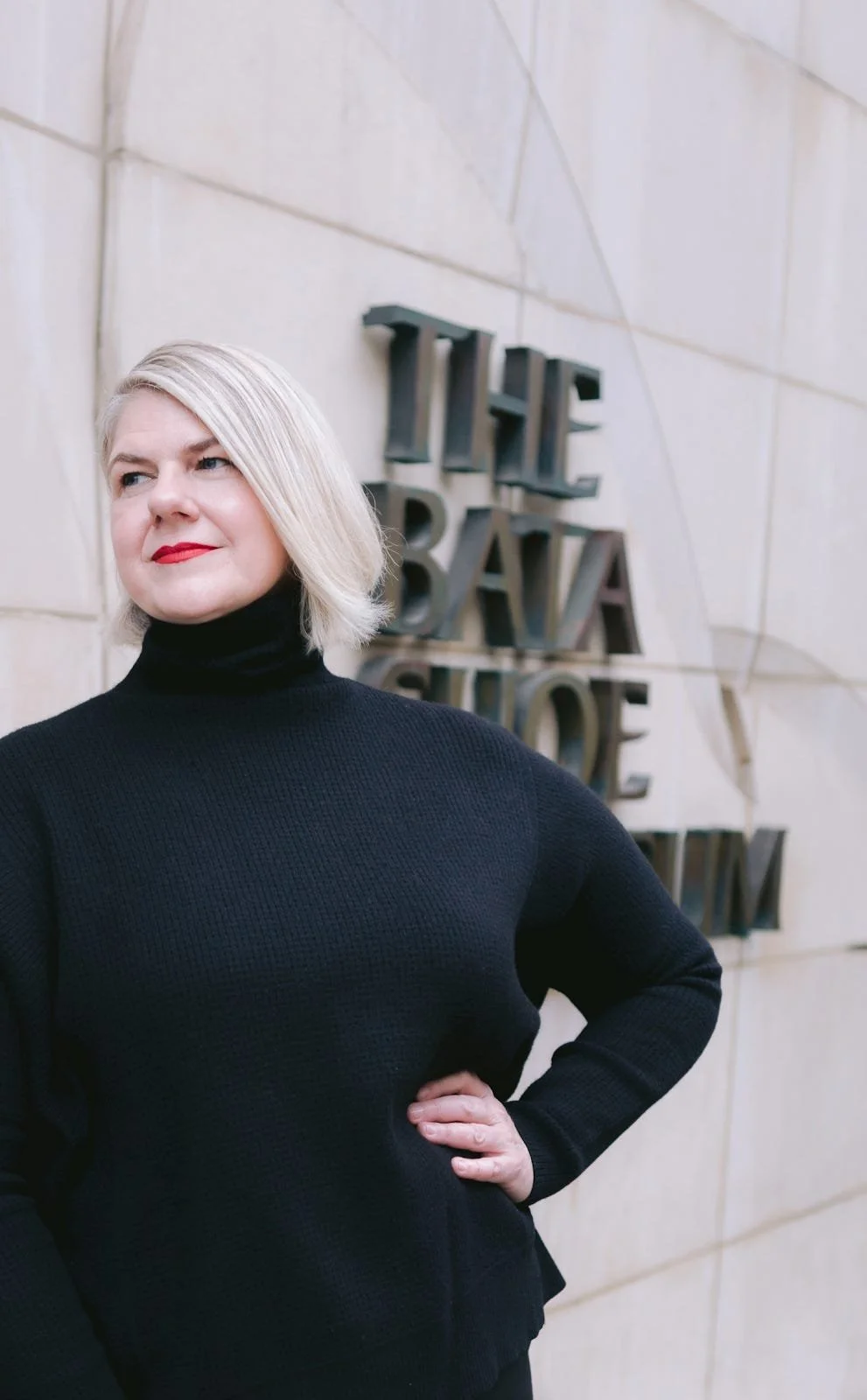
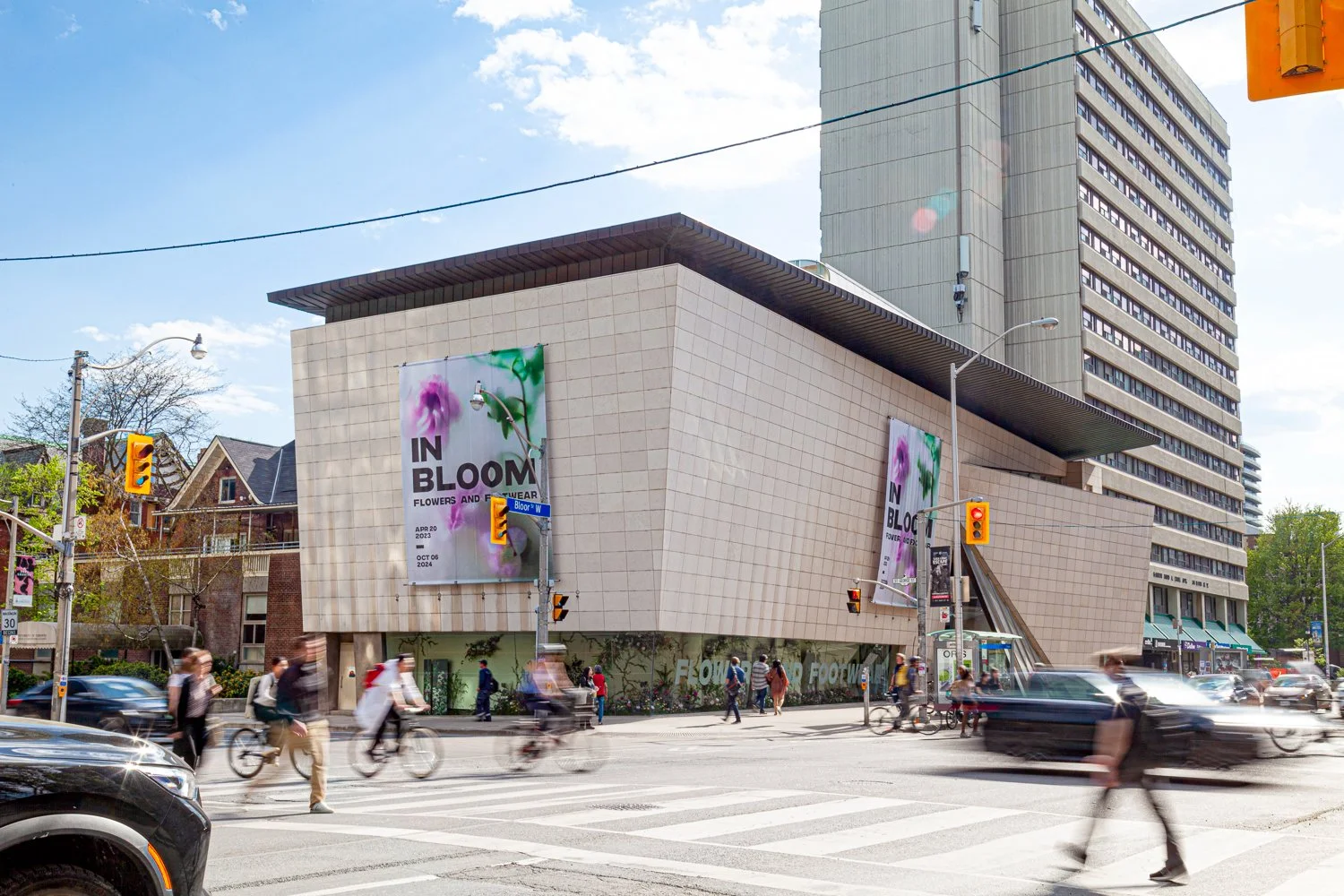
The second episode in our three-part series on footwear histories and archives features Dr Emily Brayshaw in conversation with Elizabeth Semmelhack, Director and Senior Curator of the Bata Shoe Museum, Toronto. From the museum's founding vision to virtual footwear and sustainability, Elizabeth reveals how a world-class collection can simultaneously serve designers, researchers, and communities. And why material objects matter more, not less, in an increasingly digital world.
Credits:
Interviewee: Elizabeth Semmelhack: Director and Senior Curator at the Bata Shoe Museum
Interviewer: Dr. Emily Brayshaw
Presenters: Dr. Alexandra Sherlock and Dr. Emily Brayshaw
Edited and produced by: Dr. Alexandra Sherlock
Photographs: Credits in captions
Links:
The Bata Shoe Museum https://batashoemuseum.ca
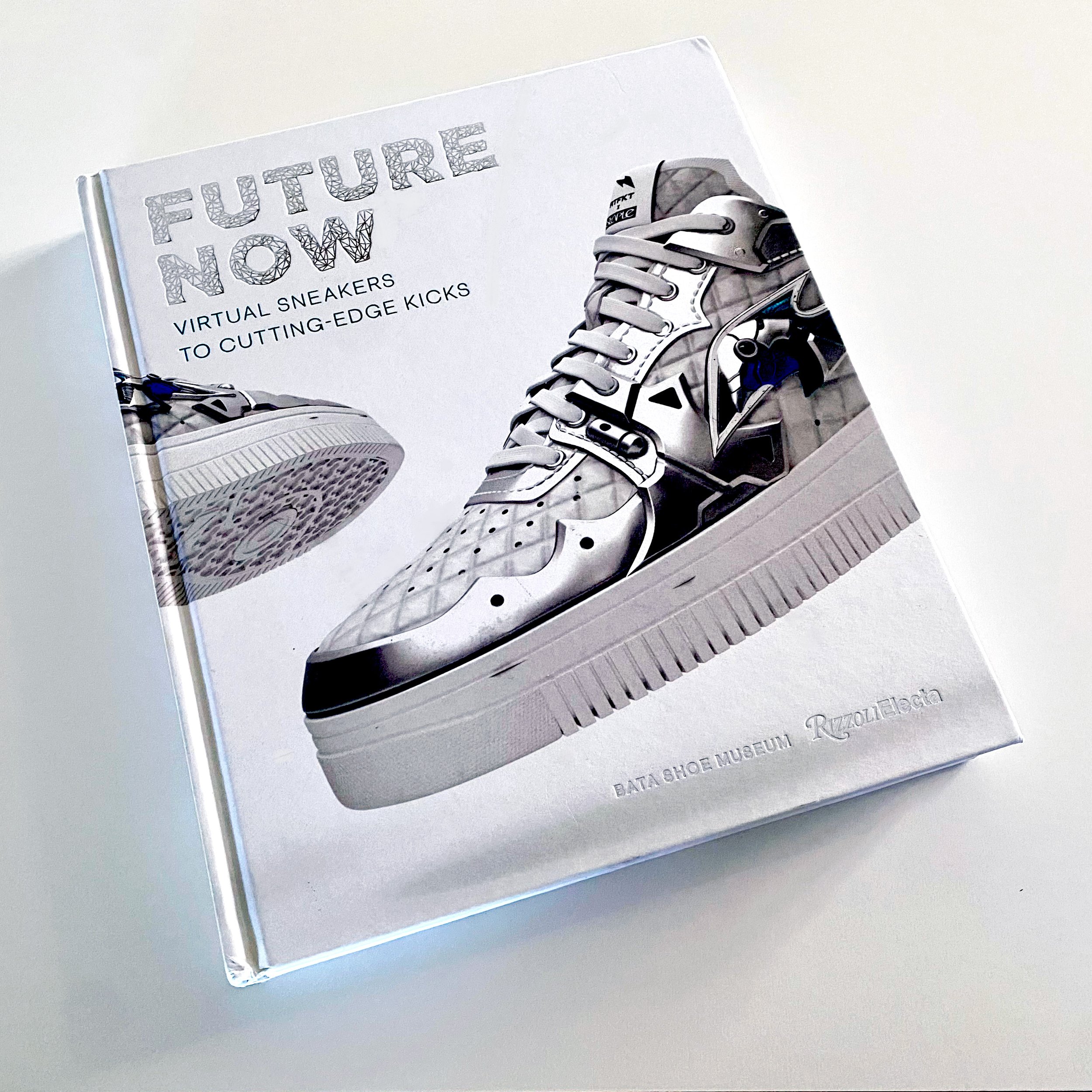
Alex's review for the Footwear Research Network of 'Future Now: Virtual Sneakers to Cutting-Edge Kicks' https://footwearresearchnetwork.org/articles/book-review-future-now-virtual-sneakers-to-cutting-edge-kicks
Future Now: Virtual Sneakers to Cutting-Edge Kicks, Bata Shoe Museum https://batashoemuseum.ca/future-now/
Rough and Ready: A History of the Cowboy Boot, Bata Shoe Museum https://batashoemuseum.ca/rough-and-ready/
The Mint Museum, Future Now Public Talk with Elizabeth Semmelhack, 16 November 2025 https://www.youtube.com/watch?v=Gj9jis9KWhk
Chopines, The Metropolitan Museum of Art https://www.metmuseum.org/art/collection/search/156215
Out of the Box: The Rise of Sneaker Culture, Bata Shoe Museum https://batashoemuseum.ca/out-of-the-box/
Nike Go FlyEase https://www.nike.com/flyease/go-flyease
Mycelium, by Ica & Kostika, Virtual Shoe Museum https://virtualshoemuseum.com/ica-kostika/mycelium/
Ica & Kostika's Mycelium Sneakers: Pushing Boundaries in Design and Technology, Rhinozine 3D, 23 January 2025 https://rhino3dzine.com/stories/emerging-voices/ica-kostikas-mycelium-sneakers-pushing-boundaries-in-design-and-technology/
Nike's RTFKT: Why Nike Should Have Never Killed Its NFTs, Grant McCracken and Marcus Collins, Fast Company https://www.fastcompany.com/91246976/nike-should-have-never-killed-its-nfts
Unearthing Vindolanda: Footwear from the Edge of the Roman Empire, Bata Shoe Museum https://batashoemuseum.ca/exhibitions/vindolanda/
Vindolanda's Magna Shoes, Vindolanda Trust, 2 July 2025 https://www.vindolanda.com/news/magna-shoes
Publications by Elizabeth Semmelhack:
Semmelhack, E. (ed.) (2026), Roger Vivier: Heritage and Imagination, Rizzolihttps://www.rizzoliusa.com/book/9788891841735/
Semmelhack, E. (2026), Rough and Ready: A History of Cowboy Boots, Rizzolihttps://www.rizzoliusa.com/book/9780847874163/
Semmelhack, E. (2022), Future Now: Virtual Sneakers to Cutting-Edge Kicks, Rizzolihttps://www.rizzoliusa.com/book/9780847871223/
Semmelhack, E. (2020), The World at Your Feet: The Bata Shoe Museum Collection, Rizzolihttps://www.rizzoliusa.com/book/9780847867851/
Semmelhack, E. (2019), Sneakers X Culture: Collab, Rizzolihttps://www.rizzoliusa.com/book/9780847865789/
Semmelhack, E. (2018), Dior by Roger Vivier, Rizzolihttps://www.rizzoliusa.com/book/9780847866571/
Semmelhack, E. (2017), Shoes: The Meaning of Style, Reaktion Bookshttps://reaktionbooks.co.uk/work/shoes
Semmelhack, E. (2015), Out of the Box: The Rise of Sneaker Culture, Rizzolihttps://www.rizzoliusa.com/book/9780847846603/
Semmelhack, E. (2008), Heights of Fashion: A History of the Elevated Shoe, Bata Shoe Museumhttps://www.worldcat.org/title/heights-of-fashion-a-history-of-the-elevated-shoe/oclc/228363675
Semmelhack, E. (2005), Icons of Elegance: The Most Influential Shoe Designers of the 20th Century, Bata Shoe Museum Foundationhttps://www.google.com.au/books/edition/Icons_of_Elegance/Bb_vPAAACAAJ?hl=en&sa=X&ved=2ahUKEwj17YTDu9CSAxUIWHADHTmYG1EQiqUDegQIBRAg
Chapters:
00:00 - Show Intro
00:58 - Episode 5 Overview
05:37 - How serendipity brought an art historian to footwear
08:11 - Shoes as Research Method: Reading gender, economics and fashion through what people wore
11:14 - Debunking the Chopine: Why objects and cultural context must be studied together
15:02 - One Woman's Collection: The founding vision of the Bata Shoe Museum and how it has evolved
19:27 - Designers in the Archive: How and why designers engage with the Museum’s collections
23:22 - Object and Context: The power and significance of the material object
27:11 - The Worn-Out Sole: What signs of wear can reveal about bodies, lives and secondhand markets
31:07 - Twenty Billion Pairs: The scale of overproduction and why most of what we make can't be kept or recycled
34:38 - Shoes Without Bodies: Virtual footwear, the metaverse and what shoes might mean in digital space
38:32 - Next Steps: Roman forts, cowboy boots and beadwork: the Bata Shoe Museum’s current and upcoming projects
40:22 - Episode Reflection: Emily and Alex
43:30 - Show outro


Transcript:
Show Intro [00:00]
Emily [00:10] What if shoes could speak? What might their stories, and the stories of those who make and wear them, tell us about the ways we live, our values and our impact on the world?
Alex [00:22] Welcome to the Social Lives of Shoes, a podcast brought to you by the Footwear Research Network that brings to life one of the most underestimated and humble aspects of consumer culture.
Emily [00:32] Whether you design, produce, make, market, sell, or just wear shoes. These conversations will transform how you think about them and reveal new possibilities for a more sustainable future.
Emily [00:45] This episode was recorded and produced in Australia on the unceded lands of the Wongal people of the Eora Nation. We pay our respects to their ancestors, elders and custodians.
Episode 5 Overview [00:58]
Emily [00:58] Hello Alex!
Alex [01:01] Hi Emily, how are you?
Emily [01:03] I'm so excited. It was such a great chat with Elizabeth.
Alex [01:07] Yeah, so this is episode number five, I think, if they go out in the order that we are anticipating. And yeah, with the incredible Elizabeth Semmelhack, who has been a wonderful support and friend to the Footwear Research Network since the beginning. How did you go with the interview? We're going to sort of point out some key points for listeners that might be interesting and useful for them.
Emily [01:53] Yes, so something that I just really loved — like obviously Elizabeth is the quintessential subject matter expert when it comes to shoes. But what I found really was an amazing highlight and takeaway is just the absolute value that museums have socially and economically as well. Quite often, particularly in today's environment, people working in the humanities, these institutions have to try and justify their value, right? But there's so much we can learn. And it's not always just about our history. There are implications for problem solving, for current designers, there are implications for futuring, right?
Alex [02:41] Hmm, I think this idea of not just looking to the past, but collecting for the future — which she has particularly highlighted with the Future Now exhibition, which gets a few mentions in the episode. But I will just mention that I did do a review of the exhibition catalogue — I don't normally do reviews of catalogues, but it really seemed to be quite groundbreaking. I think the exhibition really highlighted how relevant museums and collections can be now, with curators that are thinking about the future and the long-term plan of the footwear industry. I know that exhibition has been touring and I know it's gone to Portland as well as numerous other locations, and it has got a huge amount of industry engagement.
Emily [03:26] Yeah, so one of the key insights for designers as well is how other designers have used this incredible archive at the Bata Museum. They're kind of often like a kid in a candy store. And I'm like that as well when, as a historian, you know, when I'm doing archival research, you simply don't know what you're going to get. It's such a joy. And you know, that experience of the designers really getting engaged with how the First Nations women were cutting the shoes from the hide — they might not necessarily have expected to find that, but seeing that and engaging with that, I'm sure has really helped them. And that's just such a wonderful thing that we can get, right? — rather than just purely aesthetics, which is important too. Don't get me wrong, looking for aesthetic influences, but also like manufacturing and process and problem solving. It's so important.
Alex [04:13] Yeah, absolutely. And I think it's interesting because we did talk a little bit about the role of virtual shoes, NFTs and kind of museums of the future and what those collections might look like. But I think what came across very strongly to me is that actually these material collections are becoming more, not less, important — the more digital the world becomes. Like we crave these physical connections with material things. And I think just that process of discovery. As you say, when you're looking for something online, you need to know what you're looking for. Whereas when you walk into a museum or an archive or even a library, it's this incredibly creative process of discovery.
And the connection that you get with previous generations. I thought there was this wonderful, really powerful moment of that empathy that you get through those material artefacts that you wouldn't necessarily get from a photograph.
I think I really liked the fact that Elizabeth, you know, never set out necessarily to be a footwear researcher. And I have noticed actually, as I've got to know people in the footwear industry, a lot of people will say that you don't necessarily start out working in this space but once you enter it you can't leave, you get hooked.
So yeah, wonderful episode with an extraordinary person. And thank you so much, Elizabeth, for this interview. I hope the listeners enjoy it.
Emily [05:35] Absolutely.
How serendipity brought an art historian to footwear [05.37]
Emily [05:37] Welcome to Social Lives of Shoes. We have today with us the wonderful Elizabeth Semmelhack, who is the Director and Senior Curator of the Bata Shoe Museum in Toronto. She's the author of countless books about footwear and we are talking today with Elizabeth about the role and value of museums to the footwear industry and to communities around the globe. Thank you so much for coming on our show today.
Elizabeth [06:05] Thank you so much.
Emily [06:06] Brief introduction — tell us how you actually, dare I say, landed on your feet at the Bata Museum? What brought you to footwear studies?
Elizabeth [06:20] You know, it's sort of a hard thing to hear because it was really just serendipity. I did my doctorate work in Japanese art history and I have a master's in Western art history. I did not complete my doctorate, just to be clear — I produced a child instead. But I sort of had a foot in Western art history, Asian art history, and I was working at the St. Louis Art Museum, and it was great, I had a great job. This is the actual true story. My mom, who was an international intellectual properties lawyer, she had an office in Buffalo, which is where I grew up, and she had an office in Toronto. And in 1999, she went to a women's event at the Bata Shoe Museum and Mrs. Bata spoke to the group. And she called me that night and she said, I have found the perfect place for you to work. And I was like, what does this have to do with 18th century Japanese prints, mom? Like, this is crazy. And she was like, oh, you know, I could see the grandkids, you'd be closer to home. And just by complete coincidence, three months after this advice from my mother, the job of chief curator was posted. And I read the job description — it was really interesting. And so I applied on a fluke, to tell my mom that I was listening to her. And the next thing I knew, Mrs. Bata hired me. So I had a wide range of knowledge about different cultures and things like that, but I knew literally nothing about shoes. And that was in 2000. And I didn't know when I first started for how long I would be able to do shoes, but obviously it's been going on 26 years now.
Shoes as Research Method: Reading gender, economics and fashion through what people wore [08.11]
Elizabeth [08.11] I think one of the things that really did excite me about entering into footwear studies was that there had been so little research. And so it was this opportunity to work with so many primary source materials. And so obviously being trained as an art historian, I was looking at a lot of artwork. But when I was doing Japanese art history, I was looking at Japanese prints — at Ukiyo-e — and those were mass produced prints during the Edo period and they were being produced for mass consumption. And I was interested in teasing out from what was being consumed the intersections of fashion, gender, economics. And so shoes… at first it felt like a bit of a wild pivot, but I realised that my core interests — which is about what do mass consumed items tell us about the moment in which they're being mass consumed, and how does that reflect constructions of gender, economic status, and fashion? And so I realised that the questions that really got me up every day, I could pivot to footwear. But in addition, because there was so little research, I could just start looking at works of art. I could read diaries. I could read religious texts. I could read wills. And then I could also work with the actual objects, right? Because at the Bata Shoe Museum, we have so many shoes. So it was just a blessing to be able to search for and find shoes everywhere. Now when I go to the Louvre, I'm looking at the bottom of every single painting, right?
Emily [10:01] Me too!
Elizabeth [10:02] I've lost my art historical need to see the entire work — I mean, not completely — but there's so much visual information that includes footwear that's not just fine art, it's also advertisement. It's Instagram, it's music lyrics. Shoes are literally everywhere. You just need to look.
Emily [10.21] In film, on television, on screen, on the stage.
Elizabeth [10:25] And on the road. Right?
Emily [10:25] Yeah. And it's so interesting to me to hear you say that you almost developed kind of this methodology, if you will. Because I started my PhD in 2010, and mine was grounded in fashion history and performance costume history. And as part of that, I was being trained to use this methodology that had come from art history, that had come from consumer culture, that had come from diaries, primary sources, all these things. I guess you're one of the people in the world who had a real chance at developing that specifically within the field of footwear — thank you for your service!
Debunking the Chopine: Why objects and cultural context must be studied together [11:14]
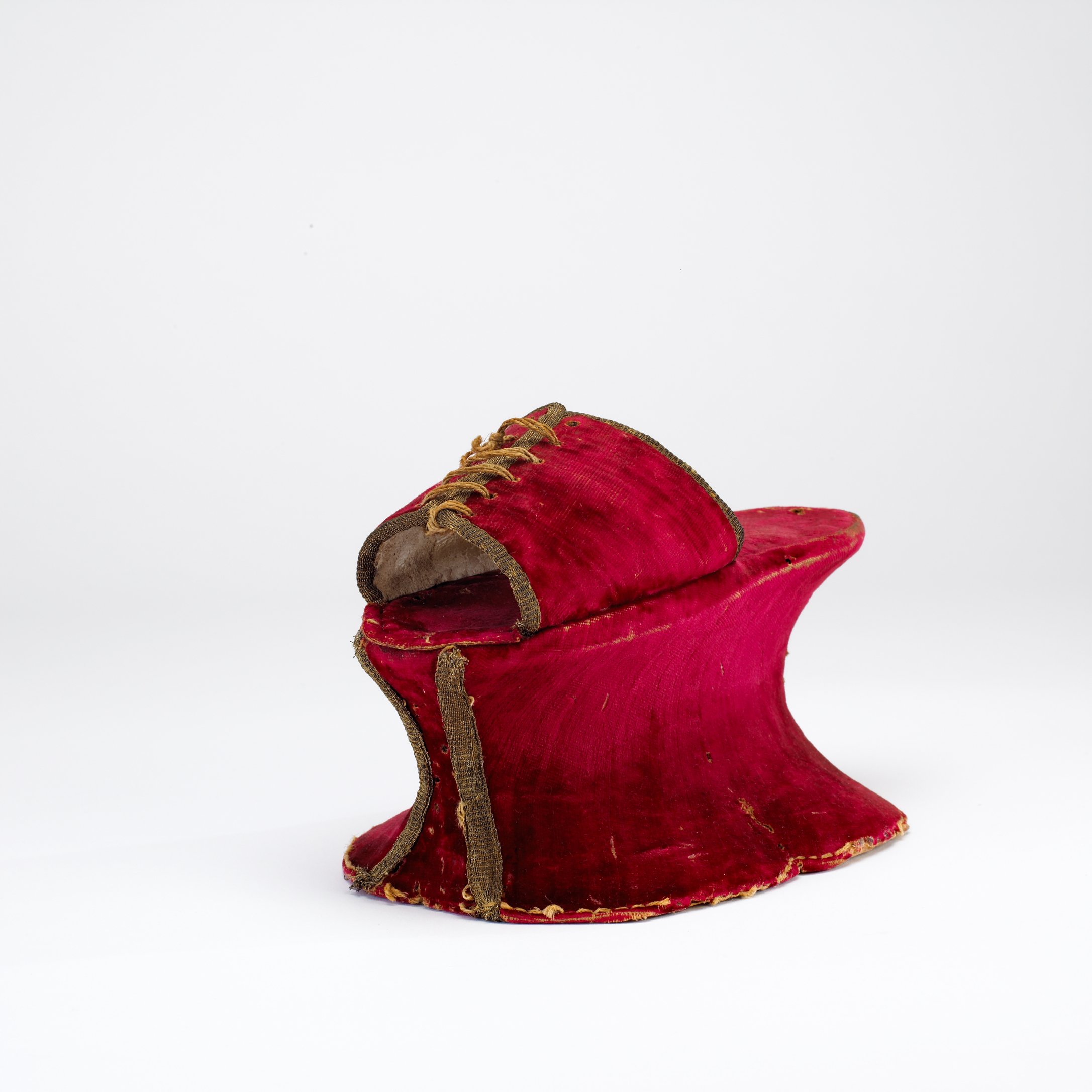
Elizabeth [11:14] I mean, I think there's a good example. Like when I was working on Chopines — Venetian Chopines — there was this story, right? It was told everywhere that Venetian Chopines were worn by Venetian women to keep their dresses out of the water and the mud. And I was like — if you look at an actual Venetian Chopine, it's covered in white Hungarian imported leather. And at the bottom of it, around the edge, there are always little silk tassels, usually pink, little pink silk tassels.
Emily [11:49] You’re not going to wear those in the mud!
Elizabeth [11:48] You are not going to wear those in the mud. So the artefact is telling me, that's not the right story. And then I'm looking and looking for images of women rising above the waters of Venice and their dresses being protected. And I can't find it. I can’t find it. So then I see very tall women — like exaggeratedly tall. And I began to realise that when I was reading sermons about women's vanity and their Chopines causing women to spend too much money on fabric, and then seeing these tall women — and then slowly I was like, oh-oh-oh-oh! I know how they were really used. They were really used to increase the length of a woman's dress. And so that's a good example of how the story that had been told — because I think there's a ton of erroneous shoe stories —
Emily [12:44] Absolutely
Elizabeth [12:46] could be refuted by primary research in tandem with looking at the object, to then reveal what the real focus and the real purpose of Venetian Chopines were. So that was great.
Emily [13:01] Yeah, but I mean this research, just anecdotally is still talked about today, and people who might not know that history. So I was at an art gallery in Spain with a friend of mine recently and she is six foot tall — she's a very tall woman — and she saw some of these Renaissance paintings, early 17th century paintings. She's saying, “wow, those women, they're so tall!”, I'm like, “honey, no. They've got the Chopines”, and you know, it's all your research I was able to share.
Elizabeth [13:34] I still haven't written a paper on it, but the Van Dyck Genoese woman — the painting that's at the Frick — when Van Dyck went to Italy, art historians claimed that his elongated female figures were because he was being impacted by mannerism. And I was like, no, no, no, no, no — he's just painting what he literally sees. And so another reason why footwear history, or the history of anything that people wear, is so important to get straight — because otherwise you misinterpret it. You miss the real things that are being said in that painting.
Emily [14:14] You're missing what's really being said about the body, about people, how they hold themselves, about their gender…
Elizabeth [14:22] Absolutely
Emily [14:22] …about their sexuality, their national identity, all of these really key things around shoes. And so I think what might be interesting — maybe you could tell us how and why the Bata Shoe Museum was founded and just also how its focus has changed over the years. So it was founded around 1979, I think you said?
Elizabeth [14.44] The Foundation was started in 1979, but the museum opened its doors in ‘95.
Emily [14:47] Yeah and like you’ve been at the museum for 26 years, there are so many discussions happening about the focus of museums now in the 21st century.
Elizabeth [15:01] Yes
Emily [15:01] So if you could tell us a little bit about that change in focus, how and why it was started.
One Woman's Collection: The founding vision of the Bata Shoe Museum and how it has evolved [15:02]
Elizabeth [15:08] Yeah, so, Mrs. Bata married Mr. Bata of the Global Bata Shoe Company in 1946, so immediately after the war. And she worked with her husband to revive the company worldwide. And so as she was traveling around the world, she began to collect footwear from the places where they had Bata factories. And she was very struck by a simple idea, which was: people's feet are basically the same, but what they put on them is incredibly different. So what information can be gleaned by studying footwear? So she started collecting, collecting, collecting, and the next thing you knew, she had — I think it was 5,000 shoes, something like that. So people were suggesting that she start a museum, so that's why she made the foundation. And then she had a specially built museum, built in downtown Toronto. And it has three temporary galleries and one permanent gallery. And it is where we keep all of our artefacts, which is now just cresting 15,000. But the way we count artefacts — could be like a set of Roger Vivier drawings, 63, that's one artefact. So we have many, many more discrete objects than that. And she continued to collect.
I think the things that have changed are reasons for collecting, um, how we interpret what is in the collection. I think a dramatic change that was made during my tenure was in 2011. I was talking to this grad student and he asked to see the sneaker collection, and we didn't have one because it had not been one of Mrs. Bata's interests. So I said to her, you know, we need to have some sneakers. Can I do an exhibition on sneakers? And she said yes, she was game. And so I ended up doing Out of the Box: The Rise of Sneaker Culture, which went to Australia. And it allowed us to start collecting things that were sort of outside her own personal interest. Because I think the biggest shift that has happened is that it started out as one woman's interest in material culture at the footwear level, and her interests — thank goodness — were like extremely wide-ranging. But that spirit of being interested in all different kinds of footwear, from contemporary to ancient, has just grown. And so I would say that those are maybe the biggest changes that we've seen so far.
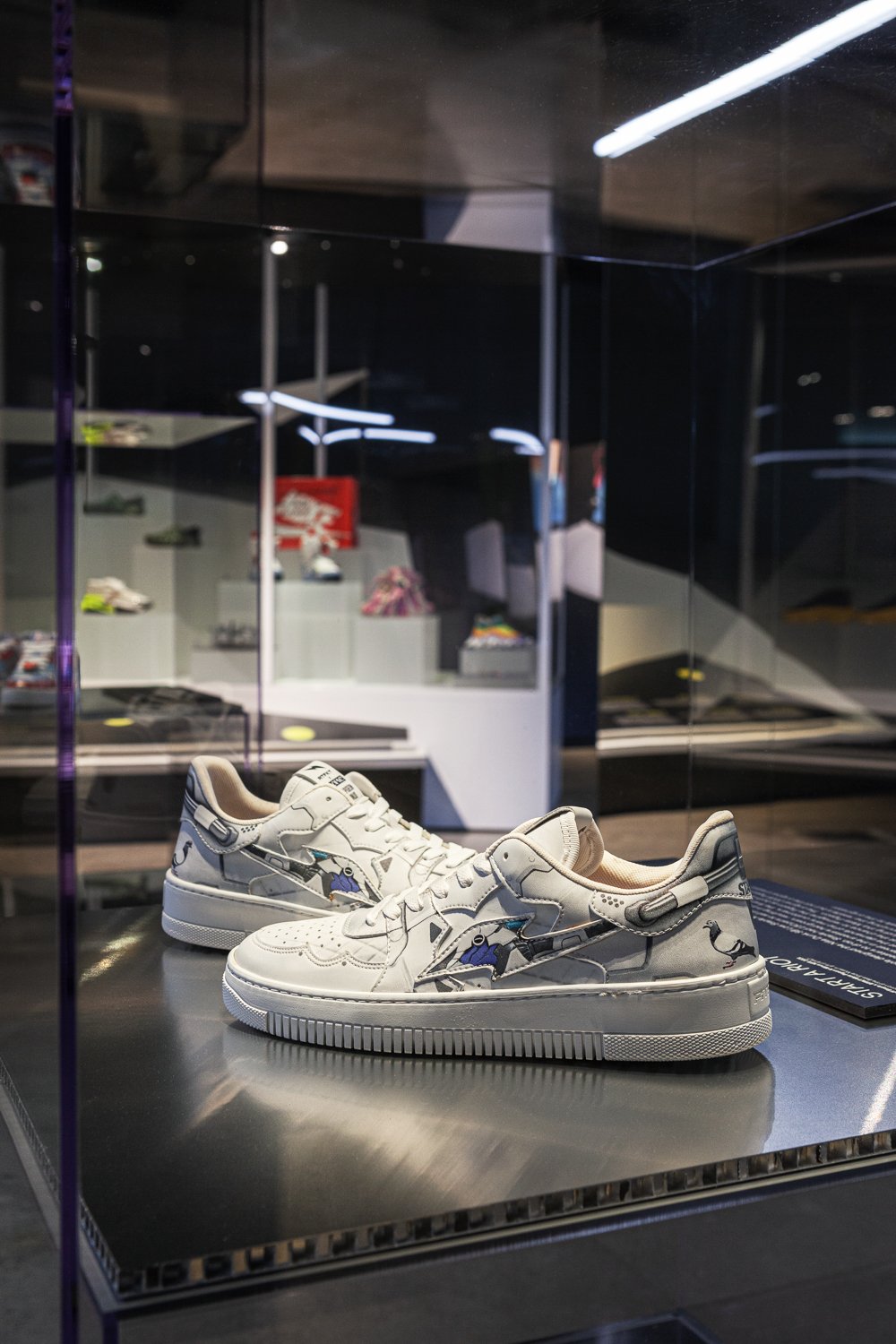
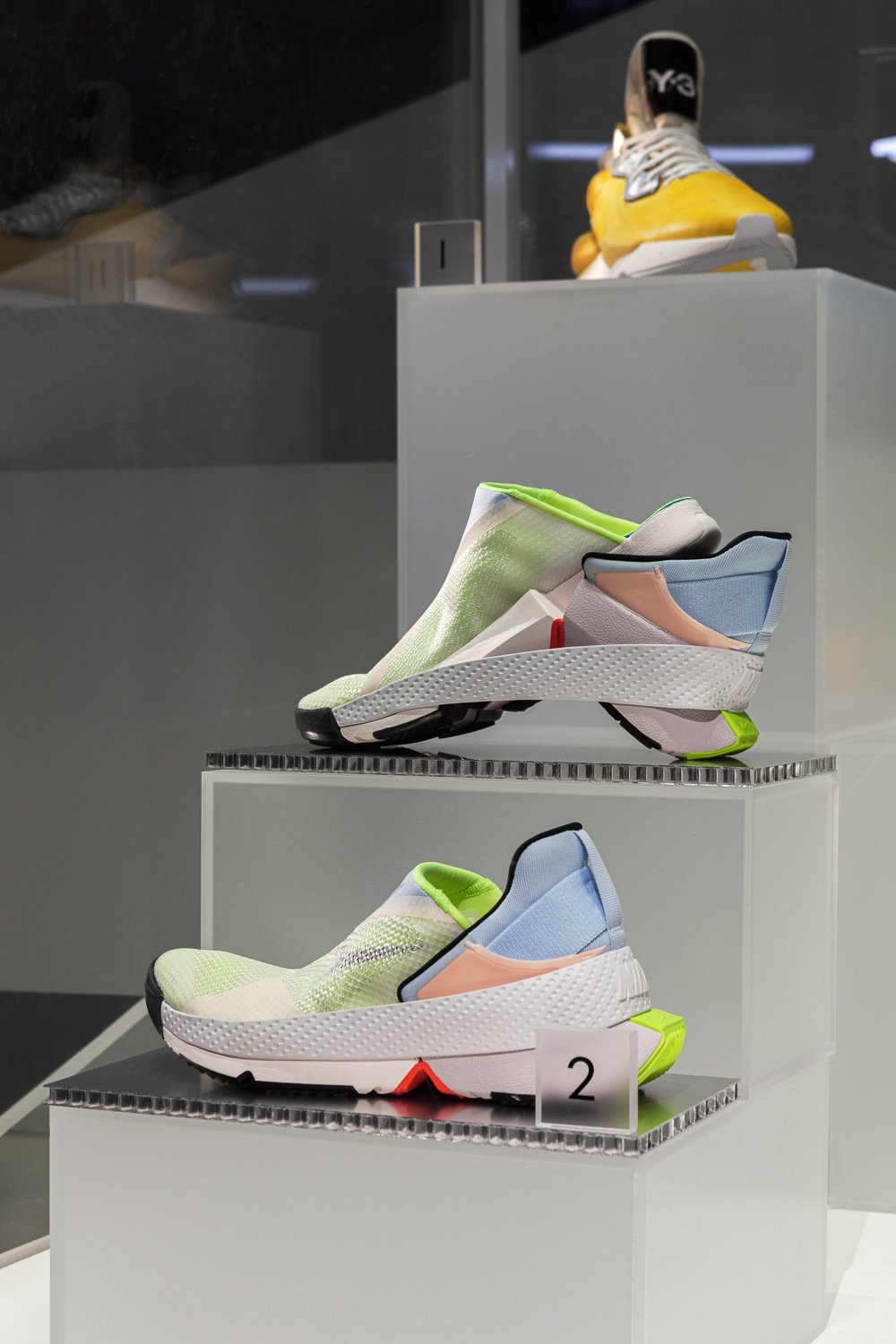
Emily [17:37] That's a really great point. What I’ve found interesting is that it sort of seems like the Bata Museum has a two-pronged approach to what it's doing. And so there's engaging and working with industry, but there's also educating and entertaining the public. And let's face it, museums are kind of — and historically have long been — this hybrid blend of education and entertainment. And so I'd like to cover both of these. If we could talk about that work that Bata does with industry first. You know, you have contemporary shoe designers like the big names, right? D’Wayne Edwards, Christian Louboutin, Manolo Blahnik, coming in to look at the collection. And I'm interested in what they've learned, what their impressions are, how they use the collections. Because something that came out of your recent exhibition, Future Now: virtual sneakers, cutting edge kicks — is that the Nike GoFlight Ease, which is such an amazing example of universal design…
Elizabeth [19:06] It is, yes
Emily [19:07] …because we know that designers don't always get universal design right…
Elizabeth [19:12] Right. Correct, yes.
Emily [19:14] …but these really seem to work. So could you maybe talk a little bit about what these, I guess you'd call them rock star designers in a way, might contribute to the museum as well as what they get back, how they use the collections?
Designers in the Archive: How and why designers engage with the Museum's collections [19:27]
Elizabeth [19:27] So, I think it is really important to me for my own work that we are independent of any corporate influence. So, you know, we have the Bata name because we share Mrs. Bata, but Mrs. Bata created the museum so that academic independence was paramount. So I would say that when I borrow from major manufacturers or an amazing designer like Mr. Blahnik comes to see the collection, it really all is through the lens of an appreciation of the history of footwear. So there's nothing in our mandate at all that is about changing industry or anything beyond being the world's resource, the world's centre for footwear research and knowledge. And we welcome everybody — from the grad student, right, to the indigenous moccasin maker, to the sneaker designer, to the high-end women's designer — to come and see how others have solved footwear problems in the past. But having said that, you've mentioned Future Now — that exhibition I decided to do because as a historian, I am always looking to the past. And of course, what I have noticed is that I will see something like a pair of inline skates from 1860 and be like, okay, these were designed in 1860, but they really only take the world by storm in the 1980s. And so how it is that ideas can happen and take a long time to come to fruition. And so I was like, what are we doing today that's going to dramatically impact what we wear in the future? And so that was a wonderful opportunity to work with or to reach out to new designers, new people, people working with new approaches. And so that was sort of my thesis for that exhibition.
Emily [22:43] And are some of these new designers, when they get to have a look into the archives as well — what's their kind of response to maybe seeing that, oh, hang on, somebody was working on this 100 years ago or 200 years ago, it just never took off. Does it help them solve problems?
Elizabeth [22:04] I think it's long enough now that I can say this — that I worked with a group of Converse designers. And what they were really struck by was how the Inuit women lay out their shoe patterns on a hide. And so the way that they made use of the caribou hide. And so, you know, these young sneaker designers were coming and I thought, okay, we're going to be looking at sneakers. But they wanted to look at exactly what I had said before — solutions that others had made in the past about footwear production, footwear making. So I think there's that there’s that kind of inspiration that can come when you see how solutions have been arrived at in different cultures and different time periods. I think there's also the joy of — you may have seen a 17th-century shoe in a painting or a photograph, but when you hold it in your hand, and you look at it up close, you learn things. I certainly experience this all the time when I see things in real life — is that your ideas change, your understanding changes, because of a close look at the object.
Object and Context: The power and significance of the material object [23:22]
Emily [23:22] Yeah, and this sort of object approach and this object analysis, I think is really important. It's something that we teach designers to do at university. I teach design history and theory a lot of the time — a lot of my students are fashion students. And we do get them thinking about this object analysis, this relationship that our bodies have to objects, the materiality. You know, do designers, contemporary designers, come away perhaps after holding some of these objects and understanding and seeing, okay, so historically people have always worn through the sole at this point? Do we need to build something that reinforces this point? Like is there kind of some material focus there, or is there something that we can understand from that?
Elizabeth [24:16] I actually haven't seen that as much. And I think it's a little more like kids in the candy store. You know, it's just like…
Emily [24:22] Yes, I'm like that with archives too!
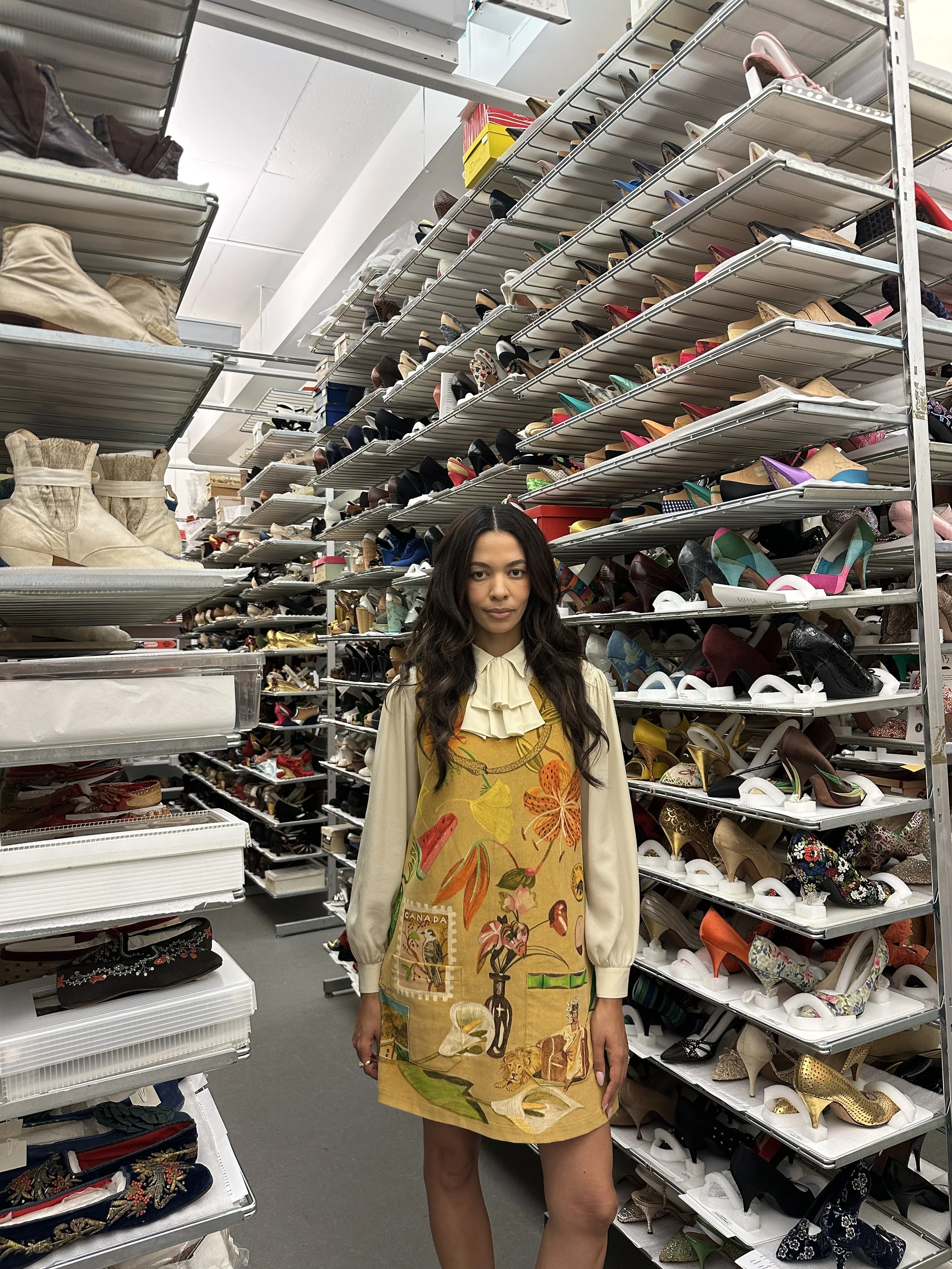
Elizabeth [24:26] Right, yeah. And so the archives are, as you will know, very sensitive places. So when we do welcome researchers and visitors to the archive, we're not down there for 10 hours at a time. And so I think many people who are able to come and see storage are still in the smorgasbord moment — what do I pick? What do I look at?
And I just wanted to also make a point about object analysis because I actually think that this is something that footwear history has suffered from. Which is, I am a very very — this is a hill I will die on — strong proponent of an understanding that footwear is made within a larger cultural system. The cultural meaning is embedded in the object to a point. But if you take a shoe and you hand it to somebody and you ask them with no knowledge of the time period in which it was worn or made to have that shoe tell them something, each person will come up with a wildly different idea. And so you need to have the study of footwear done in tandem - like I said with my example of the Chopines — you need to look at what the object is telling you, and then you must also understand the broader cultural context in which that shoe was made and worn and used, in order for a compelling theory or research to come forward.
Emily [26:03] Yeah, I agree with that. Absolutely. I guess these are artefacts, they’re almost like the piece in the puzzle that is often missing when we do art history or things like that. And I guess with material objects and analysis and solving problems — I did a little bit of research recently, just looking briefly at the cave shoes that were found in the caves in Oregon that are more than 10,000 years old. And just seeing, you know, some of them having rabbit fur woven into the sole, or some of them you can also see where the wearer's heel has worn out the sole. And regardless of their culture — like of course we've got paved roads now, our shoes wear out a lot faster — but there are still these issues that are still part of footwear today: keeping our feet warm and dry, where we wear through our shoes because of our balance in the body.
The Worn-Out Sole: What signs of wear can reveal about bodies, lives and secondhand markets [27:11]
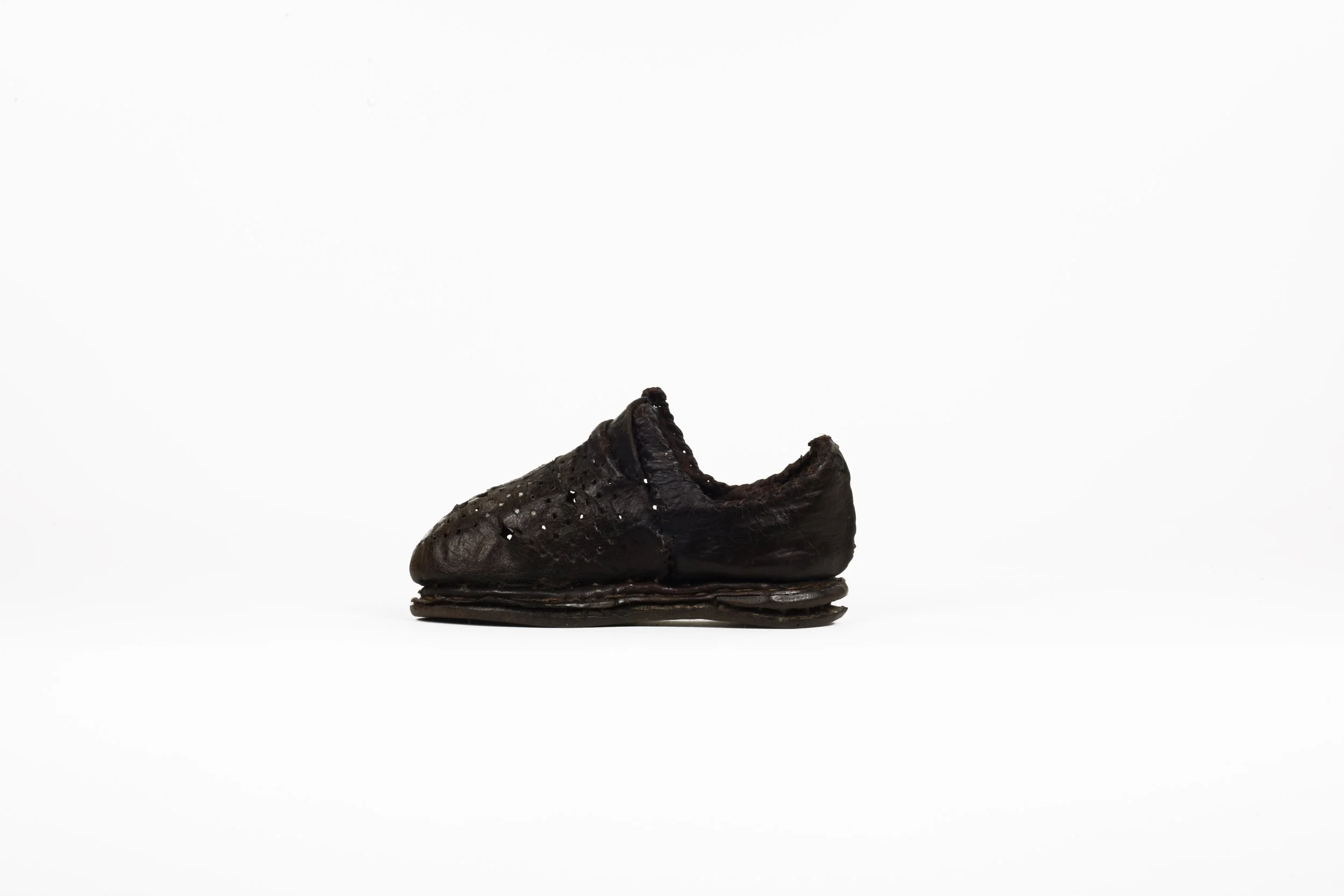
Elizabeth [27:11] Absolutely. I also think that what you're also describing is something I experienced very profoundly when I first started at the museum. Mrs. Bata had a — what was it, maybe 1550s, 1540s — child shoe, and she wanted me to catalogue it. And so I was holding it in my hands and it had all this beautiful punch leather work, and it was just like a pair of shoes I had just bought my daughter, who was three at the time. And I couldn't help think about it. And you know, as an art historian, you're often trained to read a painting, to think about a painting, but you also think about the maker, right? And you think about the maker if the maker's famous — Van Gogh, whatever — but you often don't think about the consumer of the painting. You don't think about like, “oh, Van Gogh painted this painting, and I wonder what person bought it and where did they hang it in their house and how was it used? How did it get to a museum?” And so there I was holding this shoe from like 1540, 1550 and it reminded me so much of Isabelle's shoe. And I thought, okay, I'm supposed to be thinking about the maker here, but who was this kid? Who did this kid grow up to be? And so many of the shoes in our collection also show evidence of wear. And so you can think about this high heel's place in fashion history, you can think about the maker — oh, it was a famous designer — but then you see the footprint left inside the high heel and you have to think about the body that animated that pair of shoes. And I feel the, you know, oh the humanity of this part of our work. It really I think allows — you know, I can hold that shoe from 1540, 1550, and that little kid from hundreds of years ago just appears before me as a real, living, breathing person. For me, that's a very special part of working with footwear.
Emily [29:24] It is because I know from doing object analysis on extant garments — and the implications of that also for design — so you see a garment and it's like, oh, the person carried a bag a lot, so it's worn down at the shoulder, like the coat's worn at the shoulder, or you know, this shoe shows signs of being worn through here, so maybe that person had a limp.
Elizabeth [29:51] I mean, something that scholars of pre-industrial footwear always need to think about if they are interested in issues related to wear is the secondhand market. You can have multiple bodies wearing a single pair of shoes. And so you will see alterations that maybe don't make sense — and that could be the aging of the single wearer, you know, their feet change, whatever happens. But the secondhand market was, at least in Europe and in the early Americas, was so important for the disbursement of footwear that we just have to keep that in mind when insights might be being made about wear.
Emily [30:43] Yeah, and I think that's an excellent point. I also thinking about the future of footwear — of sustainability. Increasingly people are looking at secondhand clothes, because footwear often does — secondhand footwear often does — have these signs of wear. What are the things that maybe you might see in the future of footwear and secondhand markets in terms of sustainability?
Twenty Billion Pairs: The scale of overproduction and why most of what we make can't be kept or recycled [31:07]
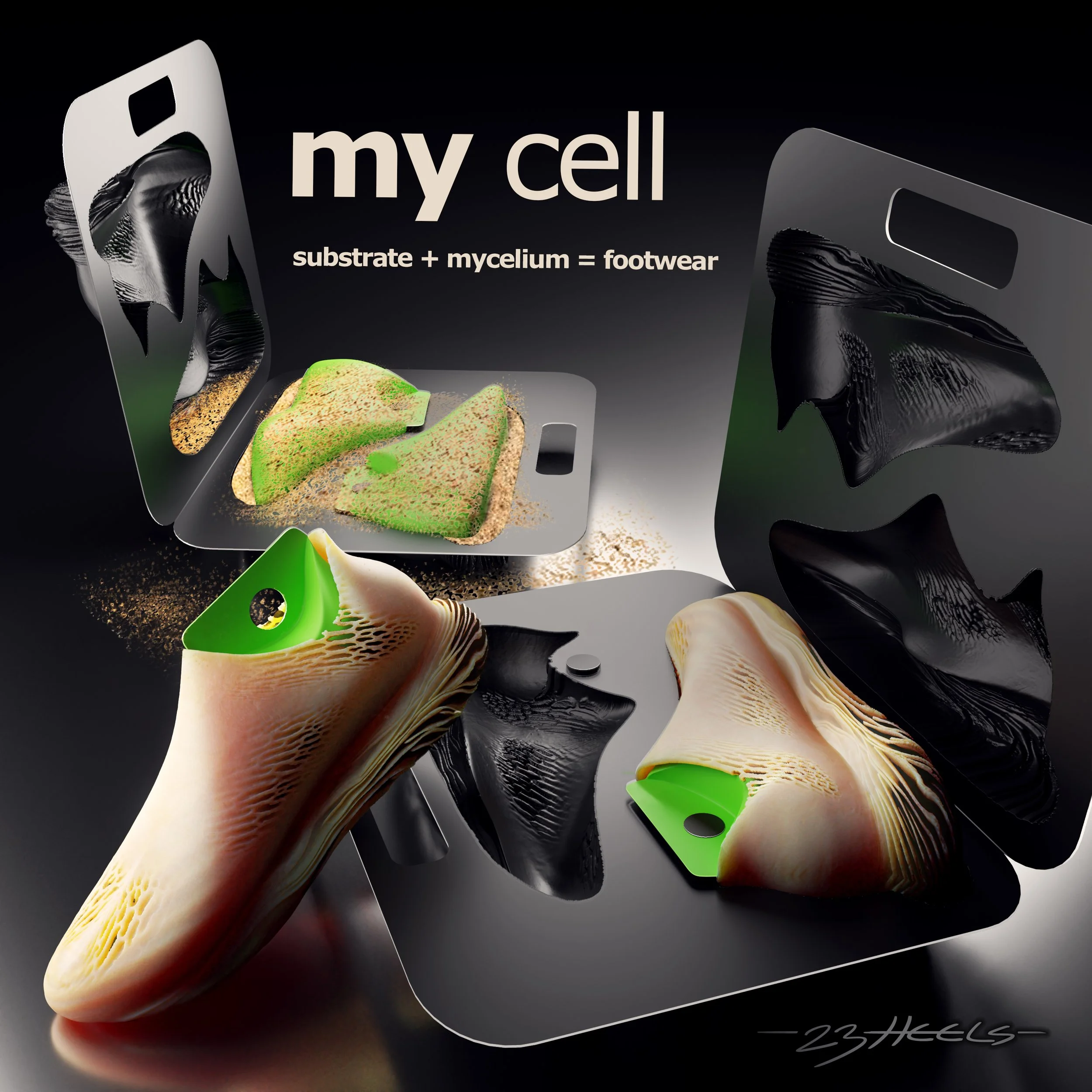
Elizabeth [31:07] So the type of footwear that does the best in the vintage market or in the secondhand market is good old-fashioned Goodyear welted shoes, right? Like leather sole, leather upper. These shoes are repairable. But a sneaker really isn't. And so I think the biggest challenge that we face — and I do talk about this in Future Now — is that we currently make, I think it's 20 billion pairs of shoes a year. And that's enough for every single person on the planet to get three new pairs of shoes every year. So we are overproducing already. And things that we are producing, like sneakers, have so many different component parts that they cannot be recycled. And those component parts also fight with each other, causing degradation in the materials in the individual shoe itself. So the longevity of these shoes is never going to happen. So like a secondhand market of sneakers is in and of itself already flawed, because yes, you can invest in a beautiful pair of sneakers from 1990, but it will degrade in storage. Your investment will be lost as its inherent vice takes over. So I think that if we are going to remain a culture that's focused on the newest, then it does have to be things like 3D printing. I do have great hope for mushroom leather. And also in the exhibition, there is this incredible example — it's just a concept, it's called the Mycel. The idea is that you 3D print a last that's for your feet and then maybe you download the latest shoe design from a brand you are aligned with — maybe it's a different concept — and then you put in mycelium spores, you put in corn, you put in water, and the shoe will grow overnight.
Emily [33:19] That’s exciting!
Elizabeth [33:20] It is! It is! And then you could wear the shoe and you could eat it for dinner — I mean, obviously you're not going to eat it for dinner, but you could compost it easily.
Emily [33:26] Cream sauce? A cream sauce? [laughs]
Elizabeth [33:29] Yeah [laughs], but I feel like that is a really clever idea. And so 3D printing, also which is additive rather than subtractive technology — of course I think it's better for the environment — and the knit technology which allows for more bespoke fit. Another prediction I have for the future is that in 500 years people will look back at the period of the Industrial Revolution and be like, “wait what? — you had to wear shoes that were a predetermined size as opposed to having things made for you?” I think we will see a return to bespoke, just in maybe newer and more innovative ways.
Emily [34:09] Great. Yeah, so lots of points around futuring and sustainability. But I think also it's important to touch on the future of the museum itself, particularly with a lot of the time this footwear does degrade — even though obviously you've got really high tech storage solutions and preservation solutions — but also with virtual footwear and technology around the virtual shifts and changes as well. What do you see the future of the museum being?
Shoes Without Bodies: Virtual footwear, the metaverse and what shoes might mean in digital space [34:38]
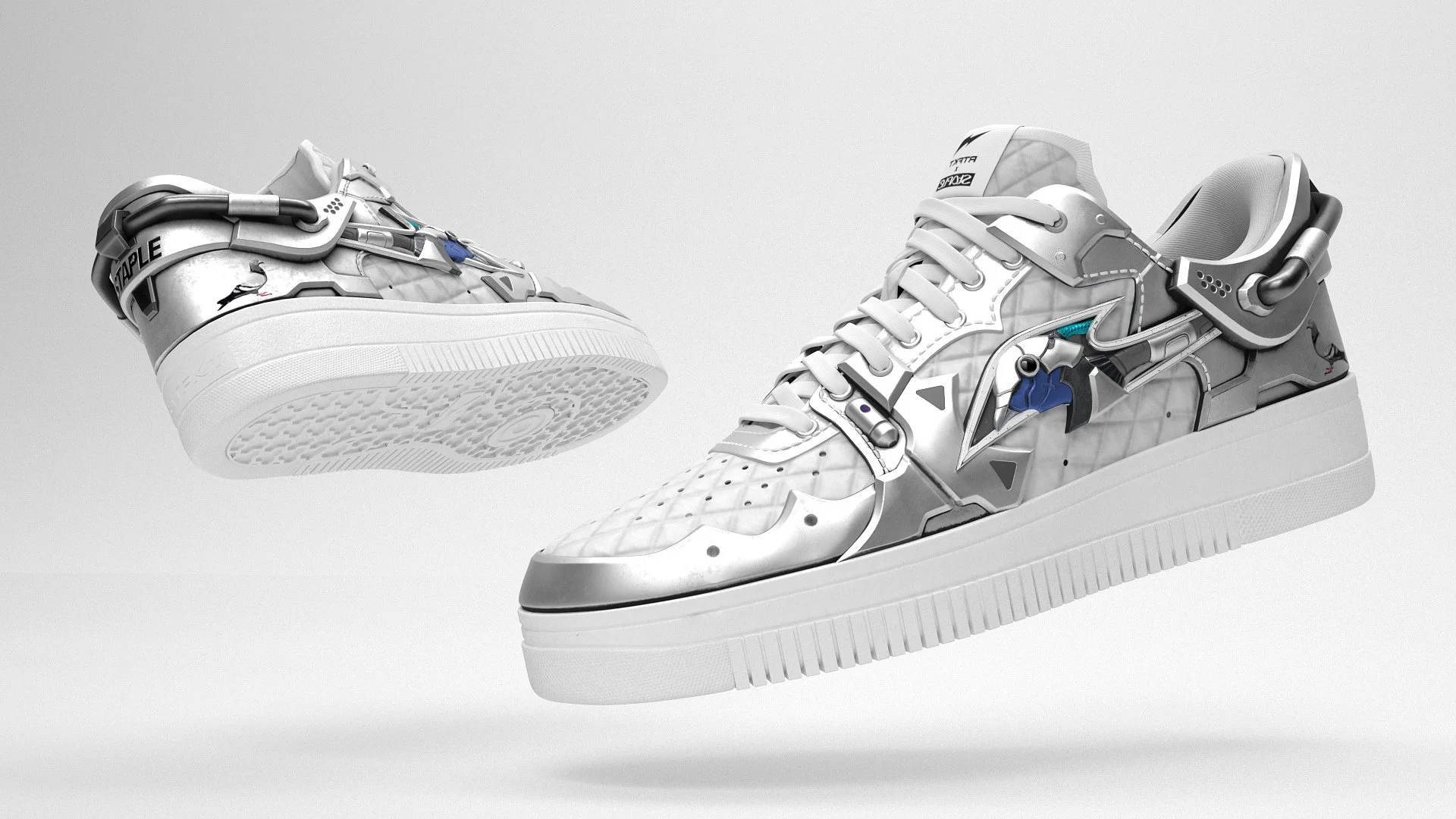
Elizabeth [34:38] So I do think that pretty deep in our DNA is Mrs. Bata's interest in all footwear. And I think that we have shown that with her passing, we are still very actively collecting. And as you mentioned, we're collecting things — you know, 3D printed shoes, shoes within the virtual realm. And so the question of how does the digital and the real interact? I think increasingly people will want access to the artefacts in digital ways — AR for example, or within virtual reality. I think these are all really interesting opportunities. I will say, however, that a virtual take on a historic shoe can't beat seeing the real historic shoe. But real virtual shoes within the metaverse are their own thing. And so one of the things I talk about in Future Now was when Nike dropped a bunch of Jordan skins — or Jordan dropped a bunch of Jordan skins — in Fortnite. And so they looked similar to things that might be available in the real world, but they were their own thing and they were collected and worn by avatars in this virtual realm. I mean, we are at the absolute nascency of this phenomenon, but I think it's interesting if footwear continues to have social meaning in spaces where it is 100% not needed. When you are wearing VR and you become an avatar, you're like an embodiment of this avatar in virtual space, but you don't actually need to look human. You don't need to have feet. You don't need to have shoes. And so what will shoes do within this space? Will it replicate patterns that we see in the real world? Or is there opportunity here to imagine things like never before thought about?
Emily [36:53] Yeah, and I think it's column A and column B as well. I mean, I know that in your Future Now talk, you were mentioning these Jordan skins in Fortnite — but you're also sort of mentioning that it's a way for a new generation to get interested in sneaker fashions. And I think also a lot of other designers are doing that as well. So Balenciaga is releasing skins for games as well. And it's almost — I mean, I see it almost like the lipstick economy in a way, right? So you can buy a Balenciaga skin for $25 for a hoodie online.
Elizabeth [37:37] Absolutely, yes, It's a gateway drug. Absolutely. I mean, it's interesting to look back to what Second Life had done in the early 2000s, right — which is similar, you could buy Jimmy Choos in Second Life. And so I do believe that we're really at the beginnings of where this might go. But I will say this — my hope is that we don't just replicate systems that we have in the real world, that we take the opportunity to challenge all of the inequities that are forced upon us from how our physical bodies are perceived in the real world. Why don't we create these more interesting, utopian, potentially, spaces where creativity is paramount.
Emily [38:29] Yeah, I love that. What's the future for you? What are you working on at the moment?
Next Steps: Roman forts, cowboy boots and beadwork: the Bata Shoe Museum's current and upcoming projects [38:32]
Elizabeth [38:32] Yeah, so I just launched a book in Paris last month on the history of Roger Vivier and the work of Gerardo. So it looks at the Maison, past and present, and so that just came out. And my book on the history of cowboy boots comes out on March 10th.
Emily [38:51] Oh Fantastic
Elizabeth [38:52] Yeah, and that's really interesting because we have this very monolithic idea of who a cowboy was and what a cowboy looks like, but the story is really so much a story of diversity. You know, if the heel comes from Persia and the stirrup comes from China and the bandana comes from India and tooled leather comes from Islamic Spain — you know, the first cowboys were enslaved Black men from Senegambia. So the story is really, really interesting and the boots in the book are incredible. And then the makers of cowboy boots today are doing such incredible work. So that’s fun. The next exhibition that opens in May is with Vindolanda. So Vindolanda was one of the northernmost forts of the ancient Roman Empire. And because of the anaerobic soil that they have there, they've been able to excavate 5,000 Roman shoes.
Emily [39:50] That’s exciting
Elizabeth [39:52] So we are borrowing a hundred artefacts from them and doing an exhibition on what fort life was like at the outer edges of empire. And then we — myself, Nishi Basi our curator, and Justine Woods, who is a professor at Parsons — we're doing an exhibition on the history of beads on footwear. So that will be interesting. So yeah, there's always something we're working on.
Emily [40:17] Fantastic. Thank you so much!
Elizabeth [40:20] Thank you. Thank you so much.
Episode Reflection: Emily and Alex [40:22]
Alex [41:22] So Emily, yeah, thank you so much for that incredible interview with Elizabeth. Really wonderful to get her insights into the role of the museum for industry and also for culture. I don't think we can really underestimate Elizabeth's influence and presence in the footwear space. And, I think she's probably one of just a handful of, mainly women, responsible for bringing shoes to academic attention as a serious topic of study.
As we sort of leave, I just wanted to just draw a line under one particular point that I felt was a really strong theme in this episode. It connected to what we spoke to with Tim from the Shoemaker's Museum, around this idea of keeping things that didn't quite make it at the time and sort of, to give them the possibility of finding their time in the future. And just coming back to that Future Now exhibition — I felt that on reflection this was encapsulated by her feature of the NFT brand RTFKT, which listeners may recall was a startup that was bought and then closed down by Nike. And I think this kind of shines a light on a contradiction and problem between the short-termism of investor expectations and the speed of consumer culture and innovation, and how sometimes things are dropped before they've got that momentum and realised their full potential. And there was a wonderful article that I read a little while ago, which was a collaboration between Grant McCracken and Marcus Collins, who are both cultural anthropologists, who focused on what a shame the closure of that brand was. So how incredible that Elizabeth, as part of her curation of that exhibition and that book, captured that story, captured those interviews — to be held for them to be resurrected, I suppose, when the time is right. So again, I think it draws focus to actually archives and museums are not becoming less important in these fast and digital times — they're actually becoming more important in terms of preparing us for the future.
Emily [42:50] Absolutely, definitely.
Alex [42:52] So in the next episode Emily, you'll be speaking to the wonderful Hilary Davidson at the Fashion Institute of Technology about Regency shoes, which is highly topical at the moment.
Emily [43:03] I'm extremely excited. Dr. Davidson is essentially the world's leading expert on Regency period dress. And there's just so much fantastic stuff that we're going to be covering around Regency footwear of the era, manufacturing, global trade routes. So we've got a great episode coming up for listeners and I'm really excited about it.
Alex [43:28] Wonderful. Thanks, Emily.
Show Outro [43:30]
Alex [43:30] We hope you've enjoyed this episode of the Social Lives of Shoes from the Footwear Research Network. Please go to our website for the show notes, including a full transcript, links and images. You can find us on LinkedIn and Instagram. That's footwearresearchnetwork.org.