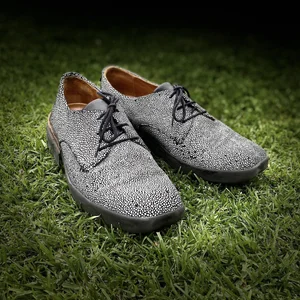
1. Bespoke insights with Gabriele Gmeiner
Available on Spotify and Apple Podcasts:
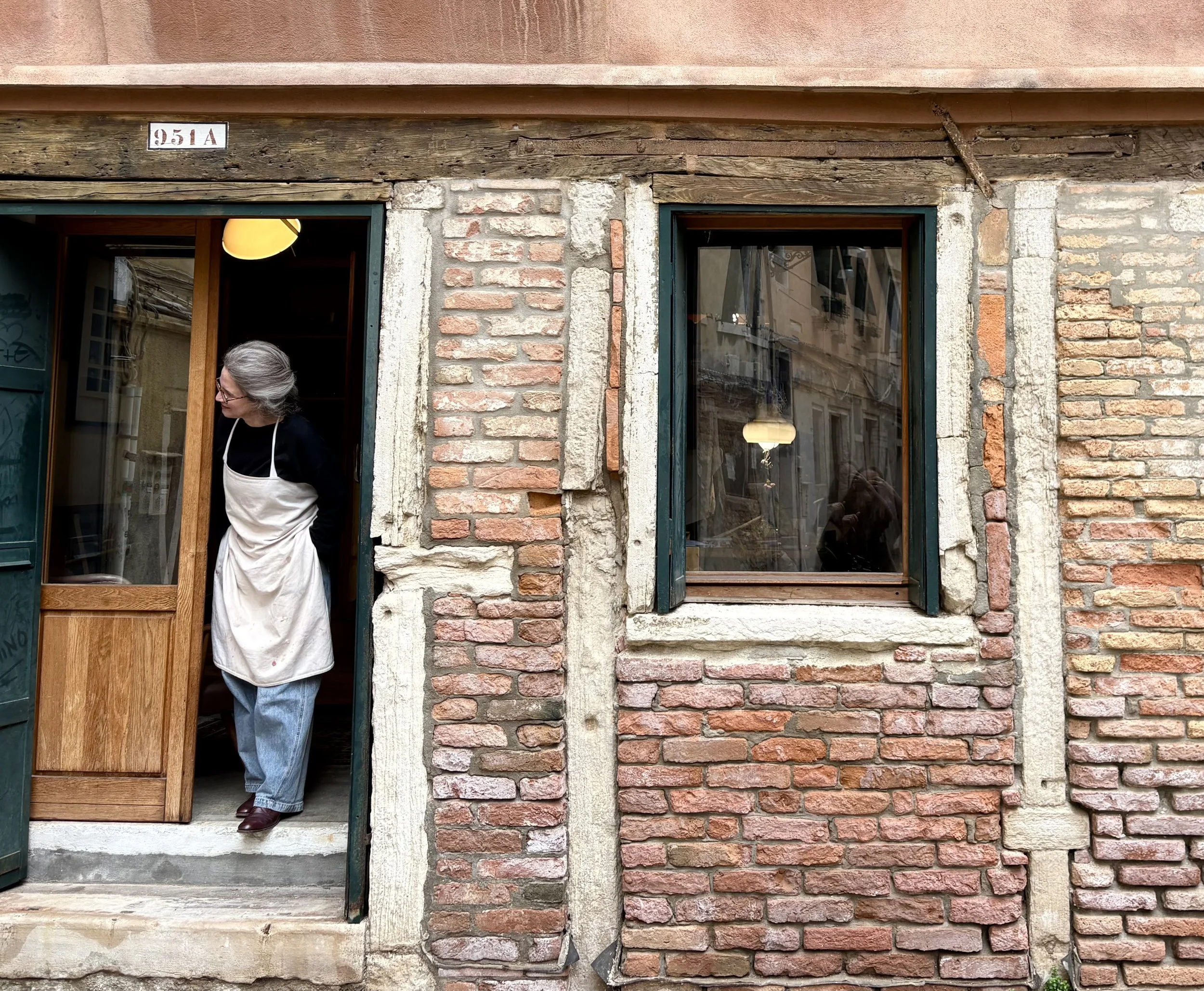
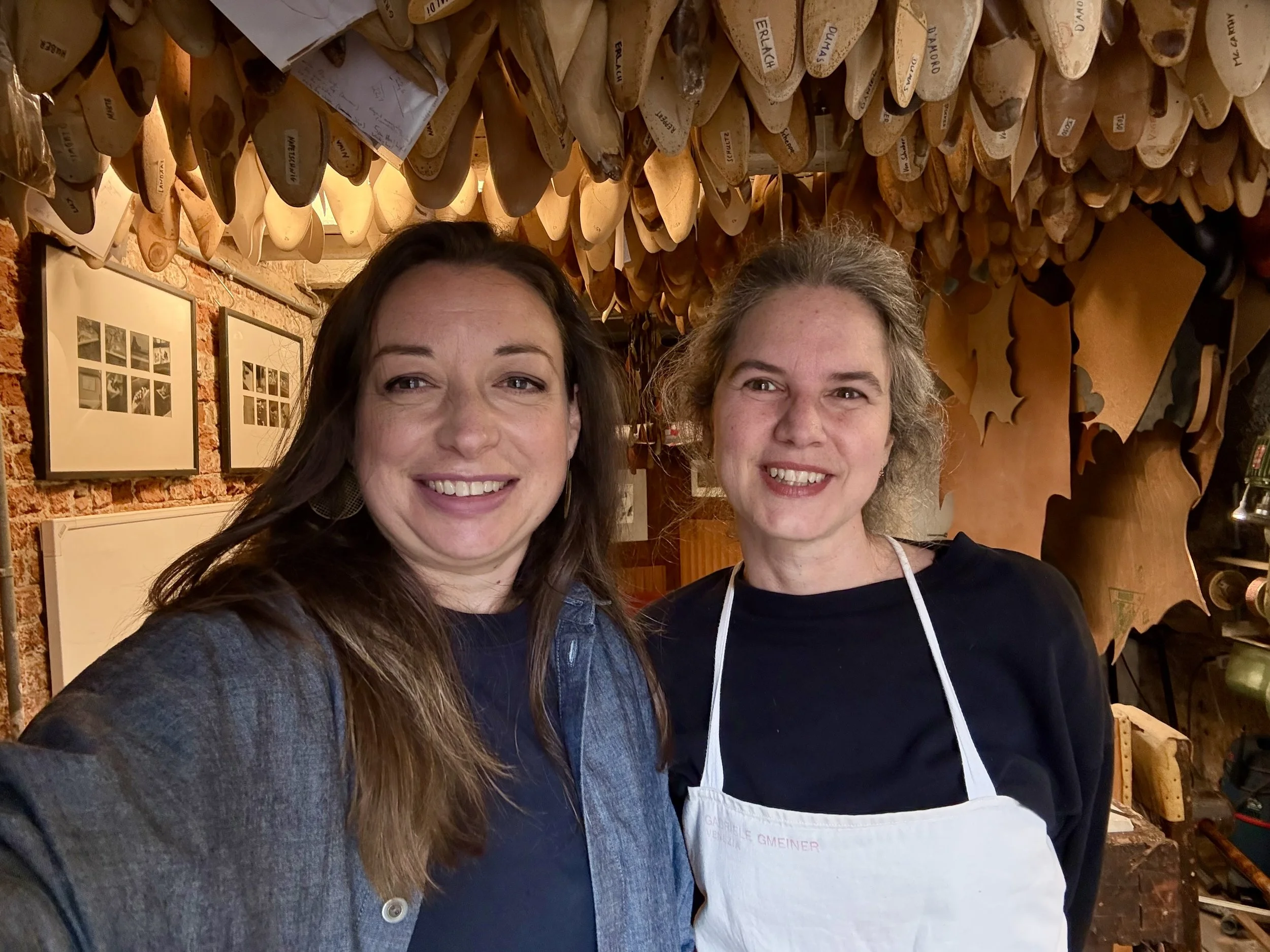
Bespoke shoemaker Gabriele Gmeiner standing outside her Venice workshop on a cold November morning in 2025. Image: Alexandra Sherlock.
Episode Overview:
What motivates people to commission a bespoke pair of shoes? What insights does the bespoke model offer into the importance of storytelling, customer loyalty, supply chain transparency, and design for repair?
In this pilot episode of ‘The Social Lives of Shoes’, recorded in November 2025, Dr. Alexandra Sherlock visits the Venice workshop of bespoke shoemaker Gabriele Gmeiner to understand the value of bespoke shoes as both object and profession.
Links:
Materially Speaking - Sarah Monk
https://materiallyspeaking.com/
https://open.spotify.com/episode/5bY5TJEFhEyPBq7V8Nz9eA?si=fe618f828cbd4768
Cordwainers College / London College of Fashion
RMIT University - School of Fashion and Textiles - Footwear
John Lobb
https://www.johnlobb1849.com/ (Bespoke - London)
https://www.johnlobb.com/en_us/ (Paris/Hermès)
Segalin (Rolando Segalin - Venice)
https://craftsmanship.net/the-soul-of-the-italian-shoe/ (Article about Atelier Segalin and Daniela Ghezzo who took it over)
Presot (Pietro Presot) - Vegetable Tanned Leather
Luigi Bevilacqua - Fabric Weaver
https://www.luigi-bevilacqua.com/en/ Located in Venice (Santa Croce district)
Credits:
Interviewee: Gabriele Gmeiner
Interviewer & Presenter: Dr. Alexandra Sherlock
Editor: Dr. Alexandra Sherlock
Photographs: Dr Alexandra Sherlock
Chapters:
00:00 - Show intro
01:00 - Episode Overview
03:19 - Journey to Bespoke Shoemaking
08:16 - Craftsmanship and Materiality
10:47 - The Story Behind Each Shoe
16:44 - Understanding the Customer's Needs
19:05 - The Value of Bespoke Shoes
27:25 - The Future of Shoemaking
32:10 - Cultural Identity and Craftsmanship
37:00 - Walking in Venice: A Unique Experience
42:52 - Outro and Acknowledgement of Country
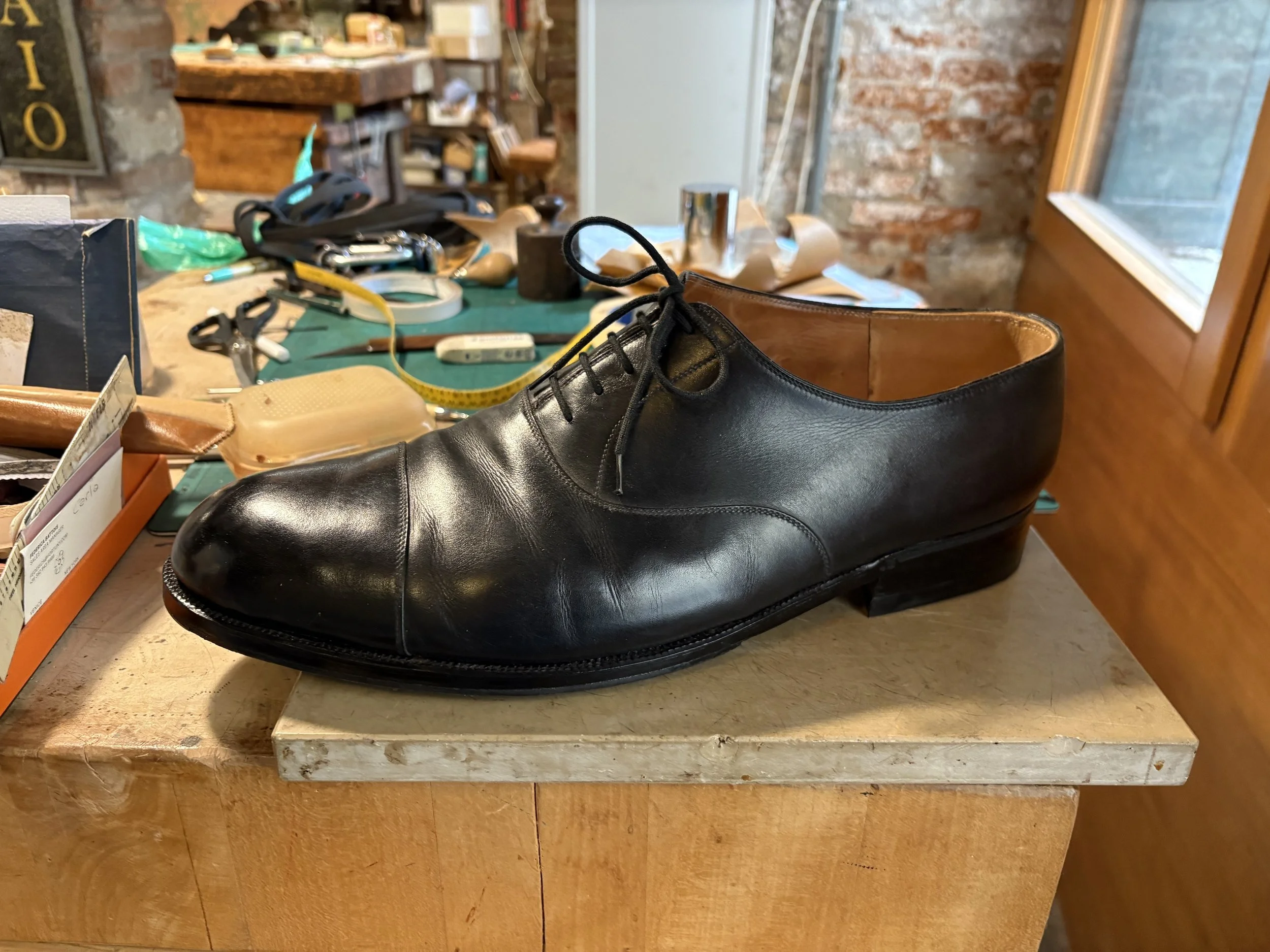
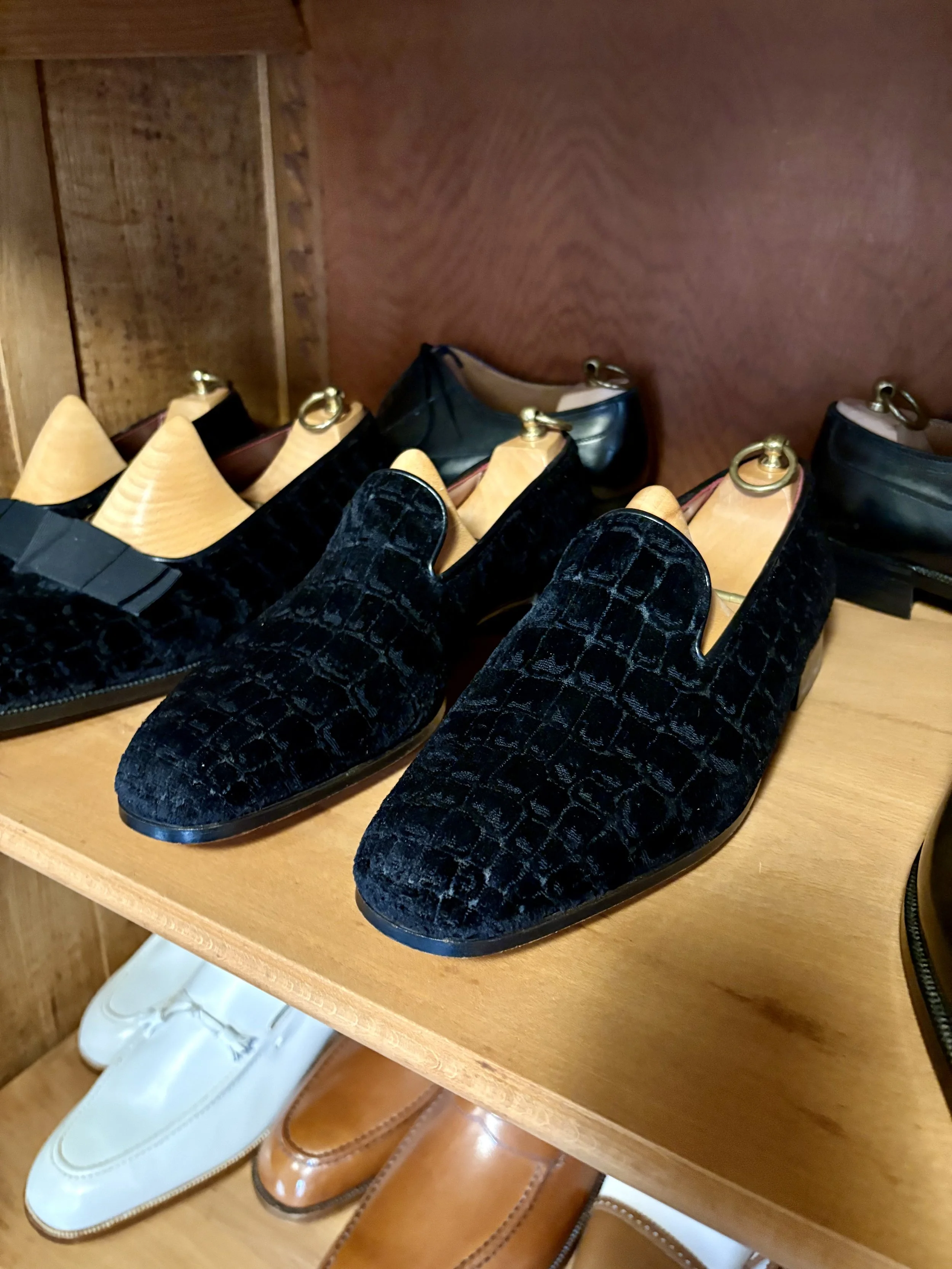
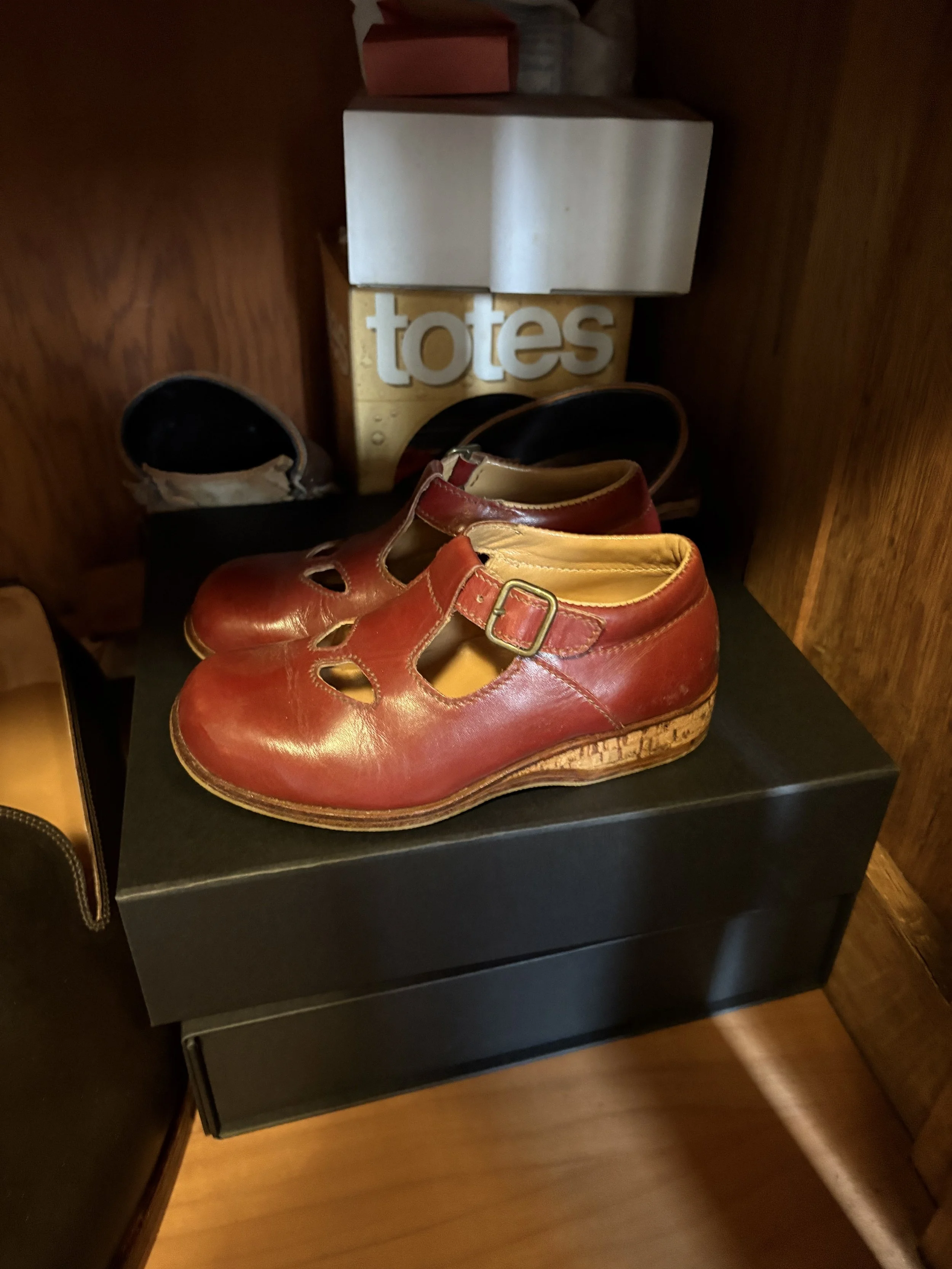
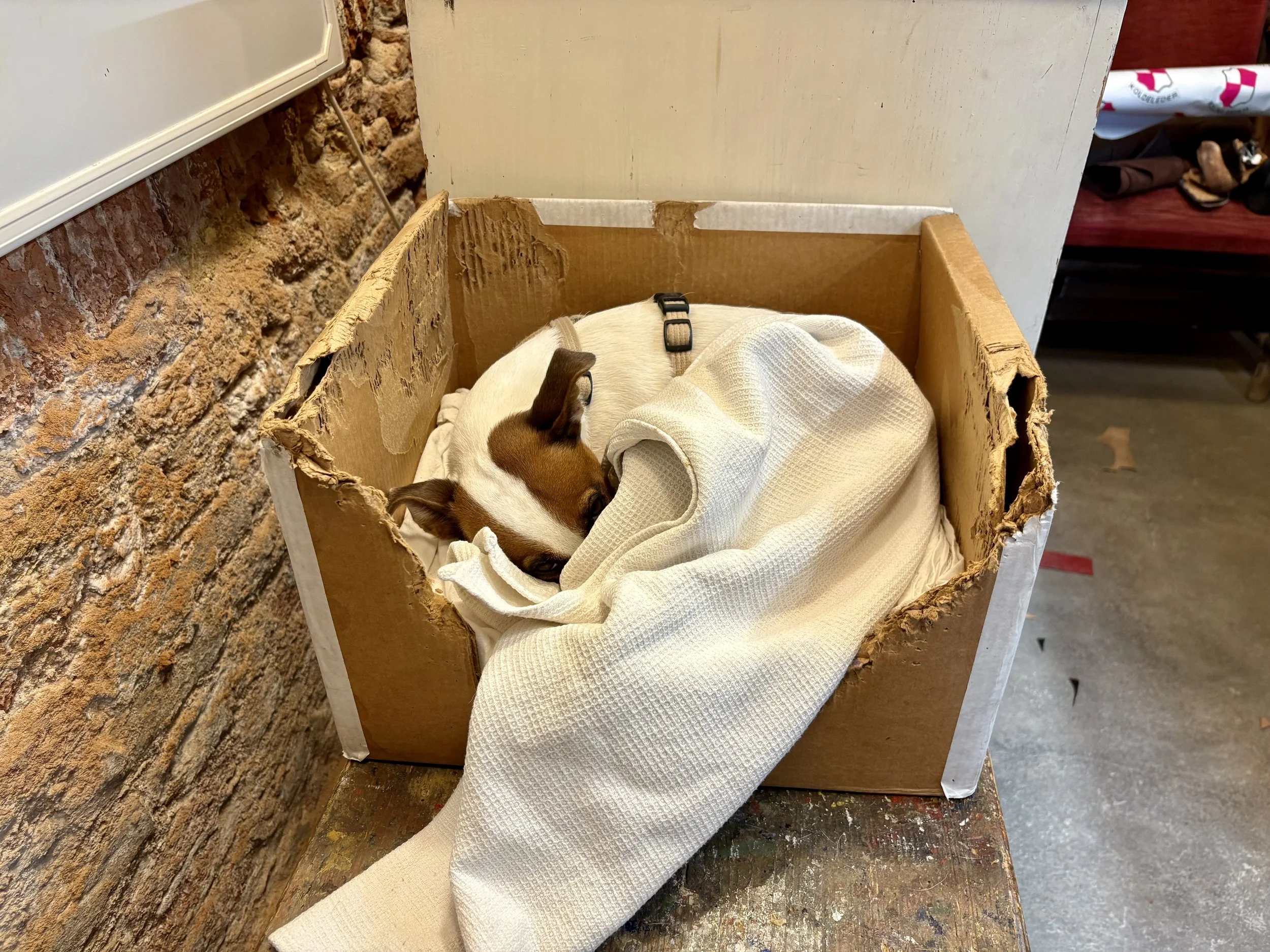
Transcript:
1 - 00:00 - Show intro
Emily Brayshaw (00:11)
What if shoes could speak? What might their stories and the stories of those who make and wear them tell us about the ways we live, our values and our impact on the world?
Alexandra Sherlock (00:24)
Welcome to the Social Lives of Shoes, a podcast brought to you by the Footwear Research Network that brings to life one of the most underestimated and humble aspects of consumer culture.
Emily Brayshaw (00:35)
Whether you design, produce, make, market, sell, or just wear shoes. These conversations will transform how you think about them and reveal new possibilities for a more sustainable future.
Alexandra Sherlock (00:47)
Visit FootwearResearchNetwork.org to access the show notes, photographs, transcripts, and to dive deeper into our research and join the conversation. You can also find us on LinkedIn and Instagram.
2 - 03:19 - Journey to Bespoke Shoemaking
Alexandra Sherlock (01:02)
Welcome to this first episode of the social lives of shoes with me, Dr Alexandra Sherlock.
I'd like to frame this episode as a pilot. It was very opportunistic, recorded on my phone on a cold November morning in Venice in 2025 with the incredible bespoke shoemaker Gabriele Gmeiner.
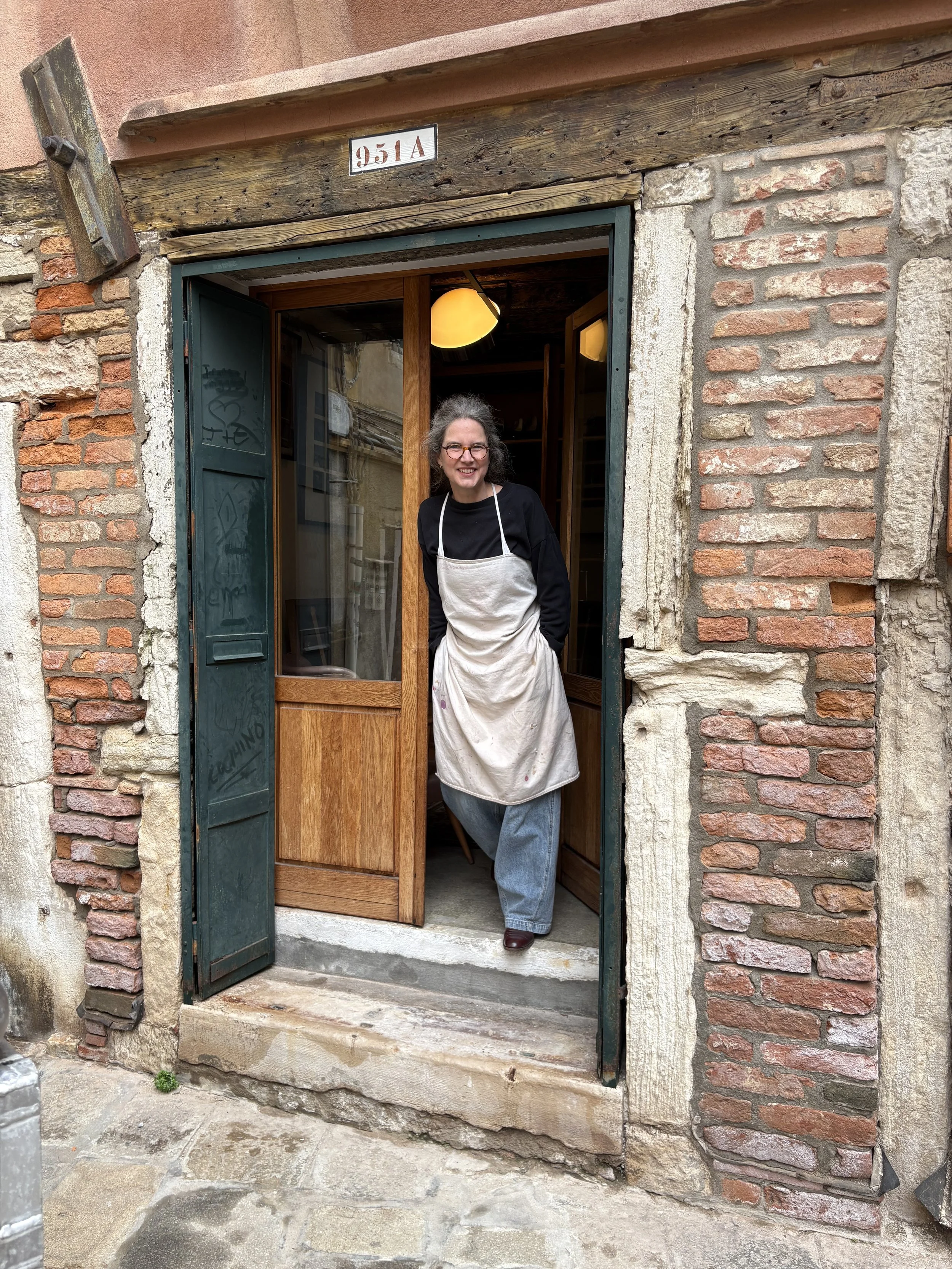
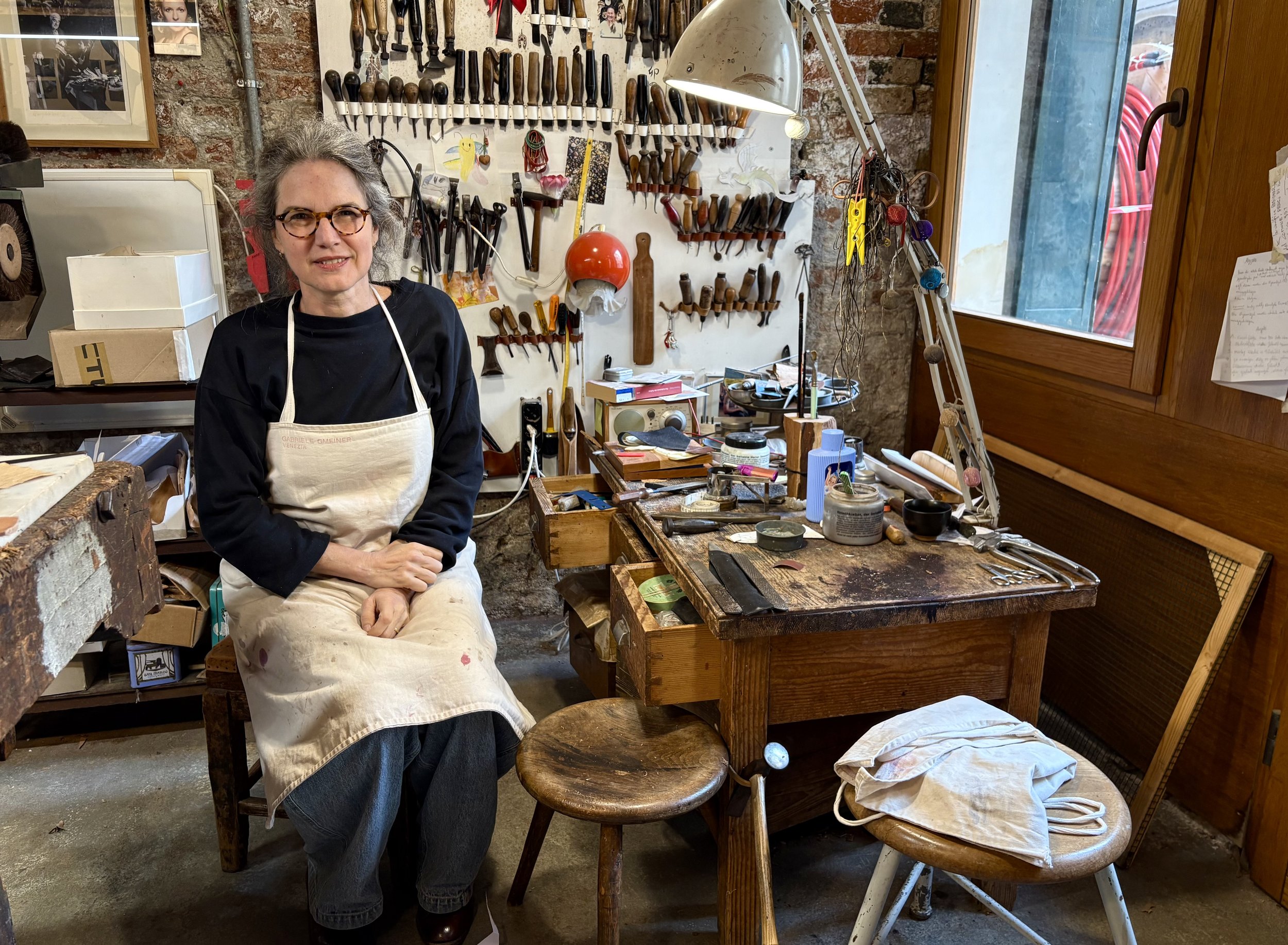
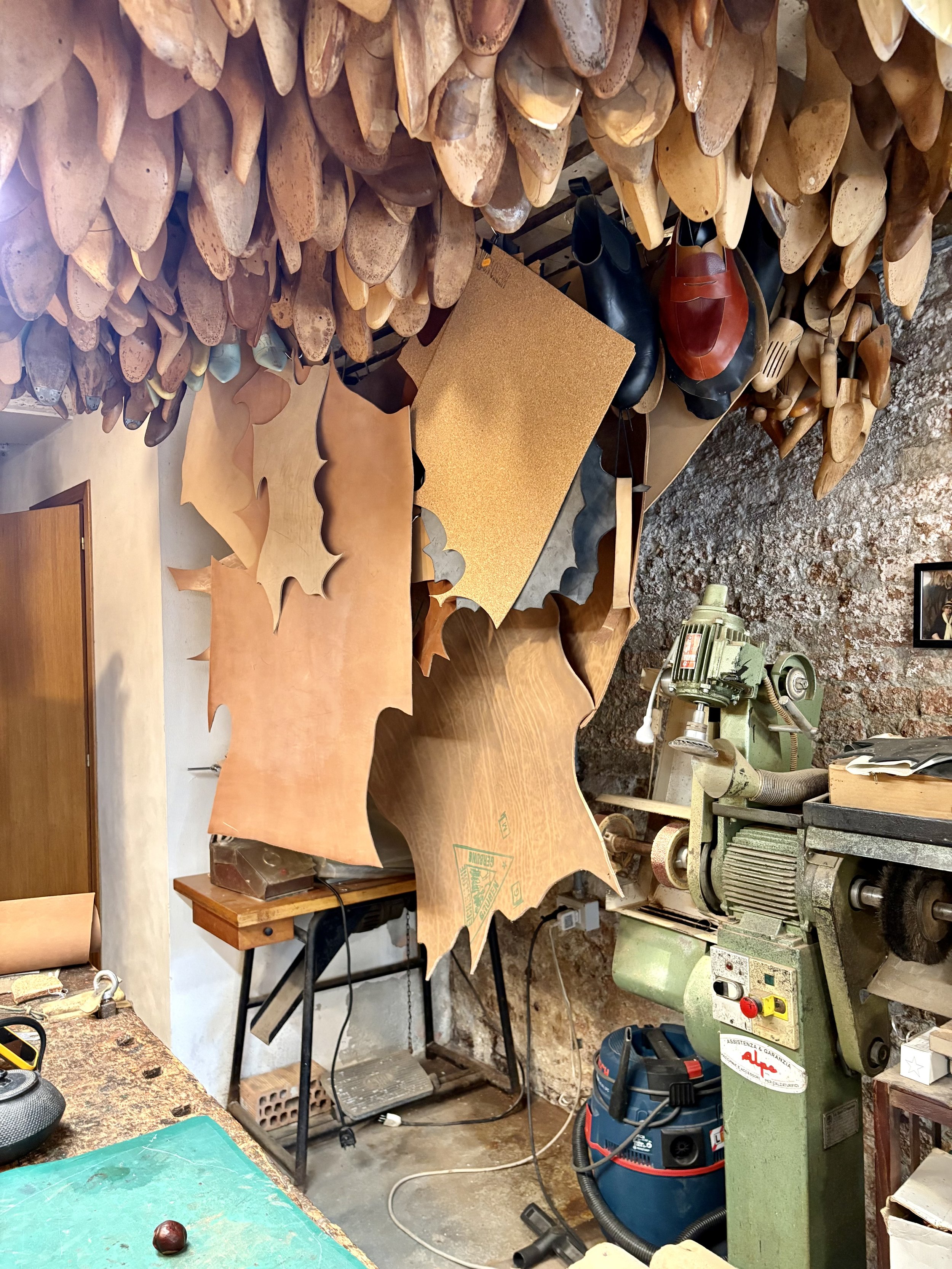
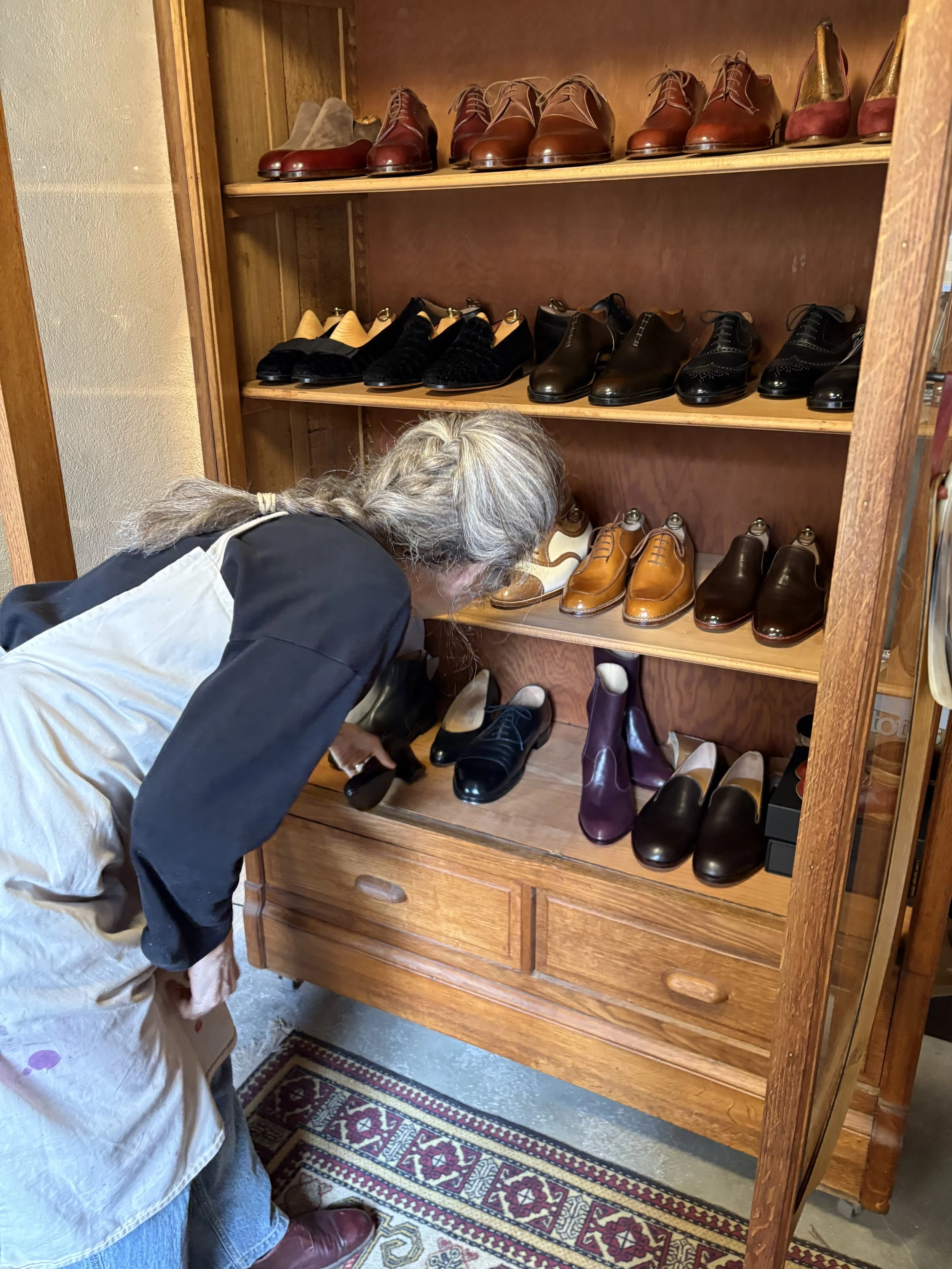
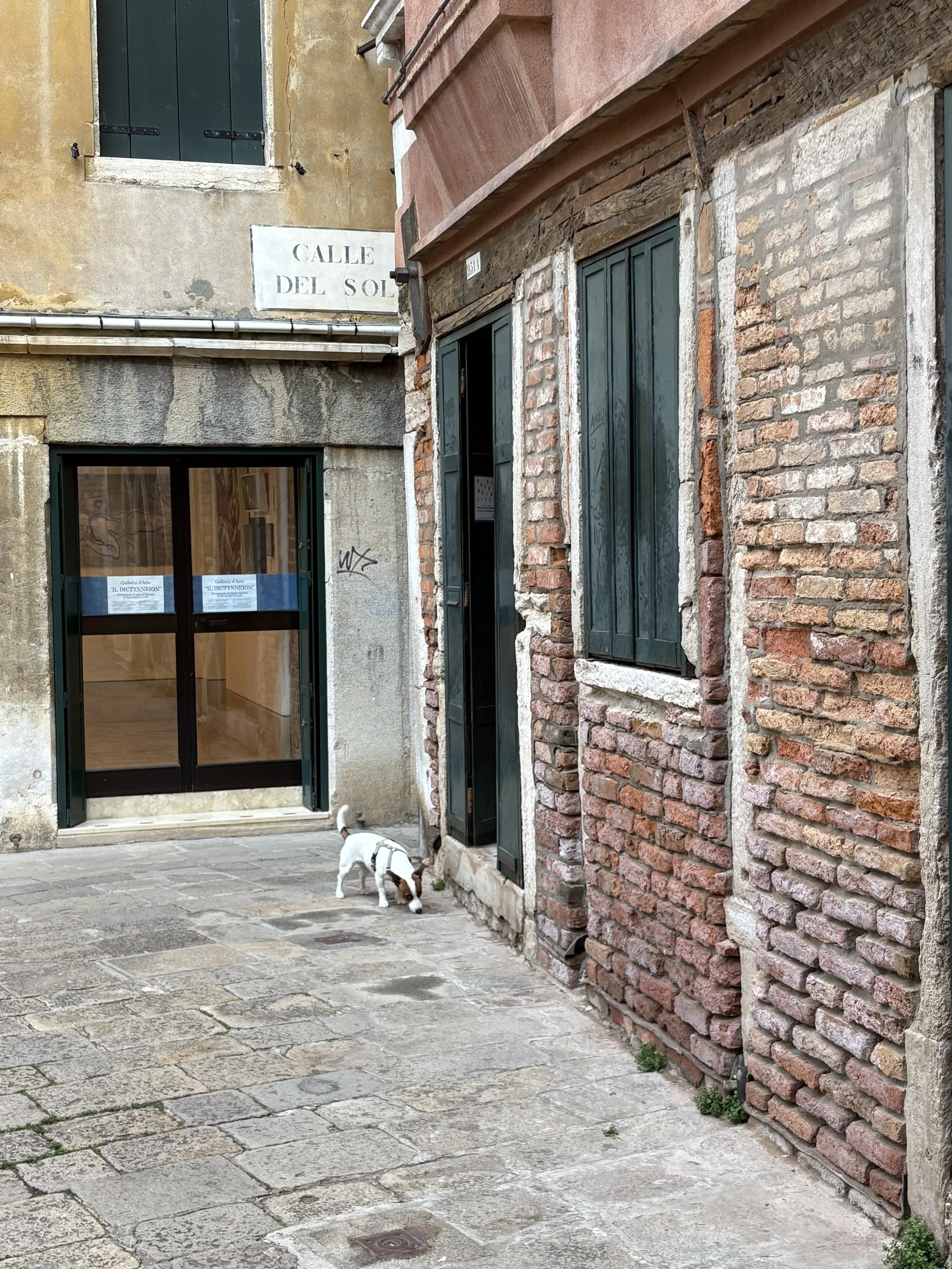
When I arrived walking through the Venetian streets, I was greeted by Gabriele's beautiful little dog. I'll include photographs of her dog and the workshop in the show notes. And Gabriele was opening the shutters for a new day. As you're listening to the interview, I hope you can imagine yourself sitting with us at her timber bench, surrounded by the materials she uses, the shoes she's made, the tools, and with the incredible smell of these natural materials. And above us, a ceiling full of pairs of beautifully crafted lasts, each one representing the feet of each of her clients with whom she's built close and sustained relationships over the years. The insights that Gabriele provides, I found really inspiring, and I hope you find the same.
The work that Dr Emily Brayshaw and I do with the Footwear Research Network provides us with a wonderful opportunity to speak with and hear from a variety of different people across a full value chain of footwear, from those who design and make them to those who market and sell them, but also just everyday wearers.
There are a few wonderful podcasts out there exploring footwear, and I hope that this one adds to what is becoming an increasing focus on this important aspect of fashion and consumer culture. This podcast takes a socio-cultural perspective to provide stories about our relationships with shoes with the hope that these insights might inform more relevant, meaningful and sustainable products, business models and consumption practices. So I hope you enjoy this first episode.
And please do let me know what you think of what we're doing at the Footwear Research Network. These initial… experiments, certainly, it's great to have encouragement if you think it's worthwhile.
3 - 03:19 - Journey to Bespoke Shoemaking
Alex (03:19)
First of all, thank you so much, Gabriele Gmeiner for meeting with me at such short notice while on holiday in Italy. I took the opportunity to get in touch with you and come and chat about shoes. Part of the reason that I know who you are, and could find you is because I listened to your podcast with Sarah Monk, Materially Speaking, which just had a beautiful description of what you do, who you are, where you've come from. But I wonder if you could just explain briefly, for the purposes of this little interview, a bit about your background and how you've ended up in Venice making bespoke shoes.
Gabriele (03:59)
Right, so yeah, I ended up in Venice. It's after 10 years of learning, researching about shoes. And it all started, actually, in England, where I went to Cordwainers College to start with. And that was a two year full-time course. And from there, I got to manage work experiences, also after finishing the course. So I got in contact with the great bespoke shoemakers like John Lobb, for example, and I think that that was the thing that really impressed me and and created my wish, where to get to, and from there I moved on to Paris as well there was another branch, independent now, from from John Lobb, connected to Hermès, to work with them to work with Hermès to do other schools like Abbé Grégoire, Centre de Formation Abbé Grégoire. And well, a lot of things happened and when I say I spent it with researching, I realised also some free projects like doing research on crafts in general, reflecting culture of a certain area. So I did it in Austria of the area where I came from so there's not much culture but there are the crafts.
There were just a few writers so I brought it together. I was creating portraits, putting together different crafts practiced in this area, and It was portraits of different personalities made as shoes. So the shoes put together like doing everything from scratch, making also the last from a piece of wood or tanning the leather myself, of course being taught by a tannery to do so. ⁓ It was a sort of experimenting of materials, crafts, techniques and putting it all together on the object of the shoe. A similar project I did later on was going to Japan, working with different craftsmen and creating with them the material to get together shoes. So it was all about playing around. What's the shoe? What's the material? What's the craft, what’s able to be integrated, and so on. So there were the two different rows, like the classic formation at John Lobb and similar shoemakers. There was a shoemaker in Venice, there was Segilin, I was taught by. And then the experimental row.
So that was my 10 years of ⁓ learning before getting here, again, coming back to Venice and being kind of offered to open my own workshop. So actually it was Segalin offering me his workshop but then there were many things not clear about it and ⁓ I would have... had to sub-enter the way he was making the shoes and while I was choosing my own workshop and finding the place, which I really love, I could do my own product, which I was always dreaming of, which I had in my mind since I went to John Lobb. And I could do my own thing. And that was in 2002, in November. It was exactly 23 years ago. Time was passing, and fast.
4 - 08:16 - Craftsmanship and Materiality
Alex (08:16)
It's so fascinating everything that you're saying to me. I suppose you, with all of that research that you did previously, you have developed a really good understanding of the materiality of shoes and the craft of all of the stages of those materials and the final construction of the shoe. So you have, I guess, quite an unusual insight into, I guess, what would be the full value chain of a shoe, all the way from the hide to the foot.
Gabriele (08:44)
That’s right, it's all part of it. And now my aim is to get really high quality products together, it's also about choosing each single material to get a really good base to make shoes which are made for... I'm hesitating saying it, but eternity. ⁓ Not eternity, nothing is eternal but for a long long time of wearing. And ⁓ like now I'm getting... always closer to choose the materials. I find companies, tanneries, which are close by. So even like I can reduce long traveling of the products, I reduce the kilometers to get to me. Like I can talk about one company, it's Presot. They make vegetable tanned sole leather. And they're just nearby in Porcia which is close to Pordenone and they have this beautiful product and philosophy also of producing. It's a no waste production so it's all a circular thing like the waters which are used they get cleaned and they get reused for other things and it's all ecologically clean. And even the people working with them, have their own spaces to grow vegetables, to have the animals. It's a big area, a natural area with a lake with a... They have the Presot ... So it's a beautiful company and it's so nice for me to integrate such a material in my story.
5 - 10:47 - The Story Behind Each Shoe
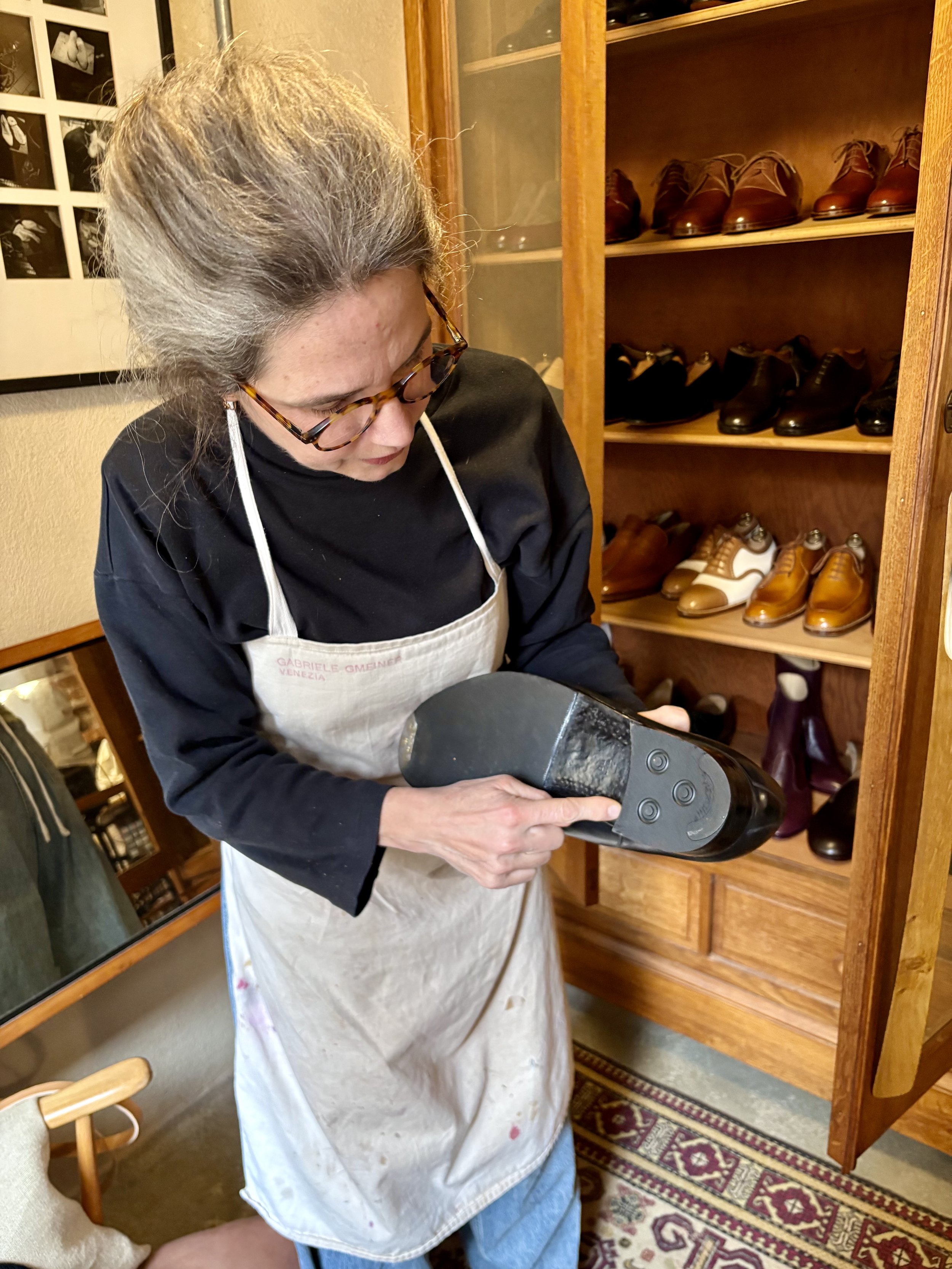
So, the shoe I make, it’s not just an object. It tells all a range of stories. It starts with my concept, with the customer, and then with the hands in here that the customers see making the shoes and getting the shoe very close to perfection as a made-to-measure shoe. There’s a whole story, a whole relation starting. And this relation really should, the customer knowing all these things, it should continue when he's wearing, the customer, or she is wearing the shoe. And once the shoe is worn down, the sole has a hole, that happens, it can come back to me, I put the same last inside and we redo the sole, they're redone the stitching and the shoe it gets new. It gets new again and it will last another five years of heavy wearing or ten years of less wearing and it goes on and on and on, it can go on for decades.
Alex (12:01)
So I guess then with your understanding of the stories of the materials and the ethos of the companies that produce the materials and you're bringing lots of stories to the shoes that you make, and then you're communicating… and then you add your own stories through making, in this beautiful workshop in Venice, and then you communicate those stories to the consumer. I want to say consumer but that's a wearer.
Gabriele (12:31)
communicated with when they're here, if we get to it, maybe it's not so consequently I'm not having a schema to… that-that-that-that, but it's a
Alex (12:42)
a conversation.
Gabriele (12:43)
a conversation and I do tell them, and I mean the people come in, not in a sales place, they come into the workshop and they get into the making and they see the hides here hanging and they have the option really to get introduced into what they wear. Yeah. I mean that's the big difference. Yeah. There's not a closed box and a ready-made shoe it's… they they know, that's happening here, this person makes it, and I saw the hide hanging there, and if I wanted, the person could tell me everything about it. So this is exactly the big difference of a shelf shoe, I mean ⁓
Alex (13:32)
It comes down to transparency, suppose, doesn't it?
Gabriele (13:35)
Full transparency. I mean the same thing happens if you go to a market or if you go to the producer of the potatoes, so you see the area where the potatoes are, you can see how they tear out the potatoes, and they can tell you the quality of it. So it's the same thing. It's all about knowing what you consume, what you have near you. It's not even a consumption. I mean, OK, the potato is a consumption. You eat it and it's gone. Then about the clothes and the shoes, especially, you have it long time on you and they bury you for many walks and many kilometers I mean…
Alex (14:25)
So I think that's what I love about it as well that you bring these stories through the transparency and the relationship with the customer and your conversations, but then they also continue those stories through the wearing. So the shoes continue to build.
Gabriele (14:40)
They feel the difference. They feel the story. That's the difference. I mean, they might feel even the shining of a great designer of the shoe. They feel it as well. But that's another story again. I mean, there are the stories of the fancy designers and you feel it. But here you feel first of all, also the very personal context and the relation you create. I mean, I think we do create relations even with objects that it’s like, they are about us. I mean, we create a relation with the house we live in, we create a relation with the shoe we walk in. And ⁓ we care for it, we clean it. We think, maybe I shouldn't hit the stone with it…
Alex (15:36)
Some shoes, some shoes we care about them in that way, other shoes we don't care so much about them in that way, I suppose. I guess that's what I love about the distinction between the shoes that we really care about, and I think you're already, you know, obviously explaining that, you know, what is the difference? What is it? And I guess maybe it is the stories of the materials, the stories of the making, the appreciation of those things, the connections they afford.
Gabriele (16:03)
I just had an idea that the more we care about things, we care for the things or beings, the more we love them.
Alex (16:13)
That's right.
Gabriele (16:14)
I mean you're sitting next to my dog here. Yes. And it's just we care a lot of... Well, we care for him and we give him food and give him walks and things and the more we do the more we love it. And the same happens with things. Beings and things. The more we care for something or someone, the more we love it. And the more we create a relation. It's all about that.
6 - 16:44 - Understanding the Customer's Needs
Alex (16:42)
Yeah. So I love this idea of almost treating shoes as alive in some way and they are alive with stories, with relationships and I think as you say, the longer… and I guess this relates to this concept of emotional durability, the fact that the shoes return our love for them and they continue and improve with age. Some shoes don't do that, and I guess, I mean, I'm interested in… do you work principally with leather? Is it all leather that you work with in terms of the materials.
Gabriele (17:17)
Yeah, mainly leather. I mean we do sometimes apply a rubber sole to have it more waterproof from the soles but it's mainly leather especially the insoles. It's always leather but it's such a great comfort to have a leather insole because first of all the insole takes the shape of the imprint of the foot so perfectly. It's not a pre-shaped shape like some brands do and sell it for health shoe footwear. It's your own imprint. And then... ⁓ sole leather, for the insole, it absorbs the humidity. There is no smell. There is no bacteria growing. There is no bacteria growing. like...
Alex (18:10)
Yes, it's interesting, isn’t it. With natural materials.
Gabriele (18:19)
So like all synthetics in the common footwear they grow bacteria, and it's got a smell already after the first time of wearing and it's ⁓ it's got a perfect, I think it's it's a great material.
Alex (18:35)
There's a durability there. I mean, I've heard you talk about the patina that they develop in terms of that emotional durability, which I think is beautiful. But also there's a durability in terms of hygiene there, you're saying, with those natural materials, you're unlikely to get rid of them because they smell and you can't get rid of them.
Gabriele (18:51)
Seriously, there won't ever be an awkward smell. That's a great thing. I mean, it's one part of it. yeah. ⁓
7 - 19:05 - The Value of Bespoke Shoes
Alex (18:56)
So I'm really interested in, I guess, how the relationship with the customer starts. What motivates someone, I suppose, to want to have a pair of shoes made by you? Because, I mean, to have a bespoke-made pair of shoes, it's not a cheap, you know... endeavor. So there needs to be quite a significant motivation to be able to do that. I mean, I guess obviously somebody needs to have the money to be able to do that. But even if you have the money, you still need the motivation and understand the value of it. So who are your customers, I suppose? And why do they want to have their shoes made by you? What is it that motivates them?
Gabriele (19:50)
I think, I consider myself very lucky because I think all of my customers, they appreciate exactly the things that we've been talking about before. They are searching for something like that. And they appreciate, they admire even that workshops like this exist and people practice with passion such a craft. So they... I think that there are people, they love beautiful things, they love... they would love art as well. And as I'm not a big brand... not even in terms of bespoke shoemaking. I mean, 23 years of being, it's not much. The big ones, they have generations, back then. And um, but I feel happy that there are not the ones coming, just having a brand.
So, just having a brand means they do not care about the rest of it. They just build on an opinion, on a big public opinion, and they do not, they're not even, wouldn't be interested in what's happening. They would just order, bam, bam, bam, bam. But the customers that come to me, they really search a relationship. They search the very individuality. They search for knowing what's going on, seeing what's going on and so on. It's all we've been talking about.
Alex (21:44)
And I suppose, in wearing the shoes, which are the outcome of all of those things, they're expressing those values through the things that they're wearing, the connection with the materials, the place, the making, the, yeah.
Gabriele (21:56)
They find their values on themselves. I'm sure they get other things and objects around them chosen in a similar manner.
Alex (22:10)
Mm-hmm.
Gabriele (22:14)
And I would say that they are not just very rich people, I think that ⁓ a meduim wealthy person could afford to invest in a good quality product, I mean it's, the value comes back over the years.
Alex (22:38)
It's an investment I suppose isn't it, because when you think about, I mean at the very basic level, if you think about price per wear for a well-made good quality pair of shoes that you can resole, It would pay for itself over time. But I guess it is that kind of having the motivation to want to spend that much in the first place is is the tricky thing to get over. And sometimes I wonder if that is the thing that brands particularly that want to be more circular, that want to be more sustainable, that want to produce better quality products struggle to get over that hurdle because it's the consumer understanding why they would be paying more in the first place, and also shareholders understanding why there needs to be infrastructural investment to be able to to be able to, kind of, produce that quality and it's a really difficult, I guess, hurdle that I think probably industry is struggling a lot to kind of make that switch.
Gabriele (23:38)
I believe so, I believe the industry struggles with that, but it's not such a problem for me as I'm not producing big numbers. So if you talk about the minority of people understanding, I'm fine with the minority. So even then growing it will get different and more difficult to maintain the same quality and produce more pieces.
Alex (23:46)
But here again, you're talking about a shift to a different kind of business model as well. So if you're going to repair or upgrading and those kinds of things, you're not just producing new shoes all the time, are you? But I feel like we're getting towards this conversation of the difference between fashion and style, which I find really interesting. I think what you're sort of talking about with your customers and your wearers is that they're probably more interested in this idea of style, perhaps, than fashion. I don't know.
Gabriele (24:37)
I think you can call it style, yeah. But then everybody's got his own style. What I do is I'm not suggesting you have to wear this style because now it's the only style being fashionable. I'm listening to the customer and try to get out what he wants to wear. What is his style? The personal style. ⁓
Alex (24:43)
Yes.
Gabriele (25:06)
I think each customer has his style so the customers decide about the toe shape if it's pointy, elegant, rounder. They can influence on all little decisions. I just had now a customer knowing exactly what he wanted. I'm very fascinated if that happens and I really appreciate that. He says he wants the heel sticking out a little bit so he gets it off easier, the shoe, and he wants the hole of the lace is bigger so they ⁓ so he knew exactly all the details he was thinking about and it's so pretty having these suggestions for this person.
Alex (25:43)
Mmm.
Gabriele (25:55)
And of course, they say “this is my style, this is what I want” and I do it. Of course, I do it in my terms of aesthetic, then there's, I'm not evaluating a round toe, it's off season and where as the power-pointy in toe is, in the end it's still a Gabriele Gmeiner shoe, but it's the style of the customer. It's really bespoke, that's the point. I think it's very important. ⁓
Alex (26:28)
So you have to really get to know your customers then, be able to, particularly the ones that don't have a clear idea of exactly what they want. You have to get to know them quite well.
Gabriele (26:37)
I do a serious interviews about what they want to get into them, yeah, on the shoes and then I make usually for new customers I do the test pair so they have to wear it at least two weeks and they can make up their mind. And of course, not everybody knows exactly what he wants. Sometimes it's quite difficult to help, to find a really nice thing that the customer then feels, oh that's my shoe, that's only my shoe. Each of my customers is a kind of challenge and it's so different and it's so beautiful to have each of them so different, I think. So it's never annoying. I mean, it's just making shoes. They're always making the same thing. Not at all. Each of them is so different.
8 - 27:25 - The Future of Shoemaking
Alex (27:26)
And you can see then in that case why people would end up doing it for a whole lifetime because every pair of shoes is new or different, every experience is different and you're getting to know people as you go.
Gabriele (27:38)
Yes, I've never got bored with it. It's one after the other, is a challenge.
Alex (27:44)
Yeah, how beautiful.
You mentioned earlier that you studied at Cordwainers when it was originally, I think you said in Hackney? And then of course it moved to London College of Fashion. And I was very sad to hear recently, as I'm sure lots of other people were, that the dedicated footwear design program had been discontinued. I believe they're still doing footwear, but I think increasingly around the world it is difficult… I know we teach footwear, a Cert IV diploma at RMIT University, where I come from, there are often a low intake, like you have small numbers of students, and I can't help but wonder if it is because younger people today just don't really see shoemaking as a job or a profession or... I mean the way that you describe it, it just sounds so fulfilling like a really kind of fulfilling profession and I'm just wondering sort of what's happened there or what needs to be done to be able to show… I mean is it because we offshored the production of shoes so people don't realise that they're kind of made by hands or like is it…
Gabriele (28:58)
I do think there is quite some interest in younger generations. I do notice as well the people coming towards me, asking me about being taught. So I keep having interns, apprentices, continuously. I have like a very... required is to have the internship of six months and I have two a year,
Alex (29:33)
Wow, So where do they come from? they?
Gabriele (29:38)
They come from Europe, I mean there is support from Europe. They do Erasmus also for young entrepreneurs or for craftsmen. So that's great help. They are financed and they come to learn from Germany, France. I think that in... these countries like Germany, Austria, Switzerland and France there is a big big interest and there are many young people. I just gave a course, a one-week course to a Swiss lady and there is a shoe fanatic association. They move about getting taught by masters and they have their own workshop and they all move about shoes and so, I mean, I might be one of three shoemakers here in Venice, there are another two ladies making shoes but there is,
Alex (30:40)
only ladies. ⁓
Gabriele (30:54)
Yeah all ladies, but I'm very much integrated into this world of shoes in Europe. So I do know, we all know each other. And there is a whole thing moving about these shoe-fanatics. And there are quite some young people. Obviously, it's not as many young people wanting to study medicine as making shoes. It's still a very particular decision, a particular focus to put on. But there is movement. I have very nice and interesting people coming to me. Now it's going to be a French lady. She is from theatre and now she wants to make shoes. So there is movement, I think it's not that the people do not want.
I've never had English collaborators. But I thought maybe it's because in England there are more shoemakers. There are still very nice shoemakers in London as well. There's a great thing going on as well. There are young people doing bespoke shoes as well. Beautiful shoes. ⁓ Really beautiful ones. Very, very much researched. ⁓
9 - 32:10 - Cultural Identity and Craftsmanship
Alex (32:10)
I do think also there is a really lovely connection… You were talking originally about your research doing sort of different profiles of crafts in different areas, or the different kind of profiles of the different stages of the crafts involved in the production of the materials. And obviously we're sitting in Venice and I'm walking around the streets in Venice and you see lots of workshops and a lot of craft and... I do find it quite interesting. I don't know whether I'm… this is just a complete preconception or stereotype or whether you do still have those more regional distinction in terms of the identity of particular places in relation to the crafts that make that place or that are connected to that place in Europe. Or is that... a complete assumption, like do you understand what I mean? Like the fact that you still have that connection with the tradition of particular crafts within particular places, whereas other places have lost that connection.
Gabriele (33:21)
There are just a few of them, really, the traditional ones, left in Venice, I think. And I even... I'm very... There are also associations trying to put things together and promote... ⁓ the identity of Venice in terms of craftsmanship of different types together. I did actually, as I did the research before starting here, I did also collaborations with the fabric producer, Weaver. Luigi Bevilacqua, they work on 400-year-old looms, weaving by hand silk fabrics, velvets. So we did a collaboration, we created a crocodile, an alligator relief of the velvet together as a small-scale alligator to have the shoes made with it. So this was another thing, a collaboration with another branch of ⁓ artigianato [craftsmanship].
Alex (34:45)
Yes, and again you've got that lovely web and meeting of different stories that sort of network of meeting of different stories.
Gabriele (34:52)
It gives very much about this identity. I can really much feel it in here. And I kind of feel it even as a responsibility of giving identity and value to the city. Because also the cities... It's getting overwhelmed by masses of tourists and obviously the products and services offered here are very low budget-based, but I really appreciate that things are still happening here ⁓ having an identity, a cultural historical identity and I see myself into this role, even if I'm coming from abroad, but my excuse is that Venice has always had people coming from abroad and it was the it's richness having this exchange happening.
Alex (35:50)
Yeah, as part of the identity is the different people.
Gabriele (35:54)
think so, yeah, especially Venice. It's been a harbour. It's been the biggest marketplace at the time. ⁓ It's been like New York today. It's been Venice. It's the biggest marketplace. ⁓
Alex (36:09)
Yeah and I just think, it's interesting to me in perspective of, I don't know, that guess what I do with the Footwear Research Network is I'm interested in lots of different kind of perspectives in terms of shoes and making shoes and wearing shoes and including you know mass-manufactured brands, but also individual artisans, and I find it interesting that some brands seem to be starting to understand the value of reshoring some of their production to be able to reconnect with that sense of identity and cultural identity through craft and through materials and through place. And I think this seems to be the thing that you seem to be, speaking to so strongly.
10 - 37:00 - Walking in Venice: A Unique Experience
I think the other thing that I really love and I remember listening to in the previous podcast that you did with Sarah Monk, Materially speaking, was that you were talking Venice as a very particular place as well and the shoes that you make, and I just I guess wanted to finish by talking a little bit about this idea of durability. So I think you mentioned in that podcast that the shoes that you make are for walking because in Venice there are no cars there are only boats, and there are only cobbled streets, and they're not flat streets they're cobbled streets, and so this idea of making shoes for use in a particular place for a particular lifestyle. I mean having Venice a couple of times before it is a slower pace of life. it's not easy to live in Venice is it? You have to walk a lot, you have to use a lot of steps. And I guess what I'm getting at is I see a connection there between this idea of slowness, slowing down, paying attention just through the very act of walking and connecting. I wonder if you can speak a little bit about that.
Gabriele (37:56)
I mean, you said a lot about it already. You talk from my heart really. I see it the same and it's a good reason to make shoes in Venice because you walk a lot. And uh, of course people choosing this city as a home place, they did love walking. If you don't love walking you're in the wrong place.
Alex (38:20)
Well, I've rediscovered a love for walking. Like, I didn't think I loved walking, but I love walking here.
Gabriele (38:27)
There still remains some rushing in the walking. And being annoyed by by obstacled streets and... But yeah, it's the walking. Or you're rowing in a boat, but just a few Venetians do have the boat. They would need other shoes. They're not so fine with the leather shoes. Maybe they rather prefer a rubber sole. But especially in Venice, you... There are different aspects. I think the stone streets, they're actually even better for the leather soles because they're not so abrasive. They don't take off that much material as maybe cement or concrete would do. ⁓ So it's quite good. My soles, my leather soles, last for a very, very, very long time. Like wearing a shoe for almost half of a year, they last like eight years here. Whereas some customers from outside, they last just five years if they're wearing them a lot. So the concrete is more abrasive. ⁓
Alex (39:46)
Isn't that interesting? Yes, yeah.
Gabriele (39:52)
And the other thing is the sound of... well, the sneakers, they do not have any sound. But I think the heels, they have a very cozy sound of dock dock dock dock. And when you walk through Venice you hear the dock, dock, dock, more softly, it's not annoying and you feel the space by the reverbero. So that's about walking in Venice and I think it's beautiful, yeah. Plastic heels, have the tick, tick, tick. They have an annoying noise.
There was once a meeting with our landlord, the landlord of our apartment. He was a baron and he was... ...he was actually a compositore and he was writing music. Atonale? Atonale music?
Alex (40:58)
Yeah, okay.
Gabriele (41:02)
Dodecafónica [twleve-tone], 12th, I don't know, modern music, classical, and he was blind. He has a very strong personality and once, everybody from his apartments from the same palazzo were invited, and he very much admired my craft and making shoes and he said, “do you know the difference of how do you understand about handmade shoes?” And said, “nah”. And he said, “you hear the sound if you click the heels together, if you do. You have the soft sound of the beating”. So that's about the sound of the shoes, which gives you the consciousness of wearing something special. ⁓
Alex (41:58)
Yes, that's beautiful.
Gabriele (42:04)
It’s a small anecdote. He's not there anymore but I think it was very...
Alex (42:09)
I just think that it's a multi-sensory experience. Walking into your workshop here I was just struck by the smell of the leather in the workshop and you've got the sound, and you've got the feel, and you've got the connection with the ground, the different types of terrain. It's a very embodied experience.
Gabriele
It’s very human. Human-made, and it gets it all together.
[music]
That's wonderful. Thank you so much, Gabriele, for your time on this lovely, cool Venice morning. And I hope to see you again very soon, thank you.
Gabriele (42:50)
Me too!
11 - 42:52 - Outro and Acknowledgement of Country
Alexandra Sherlock (42:54)
Thank you so much for listening to this pilot episode of the Social Lives of Shoes, brought to you by the Footwear Research Network, by me, Dr Alexandra Sherlock. We're really looking forward to bringing many more episodes to you in 2026, presented by myself and Dr Emily Brayshaw. If you enjoyed this episode, don't forget to follow the show so you're updated when the next one appears. And we'd love to know what you think. Please do feel free to add comments or contact us on LinkedIn or Instagram.
This episode was partly recorded and entirely produced in Australia on the unceded lands of the Wurundjeri Woiwurrung people of the Eastern Kulin Nation. I pay my respects to their ancestors, elders and custodians.